Listen to this Post
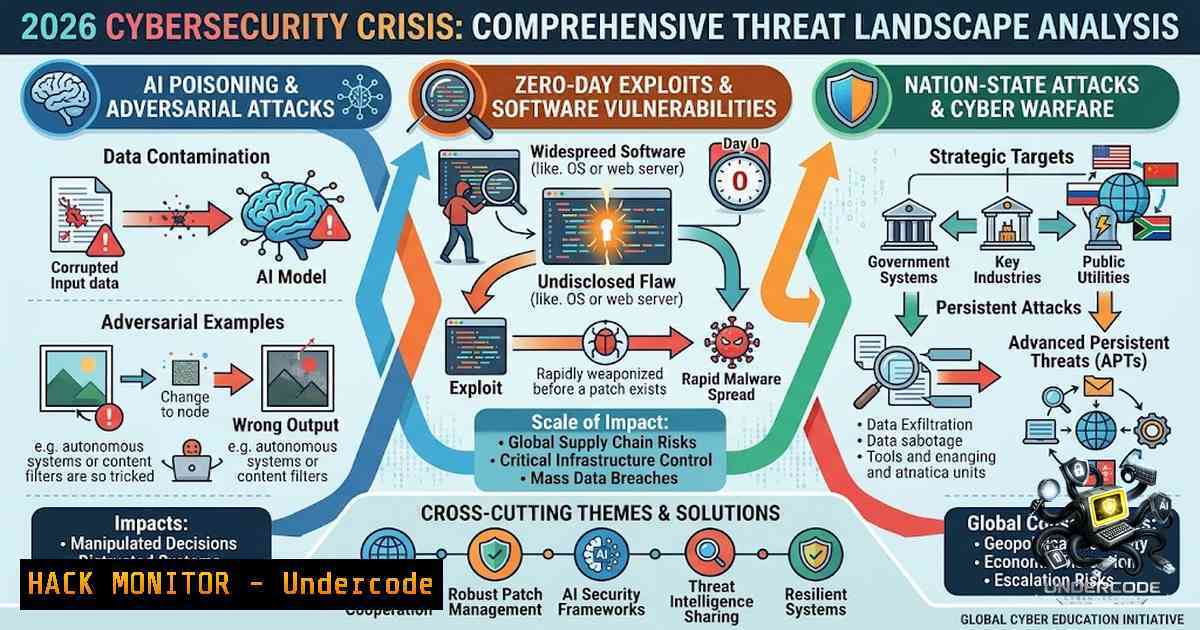
Introduction
The cybersecurity landscape of August 2026 presents an unprecedented convergence of threats spanning remote cryptominer deployments on macOS, nation-state AI-driven hacking campaigns, critical zero-day vulnerabilities in Windows and VMware, and a surge in blockchain and supply-chain attacks. As threat actors increasingly weaponize AI tools, exploit fundamental OS mechanisms, and target critical infrastructure, organizations must rapidly adapt their defensive postures. This article analyzes the most significant cybersecurity incidents reported in recent weeks, providing actionable technical insights and mitigation strategies for security professionals.
Learning Objectives
- Understand the mechanics and impact of recent zero-day vulnerabilities, including ShieldBreak (Windows Defender) and Plug and Pwn (Windows PnP)
- Analyze emerging AI-related threats, including Deadbugz MCP supply-chain poisoning and AI-assisted malware campaigns
- Master detection and mitigation techniques for cryptominer deployments, botnet infections, and container escape vulnerabilities
- Develop comprehensive incident response strategies for ransomware, blockchain attacks, and nation-state cyber operations
You Should Know
- Remote Cryptominer Exploitation Targeting macOS and Cloud Infrastructure
A significant wave of remote code execution attacks has been deploying cryptocurrency miners on macOS devices and exposed cloud infrastructure. The exploitation of CVE-2026-33017, a remote code execution vulnerability in Langflow servers, has converted exposed instances into cryptocurrency-mining infrastructure. Additionally, attackers have leveraged the React2Shell vulnerability (CVE-2025-55182) to deploy XMRig cryptocurrency miners, with two IP addresses accounting for a substantial portion of the attacks—one responsible for deploying reverse shells and the other for launching miners.
The macOS attack surface has expanded significantly, with Bybit uncovering an AI-assisted multi-stage malware campaign targeting users searching for “Claude Code,” an AI-powered development tool. This malware establishes persistence through system-level agents and enables remote command execution via HTTP-based polling. Furthermore, the ClickFix campaign has delivered an AppleScript-based infostealer targeting macOS users, pilfering sensitive data through persistent fake system dialogs and targeting five specific desktop cryptocurrency wallets for application code replacement.
Detection and Mitigation Commands:
Linux (Detect XMRig miners):
 Check for unauthorized XMRig processes
ps aux | grep -i xmrig
 Monitor unusual outbound connections to mining pools
ss -tunap | grep -E ':(4444|5555|3333|14444)'
 Check for suspicious cron jobs
crontab -l && cat /etc/crontab
 Audit Langflow instances for CVE-2026-33017
grep -r "langflow" /var/log/nginx/access.log | grep -E "(POST|GET).run"
macOS (Detect persistence and malware):
 Check LaunchAgents and LaunchDaemons for suspicious entries
ls -la ~/Library/LaunchAgents/ /Library/LaunchDaemons/
 Monitor for AppleScript-based infostealers
sudo lsof -c AppleScript
 Check for unexpected system-level agents
sudo launchctl list | grep -v com.apple
Mitigation Strategy: Immediately patch Langflow instances (CVE-2026-33017) and React2Shell-vulnerable applications (CVE-2025-55182). Implement egress filtering to block connections to known mining pool ports. Deploy endpoint detection and response (EDR) solutions with cryptominer-specific behavioral detection rules.
2. The ShieldBreak Zero-Day: Windows Defender Privilege Escalation
Security researcher Nightmare Eclipse has publicly released a Microsoft Defender zero-day exploit named “ShieldBreak” (CVE-2026-50656). This vulnerability enables privilege escalation to SYSTEM on fully patched Windows 10, Windows 11 (including version 25H2), and Windows Server 2025 systems. The exploit leverages Defender’s cloud hydration scan and manipulates file system callbacks via the Cloud Filter API (cfapi). It works by creating a temporary directory registered as a Cloud Sync provider.
The disclosure came after Microsoft released the August 2026 Patch Tuesday security updates, and the researcher faced legal threats from Microsoft prior to the release. ShieldBreak functions as a bypass for RoguePlanet, a previous Microsoft Defender privilege escalation flaw. No official patch has been announced, and Defender must be active for the exploit to function.
Detection Commands (Windows):
 Check for Cloud Filter API abuse
Get-WinEvent -LogName Microsoft-Windows-CloudFilter/Operational | Where-Object {$<em>.Message -match "Cloud Sync"}
 Monitor for suspicious temporary directory creation
Get-WinEvent -LogName Security | Where-Object {$</em>.ID -eq 4656 -and $<em>.Message -match "C:\Windows\Temp"}
 Audit privilege escalation attempts
Get-WinEvent -LogName Security | Where-Object {$</em>.ID -in @(4672, 4688, 4732)}
Mitigation Strategy: Until Microsoft releases an official patch, consider temporarily disabling Defender’s cloud-delivered protection if business risk assessment permits. Implement strict application whitelisting and monitor for unauthorized SYSTEM-level process creation. Deploy SIEM rules to detect Cloud Filter API abuse patterns.
- Plug and Pwn: Weaponizing Windows Plug and Play for SYSTEM Privileges
Security researchers have disclosed “Plug and Pwn” attacks that abuse the Windows Plug and Play feature. Attackers create fake USB devices that trick Windows into automatically downloading and installing vulnerable or insecure vendor software, granting SYSTEM privileges through the device installation process. The attack requires zero user interaction—simply connecting a malicious USB device triggers the exploit chain.
A remote variant exists where hardware presence can be simulated via Remote Desktop through synthetic USB traffic, provided specific Plug and Play forwarding settings are enabled. This significantly expands the attack surface for remote compromise scenarios.
Detection Commands (Windows):
 Audit USB device installation events
Get-WinEvent -LogName System | Where-Object {$<em>.ProviderName -eq "Microsoft-Windows-Kernel-PnP"}
 Check for unsigned or suspicious driver installations
Get-WinEvent -LogName System | Where-Object {$</em>.ID -eq 20001}
 Monitor PnP remote forwarding
Get-ItemProperty -Path "HKLM:\SOFTWARE\Policies\Microsoft\Windows NT\Terminal Services" -1ame "fEnableWddmDriver"
Mitigation Strategy: Disable automatic driver installation via Group Policy (Computer Configuration → Administrative Templates → System → Device Installation → Device Installation Restrictions). Implement device control policies to restrict USB device classes. Monitor for unexpected PnP events and remote desktop forwarding configurations.
4. Deadbugz: AI Supply-Chain Poisoning Through MCP Servers
Pillar Security researchers identified an active campaign distributing malicious Model Context Protocol (MCP) servers through public GitHub pull requests. The “Deadbugz” campaign demonstrates a sophisticated technique: the malicious instructions are built into the server but withheld until the client has made three ordinary tool calls. After the third call, tool descriptions and prompts transform to exfiltrate sensitive information while evading user notice.
The campaign operated with remarkable speed: 23 GitHub pull requests were submitted in 74 minutes from a single account, with all submissions adding a “productivity-suite” MCP server that masqueraded as a text formatter. This represents a new class of AI supply-chain attack where tool schemas, once trusted, become mutable and malicious.
Detection Commands:
 Audit MCP server configurations
find / -1ame "mcpconfig" -type f 2>/dev/null | xargs grep -i "tool"
 Monitor GitHub PR activity for suspicious MCP additions
 Review MCP server code for runtime-gated behavior
 Check for unexpected tool description modifications
Mitigation Strategy: Implement rigorous code review for all MCP server integrations. Treat tool schemas as mutable—verify tool behavior at runtime rather than trusting initial definitions. Deploy behavioral monitoring for AI agent tool calls that deviate from expected patterns.
5. Evooo1Bot: The Next-Generation Mirai Botnet
FortiGuard Labs has uncovered Evooo1Bot, a previously undocumented Linux botnet family derived from the infamous Mirai malware. Actively targeting Internet-facing devices since July 2026, Evooo1Bot exploits multiple vulnerabilities across routers and hardware from Alcatel, D-Link, Mitsubishi Electric, Netgear, Tenda, and Telesquare.
The botnet introduces advanced features including encrypted command-and-control communication, SSH brute-force credential scanning, and SOCKS proxy functionality. This enables stealthy DDoS attacks and pivot operations while evading traditional detection methods. The modular architecture allows operators to deploy additional capabilities dynamically.
Detection Commands (Linux):
 Check for Mirai-derived botnet indicators
ps aux | grep -E "(mirai|bot|evil)"
 Monitor for unusual outbound connections
ss -tunap | grep -E ":(53|123|22)" | grep -v "127.0.0.1"
 Check for SSH brute-force attempts
grep "Failed password" /var/log/auth.log | awk '{print $11}' | sort | uniq -c | sort -1r
 Audit for unauthorized SOCKS proxies
netstat -tulpn | grep -E ":(1080|9050|9150)"
Mitigation Strategy: Immediately patch all Internet-facing routers and edge devices. Implement strong SSH key-based authentication and disable password authentication where possible. Deploy network segmentation to limit lateral movement. Monitor for encrypted C2 traffic patterns and unusual outbound connections.
- Zapscape and CopyEscape: Critical Virtualization and Container Escape Vulnerabilities
Two critical escape vulnerabilities have emerged: Zapscape (CVE-2026-64561) and CopyEscape (CVE-2026-17106). Zapscape is a use-after-free vulnerability in the Linux KVM/x86 shadow MMU. Attackers with L1 guest kernel privileges (typically guest root) can escape to the host and execute code as root in nested virtualization environments. The vulnerability affects a wide range of Linux kernels from 2020 to July 2026.
CopyEscape is a Docker vulnerability allowing malicious containers to overwrite host files and achieve full root-level code execution under specific configurations. Docker has patched the issue in Docker Engine and CLI version 29.7.2 following a disclosure process that began in April 2026.
Detection Commands (Linux):
 Check for KVM vulnerabilities
uname -r
 Verify if kernel is vulnerable to Zapscape (check dates between 2020-07-08 and 2026-07-21)
 Audit Docker version
docker version
 Check for container escape indicators
docker ps -a | grep -v "Exited"
 Monitor for suspicious host file modifications from containers
auditctl -w /etc/ -p wa -k container_escape
Mitigation Strategy: Apply kernel patches for Zapscape immediately. Upgrade Docker Engine and CLI to version 29.7.2 or later. Restrict container privileges using security profiles (AppArmor, SELinux, seccomp). Avoid running containers with privileged mode or root user.
7. Ravencoin Blockchain Rollback: Consensus Layer Exploitation
The Ravencoin network suffered a critical consensus mechanism flaw exploited since August 7, 2026. The first known invalid block appeared at height 4,487,776, and vulnerable nodes accepted invalid blocks. The exploit could trigger a blockchain reorganization covering approximately three days, potentially reversing transactions confirmed after block 4,487,775.
The cryptocurrency dropped nearly 20% following the disclosure, with mining pools 2Miners and RavenMiner initiating a chain reorganization. Exchanges temporarily halted RVN deposits and withdrawals.
Mitigation Strategy: For blockchain operators, implement robust consensus validation mechanisms and conduct regular security audits. For users, avoid transacting during active blockchain reorganizations. Monitor official network announcements for resolution timelines.
What Undercode Say
- The convergence of AI and cybersecurity threats demands immediate attention. Deadbugz and AI-assisted malware campaigns represent a paradigm shift in attack vectors that traditional defenses cannot adequately address.
- Zero-day exploits targeting fundamental OS mechanisms are becoming more sophisticated and publicly disclosed. ShieldBreak and Plug and Pwn demonstrate that even fully patched systems remain vulnerable to privilege escalation.
- The botnet landscape continues to evolve with advanced evasion techniques. Evooo1Bot’s encrypted C2 and SOCKS proxy capabilities represent a significant upgrade from traditional Mirai variants.
- Critical infrastructure remains under sustained attack. From VMware vCenter exploitation (CVE-2026-59310, CVSS 9.8) to government breaches and ransomware campaigns, no sector is immune.
- The cryptocurrency ecosystem faces existential threats from consensus-layer vulnerabilities. The Ravencoin incident highlights the fragility of blockchain networks and the potential for economic disruption.
- Supply-chain attacks now extend to AI tooling. MCP server poisoning represents a new frontier in software supply-chain security that requires immediate industry response.
- Nation-state cyber operations are increasingly intertwined with cybercrime. Jewelbug’s co-hosting of e-crime and APT infrastructure demonstrates the blurring lines between state-sponsored and criminal activities.
- The White House’s decision to allow private companies to conduct offensive cyber operations raises significant legal and ethical questions, potentially creating a dangerous precedent for privatization of cyber warfare.
- Data breaches and insider threats persist as major vulnerabilities. CBP workers abusing access to spy on individuals and the 78,000 TeamPCP stolen credentials leak underscore the ongoing insider threat problem.
- Organizations must adopt a zero-trust architecture and continuous monitoring approach. The diversity and sophistication of current attacks require defense-in-depth strategies that assume breach.
Prediction
- -1 The proliferation of AI-powered hacking tools on underground forums will democratize sophisticated attacks, enabling less-skilled actors to conduct espionage and ransomware operations at scale.
- -1 Blockchain consensus-layer vulnerabilities will become a primary target for attackers, with potentially catastrophic economic consequences as cryptocurrency adoption increases.
- +1 The rapid disclosure and analysis of zero-day vulnerabilities like ShieldBreak will pressure vendors to accelerate patch development and improve bug bounty programs.
- -1 The privatization of offensive cyber operations will create accountability gaps and potentially escalate international cyber conflicts as private actors operate outside traditional diplomatic frameworks.
- +1 Increased awareness of AI supply-chain risks will drive the development of new security frameworks and tool-validation mechanisms for MCP and similar protocols.
- -1 The convergence of e-crime and APT infrastructure (as seen with Jewelbug) will make attribution increasingly difficult, complicating incident response and international cooperation.
- +1 The surge in botnet activity will accelerate the adoption of AI-driven network detection and automated response systems capable of identifying encrypted C2 traffic patterns.
- -1 Ransomware attacks against government institutions and critical infrastructure will intensify, with threat actors targeting entities that cannot afford extended downtime.
- +1 The cybersecurity community’s collective response to these threats—through collaborative research, rapid disclosure, and information sharing—will strengthen global defensive capabilities.
- -1 Without immediate action on AI security frameworks, we can expect significant data breaches and intellectual property theft through AI-assisted malware and supply-chain poisoning campaigns within the next 6–12 months.
This analysis is based on threat intelligence reports and security disclosures from August 2026. Security professionals should consult official vendor advisories for the most current patch information and mitigation guidance.
▶️ Related Video (70% Match):
🎯Let’s Practice For Free:
🎓 Live Courses & Certifications:
Join Undercode Academy for Verified Certifications
🚀 Request a Custom Project:
Secure, high-velocity infrastructure and disruptive technological engineering. Contact our engineering team for high-tier development and proprietary systems:
[email protected]
💎 Smart Architecture | 🛡️ Secure by Design | ⭐ Trusted by Thousands
IT/Security Reporter URL:
Reported By: https://lnkd.in/p/exfCc9pk – Hackers Feeds
Extra Hub: Undercode MoN
Basic Verification: Pass ✅


