Listen to this Post
Introduction:
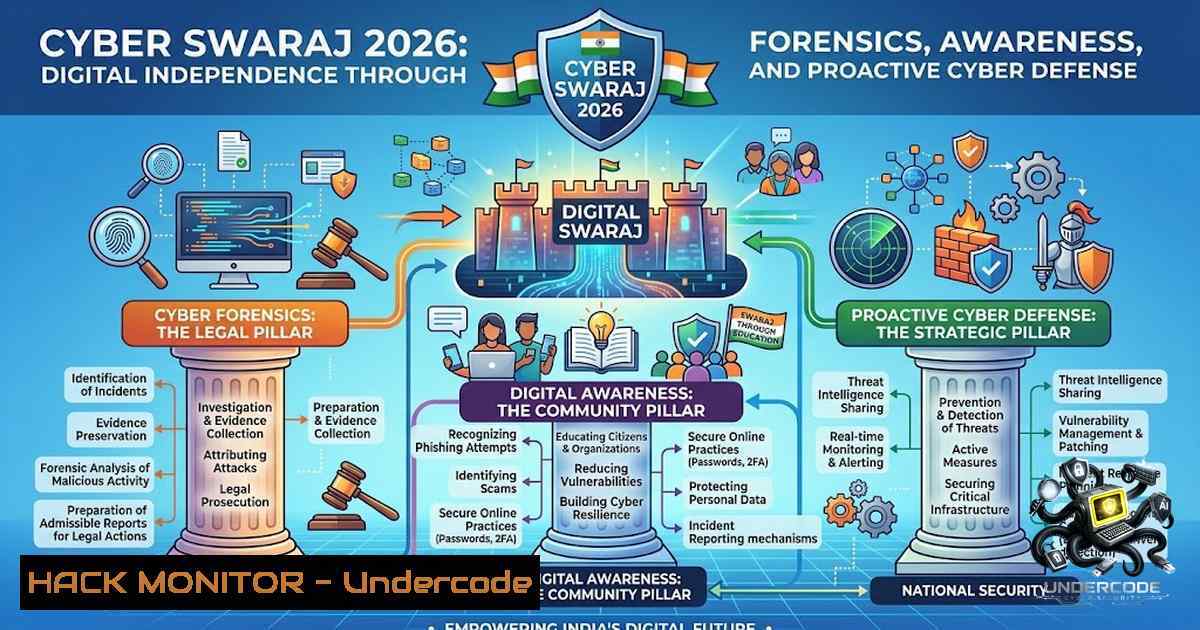
As India celebrated its 80th Independence Day on August 15, 2026, the digital frontier witnessed its own call for sovereignty through the “Cyber Swaraj 2026 FORENSICO” webinar, organized by Forensic. This event brought together leading cybersecurity educators, digital forensics investigators, and AI cyber psychologists to address the escalating threats in an increasingly interconnected world. The core message was clear: true digital independence requires a proactive defense mindset, blending technical acumen in digital forensics with widespread cyber awareness to build a resilient and informed digital citizenry.
Learning Objectives:
- Understand the core principles of digital forensics and its critical role in modern criminal investigations.
- Identify common cyber threats, including phishing, social engineering, and online scams, and learn practical prevention techniques.
- Gain actionable knowledge on building a security-aware culture, from creating strong passwords to responsible digital citizenship.
You Should Know:
1. The Art of Digital Evidence Identification
Digital forensics is the backbone of modern cybercrime investigation. It involves the systematic identification, preservation, analysis, and presentation of digital evidence. For first responders and IT professionals, the first step is often the most critical: recognizing that an incident has occurred and knowing what constitutes digital evidence. This goes beyond just seizing a suspect’s computer; it includes understanding that evidence can reside in cloud storage, email servers, GPS location data, and IoT devices. The “Cyber Swaraj” webinar emphasized that for forensic science students and professionals, mastering these identification skills is becoming as fundamental as traditional investigative techniques.
Step-by-Step Guide: Basic Digital Evidence Identification
- Preserve the Scene: Immediately isolate the device (computer, phone, server) from the network to prevent remote alteration or data wiping. Do not turn off the device if it’s running, as this could lose volatile memory (RAM) data.
- Document Everything: Create a detailed chain of custody log. Note the time, date, location, and condition of the device. Photograph the setup and all connections.
- Identify Potential Evidence Sources: Look beyond the obvious. Check for external hard drives, USB sticks, SD cards, and even smart home devices that might contain logs.
- Secure Cloud Accounts: If the investigation involves a service like Google Drive or Office 365, immediately send a legal preservation request to the provider to prevent data deletion.
- Image the Drive: Use a write-blocker to create a forensic image (a bit-for-bit copy) of the storage media. This ensures the original evidence remains untampered.
Linux Command: Creating a Forensic Disk Image
 Using 'dd' to create a bit-for-bit image of a drive (/dev/sdb) to a file.
 IMPORTANT: Ensure the drive is mounted as read-only to prevent alteration.
sudo dd if=/dev/sdb of=evidence_image.dd bs=4096 conv=noerror,sync status=progress
This command reads the input file (if), the raw disk, and writes it to an output file (of), creating a forensic image for analysis.
2. Building a Culture of Cyber Awareness
A recurring theme from speakers like Akshay K. Sharma was that technology alone cannot stop cybercrime; human awareness is the first and most vital line of defense. Akshay, a cybersecurity educator, emphasizes practical safety measures such as creating strong passwords, identifying suspicious links, and avoiding phishing attempts. The webinar highlighted that student awareness and responsible digital citizenship are crucial, especially as younger demographics enter the digital ecosystem without a full understanding of the risks. This involves not just protecting oneself but also understanding the ethical and social responsibilities of being online.
Step-by-Step Guide: Implementing a Security Awareness Program
- Assess Your Audience: Tailor training for different groups—students, non-technical staff, and IT administrators have different needs and vulnerabilities.
- Focus on Phishing: Conduct simulated phishing campaigns to teach users how to recognize and report suspicious emails. This is one of the most effective ways to build resilience.
- Promote Strong Password Hygiene: Enforce the use of long, complex passphrases and mandate multi-factor authentication (MFA) for all critical accounts.
- Create a “See Something, Say Something” Culture: Encourage employees and students to report any suspicious digital activity without fear of reprisal.
- Regular, Bite-Sized Training: Move away from annual, hour-long lectures. Instead, use short, frequent training modules that are more engaging and easier to retain.
Windows Command (PowerShell): Checking for Suspicious Logins
 This command queries the security log for failed logon attempts (Event ID 4625).
Get-WinEvent -FilterHashtable @{LogName='Security'; ID=4625} -MaxEvents 10 | Format-List TimeCreated, Message
This helps security analysts quickly identify potential brute-force attacks or unauthorized access attempts on a Windows system.
3. Leveraging Free and Accessible Cybersecurity Training
The webinar underscored the importance of continuous learning. In line with this, several free and accessible training opportunities are available globally. The InnovaCyBridge project, supported by the EIT, offers free, practical cybersecurity courses online. Modules include “Human-Centric Security & Resilience,” “Threat Detection & Digital Forensics,” and “Incident Recovery & Organisational Readiness”. Similarly, courses like AWR-427 (“Cybercrime Insight and Introduction to Digital Evidence Identification”) are offered at no cost to first responders to help them reduce cybersecurity risks. These resources are vital for professionals and students looking to build expertise in digital forensics and security operations.
- The Role of AI in Modern Cyber Defense
Experts like Shonal D, an Anti-Cybercrime Strategist and AI Cyber Psychologist, brought attention to the dual role of AI in cybersecurity. AI is a powerful tool for defense, enabling faster threat detection and automated incident response. However, it also empowers cybercriminals to create more sophisticated phishing attacks and deepfakes. Understanding this dynamic is crucial. Professionals must learn to use AI to augment their security operations centers (SOCs) while also being aware of AI-driven threats. This involves using AI for vulnerability scanning, log analysis, and predicting attack patterns before they occur.
Step-by-Step Guide: Using AI for Threat Hunting
- Data Aggregation: Collect logs from all network devices, servers, and applications into a centralized SIEM (Security Information and Event Management) system.
- Establish Baselines: Use AI/ML algorithms to learn what “normal” network behavior looks like for your organization.
- Anomaly Detection: Configure the system to alert on deviations from the baseline—such as unusual outbound data transfers or off-hours logins.
- Investigate Alerts: When an alert is triggered, use the AI’s contextual data to quickly investigate the root cause, reducing the time to respond.
- Automate Responses: For low-level, confirmed threats (like known malware signatures), automate the response to isolate the infected system without human intervention.
5. Incident Response and Organizational Resilience
Er. Mehul Dubey, a Digital Forensics Investigator and ISO 27001 Lead Auditor, highlighted the necessity of robust incident response (IR) plans. An IR plan is not just a technical document; it’s a business continuity essential. It outlines the procedures to detect, respond to, and recover from a security incident, minimizing damage and reducing recovery time and costs. The webinar stressed that organizations must move from a reactive to a proactive stance, preparing for inevitable breaches by having clear communication channels, defined roles, and regularly tested recovery procedures.
Step-by-Step Guide: Developing an Incident Response Plan
- Preparation: This is the most critical phase. Develop and document IR policies, create a communication tree, and assemble a trained incident response team.
- Identification: Use monitoring tools and user reports to detect potential incidents. Determine if an event qualifies as a security incident.
- Containment: Take immediate action to limit the scope of the breach. This could mean disconnecting infected systems from the network or blocking malicious IP addresses.
- Eradication: Find and remove the root cause of the incident, such as deleting malware or patching the vulnerability that was exploited.
- Recovery: Restore systems and data from clean backups. Bring affected systems back online carefully and monitor for any signs of recurrence.
- Lessons Learned: After the incident, conduct a thorough review. What worked? What didn’t? Update the IR plan based on these findings to improve future responses.
What Undercode Say:
- Key Takeaway 1: Digital independence in 2026 is less about technological prowess and more about cultural resilience. The “Cyber Swaraj” webinar successfully bridged the gap between technical digital forensics and public cyber awareness, proving that a secure digital future requires both skilled professionals and an informed populace.
- Key Takeaway 2: The integration of AI into cyber defense is a double-edged sword. While it offers unprecedented capabilities for threat detection and response, it also lowers the barrier to entry for cybercriminals. The future of cybersecurity lies in human-centric security—using AI to augment human decision-making, not replace it, and focusing on training individuals to be the ultimate firewall.
The event served as a powerful reminder that cybersecurity is a shared responsibility. From the forensic investigator analyzing a hard drive to the student learning to spot a phishing email, every action contributes to a safer digital ecosystem. The emphasis on free, accessible training and the collaborative spirit of the speakers underscore a vital message: in the fight against cybercrime, knowledge is our most potent weapon.
Prediction:
- +1 The emphasis on AI in cybersecurity will lead to a surge in “AI Security Analyst” roles, creating new career paths and requiring a blend of data science and security skills.
- -1 As awareness training becomes more widespread, cybercriminals will pivot to more sophisticated social engineering tactics, potentially using AI-generated deepfakes in impersonation attacks, making scams harder to detect.
- +1 The collaboration between educational institutions (like NIELIT) and industry will accelerate, leading to more standardized and practical cybersecurity curricula that better prepare students for the workforce.
- -1 The growing reliance on cloud storage and IoT devices will expand the attack surface, making digital evidence identification more complex and requiring investigators to continuously update their skills.
- +1 Free training initiatives like InnovaCyBridge will democratize cybersecurity education, helping to close the global skills gap and build a more resilient digital society.
▶️ Related Video (84% Match):
🎯Let’s Practice For Free:
🎓 Live Courses & Certifications:
Join Undercode Academy for Verified Certifications
🚀 Request a Custom Project:
Secure, high-velocity infrastructure and disruptive technological engineering. Contact our engineering team for high-tier development and proprietary systems:
[email protected]
💎 Smart Architecture | 🛡️ Secure by Design | ⭐ Trusted by Thousands
IT/Security Reporter URL:
Reported By: https://lnkd.in/p/euuThYsX – Hackers Feeds
Extra Hub: Undercode MoN
Basic Verification: Pass ✅


