Listen to this Post
Introduction:
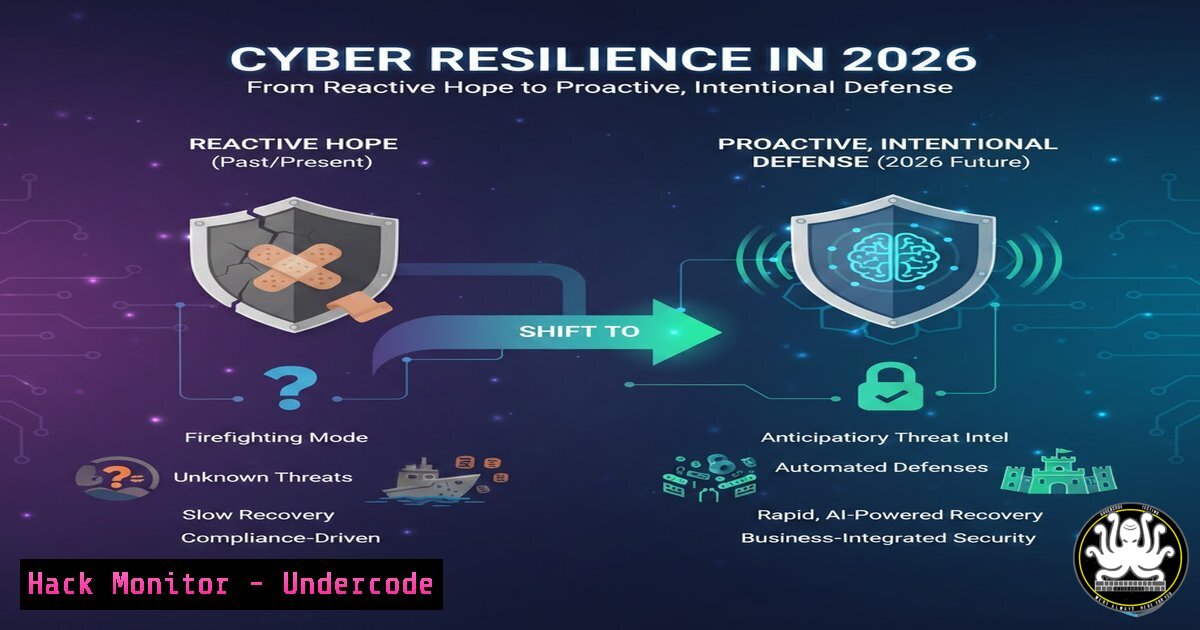
As we enter 2026, the cybersecurity landscape mirrors the reflective tone of new beginnings—past years have been marked by relentless breaches, hard-learned lessons, and demands for unprecedented resilience. This article translates the ethos of intentional growth into a actionable cybersecurity framework, moving from frantic, reactive firefighting to a strategy built on clarity, consistency, and continuous learning. The new year is not a promise of comfort but an invitation to architect more defensible systems.
Learning Objectives:
- Translate core principles of “clarity over noise” and “consistency over intensity” into practical security hardening for networks, cloud, and endpoints.
- Implement proactive monitoring and logging to shift from reacting to breaches to anticipating and mitigating threats.
- Develop a continuous learning and validation regimen through controlled penetration testing and security tooling to maintain “quiet confidence” in your security posture.
You Should Know:
- Achieving Clarity Over Noise: Centralized Logging & Threat Intelligence Filtering
The first step in operationalizing “clarity over noise” is aggregating and intelligently filtering your digital exhaust. Security teams are often drowned in alerts; true clarity comes from centralized visibility and prioritized intelligence.
Step‑by‑step guide:
Step 1: Deploy a Centralized Logging Solution.
On Linux, set up an ELK Stack (Elasticsearch, Logstash, Kibana) or a simpler `rsyslog` server. For a cloud-native approach, use AWS CloudWatch Logs, Azure Monitor, or Google Cloud Logging.
Linux Command to configure rsyslog client: Edit `/etc/rsyslog.conf` to forward logs: . @<central-log-server-ip>:514. Restart with sudo systemctl restart rsyslog.
On Windows, configure Windows Event Forwarding (WEF) to a central collector or use a SIEM agent.
Step 2: Ingest and Correlate.
Use Logstash or a SIEM (like Wazuh, Splunk, Sentinel) to parse logs from firewalls, endpoints, authentication servers, and applications. Create correlation rules to connect related events.
Step 3: Filter Noise with Threat Intelligence Feeds.
Integrate curated threat intelligence feeds (e.g., AlienVault OTX, MISP) into your SIEM. Filter out generic “noise” by creating allowlists for known-good internal IPs and blocklists for known malicious IPs/domains.
Example Rule Logic: ALERT IF: (Source IP is in Threat Intel Feed) AND (Event is "Outbound Connection to Port 443").
2. Ensuring Consistency Over Intensity: Automated Configuration Hardening
Sporadic, intense security pushes fail. Resilience is built through consistent, automated enforcement of secure baselines across all assets.
Step‑by‑step guide:
Step 1: Define a Security Baseline.
Use established standards like CIS (Center for Internet Security) Benchmarks for Windows, Linux, and cloud services (AWS, Azure, GCP).
Step 2: Automate Enforcement with Infrastructure as Code (IaC).
For cloud resources, define hardened configurations in Terraform or AWS CloudFormation templates.
Example Terraform snippet for a secure AWS S3 bucket:
resource "aws_s3_bucket" "secure_log_bucket" {
bucket = "my-secure-logs-2026"
acl = "private"

versioning {
enabled = true
}

server_side_encryption_configuration {
rule {
apply_server_side_encryption_by_default {
sse_algorithm = "AES256"
}
}
}

Block public access
block_public_acls = true
block_public_policy = true
ignore_public_acls = true
restrict_public_buckets = true
}
Step 3: Continuous Compliance Scanning.
Use tools like `Lynis` for Linux, `Microsoft Security Compliance Toolkit` for Windows, or `Prowler` for AWS to regularly scan for baseline deviations and automate remediation.
- Prioritizing Learning Over Comfort: Building a Personal Cyber Lab
“Learning over comfort” means moving out of a passive, theoretical space and into hands-on, practical experimentation in a safe environment.
Step‑by‑step guide:
Step 1: Set Up a Virtualized Lab.
Install VMware Workstation, VirtualBox, or use KVM on Linux. Allocate dedicated resources (CPU, RAM, storage).
Step 2: Deploy Vulnerable Machines & Tools.
Download intentionally vulnerable VMs from OWASP Broken Web Apps, VulnHub, or the Metasploitable series.
Install a penetration testing distribution like Kali Linux or Parrot OS as your attacker machine.
Step 3: Practice Core Techniques.
Network Enumeration: Use `nmap` to discover hosts and services: nmap -sV -sC -O <target_ip>.
Web App Testing: Use Burp Suite or OWASP ZAP to intercept and manipulate HTTP requests.
Exploit Development: Practice on buffer overflow VMs like `Brainpan` or SLMail. Use `gdb` for Linux debugging and Immunity Debugger/WinDbg for Windows.
4. Fostering Relationships Over Transactions: API Security Hardening
In modern architectures, applications “relate” via APIs. These relationships must be secured with more than just transactional TLS.
Step‑by‑step guide:
Step 1: Implement Strong Authentication & Authorization.
Move beyond basic API keys. Use OAuth 2.0 with short-lived tokens. For service-to-service communication, consider mutual TLS (mTLS) or JWT validation.
Example: Validating a JWT in a Node.js middleware:
const jwt = require('jsonwebtoken');
function authenticateToken(req, res, next) {
const authHeader = req.headers['authorization'];
const token = authHeader && authHeader.split(' ')[bash];
if (!token) return res.sendStatus(401);
jwt.verify(token, process.env.ACCESS_TOKEN_SECRET, (err, user) => {
if (err) return res.sendStatus(403);
req.user = user;
next();
});
}
Step 2: Enforce Strict Rate Limiting and Quotas.
Use API gateways (AWS API Gateway, Azure API Management, Kong) to throttle requests per client/IP to prevent denial-of-wallet and brute-force attacks.
Step 3: Schema Validation and Input Sanitization.
Validate all incoming request payloads against a strict JSON schema. Never trust client input.
- Carrying Lessons Forward, Not Resentment: Proactive Threat Hunting & Incident Retrospectives
The scars of past incidents are invaluable if analyzed objectively, not resentfully. Institutionalize this learning.
Step‑by‑step guide:
Step 1: Conduct a Proactive Hunt.
Using your SIEM, hypothesize based on past attacks (e.g., “An attacker who phished a user may move laterally via RDP”). Query for anomalies:
Linux Command to audit failed logins: grep "Failed password" /var/log/auth.log | awk '{print $11}' | sort | uniq -c | sort -nr.
Windows PowerShell to check for unusual service creations: Get-WinEvent -FilterHashtable @{LogName='Security'; ID=4697} | Select-Object TimeCreated, Message.
Step 2: Run a Blameless Post-Mortem.
After any security event, gather stakeholders. Use a template: Timeline, Root Cause, Impact, Detection Gaps, Corrective Actions (short & long-term). Focus on process and technology failures, not individuals.
Step 3: Update Playbooks and Automate Detection.
Translate hunt queries and post-mortem findings into new automated correlation rules and incident response runbooks. This “carries the lesson forward.”
What Undercode Say:
- Intentional Architecture Beats Reactive Panic: The shift from “hope” to “intentional choice” is the core of modern cyber defense. It’s the difference between praying your firewall holds and having automated, immutable infrastructure deployed via code.
- Resilience is a Continuous Feedback Loop: The principles of clarity, consistency, and learning form a virtuous cycle. Logging provides clarity, which informs consistent hardening, which is tested through continuous learning (labs, hunting), which in turn improves clarity.
The post’s philosophical call for “quiet confidence” is the ultimate security goal. It’s not the absence of threats, but the proven, tested knowledge that your systems are observant, hardened, and capable of enduring and evolving from attacks. This mindset, backed by the technical processes outlined, transforms cybersecurity from a cost center fueled by fear into a strategic enabler built on competence.
Prediction:
By the end of 2026, organizations that have successfully operationalized this “intentional defense” model will see a measurable divergence from their peers. They will experience shorter mean-time-to-detect (MTTD) and mean-time-to-respond (MTTR) due to superior clarity. Their blast radius from incidents will be minimized by consistent hardening and segmentation. Furthermore, they will adapt faster to novel threats (e.g., AI-powered phishing, supply chain attacks) because their culture of “learning over comfort” embeds continuous adaptation into their security DNA. The gap will widen not due to a single tool, but because their entire security lifecycle is a disciplined, learning-oriented system.
▶️ Related Video (86% Match):
🎯Let’s Practice For Free:
IT/Security Reporter URL:
Reported By: Activity 7412304096126222336 – Hackers Feeds
Extra Hub: Undercode MoN
Basic Verification: Pass ✅


