Listen to this Post
Introduction:
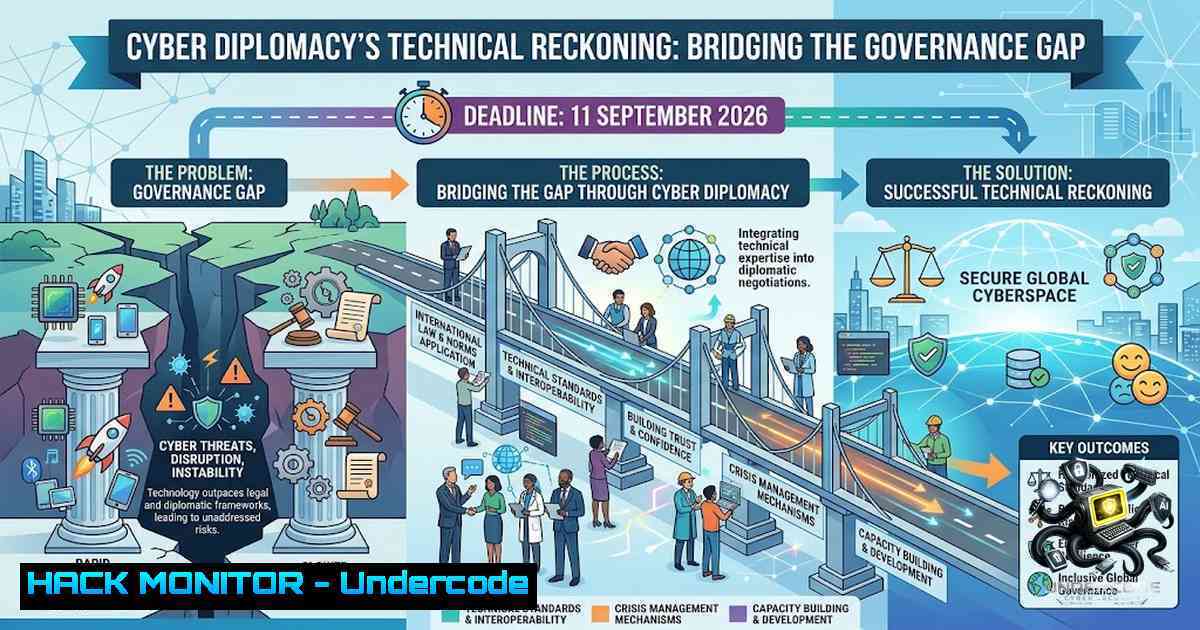
As nation-state cyber threats grow in scale, severity, and sophistication—with ENISA documenting over 11,000 incidents between 2023 and 2024 alone—the gap between diplomatic intent and technical reality has become a critical vulnerability. The 5th EU CyberNet Summer School, held from 29–31 July 2026 in Florence under the theme “Cyber Diplomacy: From Norms to Actions – Governing Cyberspace in a Fractured World,” brought together international experts to confront this disconnect. With the Cyber Resilience Act’s vulnerability reporting deadline approaching on 11 September 2026, the question is no longer whether regulations will change—but whether technical experts will be given real co-authorship of cyber governance before the text is final.
Learning Objectives:
- Understand the structural gap between cyber diplomacy frameworks and technical implementation realities
- Master the EU Cyber Diplomacy Toolbox, sanctions regime, Cyber Blueprint, and their operational implications
- Prepare for the 11 September 2026 CRA vulnerability reporting deadline with actionable technical guidance
You Should Know:
- The Cyber Diplomacy Toolbox: From Sanctions to Technical Response
The EU Cyber Diplomacy Toolbox (CDT) enables the EU and its Member States to deploy all Common Foreign and Security Policy measures to prevent, deter, and respond to malicious cyber activities. First established in 2017 and revised in 2024, the CDT encompasses diplomatic, political, and economic measures—including targeted sanctions—that can be deployed in response to cyberattacks against Member States or critical infrastructure. Since its inception, the Toolbox has been used on multiple occasions, from issuing public statements to exposing malicious activities to implementing the horizontal cyber sanctions regime.
The Cyber Blueprint, adopted in June 2025, builds on the CDT to close interoperability gaps among Member States’ cybersecurity systems during crises. It strengthens technical and operational readiness by leveraging the European Cyber Crisis Liaison Organization Network (EU-CyCLONe), which links national authorities and technical teams to maintain communication and rapidly share information during cross-border attacks. The Blueprint aligns with existing policies including NIS2, the Cyber Solidarity Act, and the Integrated Political Crisis Response mechanism.
Step‑by‑Step Guide: Navigating the EU Cyber Diplomacy Framework
For security professionals advising clients on EU regulatory compliance, understanding the diplomatic intent behind regulatory text is essential. Here’s how to operationalise this knowledge:
- Map the regulatory landscape – Identify which instruments apply to your organisation: NIS2 for operational security of essential entities, CRA for products with digital elements, DORA for financial services, and the CDT for diplomatic and sanctions exposure.
-
Understand the sanctions mechanism – The horizontal cyber sanctions regime allows the EU to impose restrictive measures against individuals or entities responsible for cyberattacks with significant impact. Review Council Decision (CFSP) 2019/797 and its implementing guidelines.
-
Integrate Blueprint procedures – Ensure your incident response plan aligns with the Blueprint’s common procedures and shared terminology for joint responses. This includes understanding how information flows through EU-CyCLONe during cross-border incidents.
-
Monitor diplomatic signals – Track EU Council statements and sanctions listings. Attribution decisions often precede regulatory enforcement actions. The CDT enables collective attribution and the imposition of restrictive measures as tools to raise the “cost” of aggressive behaviour.
-
Document for multiple audiences – Technical reports must be structured for both CSIRT consumption and diplomatic use. The CRA’s Single Reporting Platform will route reports simultaneously to national CSIRTs and ENISA.
-
The September 2026 Deadline: CRA Vulnerability Reporting Goes Live
From 11 September 2026, 14 of Regulation (EU) 2024/2847—the Cyber Resilience Act—becomes enforceable. Every manufacturer placing a product with digital elements on the EU market must file a structured early warning within 24 hours of becoming aware of an actively exploited vulnerability or a severe incident impacting product security. The receiving system is the Single Reporting Platform (SRP), a federated portal operated by ENISA.
The reporting obligation applies to any manufacturer, irrespective of where they are established, with no de minimis exception based on revenue or company size. “Actively exploited” is defined as a vulnerability for which there is reliable evidence that a malicious actor has executed code without permission, or has accessed, modified, or disrupted systems, services, or data. A single proof-of-concept demonstrably used in the wild qualifies—theoretical exploits, even with high CVSS scores, do not.
The reporting cadence is three-stage:
- Early warning: within 24 hours
- Incident notification: within 72 hours
- Final report: within 14 days for vulnerabilities (one month for severe incidents)
Step‑by‑Step Guide: Preparing for CRA Compliance
- Inventory all products with digital elements – Catalogue every hardware and software product placed on the EU market. Gateways, sensors, controllers, routers, and equipment behind them all fall within scope. Open source software stewards have narrower obligations—notifying only severe incidents affecting software security.
-
Implement vulnerability monitoring – Establish continuous monitoring to detect active exploitation. The 24-hour clock starts when the manufacturer becomes aware—interpreted as “first knowledge that meets a reasonable threshold of plausibility,” not formal confirmation by an incident response team.
-
Build reporting pipelines – The SRP collapses what could have been 27 national filing systems into a single interface. However, operational demands are significant. Prepare structured reports that can be filed once and routed simultaneously to the CSIRT of the manufacturer’s main establishment and to ENISA.
-
Train incident response teams – NIS2 makes management bodies personally responsible for approving and overseeing security measures. Fines reach €10 million or 2% of global turnover. Ensure your team can meet the 24-hour, 72-hour, and one-month reporting windows.
-
Align with NIS2 requirements – 21 of NIS2 sets out ten minimum security measures covering risk analysis, incident handling, business continuity, supply chain security, access control, encryption, and multi-factor or continuous authentication. These are outcomes-based—the law tells you what to achieve, not which technology to buy.
Linux Command Reference: Vulnerability Assessment and Log Analysis
 Check for suspicious processes and active connections
ps aux --sort=-%mem | head -20
ss -tulpn | grep ESTABLISHED

Monitor system logs for exploitation indicators
journalctl -f -p err -1 100
grep -r "error|failed|unauthorized" /var/log/ --color=always | tail -50

Identify vulnerable packages (Debian/Ubuntu)
apt list --upgradable
debsecan --suite=$(lsb_release -cs) --format=html

For RHEL/CentOS/Fedora
yum list updates
dnf check-update

File integrity monitoring baseline
aide --init
mv /var/lib/aide/aide.db.new.gz /var/lib/aide/aide.db.gz
aide --check

Network scanning for exposed services
nmap -sV -p- --open <target-ip>
Windows Command Reference: Security Monitoring and Compliance
 Check running processes and network connections
Get-Process | Sort-Object -Property CPU -Descending | Select-Object -First 20
netstat -anob | Select-String "LISTENING|ESTABLISHED"

Review security event logs
Get-WinEvent -LogName Security -MaxEvents 100 | Where-Object {$<em>.Id -in @(4624,4625,4672,4688)}
Get-WinEvent -LogName System -MaxEvents 50 | Where-Object {$</em>.LevelDisplayName -eq "Error"}

Check for unpatched vulnerabilities (requires PSWindowsUpdate module)
Get-WindowsUpdate -IsInstalled | Where-Object {$_.IsHidden -eq $false} | Sort-Object Date

Audit local security policy
secedit /export /cfg C:\secpol.cfg
Get-Content C:\secpol.cfg | Select-String "PasswordComplexity|MinimumPasswordLength|LockoutThreshold"

Windows Defender and AMSI scanning
Start-MpScan -ScanType FullScan
Get-MpThreatDetection | Where-Object {$_.Resources -like "exploit"}
- DORA, NIS2, and the CRA: Navigating the Regulatory Trio
DORA (Digital Operational Resilience Act) is already live for financial services, with first enforcement waves in 2026. NIS2 first audits begin in June 2026. The CRA’s first mandatory reporting obligations fire in September 2026. The parallel adoption of substantial EU horizontal legislation introduces risks of overlap and fragmentation. Organisations must harmonise compliance across these frameworks.
Step‑by‑Step Guide: Harmonising DORA, NIS2, and CRA Compliance
- Map overlapping requirements – DORA applies to financial entities with ICT risk management, incident reporting, and resilience testing. NIS2 covers essential and important entities across 18 sectors. The CRA applies to manufacturers of products with digital elements. Identify which frameworks apply to each business unit.
-
Establish unified incident reporting – The CRA’s SRP will route reports to CSIRTs and ENISA. NIS2 requires significant incident reporting within 24 hours. DORA mandates ICT-related incident reporting to competent authorities. Build a single pipeline that satisfies all three.
-
Conduct gap analysis – Compare current security controls against NIS2 21 measures, DORA’s ICT risk management requirements, and CRA’s secure-by-design mandates. Address gaps before audits begin.
-
Document technical implementation – CRA requires documented processes for receiving and fixing reported vulnerabilities. NIS2 requires evidence of risk analysis, incident handling, and business continuity measures. DORA requires comprehensive ICT documentation. Centralise documentation.
-
Prepare for management accountability – NIS2 20 holds management bodies personally accountable for cybersecurity risk management. Ensure board-level oversight and documented approval of security measures.
-
Technical Reality vs. Political Possibility: The AI Governance Gap
The panel “Coding Norms: Connecting Cyber Diplomacy with Technical Reality” raised a critical question: where do technical reality and political possibility meet, and where do they collide? Diplomats tend to regulate what they understood at the start of a negotiation—not what exists by the end of it. As AI empowers new threats, this lag has consequences.
Step‑by‑Step Guide: Preparing for AI-Enabled Cyber Threats
- Understand the threat landscape – AI enables automated vulnerability discovery, sophisticated phishing, and adaptive malware. Monitor ENISA Threat Landscape reports for emerging AI-driven threats.
-
Implement AI-specific controls – Secure AI supply chains, monitor model integrity, and implement adversarial robustness testing. The EU AI Act adds another layer of compliance.
-
Prepare for diplomatic attribution – AI-enabled attacks complicate attribution. Understand how the Cyber Diplomacy Toolbox handles attribution and sanctions.
-
Build technical expert co-authorship – Ensure technical experts are involved in regulatory drafting, not just consulted when the text is almost final. This makes regulation and directives more actionable.
-
The EU CyberNet Summer School: Operationalising Cyber Diplomacy
The EU CyberNet Summer School aimed to equip Expert Pool members with strategic, legal, and practical tools to strengthen project partner countries’ cyber diplomacy capacity. The programme included understanding the UN Global Permanent Mechanism, bridging the gap between norms and practice, and operationalising the Cyber Diplomacy Toolbox. Using a train-the-trainer approach, up to 20 experts were trained to transfer knowledge in future EU CyberNet missions.
Key takeaways from the Scenario Exercise:
- Live negotiation of contested draft text reveals procedural challenges
- Cyber diplomacy faces significant transformation challenges despite progress
- The gap between technical reality and diplomatic understanding widens with AI
Step‑by‑Step Guide: Engaging with EU Cyber Diplomacy Initiatives
- Join the EU CyberNet Expert Pool – The Summer School is open to members of the Expert Pool only. Application calls are announced periodically.
-
Monitor EU Cyber Direct – The EU Cyber Direct – EU Cyber Diplomacy Initiative convenes dialogues and publishes guidance. The 7th European Cyber Diplomacy Dialogue addressed key challenges shaping the cyber diplomacy agenda in 2026.
-
Engage with national authorities – NIS2 transposition runs through national law. Engage with national supervisory authorities to understand local implementation.
-
Participate in multi-stakeholder forums – The UN Framework of Responsible State Behaviour in Cyberspace includes four pillars: application of international law, voluntary norms, confidence-building measures, and cyber capacity building. Engage in these processes.
What Undercode Say:
Key Takeaway 1 – The gap between diplomatic intent and technical reality is widening, and AI will accelerate this divergence. Technical experts must demand real co-authorship of cyber governance, not just a seat at the table when the text is almost final.
Key Takeaway 2 – The 11 September 2026 CRA deadline is not a future concern—it is a present imperative. Organisations must build vulnerability monitoring, reporting pipelines, and incident response capabilities now, or face fines up to 2.5% of global turnover and management liability.
Analysis: The Florence Summer School exposed a fundamental tension in EU cyber governance: diplomats negotiate based on the technical landscape as they understood it at the start of a process, not as it exists by the end. This “regulatory lag” has consequences—especially as AI empowers new threat vectors that outpace traditional diplomatic frameworks. The CRA’s vulnerability reporting deadline represents a concrete attempt to bridge this gap, but it requires technical experts to operationalise diplomatic intent. For clients implementing DORA, NIS2, and CRA, understanding the diplomatic intent behind regulatory text makes compliance more actionable. The real question is whether the EU will give technical experts genuine co-authorship of cyber governance—not just consultation—before the next wave of AI-enabled threats makes the current frameworks obsolete. The September 2026 deadline is the first stress test.
Expected Output:
Introduction:
The gap between cyber diplomacy frameworks and technical implementation is no longer an academic concern—it is a critical vulnerability. As the EU CyberNet Summer School in Florence demonstrated, diplomats regulate based on the technical reality they understood at the start of a negotiation, not what exists by the end. With the Cyber Resilience Act’s vulnerability reporting deadline approaching on 11 September 2026, technical experts must demand real co-authorship of cyber governance.
What Undercode Say:
- Technical experts must be given real co-authorship of cyber governance, not just a seat at the table when the text is almost final.
- The 11 September 2026 CRA deadline requires immediate action—build monitoring, reporting, and incident response capabilities now.
Prediction:
- +1 The CRA’s Single Reporting Platform will set a global benchmark for coordinated vulnerability disclosure, influencing regulations beyond the EU.
- +1 Technical experts who engage early with diplomatic processes will gain competitive advantage in regulatory compliance advisory.
- -1 The regulatory lag between diplomatic intent and technical reality will widen as AI-enabled threats outpace governance frameworks.
- -1 Organisations that fail to meet the September 2026 deadline will face significant fines and management liability, creating a wave of enforcement actions.
- +1 The EU CyberNet train-the-trainer approach will build a global network of cyber diplomats capable of operationalising norms.
- -1 Fragmentation across NIS2, DORA, and CRA compliance will create operational complexity and overlapping reporting burdens.
- +1 AI governance will force closer integration between technical and diplomatic communities, accelerating the co-authorship model.
▶️ Related Video (80% Match):
🎯Let’s Practice For Free:
🎓 Live Courses & Certifications:
Join Undercode Academy for Verified Certifications
🚀 Request a Custom Project:
Secure, high-velocity infrastructure and disruptive technological engineering. Contact our engineering team for high-tier development and proprietary systems:
[email protected]
💎 Smart Architecture | 🛡️ Secure by Design | ⭐ Trusted by Thousands
IT/Security Reporter URL:
Reported By: Eric Cisse – Hackers Feeds
Extra Hub: Undercode MoN
Basic Verification: Pass ✅


