Listen to this Post
Introduction:
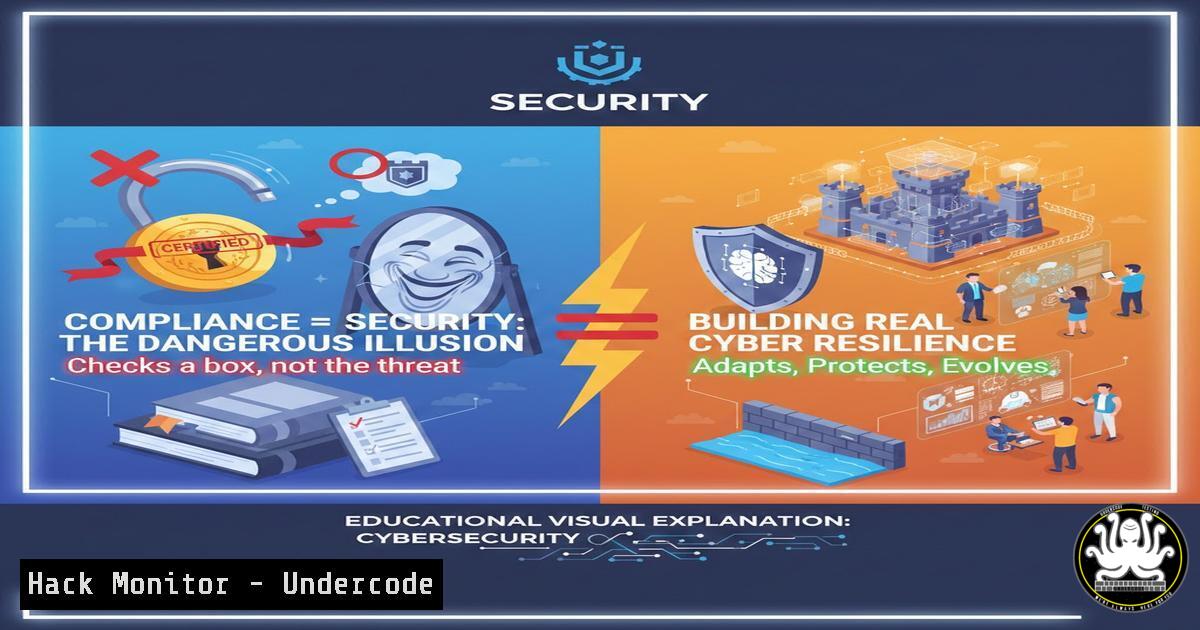
In the evolving cybersecurity landscape, a critical misconception persists: that regulatory compliance equates to robust security. While frameworks like NIS2, GDPR, and ISO 27001 provide essential baselines and demonstrate due diligence, they represent a minimum standard, not a finish line. True security is a continuous, proactive, and often technical journey that goes far beyond checking boxes and obtaining certificates, requiring dedicated budget, strategic implementation, and ongoing employee vigilance.
Learning Objectives:
- Understand the fundamental difference between compliance (meeting external requirements) and security (managing actual risk).
- Learn practical, technical steps to build security that surpasses compliance checklists.
- Implement continuous monitoring and hardening measures for core systems (Linux/Windows, Cloud, API).
You Should Know:
- The Budget & Training Paradox: From Compliance Check to Security Investment
The comment highlights a pivotal issue: budgets often fund compliance paperwork rather than security tools and training. Compliance mandates training attestations, but security requires behavioral change. The step-by-step process involves reallocating resources to actionable defense.
Step‑by‑step guide:
Audit Current Spend: Categorize last year’s security budget: percentage on consultants/audits vs. tools/engineering/effective training platforms.
Implement Phishing Simulations: Move beyond basic awareness videos. Use open-source tools like Gophish to run controlled campaigns and measure click rates.
Command to launch a Gophish container: `docker run -d -p 3333:3333 -p 8080:8080 gophish/gophish`
Mandate Hands-On Training: Enroll key IT staff in platform-based cyber ranges (e.g., TryHackMe, HackTheBox) and mandate completion of specific paths like “Pre Security” or “SOC Level 1.”
2. System Hardening: Beyond Compliance Baselines
Compliance may require a “hardening standard,” but security requires its continuous validation and enhancement. Automated configuration enforcement is key.
Step‑by‑step guide:
Linux (CIS Benchmark Enforcement): Use tools like `lynis` for auditing and `ansible` for remediation.
Audit Command: `sudo lynis audit system`
Example Ansible task to ensure SSH Protocol 2 is used:
- name: Harden SSH configuration
ansible.builtin.lineinfile:
path: /etc/ssh/sshd_config
regexp: '^Protocol'
line: 'Protocol 2'
notify: restart sshd
Windows (Implement LAPS): Go beyond complex password policies. Deploy Local Administrator Password Solution (LAPS) to prevent lateral movement by randomizing local admin passwords.
PowerShell to check LAPS status: `Get-ADComputer -Identity
3. Supply Chain & NIS2 Ripple Effect: Securing Your Extended Network
As noted, NIS2’s impact will ripple through supply chains. Security requires you to assess and elevate your partners’ posture, not just your own compliance.
Step‑by‑step guide:
Map Your Digital Supply Chain: Inventory all third parties with network/data access (SaaS, APIs, vendors).
Enforce Security Questionnaires & Evidence: Use standardized frameworks (SIG, CAIQ). Require evidence like penetration test reports, not just compliance certificates.
Monitor for Breaches: Integrate third-party risk feeds (e.g., HaveIBeenPwned’s Domain Search for vendor domains, OSINT tools) into your threat intelligence.
4. API Security: The Invisible Perimeter
Compliance may focus on network firewalls, but modern breaches target APIs. Security requires specific API threat modeling and protection.
Step‑by‑step guide:
Inventory & Catalog: Use tools like `OWASP Amass` in passive mode to discover APIs: `amass enum -passive -d yourdomain.com -json apis.json`
Test for Critical Flaws: Beyond compliance scans, test for business logic flaws (excessive data exposure, broken object-level authorization) using tools like `Postman` or `Burp Suite` with custom scripts.
Implement Strict Rate Limiting & JWT Validation: Enforce limits per client/API key, not just IP. Validate JWT signatures and ensure tokens are bound to the correct user context.
- Continuous Vulnerability Management: From Quarterly Scans to Real-Time Patching
Compliance often mandates “regular” scans. Security requires integrating vulnerability data into the DevOps lifecycle and prioritizing exploitability.
Step‑by‑step guide:
Integrate SAST/SCA into CI/CD: Use tools like `Trivy` or `Semgrep` in build pipelines to fail builds on critical vulnerabilities.
Example GitLab CI Job:
container_scan:
stage: test
image: aquasec/trivy:latest
script:
- trivy image --exit-code 1 --severity CRITICAL,HIGH $CI_REGISTRY_IMAGE:$CI_COMMIT_SHA
Prioritize via Threat Feeds: Correlate internal scan results (e.g., from Tenable, Qualys) with external feeds like CISA’s Known Exploited Vulnerabilities (KEV) catalog to patch what’s actively being used in attacks first.
6. Cloud Hardening: Shared Responsibility in Action
Compliance (like SOC2) attests to cloud controls. Security requires configuring those controls properly, as misconfiguration is the leading cloud risk.
Step‑by‑step guide:
Enforce Infrastructure as Code (IaC) Scans: Scan Terraform/CloudFormation templates before deployment with `checkov` or tfsec.
Command: `checkov -d /path/to/terraform/code`
Minimize IAM Permissions: Implement the principle of least privilege using tools like `AWS IAM Access Analyzer` or GCP Policy Intelligence. Regularly review and remove unused roles and permissions.
Enable Immutable Logging: Ensure all admin activity and data access logs are sent to a centralized, immutable storage account (e.g., AWS S3 with Object Lock) that the cloud team cannot alter.
What Undercode Say:
- Compliance is a Snapshot, Security is a Live Stream. Relying on an annual audit report is like driving while only looking in the rearview mirror. Real security demands real-time telemetry, continuous validation, and adaptive controls that respond to the current threat landscape, not last year’s framework.
- The Human Firewall is Built by Practice, Not Paper. A filed training certificate is a compliance artifact. A team that can recognize and respond to a novel phishing attempt or a suspicious API call is a security outcome. Investment must shift to creating that muscle memory through simulation and hands-on practice.
Analysis: The post and comments pinpoint a systemic failure in risk management. Organizations are incentivized to minimize regulatory penalty over maximizing security posture. This creates a “compliance ceiling” where effort stops once the audit is passed, leaving advanced persistent threats (APTs) and novel attacks completely undeterred. The path forward requires CISOs to technically translate compliance requirements into superior security controls (e.g., using NIS2’s training mandate to fund phishing simulators and cyber ranges) and to communicate risk in business terms, showing that security investments protect revenue and brand, not just check a box.
Prediction:
The gap between compliance and security will become a primary attack vector. Threat actors will increasingly target “compliant” organizations, exploiting the known weaknesses between the checklist and reality—like poorly configured cloud storage, unmonitored APIs, and untrained employees. This will lead to a wave of breaches where companies are found “compliant but negligent,” driving a shift in legal and insurance landscapes. Within 3-5 years, we predict the rise of real-time security attestation standards, powered by continuous monitoring and AI-driven analysis, that will render static annual audits obsolete and finally align compliance objectives with genuine security postures.
🎯Let’s Practice For Free:
IT/Security Reporter URL:
Reported By: Serge Misik – Hackers Feeds
Extra Hub: Undercode MoN
Basic Verification: Pass ✅


