Listen to this Post
Introduction:
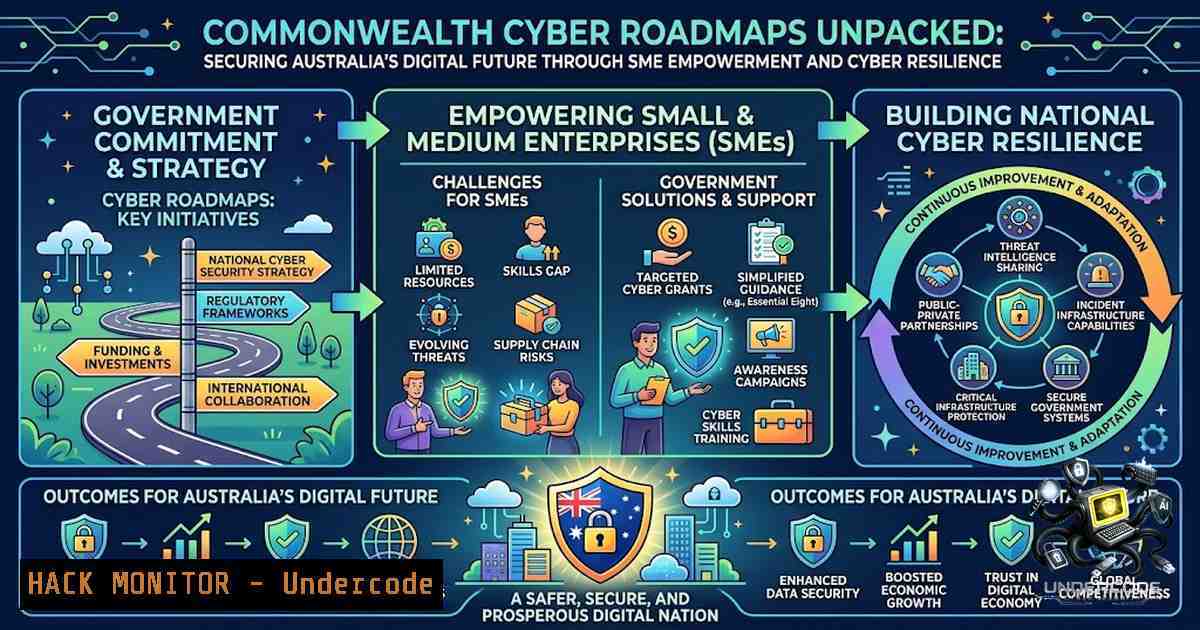
The Australian Government’s FY2026–2027 Budget has unveiled a comprehensive cyber security program of work across Commonwealth agencies, creating unprecedented opportunities for small and medium enterprises (SMEs) to engage with federal procurement pipelines. As the nation accelerates its digital transformation journey, understanding the intersection of Commonwealth Procurement Rules (CPRs), organisational maturity frameworks, and practical security implementation has become mission-critical for businesses seeking government contracts. This article unpacks the technical and strategic dimensions of the Commonwealth Cyber & Digital Roadmaps, providing actionable insights for cybersecurity professionals, IT leaders, and SMEs aiming to navigate Australia’s evolving cyber landscape.
Learning Objectives:
- Understand the technical requirements and security controls mandated by Commonwealth cyber programs for SME suppliers
- Master the application of CPRs and proportionality principles in government procurement contexts
- Implement practical security hardening measures across Linux, Windows, and cloud environments aligned with federal standards
- Develop organisational maturity frameworks that demonstrate value for money and ethical engagement
- Configure email authentication (SPF, DKIM, DMARC) and DNS hardening to reduce phishing and spoofing threats
You Should Know:
- Commonwealth Cyber Program of Work: Technical and Procurement Landscape
The Commonwealth Cyber & Digital Roadmaps Unpacked forum, hosted by the Canberra Cyber Hub at the Shine Dome on 11 August 2026, brings together industry leaders and government representatives to explore cyber security programs announced in the FY2026–2027 Budget. Key federal agencies including the Australian Taxation Office (ATO) and Services Australia are prioritising cyber security procurement, with a focus on how SMEs can successfully engage with government buyers and delivery partners.
The cyber security program of work across Commonwealth agencies encompasses several critical domains: identity and access management, data protection, network security, incident response, and supply chain risk management. For SMEs, this translates into a requirement to demonstrate alignment with the Australian Government’s Protective Security Policy Framework (PSPF) and the Information Security Manual (ISM).
To prepare for Commonwealth procurement, organisations should implement the following technical controls:
Linux Hardening Commands:
 Audit system for vulnerabilities
sudo apt-get update && sudo apt-get upgrade -y
sudo apt-get install lynis -y
sudo lynis audit system

Configure firewall (iptables)
sudo iptables -A INPUT -m state --state ESTABLISHED,RELATED -j ACCEPT
sudo iptables -A INPUT -p tcp --dport 22 -j ACCEPT  SSH
sudo iptables -A INPUT -p tcp --dport 443 -j ACCEPT  HTTPS
sudo iptables -A INPUT -j DROP
sudo iptables-save > /etc/iptables/rules.v4

Enable SELinux/AppArmor
sudo apt-get install apparmor apparmor-utils -y
sudo aa-enforce /etc/apparmor.d/
sudo systemctl enable apparmor

Harden SSH configuration
sudo sed -i 's/PermitRootLogin prohibit-password/PermitRootLogin no/' /etc/ssh/sshd_config
sudo sed -i 's/PasswordAuthentication yes/PasswordAuthentication no/' /etc/ssh/sshd_config
sudo systemctl restart sshd

Install and configure fail2ban
sudo apt-get install fail2ban -y
sudo systemctl enable fail2ban
sudo systemctl start fail2ban
Windows Security Configuration (PowerShell):
 Enable Windows Defender and real-time protection
Set-MpPreference -DisableRealtimeMonitoring $false
Set-MpPreference -DisableBehaviorMonitoring $false
Set-MpPreference -DisableBlockAtFirstSeen $false
Set-MpPreference -DisableIOAVProtection $false

Configure Windows Firewall
New-1etFirewallRule -DisplayName "Block All Inbound" -Direction Inbound -Action Block
New-1etFirewallRule -DisplayName "Allow RDP" -Direction Inbound -Protocol TCP -LocalPort 3389 -Action Allow
New-1etFirewallRule -DisplayName "Allow HTTPS" -Direction Inbound -Protocol TCP -LocalPort 443 -Action Allow

Enable BitLocker encryption
Manage-bde -on C: -RecoveryPassword -SkipHardwareTest

Configure Windows Update
Set-MpPreference -DisableAutoExclusions $false
2. Commonwealth Procurement Rules (CPRs) and Proportionality Principles
Understanding the Commonwealth Procurement Rules (CPRs) is essential for SMEs seeking government contracts. The principle of proportionality requires that the level of security and compliance demanded of suppliers must be proportionate to the value and risk of the procurement.
Key considerations for SMEs:
- Value for Money: Demonstrate cost-effective security solutions without over-engineering
- Organisational Maturity: Show evidence of established security policies, incident response plans, and continuous improvement
- Ethical Engagement: Maintain transparent communication and adhere to probity requirements
Step-by-Step Guide: Implementing a Proportional Security Framework
- Conduct a Risk Assessment: Identify assets, threats, and vulnerabilities specific to your organisation
- Map Controls to ISM: Align security controls with the Australian Government’s Information Security Manual
- Document Policies: Create and maintain security policies covering access control, data classification, and incident response
- Implement Continuous Monitoring: Deploy SIEM tools and conduct regular vulnerability scans
- Prepare for Audits: Maintain logs and evidence of security controls for Commonwealth reviews
3. Email Authentication and DNS Hardening
According to internal data from cybersecurity firms, aligning SPF, DKIM, and DMARC records can reduce phishing, spoofing, and spam threats by up to 87%. This is a critical requirement for organisations engaging with government agencies.
Step-by-Step Guide: Configuring Email Authentication
- SPF (Sender Policy Framework) : Define which servers are authorised to send email from your domain
v=spf1 mx include:spf.protection.outlook.com -all
- DKIM (DomainKeys Identified Mail) : Generate and publish a DKIM key pair
 Generate DKIM keys (Linux)
sudo apt-get install opendkim opendkim-tools -y
sudo opendkim-genkey -t -s default -d yourdomain.com
 Add the generated DNS record to your domain
 TXT record: default._domainkey.yourdomain.com
- DMARC (Domain-based Message Authentication, Reporting & Conformance) : Publish a DMARC policy
v=DMARC1; p=reject; rua=mailto:[email protected]; ruf=mailto:[email protected]; pct=100
4. Verify Configuration :
 Use dig to verify DNS records
dig TXT yourdomain.com
dig TXT _dmarc.yourdomain.com
4. Cloud Hardening and API Security
Commonwealth agencies increasingly rely on cloud services and APIs. Securing these environments is paramount.
AWS Security Commands (AWS CLI):
 Enable CloudTrail for auditing
aws cloudtrail create-trail --1ame my-trail --s3-bucket-1ame my-bucket --is-multi-region-trail

Configure S3 bucket policies to block public access
aws s3api put-public-access-block --bucket my-bucket --public-access-block-configuration "BlockPublicAcls=true,IgnorePublicAcls=true,BlockPublicPolicy=true,RestrictPublicBuckets=true"

Enable encryption for S3 buckets
aws s3api put-bucket-encryption --bucket my-bucket --server-side-encryption-configuration '{"Rules":[{"ApplyServerSideEncryptionByDefault":{"SSEAlgorithm":"AES256"}}]}'

Configure security groups to restrict access
aws ec2 authorize-security-group-ingress --group-id sg-12345678 --protocol tcp --port 22 --cidr 192.168.1.0/24
Azure Security Commands (Azure CLI):
 Enable Azure Security Center
az security auto-provisioning-setting update --1ame default --auto-provision On

Configure network security groups
az network nsg rule create --1sg-1ame myNSG --1ame AllowSSH --protocol Tcp --direction Inbound --priority 100 --source-address-prefixes 192.168.1.0/24 --source-port-ranges '' --destination-address-prefixes '' --destination-port-ranges 22 --access Allow

Enable Azure Defender
az security pricing create -1 VirtualMachines --tier Standard
API Security Best Practices:
- Implement OAuth 2.0 and OpenID Connect for authentication
- Use API keys with strict rate limiting
- Validate and sanitise all input parameters
- Implement proper logging and monitoring for API calls
5. Building Organisational Maturity for Government Engagement
The Commonwealth Cyber & Digital Roadmaps forum emphasises the importance of building organisational maturity and demonstrating value for money. This involves:
Step-by-Step Guide: Organisational Maturity Framework
- Establish a Security Governance Structure: Define roles, responsibilities, and reporting lines
- Develop a Cybersecurity Strategy: Align with the Australian Cyber Security Strategy 2023-2030
- Implement a Risk Management Framework: Use ISO 31000 or the Australian Government’s risk management guidelines
- Conduct Regular Training and Awareness: Ensure all staff understand their security responsibilities
- Engage with the Ecosystem: Join organisations like the Canberra Cyber Hub to stay informed and connected
6. Incident Response and Ethical Engagement
Ethical engagement and navigating government procurement processes are key themes of the forum. Organisations must demonstrate the ability to respond to security incidents effectively.
Linux Incident Response Commands:
 Check running processes
ps aux | grep -v root

Examine network connections
netstat -tulpn
ss -tulpn

Review system logs
journalctl -xe
tail -f /var/log/syslog

Check for unauthorised user accounts
cat /etc/passwd | grep -v nologin

Verify file integrity (using AIDE)
sudo apt-get install aide -y
sudo aideinit
sudo aide --check
Windows Incident Response Commands (PowerShell):
 Get running processes
Get-Process

Check network connections
Get-1etTCPConnection

Review event logs
Get-WinEvent -LogName Security -MaxEvents 100

Check for scheduled tasks
Get-ScheduledTask

Verify user accounts
Get-LocalUser
What Undercode Say:
- The Ecosystem Approach is Critical: The convergence of workspace communities, cyber hubs, and government forums creates a unique environment for knowledge sharing and collaboration. Organisations that actively participate in these ecosystems gain early insights into procurement opportunities and emerging threats.
-
SMEs Must Prioritise Compliance Early: With the Commonwealth Cyber & Digital Roadmaps Unpacked forum highlighting opportunities for SMEs, organisations should begin aligning with ISM and PSPF requirements immediately. Waiting until the procurement stage is too late.
-
Technical Implementation Must Be Strategic: While technical controls like email authentication and DNS hardening are essential, they must be implemented within a broader strategic framework that demonstrates organisational maturity and value for money.
-
The Cyber Security Act 2024 Sets the Baseline: Compliance with the Cyber Security Act 2024 and the Cyber Security (Security Standards for Smart Devices) Rules 2025 is becoming mandatory, and organisations must prepare for these requirements.
-
AI and Emerging Technologies Are in Scope: As highlighted by cybersecurity startups targeting AI-driven threats, organisations must consider AI security governance frameworks and prompt injection vulnerabilities as part of their overall security posture.
Prediction:
+1 Australia’s cyber security sector is poised for significant growth, with the Canberra Cyber Hub positioning the nation’s capital as the cyber capital of Australia.
+1 The Commonwealth Cyber & Digital Roadmaps will drive increased SME participation in government procurement, fostering innovation and competition in the cyber security market.
+N Organisations that fail to align with Commonwealth security requirements risk being excluded from lucrative government contracts and may face compliance penalties under the Cyber Security Act 2024.
+1 The integration of space and quantum technologies into Australia’s cyber ecosystem will create new opportunities for specialised security services.
+N The rapid evolution of AI-driven threats will require continuous adaptation of security controls, potentially outpacing the capabilities of smaller organisations without dedicated security resources.
+1 Community-driven initiatives like Workspace by black vc and Ryujin Labs Founders Night will foster collaboration and accelerate the development of Australia’s cyber security talent pipeline.
▶️ Related Video (80% Match):
🎯Let’s Practice For Free:
🎓 Live Courses & Certifications:
Join Undercode Academy for Verified Certifications
🚀 Request a Custom Project:
Secure, high-velocity infrastructure and disruptive technological engineering. Contact our engineering team for high-tier development and proprietary systems:
[email protected]
💎 Smart Architecture | 🛡️ Secure by Design | ⭐ Trusted by Thousands
IT/Security Reporter URL:
Reported By: Beaudine Moses – Hackers Feeds
Extra Hub: Undercode MoN
Basic Verification: Pass ✅


