
Listen to this Post
Introduction
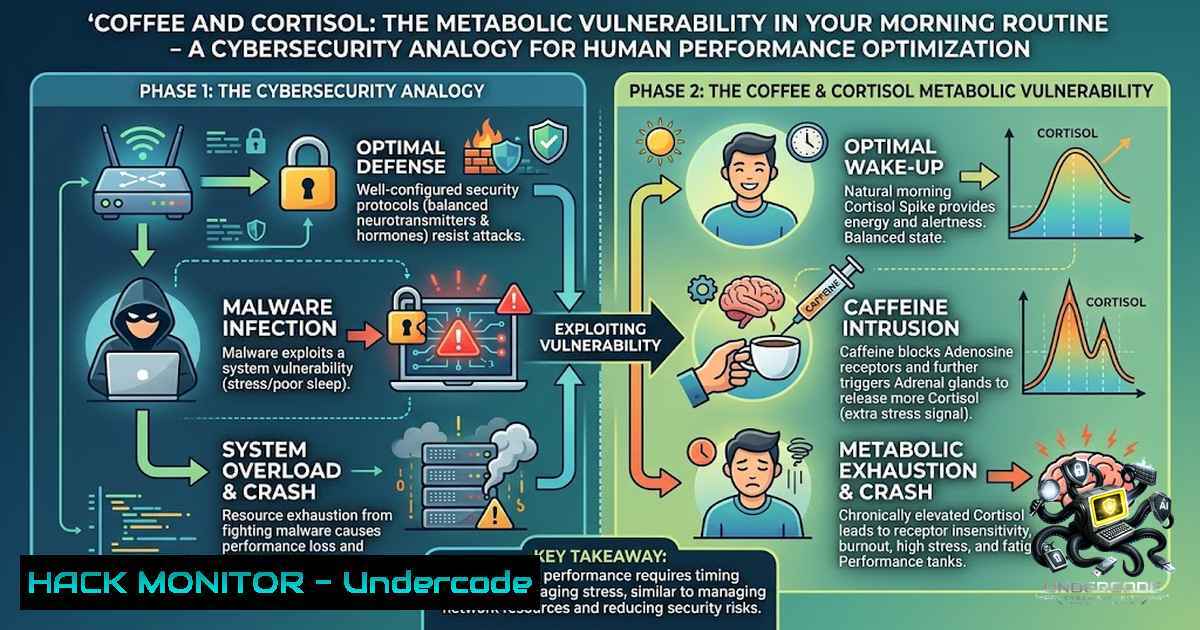
In the high-stakes world of cybersecurity, timing is everything—whether deploying patches, executing incident response, or scheduling vulnerability scans. Similarly, human biological systems operate on precise temporal rhythms that, when disrupted, create cascading vulnerabilities. Recent medical insights reveal that consuming caffeine immediately upon waking—a ritual practiced by countless IT professionals—may inadvertently compromise metabolic efficiency through interference with natural cortisol cycles, essentially creating a “denial-of-service” condition on the body’s alertness mechanisms. This article explores the intersection of chronobiology and performance optimization, offering actionable protocols for professionals seeking to maximize cognitive function while minimizing physiological debt.
Learning Objectives & Secrets
- Objective 1: Master Cortisol-Aware Caffeine Timing – Understand the circadian rhythm of cortisol production and learn to strategically delay caffeine intake by 90–120 minutes post-waking to prevent tolerance buildup and maintain optimal alertness throughout the workday.
-
Objective 2: Implement Pre-Caffeine Hydration Protocols – Recognize that dehydration impairs cognitive function by 10–15%, and establish a morning hydration routine (500ml water before coffee) to support metabolic processes and prevent the insulin sensitivity disruption caused by caffeine on an empty stomach.
-
Objective 3: Optimize Blood Glucose Stability Through Strategic Feeding – Learn how caffeine on an empty stomach can reduce insulin sensitivity by up to 25% (especially after poor sleep), and implement pre-caffeine nutrition strategies to prevent metabolic “crash” events that impair afternoon focus and decision-making.
You Should Know
- Understanding the Cortisol-Caffeine Collision: A System Architecture Analysis
The human endocrine system operates on a predictable scheduling protocol, with cortisol production peaking approximately 30–45 minutes after waking—a natural “wake-up call” that primes the body for activity. When caffeine is introduced during this peak, it creates a superposition of stimulatory signals, effectively wasting the natural alertness resource while accelerating receptor downregulation.
Step-by-Step Guide to Cortisol-Aware Caffeine Scheduling:
- Monitor Your Wake Time: Document the exact time you rise for 5 consecutive days. Identify the average wake time (e.g., 06:30).
-
Calculate the 90-Minute Window: Add 90–120 minutes to your wake time. For a 06:30 wake, target your first coffee at 08:00–08:30.
-
Track Alertness Metrics: Rate your focus on a scale of 1–10 at 30-minute intervals from wake to first coffee. Note the natural alertness curve.
-
Implement a “Waking Audit”: Before reaching for coffee, perform a 5-minute hydration and light stretching routine. This allows cortisol to rise naturally.
-
Document Tolerance Patterns: Record how much caffeine you consume daily. If you find yourself needing >400mg (approx. 4 cups) to feel alert, your tolerance is elevated—consider a 7-day “caffeine reset” reducing intake to 1 cup before 11:00 AM.
Linux/Windows Command Analogy for System Monitoring:
For IT professionals, consider setting up a morning routine automation:
 Linux - Create a morning check script
!/bin/bash
 morning_caffeine_tracker.sh
wake_time=$(date +%H:%M)
target_time=$(date -d "today 08:00" +%s)
current_time=$(date +%s)
time_diff=$(( (target_time - current_time) / 60 ))

if [ $time_diff -gt 0 ]; then
echo "🕒 Wait $time_diff minutes before caffeine intake"
echo "💧 Hydrate now: drink 500ml water"
else
echo "☕ Caffeine window open - enjoy your coffee"
fi
 Windows PowerShell - Morning Readiness Check
$wakeTime = Get-Date -Hour 6 -Minute 30
$caffeineTime = $wakeTime.AddMinutes(90)
$currentTime = Get-Date
$minutesUntilCoffee = ($caffeineTime - $currentTime).TotalMinutes

if ($minutesUntilCoffee -gt 0) {
Write-Host "⏳ $([bash]::Round($minutesUntilCoffee)) minutes until optimal caffeine window"
Write-Host "💧 Prioritize water intake now" -ForegroundColor Green
} else {
Write-Host "☕ Proceed with caffeine - timing optimized" -ForegroundColor Cyan
}
- The Insulin Sensitivity Vulnerability: How Caffeine Exploits Metabolic Backdoors
Caffeine acts as an adenosine receptor antagonist, blocking the neurotransmitter responsible for sleep pressure. However, this mechanism inadvertently triggers hepatic glucose production and reduces peripheral glucose uptake, creating a temporary state of insulin resistance. When combined with fasting state (empty stomach) and sleep debt, the effect compounds—making a morning coffee a potential “exploit” against your metabolic stability.
Step-by-Step Protocol for Metabolic Protection:
- Assess Sleep Quality: Use the Pittsburgh Sleep Quality Index (PSQI) or a smartwatch sleep tracker. If sleep duration was <6 hours or interrupted >3 times, delay caffeine by an additional 30 minutes.
-
Pre-Caffeine Nutrition: Consume 15–30g of protein within 30 minutes of waking. Examples: 2 boiled eggs, Greek yogurt, or a protein shake. This stabilizes blood glucose before caffeine enters the system.
-
Hydration First: Drink 500ml (approx. 17 oz) of water before any caffeinated beverage. Dehydration exacerbates the insulin-disrupting effects of caffeine.
-
Monitor Post-Caffeine Glucose: If you have access to a continuous glucose monitor (CGM), track the 2-hour post-caffeine glucose curve. A spike >30mg/dL indicates high sensitivity—adjust timing or food pairing.
-
Create a Morning Protocol File: Document your daily morning routine with timestamps for wake, water, food, and coffee. Review weekly for patterns.
Technical Command Reference for Health Tracking Automation:
 Python script to track morning routine metrics
import datetime
import json

def log_morning_metrics(wake_time, coffee_time, sleep_hours, food_before_coffee):
data = {
"date": str(datetime.date.today()),
"wake_time": wake_time,
"coffee_time": coffee_time,
"time_to_coffee_minutes": coffee_time - wake_time,
"sleep_hours": sleep_hours,
"food_before_coffee": food_before_coffee,
"cortisol_sync": "optimal" if coffee_time - wake_time >= 90 else "suboptimal"
}
with open("morning_metrics.json", "a") as f:
json.dump(data, f)
f.write("\n")
return data

Example usage
log_morning_metrics(6.5, 8.0, 7.2, True)
3. Gastrointestinal Stress Vectors: Protecting the Digestive Perimeter
Coffee stimulates gastric acid secretion through multiple pathways: direct gastrin release, increased gastric motility, and reduced lower esophageal sphincter tone. When introduced to an empty stomach (fasting 7–8 hours), this creates an “acidic attack surface” that can lead to mucosal irritation, heartburn, and silent reflux—all of which degrade concentration and workplace performance.
Step-by-Step Defense Protocol:
- Assess Acid Sensitivity: Note any history of GERD, heartburn, or stomach discomfort. If present, consider cold-brew coffee (lower acidity, pH 6.0 vs. 5.0 for hot brew) or dark roasts (lower chlorogenic acid).
-
Buffer with Food: Never consume coffee as the first substance of the day. At minimum, consume a small snack (1 banana, handful of almonds, or oatmeal) 15–20 minutes before coffee.
-
Alkaline Hydration: Start the day with 300ml water with a squeeze of lemon or a pinch of baking soda (¼ tsp in 500ml water) to buffer stomach pH before coffee.
-
Monitor Symptoms: Track heartburn episodes, bloating, or post-meal discomfort. If symptoms persist, consider a 2-week elimination trial (decaf or no coffee) to assess baseline.
-
Implement Gradual Introduction: Instead of consuming a full cup immediately, sip ¼ cup, wait 10 minutes, then continue. This allows the digestive system to adapt.
Configuration Example for Creating a Personal Health Dashboard:
 morning_health_config.yaml
version: "1.0"
daily_protocol:
wake_window: 06:30-07:00
hydration:
volume_ml: 500
timing: "immediately"
nutrition:
protein_grams: 20
timing: "within 30 mins"
caffeine:
delay_minutes: 90
max_mg: 200
brew_type: "cold_brew"  reduces acidity
monitoring:
glucose_spike_max: 30  mg/dL
heartburn_episodes: 0
focus_score_min: 7  out of 10
4. Circadian Rhythm Exploitation: Why Timing Determines Efficacy
The suprachiasmatic nucleus (SCN) in the hypothalamus orchestrates a 24-hour cycle of biological functions, including cortisol, melatonin, and core body temperature. Introducing caffeine at the wrong phase of this cycle is analogous to running a cron job at an inappropriate time—it creates resource contention and reduces overall system efficiency.
Step-by-Step Circadian Optimization:
- Establish a Consistent Wake Time: Set a fixed wake time ±15 minutes daily, including weekends. This trains the SCN to anticipate cortisol release.
-
Light Exposure Protocol: Within 15 minutes of waking, expose yourself to natural daylight (or 10,000 lux artificial light) for 10–15 minutes. This reinforces the cortisol peak and synchronizes peripheral clocks.
-
Caffeine Timing Calculation: Using the formula
caffeine_time = wake_time + (sleep_quality_score 10) + 60, where sleep quality score = 1–5 (1=excellent, 5=poor). Poor sleep requires greater delay. -
Afternoon Caffeine Cutoff: Set a hard cutoff at 14:00 (2:00 PM) to prevent interference with melatonin production 8–10 hours later.
-
Evening Audit: Track caffeine consumption and sleep latency. If time to fall asleep exceeds 30 minutes, reduce daily total caffeine by 25%.
Command-Line Analogy for Circadian Automation:
 Linux - Circadian alarm script with caffeine advisory
!/bin/bash
 circadian_advisor.sh
WAKE_TIME="06:30"
CURRENT_HOUR=$(date +%H)
CURRENT_MIN=$(date +%M)
CURRENT_TIME=$((CURRENT_HOUR  60 + CURRENT_MIN))
TARGET_WAKE=$((6  60 + 30))

if [ $CURRENT_TIME -ge $TARGET_WAKE ] && [ $CURRENT_TIME -lt $((TARGET_WAKE + 90)) ]; then
echo "⏰ Morning window - hydrate, eat, delay caffeine"
elif [ $CURRENT_TIME -ge $((TARGET_WAKE + 90)) ] && [ $CURRENT_TIME -lt $((TARGET_WAKE + 180)) ]; then
echo "☕ Optimal caffeine window - enjoy your brew"
elif [ $CURRENT_TIME -ge $((14  60)) ]; then
echo "🚫 Caffeine cutoff reached - switch to decaf or herbal tea"
fi
5. Long-Term Tolerance Management: Preventing System Degradation
Chronic caffeine consumption in the morning cortisol peak leads to receptor desensitization, requiring escalating doses for the same effect—a phenomenon directly analogous to attackers probing a system to find the path of least resistance. Managing this requires periodic “hardening” through tolerance resets.
Step-by-Step Tolerance Reset Protocol:
- Assessment Phase: Log daily caffeine intake (mg) and subjective alertness (1–10) for 7 days. Calculate the average dose required to achieve a score ≥7.
-
Tapering Schedule: Reduce caffeine by 25% per week over 4 weeks, substituting with decaf or green tea (which contains L-theanine for calm focus).
-
Reset Week: After 4 weeks, maintain a 7-day period with <50mg caffeine daily (approx. ½ cup of coffee). Use this time to observe natural alertness without exogenous stimulation.
-
Reintroduction: Resume caffeine at 50% of original dose, strictly timed 90–120 minutes post-wake. You should achieve the same alertness with 30–50% less caffeine.
-
Maintenance: Once optimized, establish a 3-week on, 1-week reduced schedule to prevent tolerance creep.
Data Analysis Script for Tolerance Monitoring:
 Python - Caffeine tolerance analysis
import pandas as pd
import matplotlib.pyplot as plt

def analyze_tolerance(csv_file):
df = pd.read_csv(csv_file)
df['time_to_peak'] = df['coffee_time'] - df['wake_time']
df['efficiency'] = df['alertness_score'] / df['caffeine_mg']

Calculate optimal timing
optimal_df = df[df['time_to_peak'] >= 90]
avg_efficiency = optimal_df['efficiency'].mean()

Generate report
report = f"""

<h1>📊 Caffeine Efficiency Report</h1>

Optimal Timing (>90min): {len(optimal_df)} days
Avg Efficiency (timed): {avg_efficiency:.2f} alertness/mg
Days with tolerance risk: {len(df[df['caffeine_mg'] > 300])}

Recommendation: {'Reduce intake' if avg_efficiency < 0.02 else 'Maintain protocol'}
"""
print(report)
return avg_efficiency
- Sleep Debt Amplification: When Caffeine Becomes a Double-Edged Sword
Sleep debt reduces insulin sensitivity by up to 30% and elevates baseline cortisol levels. Under these conditions, morning caffeine consumption amplifies the glucose intolerance effect, effectively creating a metabolic “vulnerability window” that can persist for 4–6 hours.
Step-by-Step Debt Mitigation Strategy:
- Sleep Debt Calculation: Track sleep duration vs. need (typically 7–9 hours). Calculate cumulative debt over 7 days.
-
Caffeine Deferral: For each hour of sleep debt, add 15 minutes to your caffeine delay. Example: 2-hour debt = delay caffeine by 120 minutes (90 + 30).
-
Hydration Intensification: Increase morning water intake to 750ml when sleep debt >2 hours to counteract dehydration and support metabolic function.
-
Protein Amplification: Increase morning protein to 30–40g to stabilize glucose and reduce the insulin-disrupting effects of caffeine.
-
Post-Lunch Caffeine Restriction: If sleep debt is high, avoid caffeine after 13:00 to protect nighttime sleep architecture.
System Health Check Script:
!/bin/bash
 sleep_debt_monitor.sh
sleep_hours=$(cat /tmp/sleep_data.txt | tail -1)
need_hours=8
debt=$(echo "$need_hours - $sleep_hours" | bc)
caffeine_delay_extra=$(echo "$debt  15" | bc)
base_delay=90
optimal_delay=$(echo "$base_delay + $caffeine_delay_extra" | bc)

echo "💤 Sleep debt: $debt hours"
echo "⏰ Optimal caffeine delay: $optimal_delay minutes"
echo "💧 Recommended water: 500 + ($debt  125) ml"
7. Workplace Integration: Creating a Performance-Optimized Morning Protocol
For cybersecurity professionals and IT teams, the morning routine is a critical prelude to high-stakes decision-making. Integrating these principles into workplace culture can enhance incident response effectiveness and reduce cognitive errors.
Step-by-Step Workplace Implementation:
- Team Education: Conduct a 15-minute “Chronobiology for Performance” session explaining cortisol, caffeine, and metabolic timing.
-
Protocol Standardization: Establish a recommended morning checklist distributed via email or internal wiki.
-
Hydration Stations: Position water dispensers prominently to encourage pre-caffeine hydration.
-
Flexible Start Times: Allow team members to adjust start times to align with their individual chronotypes (morning larks vs. night owls) where possible.
-
Performance Metrics: Correlate caffeine timing with incident response times and decision quality assessments to validate protocol effectiveness.
Sample Morning Protocol Checklist for IT Teams:
✅ [ ] Wake at consistent time (±15 min)
✅ [ ] Drink 500ml water immediately
✅ [ ] Expose to natural light 10 min
✅ [ ] Consume 20g protein (yogurt/eggs/shake)
✅ [ ] Delay caffeine 90–120 minutes
✅ [ ] Log first coffee time
✅ [ ] Monitor afternoon energy (14:00 check)
✅ [ ] Stop caffeine by 14:00
What Undercode Say
- Key Takeaway 1: The timing of caffeine consumption is a critical performance variable that IT professionals frequently overlook. Treating caffeine as a “system resource” that requires scheduling optimization can yield significant cognitive dividends without increasing total intake.
-
Key Takeaway 2: Metabolic health is a foundational component of professional performance. The insulin resistance and gastrointestinal stress induced by morning coffee on an empty stomach create subtle but cumulative performance degradation that manifests as afternoon “brain fog” and reduced decision quality.
Analysis: The intersection of chronobiology and professional performance represents an untapped optimization domain in cybersecurity and IT. While most organizations focus on technical tools, processes, and training, the human operating system remains the most complex and least optimized component. The cortisol-caffeine collision is a concrete example of how a seemingly innocuous habit can create systemic inefficiencies—much like an unpatched vulnerability that only manifests under specific conditions. By reframing personal health protocols through the lens of systems engineering (scheduling, monitoring, optimization, and reset cycles), professionals can achieve measurable improvements in alertness, focus, and resilience. This is not merely about coffee—it’s about understanding that human performance is governed by protocols that, when respected, amplify technical capabilities; when ignored, they introduce latency and errors into the most critical operations. The parallel to cybersecurity is striking: just as zero-trust architecture assumes breach and validates every request, a performance-optimized professional assumes resource constraints and validates every habit against its biological impact.
Prediction
- +1: Organizations will increasingly integrate chronobiology education into their wellness programs, recognizing that optimized human performance directly correlates with reduced security incidents and improved operational efficiency.
-
+1: The next generation of productivity tools will incorporate caffeine scheduling recommendations based on individual circadian data, collected via wearables and integrated into calendar applications.
-
-1: Without proactive education, the trend toward “always-on” work cultures will exacerbate caffeine dependence and metabolic dysfunction, increasing healthcare costs and reducing workforce resilience over the next 5–10 years.
-
+1: Emerging AI-powered health coaches will provide real-time caffeine timing recommendations, analyzing sleep data, glucose trends, and cognitive performance metrics to deliver personalized protocols.
-
+1: Enterprise wellness platforms will begin offering “performance optimization” modules that treat biological scheduling with the same rigor as vulnerability patching schedules.
-
-1: The proliferation of energy drinks and high-caffeine supplements in workplaces may accelerate adrenal fatigue and cardiovascular stress, particularly among younger professionals who lack awareness of metabolic timing principles.
-
+1: Remote work environments offer unique advantages for implementing personalized morning protocols without the constraints of commuting schedules, enabling better synchronization of work hours with natural circadian rhythms.
-
+1: Clinical pathology and medical education will increasingly incorporate chronobiology into continuing professional development, bridging the gap between physiological science and workplace performance.
-
-1: Cost pressures may lead some organizations to prioritize productivity metrics over employee health protocols, potentially worsening the burnout epidemic and undermining long-term performance.
-
+1: The integration of metabolic health monitoring into workplace health assessments will become a competitive advantage for forward-thinking organizations, attracting and retaining top talent who value holistic performance optimization.
▶️ Related Video (72% Match):
https://www.youtube.com/watch?v=6kceDep0Jgo
🎯Let’s Practice For Free:
🎓 Live Courses & Certifications:
Join Undercode Academy for Verified Certifications
🚀 Request a Custom Project:
Secure, high-velocity infrastructure and disruptive technological engineering. Contact our engineering team for high-tier development and proprietary systems:
[email protected]
💎 Smart Architecture | 🛡️ Secure by Design | ⭐ Trusted by Thousands
IT/Security Reporter URL:
Reported By: https://lnkd.in/p/eCrekswG – Hackers Feeds
Extra Hub: Undercode MoN
Basic Verification: Pass ✅


