Listen to this Post
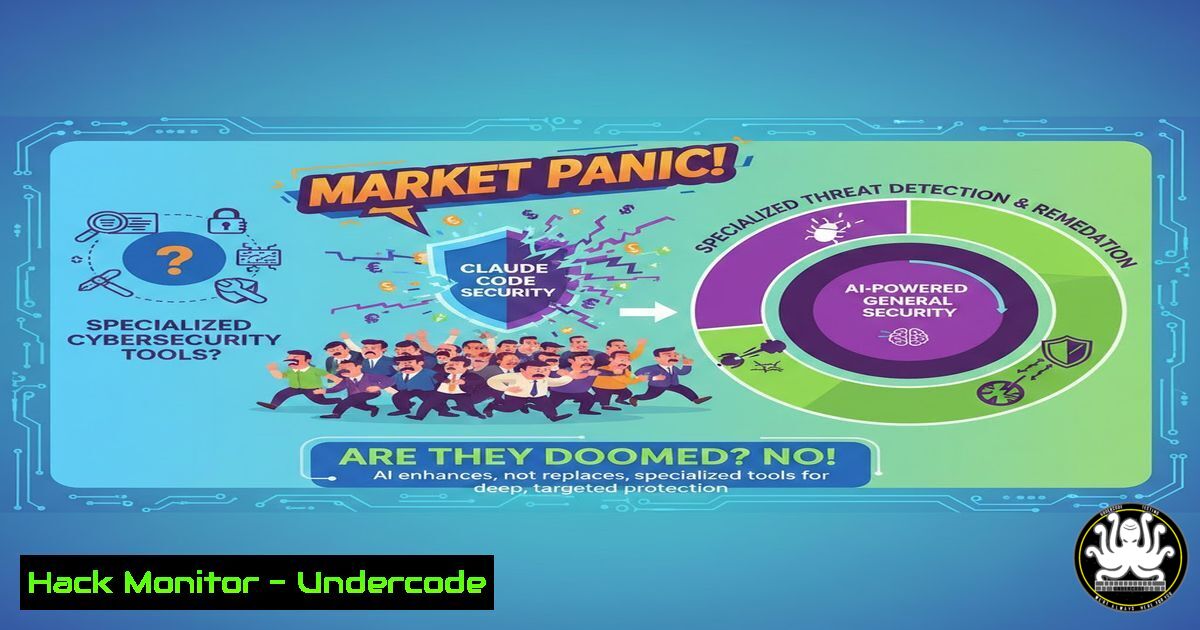
Introduction:
The recent release of Anthropic’s Claude Code Security tool sent shockwaves through the market, causing a rapid 5–10% dip in stocks for established cybersecurity players like CrowdStrike, Okta, and JFrog. This reaction has ignited a fierce debate on whether “AI-native” tools will render specialized security solutions obsolete. However, a deeper technical analysis reveals that while the threat landscape is evolving, the reality is a shift in workflow and architecture rather than a total industry extinction event.
Learning Objectives:
- Analyze the immediate market impact of new AI security tools versus the capabilities of incumbent enterprise solutions.
- Differentiate between automated code scanning and comprehensive enterprise security posture management (SSPM/CSPM).
- Implement practical security automation scripts to understand the “force multiplier” effect of AI in DevOps.
You Should Know:
- Deconstructing the “Vibe Code” Trap: AI Scanning vs. Enterprise Telemetry
The core fear driving the market dip is that a Large Language Model (LLM) can now perform the functions of an entire security stack. In reality, tools like Claude Code Security excel at static analysis—finding secrets hardcoded in a repository or identifying known vulnerable libraries. However, enterprise security requires telemetry. CrowdStrike doesn’t just look for a bad file; it monitors API calls, process trees, and network behavior across millions of endpoints.
To illustrate the difference between a simple scan and deep investigation, let’s simulate what an AI might suggest for log analysis versus what a security engineer actually needs. While an AI can summarize a log, you need the command line to get the raw data.
Linux Command for Log Investigation (The “Telemetry” Approach):
Instead of asking an LLM “is my server hacked?”, you would use `journalctl` or `grep` to feed the LLM specific data.
 Extract failed SSH login attempts to feed into an AI for pattern analysis
sudo journalctl _SYSTEMD_UNIT=ssh.service | grep "Failed password" | awk '{print $11}' | sort | uniq -c | sort -nr
What this does: This command lists all IP addresses that have failed SSH logins, sorted by frequency. This provides the raw intelligence that an AI can then use to determine if it’s a brute-force botnet or a misconfigured internal tool.
2. API Security: Where AI Agents Currently Stumble
Okta and identity management took a hit because the market fears AI will manage identities better. However, securing OAuth flows and API gateways requires understanding context that an LLM scraped from the internet cannot possess: your specific corporate RBAC (Role-Based Access Control) hierarchy. An AI can generate a policy, but it cannot test the blast radius of that policy without the “vehicle” (the platform) around it.
Windows PowerShell Command for Identity Audit:
To harden your identity security (a task AI assists with but doesn’t replace), you must audit privileged groups.
 List all members of the Domain Admins group (requires RSAT or AD module)
Get-ADGroupMember -Identity "Domain Admins" | Select-Object Name, SamAccountName, ObjectClass
Step-by-step guide: Run this in an elevated PowerShell console on a domain controller or management machine. If the list contains more than 2-3 active accounts, or any generic service accounts, your identity posture is weak. This is the manual validation an AI-driven tool like Claude Code Security would recommend, but the execution remains a human or platform responsibility.
3. Cloud Hardening: The Infrastructure Gap
JFrog (software supply chain) saw a dip, but securing the software supply chain isn’t just about scanning the code in GitHub; it’s about securing the artifacts in S3 buckets, the AMIs in EC2, and the permissions in the cloud. LLMs are great at generating Terraform scripts, but they are terrible at understanding the financial and operational impact of misconfigurations in a live production environment.
Tool Configuration (AWS CLI):
To check for publicly exposed S3 buckets (a common vulnerability that code scanners might miss), you must query the cloud provider directly.
 List all S3 buckets and check their ACLs for public access
aws s3api list-buckets --query "Buckets[].Name" --output text | xargs -I {} aws s3api get-bucket-acl --bucket {} | grep -B 1 "AllUsers"
What this does: This command iterates through every S3 bucket and searches for ACLs granting access to “AllUsers” (the public). This is the kind of “runtime” security check that a static code analysis tool cannot perform, reinforcing why specialized cloud security posture management (CSPM) tools are still essential.
- Vulnerability Exploitation and Mitigation: The “Force Multiplier” in Action
The post argues that LLMs shift the job from hunting to architecting. Let’s look at how an engineer might use an LLM to assist in mitigating a Log4j-style vulnerability, rather than the LLM replacing the engineer.
Linux Command for Rapid Mitigation (Using AI to generate the search logic):
You might ask an LLM: “Find all JAR files containing Log4j in a Linux filesystem.” The LLM will give you a command, which you must then verify and run.
 Find and list all JAR files, then search for Log4j core classes within them
find / -name ".jar" -type f 2>/dev/null | while read jar; do if unzip -l "$jar" 2>/dev/null | grep -q "org/apache/logging/log4j/core"; then echo "Vulnerable: $jar"; fi; done
Explanation: This script finds every JAR file, lists its contents without extracting, and greps for the specific class path of the core Log4j library. This is a classic “hunt” task. The AI suggests the method, but the systems administrator executes the hunt and applies the patch or workaround (e.g., setting the `LOG4J_FORMAT_MSG_NO_LOOKUPS` environment variable).
- Building the “Vehicle”: Integrating AI Agents into CI/CD
Instead of fearing the new Claude tool, security teams should look at how to integrate it into their existing CI/CD pipelines alongside tools from CrowdStrike or Okta.
GitHub Actions Integration (Conceptual YAML):
You would add a step to your workflow that calls Claude Code Security to scan a PR, but you would gate the merge based on the results of your existing SAST tool.
 Example snippet of a hardened CI/CD pipeline
- name: Run Claude Code Security Scan
run: claude-security scan ./src --format sarif > claude_results.sarif
- name: Run CrowdStrike Falcon Intelligence Scan
run: falcon-kac scan ./src --output sarif > crowdstrike_results.sarif
- name: Fail if Critical found (using a parser)
run: python scripts/check_results.py claude_results.sarif crowdstrike_results.sarif
Step-by-step: This demonstrates the “Shifting the Work” principle. The AI tool and the specialized tool run in parallel. The AI catches logic flaws or secret leaks; the CrowdStrike tool catches malware signatures or supply chain attacks unique to their threat intel. The output is combined, showing that the tools are complementary, not competitive.
What Undercode Say:
- The Market Overreacted to Hype: The stock dip reflects a misunderstanding of technical depth. Scanning code is a feature; managing a SIEM (Security Information and Event Management) or a zero-trust network is a platform. The incumbents own the platform.
- Context is King: An LLM has no inherent knowledge of your corporate network topography, user behavior baselines, or compliance requirements. This “institutional knowledge” is the moat protecting companies like CrowdStrike and Okta.
- The Engineer’s Role Evolves: The focus is shifting from repetitive “grep” tasks to architecting resilient systems. Engineers who learn to wield AI as a co-pilot—feeding it data from the commands listed above and validating its outputs—will become exponentially more valuable.
Prediction:
We will see a correction in the market within the next 6–12 months as investors realize that “AI-native security” is a feature addition, not a company replacement. The major players will acquire or build their own agentic layers, leading to a consolidation phase where specialized AI security startups are acquired by the very incumbents they were supposed to disrupt. The long-term impact will be a compression of junior-level security roles focused purely on log analysis, and a surge in demand for senior architects who can design the guardrails for these autonomous AI agents.
🎯Let’s Practice For Free:
IT/Security Reporter URL:
Reported By: %E2%9A%A1 Daniel – Hackers Feeds
Extra Hub: Undercode MoN
Basic Verification: Pass ✅


