Listen to this Post
Introduction
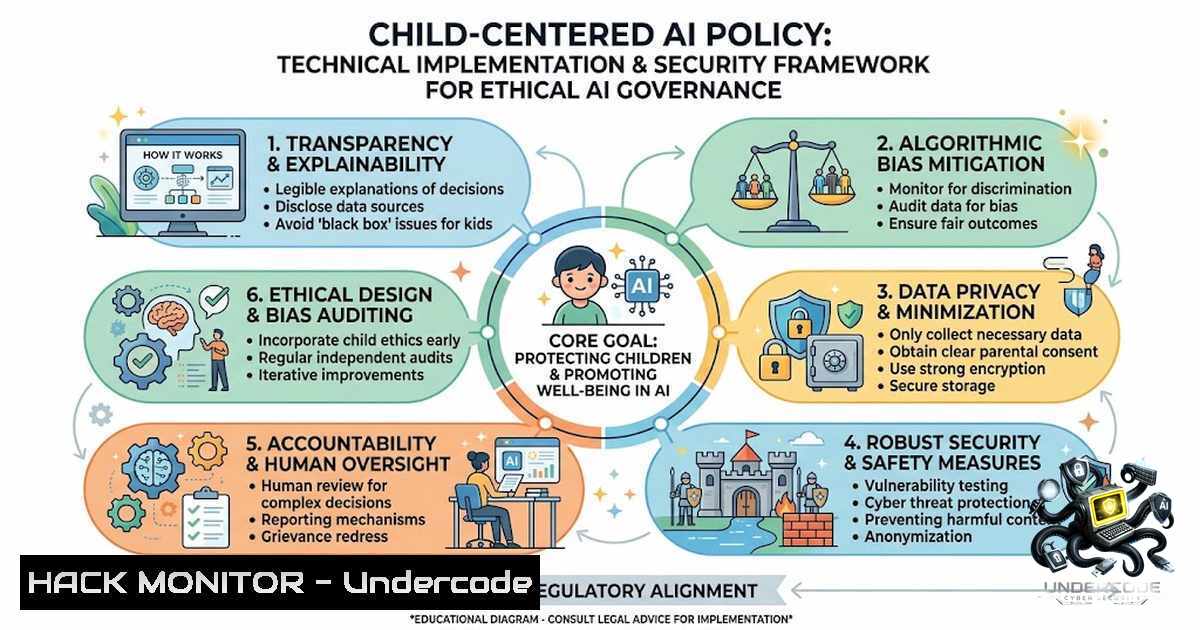
The rapid proliferation of AI systems among children has triggered a global regulatory pivot from reactive content moderation to proactive, rights-based design mandates. Since January 2026, UNICEF’s updated Guidance on AI and Children 3.0 has outlined ten core requirements for child-centered AI, including safety by design, strong data protection, transparency, fairness, and accountability. Concurrently, the UN Joint Statement on Artificial Intelligence and the Rights of the Child, signed by ITU, UNICEF, ILO, and other international bodies, has established a unified global position on designing, deploying, and governing AI to uphold children’s rights. SocialLab’s Child-Centered AI Policy, active since January 1, 2026, operationalizes these principles across four pillars: Cognitive Autonomy (rejecting engagement-hacking mechanics), Non-Monetized Data Trust (enforcing anti-surveillance standards with no tracking or profiling), Equity by Default (designing offline-capable, bias-tested architectures), and the Best-Interest Mandate (empowering child safety leads with absolute veto authority).
Learning Objectives
- Implement age-appropriate safety architectures with data isolation, parental consent verification, and automated content filtering across AI pipelines
- Configure zero-trust data protection frameworks that prevent child data from being independently addressable or monetized
- Deploy offline-capable, bias-tested AI models with cognitive autonomy safeguards that preserve critical thinking over engagement optimization
- Establish mandatory security assessment protocols and independent child safety audit workflows
You Should Know
1. Data Isolation and Parental Consent Architecture
Child-centered AI requires strict data segregation at the infrastructure layer. Child profiles must be separated from adult accounts at the data layer, and child data should never be independently addressable outside the context of an authenticated parent session. This principle extends to API design, database schemas, and access control lists.
Step-by-Step Implementation (Linux/Unix Environment):
1.1 Database Segmentation
Create separate database instances or schemas for child data with isolated credentials:
 PostgreSQL: Create isolated schema with restricted permissions
sudo -u postgres psql
CREATE DATABASE child_ai_data;
CREATE USER child_ai_app WITH PASSWORD 'secure_password';
REVOKE ALL ON DATABASE child_ai_data FROM PUBLIC;
GRANT CONNECT ON DATABASE child_ai_data TO child_ai_app;
\c child_ai_data
CREATE SCHEMA child_schema;
REVOKE ALL ON SCHEMA child_schema FROM PUBLIC;
GRANT USAGE ON SCHEMA child_schema TO child_ai_app;
1.2 Parental Consent Token Verification
Implement a JWT-based consent verification layer that expires with parental confirmation:
 Python Flask middleware for parental consent verification
import jwt
from datetime import datetime, timedelta

def verify_parental_consent(token):
try:
payload = jwt.decode(token, os.getenv('CONSENT_SECRET'), algorithms=['HS256'])
if payload.get('consent_type') != 'parental_authorization':
return False
if datetime.fromtimestamp(payload['exp']) < datetime.now():
return False
return payload.get('child_id')
except jwt.InvalidTokenError:
return False

Apply to all child-facing API endpoints
@app.before_request
def check_consent():
if request.path.startswith('/api/child/'):
token = request.headers.get('X-Parental-Consent')
child_id = verify_parental_consent(token)
if not child_id:
return jsonify({'error': 'Valid parental consent required'}), 403
1.3 Audit Logging for Data Access
Configure comprehensive audit trails for all child data access:
 Enable PostgreSQL audit logging
sudo nano /etc/postgresql/14/main/postgresql.conf
 Add:
log_statement = 'ddl'
log_line_prefix = '%t %u %d %h '
log_connections = on
log_disconnections = on
log_duration = on

Restart PostgreSQL
sudo systemctl restart postgresql

Set up audit log rotation
sudo nano /etc/logrotate.d/postgresql
/var/log/postgresql/.log {
daily
rotate 30
compress
delaycompress
missingok
notifempty
create 640 postgres postgres
sharedscripts
postrotate
/usr/bin/kill -HUP `cat /var/run/postgresql/14-main.pid 2>/dev/null` 2>/dev/null || true
endscript
}
2. Automated Content Moderation and Input Filtering
AI systems interacting with children must implement multi-layered content filtering that detects and rejects inappropriate content, including self-harm references, sexually explicit material, and emotionally manipulative prompts.
Step-by-Step Implementation:
2.1 Keyword-Based Filtering with Redis Caching
Deploy a high-performance keyword filtering system using Redis for pattern matching:
 Install Redis and Python dependencies
sudo apt update
sudo apt install redis-server python3-pip
pip3 install redis aho-corasick

Configure Redis for high-throughput filtering
sudo nano /etc/redis/redis.conf
 Set:
maxmemory 2gb
maxmemory-policy allkeys-lru
save 900 1
save 300 10
save 60 10000

sudo systemctl restart redis-server
2.2 Python Filtering Middleware
import redis
from ahocorasick import Automaton

Load prohibited keyword patterns
def load_filter_patterns():
patterns = [
"self-harm", "suicide", "kill yourself",
 Additional patterns loaded from secure configuration
]
automaton = Automaton()
for idx, pattern in enumerate(patterns):
automaton.add_word(pattern.lower(), (idx, pattern))
automaton.make_automaton()
return automaton

Redis-backed rate limiting for filtering calls
r = redis.Redis(host='localhost', port=6379, db=0)

def filter_user_input(user_input, session_id):
 Rate limit per session
key = f"filter:{session_id}"
current = r.incr(key)
r.expire(key, 60)
if current > 100:  Max 100 requests per minute
return {"blocked": True, "reason": "Rate limit exceeded"}

automaton = load_filter_patterns()
for end_index, (idx, pattern) in automaton.iter(user_input.lower()):
return {"blocked": True, "reason": f"Prohibited content: {pattern}"}

return {"blocked": False}
2.3 Windows-Based Content Filtering (PowerShell)
 Windows Server: Configure Web Application Proxy with content filtering
 Install URL Rewrite module for IIS
Import-Module WebAdministration
Install-WindowsFeature -1ame Web-Server -IncludeAllSubFeature

Create a request filtering rule
Add-WebConfigurationProperty -Filter "system.webServer/security/requestFiltering" `
-1ame "." -Value @{allowUnlisted="false"} -PSPath IIS:\

 Add prohibited URL sequences
$denySequences = @("self-harm","suicide","self-injury")
foreach ($seq in $denySequences) {
Add-WebConfigurationProperty -Filter "system.webServer/security/requestFiltering/denyUrlSequences" `
-1ame "." -Value @{sequence="$seq"} -PSPath IIS:\
}

Configure logging for all filtered requests
Set-WebConfigurationProperty -Filter "system.webServer/httpLogging" `
-1ame "selectiveLogging" -Value "LogAll" -PSPath IIS:\
3. Offline-Capable, Bias-Tested Architecture
Equity by Default requires designing systems that function without constant internet connectivity, serving vulnerable learners in low-bandwidth or no-connectivity environments. This involves deploying lightweight, quantized models that can run locally.
Step-by-Step Implementation:
3.1 Deploy Local LLM with Quantization
 Install Ollama for local model deployment
curl -fsSL https://ollama.com/install.sh | sh

Pull a quantized model suitable for offline use
ollama pull llama3.2:1b-instruct-q4_K_M

Create a custom Modelfile for child-safe configuration
cat > ChildSafeModelfile << 'EOF'
FROM llama3.2:1b-instruct-q4_K_M

PARAMETER temperature 0.3
PARAMETER top_p 0.7
PARAMETER repeat_penalty 1.1

SYSTEM """
You are a child-friendly educational assistant.
- Never provide harmful, violent, or inappropriate content
- Encourage critical thinking by asking questions rather than giving answers
- Do not simulate human emotions or relationships
- Keep responses age-appropriate and educational
- If unsure, respond with: "That's a great question! Let's think about it together."
"""
EOF

Create the custom model
ollama create child-safe-assistant -f ChildSafeModelfile

Test offline functionality
ollama run child-safe-assistant "What is critical thinking?"
3.2 Bias Testing Framework
 Bias detection and mitigation framework
import pandas as pd
from sklearn.metrics import confusion_matrix

class BiasTester:
def <strong>init</strong>(self, model, test_datasets):
self.model = model
self.datasets = test_datasets  Diverse demographic test sets

def run_bias_audit(self):
results = {}
for demographic, dataset in self.datasets.items():
predictions = []
for input_text in dataset:
output = self.model.generate(input_text)
predictions.append(self._classify_sentiment(output))

Calculate demographic parity
positive_rate = sum(predictions) / len(predictions)
results[bash] = {
'positive_rate': positive_rate,
'sample_size': len(predictions)
}

Calculate maximum disparity
rates = [r['positive_rate'] for r in results.values()]
results['max_disparity'] = max(rates) - min(rates)
results['disparity_threshold_exceeded'] = results['max_disparity'] > 0.1

return results

def _classify_sentiment(self, text):
 Simplified sentiment classification
positive_words = ['good', 'great', 'excellent', 'helpful']
return any(word in text.lower() for word in positive_words)

Usage
tester = BiasTester(model, {
'gender_female': test_set_female,
'gender_male': test_set_male,
'urban': test_set_urban,
'rural': test_set_rural
})
audit_results = tester.run_bias_audit()
if audit_results['disparity_threshold_exceeded']:
print("Bias detected - model requires retraining")
3.3 Offline-First Deployment with Service Workers (Web)
// Service worker for offline-first AI interaction caching
self.addEventListener('install', event => {
event.waitUntil(
caches.open('ai-model-v1').then(cache => {
return cache.addAll([
'/models/model.json',
'/models/weights.bin',
'/index.html',
'/app.js'
]);
})
);
});

self.addEventListener('fetch', event => {
event.respondWith(
caches.match(event.request).then(response => {
// Network-first with cache fallback for API calls
if (event.request.url.includes('/api/')) {
return fetch(event.request).catch(() => {
return caches.match(event.request);
});
}
return response || fetch(event.request);
})
);
});
4. Non-Monetized Data Trust: Anti-Surveillance and Zero-Tracking Enforcement
SocialLab’s policy explicitly enforces “strict anti-surveillance standards with no tracking or profiling.” This requires technical implementation that prevents any form of user tracking, analytics collection, or behavioral profiling on child-facing systems.
Step-by-Step Implementation:
4.1 DNS-Level Ad and Tracker Blocking (Pi-hole)
 Install Pi-hole for network-wide tracking prevention
curl -sSL https://install.pi-hole.net | bash

Add additional blocklists for child safety
pihole -a adlist add https://raw.githubusercontent.com/StevenBlack/hosts/master/hosts
pihole -a adlist add https://osint.digitalside.it/Threat-Intel/lists/latestdomains.txt
pihole -a adlist add https://s3.amazonaws.com/lists.disconnect.me/simple_tracking.txt

Update gravity
pihole -g

Configure DNS to block tracking domains
echo "server=/tracking-domain.com/0.0.0.0" >> /etc/dnsmasq.d/02-pihole.conf
sudo systemctl restart pihole-FTL
4.2 Browser-Level Anti-Tracking Configuration
// Content Security Policy to block tracking scripts
// Add to HTTP response headers
const cspHeaders = {
'Content-Security-Policy':
"default-src 'self'; " +
"script-src 'self' 'unsafe-inline'; " +
"img-src 'self' data:; " +
"connect-src 'self'; " +
"frame-ancestors 'none'; " +
"block-all-mixed-content; " +
"upgrade-insecure-requests;"
};

// Express.js middleware
app.use((req, res, next) => {
res.setHeader('Content-Security-Policy', cspHeaders['Content-Security-Policy']);
res.setHeader('X-Content-Type-Options', 'nosniff');
res.setHeader('X-Frame-Options', 'DENY');
res.setHeader('Referrer-Policy', 'no-referrer');
res.setHeader('Permissions-Policy',
'geolocation=(), microphone=(), camera=(), ' +
'payment=(), usb=(), screen-wake-lock=()'
);
next();
});
4.3 GDPR/COPPA-Compliant Data Minimization
 Data minimization middleware - only store what is absolutely necessary
from datetime import datetime, timedelta
import hashlib

class DataMinimizer:
def <strong>init</strong>(self, redis_client):
self.redis = redis_client

def store_interaction(self, child_id, interaction_data):
 Generate anonymous interaction ID
interaction_hash = hashlib.sha256(
f"{child_id}{datetime.now().isoformat()}".encode()
).hexdigest()

Only store minimal required data
minimal_data = {
'timestamp': datetime.now().isoformat(),
'interaction_type': interaction_data.get('type'),
'response_category': interaction_data.get('category'),
 No personally identifiable information
 No IP addresses
 No device fingerprints
}

Store with 30-day automatic expiration
key = f"interaction:{interaction_hash}"
self.redis.setex(
key,
timedelta(days=30),
json.dumps(minimal_data)
)

return interaction_hash

def delete_expired_data(self):
 Redis handles TTL automatically
 Additional cleanup for any orphaned data
for key in self.redis.scan_iter("interaction:"):
if not self.redis.ttl(key) > 0:
self.redis.delete(key)
5. Security Assessments and Independent Child Safety Audits
Regulatory frameworks increasingly mandate annual, independent child safety audits with transparency summaries published for the public. The SAFE KIDS Act and similar legislation require AI chatbot providers to conduct rigorous, ongoing risk assessments.
Step-by-Step Implementation:
5.1 Automated Security Assessment Pipeline
!/bin/bash
 Comprehensive security assessment script

<ol>
<li>Dependency vulnerability scan
echo "=== Scanning dependencies for vulnerabilities ==="
pip-audit --requirement requirements.txt --format json > audit_results/dependency_audit.json</p></li>
<li><p>Static application security testing (SAST)
echo "=== Running SAST ==="
bandit -r ./src -f json -o audit_results/sast_results.json</p></li>
<li><p>Container security scan (if using Docker)
echo "=== Scanning container images ==="
trivy image --severity HIGH,CRITICAL --format json child-ai-app:latest > audit_results/container_scan.json</p></li>
<li><p>Secret detection
echo "=== Scanning for secrets ==="
trufflehog filesystem --json ./src > audit_results/secret_scan.json</p></li>
<li><p>Generate compliance report
python3 generate_audit_report.py --input audit_results/ --output compliance_report.pdf
5.2 Audit Report Generation (Python)
import json
from datetime import datetime

class ChildSafetyAuditor:
def <strong>init</strong>(self, assessment_dir):
self.assessment_dir = assessment_dir

def generate_compliance_report(self):
report = {
'audit_date': datetime.now().isoformat(),
'auditor': 'Independent Child Safety Audit',
'findings': [],
'remediations': [],
'compliance_status': 'PASS'
}

Load and analyze each assessment
with open(f"{self.assessment_dir}/dependency_audit.json") as f:
dep_data = json.load(f)
vulnerabilities = dep_data.get('vulnerabilities', [])
if vulnerabilities:
report['findings'].append({
'category': 'Dependency Vulnerability',
'severity': 'HIGH',
'details': vulnerabilities
})
report['compliance_status'] = 'REMEDIATION_REQUIRED'

with open(f"{self.assessment_dir}/sast_results.json") as f:
sast_data = json.load(f)
high_severity = [r for r in sast_data.get('results', [])
if r.get('issue_severity') == 'HIGH']
if high_severity:
report['findings'].append({
'category': 'Code Security',
'severity': 'HIGH',
'details': high_severity
})
report['compliance_status'] = 'REMEDIATION_REQUIRED'

Generate remediation plan
if report['compliance_status'] == 'REMEDIATION_REQUIRED':
report['remediations'] = self._generate_remediation_plan(report['findings'])

return report

def _generate_remediation_plan(self, findings):
remediations = []
for finding in findings:
if finding['category'] == 'Dependency Vulnerability':
remediations.append({
'action': 'Update vulnerable packages',
'command': 'pip install --upgrade <package_name>',
'priority': 'IMMEDIATE'
})
elif finding['category'] == 'Code Security':
remediations.append({
'action': 'Address high-severity code issues',
'priority': 'HIGH'
})
return remediations
6. Cognitive Autonomy: Preserving Critical Thinking Over Engagement
SocialLab’s policy explicitly rejects “engagement-hacking mechanics to cultivate critical thinking.” This requires designing AI systems that ask questions rather than provide answers, fostering cognitive autonomy rather than dependence.
Step-by-Step Implementation:
6.1 Socratic Dialogue Implementation
class SocraticAssistant:
"""AI assistant that uses Socratic questioning to foster critical thinking"""

def <strong>init</strong>(self, model):
self.model = model
self.question_templates = [
"What makes you think that?",
"Can you explain your reasoning?",
"What evidence supports that view?",
"How would you test that idea?",
"What might be another perspective?",
"Why is that important?",
"What would happen if...?"
]

def generate_response(self, user_input, conversation_history):
 Detect if user is seeking a direct answer vs. exploration
if self._is_seeking_answer(user_input):
 Encourage critical thinking instead of providing direct answer
return self._generate_guiding_question(user_input, conversation_history)
else:
return self._generate_thoughtful_response(user_input, conversation_history)

def _is_seeking_answer(self, text):
answer_seeking_phrases = ['what is', 'tell me', 'give me', 'explain']
return any(phrase in text.lower() for phrase in answer_seeking_phrases)

def _generate_guiding_question(self, user_input, history):
 Select appropriate question based on context
import random
if len(history) > 3:
return "You've been exploring this topic. What do you think so far?"
return random.choice(self.question_templates)

def _generate_thoughtful_response(self, user_input, history):
prompt = f"""You are a Socratic educational assistant.
Do not provide direct answers. Instead, ask questions that help the learner think critically.
Previous conversation: {history}
User: {user_input}
Assistant:"""

return self.model.generate(prompt, max_tokens=50)
6.2 Engagement Limit Enforcement
 Prevent engagement-hacking through usage limits
class EngagementLimiter:
def <strong>init</strong>(self, redis_client):
self.redis = redis_client
self.max_interactions_per_session = 20
self.session_timeout_seconds = 3600  1 hour

def check_and_enforce_limits(self, session_id):
key = f"engagement:{session_id}"
count = self.redis.incr(key)
self.redis.expire(key, self.session_timeout_seconds)

if count > self.max_interactions_per_session:
return {
'allowed': False,
'message': "You've been exploring for a while. Take a break and reflect on what you've learned."
}

Randomly insert reflection prompts to prevent addiction
if count % 5 == 0:
return {
'allowed': True,
'reflection_prompt': "Let's pause and think: what's the most interesting thing you've learned today?"
}

return {'allowed': True}
What Undercode Say
Key Takeaway 1: The global regulatory landscape for child-centered AI has crystallized in 2026, with the UN Joint Statement, UNICEF Guidance 3.0, the SAFE KIDS Act, and China’s Interim Measures creating a multi-layered compliance framework. Organizations building AI systems accessible to children must now implement safety-by-design architecture from the ground up, not as an afterthought.
Key Takeaway 2: Technical implementation of child-centered AI requires a multi-faceted approach spanning data isolation, content filtering, offline capability, bias testing, and zero-tracking enforcement. The distinction between “child-safe” and “child-centered” is critical—the former merely filters harmful content, while the latter actively preserves cognitive autonomy and critical thinking through design.
Analysis: SocialLab’s four-pillar framework aligns remarkably well with emerging international standards. The Cognitive Autonomy pillar maps to UNICEF’s requirement for transparency and explainability. Non-Monetized Data Trust directly addresses UNICEF’s data protection requirement and the SAFE KIDS Act’s prohibition on selling children’s data without consent. Equity by Default operationalizes UNICEF’s non-discrimination and inclusion requirements. The Best-Interest Mandate with absolute veto authority exceeds most regulatory requirements, establishing a governance model that other organizations should consider adopting.
The technical challenge lies not in implementing individual safeguards but in orchestrating them into a cohesive system that balances protection with educational value. Offline-capable architectures, bias testing frameworks, and Socratic dialogue systems represent significant engineering investments that many EdTech companies have historically deprioritized in favor of engagement metrics. The regulatory momentum of 2026—from the UN to the U.S. Senate to China’s State Council—signals that this calculus is shifting permanently.
Organizations should treat child-centered AI not as a compliance burden but as a design advantage. Systems built for the hardest-to-reach learners—those without reliable broadband, recent devices, or stable school environments—inevitably become more robust, accessible, and trustworthy for all users. The 74 million out-of-school children in crisis contexts represent not just a moral imperative but a design challenge that, when solved, elevates the entire field.
Prediction
- +1 Regulatory harmonization will accelerate through 2027 as the UN Joint Statement’s 11 priority areas are translated into binding national legislation across G20 countries, creating a de facto global standard for child-centered AI that reduces compliance fragmentation.
-
+1 The technical infrastructure for child-centered AI—offline-capable models, bias testing frameworks, and zero-tracking architectures—will become commercially available as managed services, lowering the implementation barrier for small and medium enterprises.
-
-1 Organizations that delay implementing child-centered AI architecture face significant regulatory exposure, with potential fines under the SAFE KIDS Act and similar legislation reaching hundreds of millions of dollars for systemic violations.
-
-1 The gap between policy adoption and technical implementation will create a “compliance theater” risk, where organizations claim child-centered design while maintaining engagement-hacking infrastructure, inviting enforcement actions and reputational damage.
-
+1 The emphasis on cognitive autonomy and critical thinking will spur innovation in Socratic AI systems and educational chatbots that prioritize learner agency over content delivery, potentially reshaping the broader EdTech market.
-
+1 UNICEF’s ten requirements for child-centered AI will become the benchmark against which all child-facing AI systems are evaluated, driving standardization in audit frameworks and certification programs.
▶️ Related Video (84% Match):
https://www.youtube.com/watch?v=3G6AVkp4Rf0
🎯Let’s Practice For Free:
🎓 Live Courses & Certifications:
Join Undercode Academy for Verified Certifications
🚀 Request a Custom Project:
Secure, high-velocity infrastructure and disruptive technological engineering. Contact our engineering team for high-tier development and proprietary systems:
[email protected]
💎 Smart Architecture | 🛡️ Secure by Design | ⭐ Trusted by Thousands
IT/Security Reporter URL:
Reported By: https://lnkd.in/p/eKbb4Q4R – Hackers Feeds
Extra Hub: Undercode MoN
Basic Verification: Pass ✅


