Listen to this Post
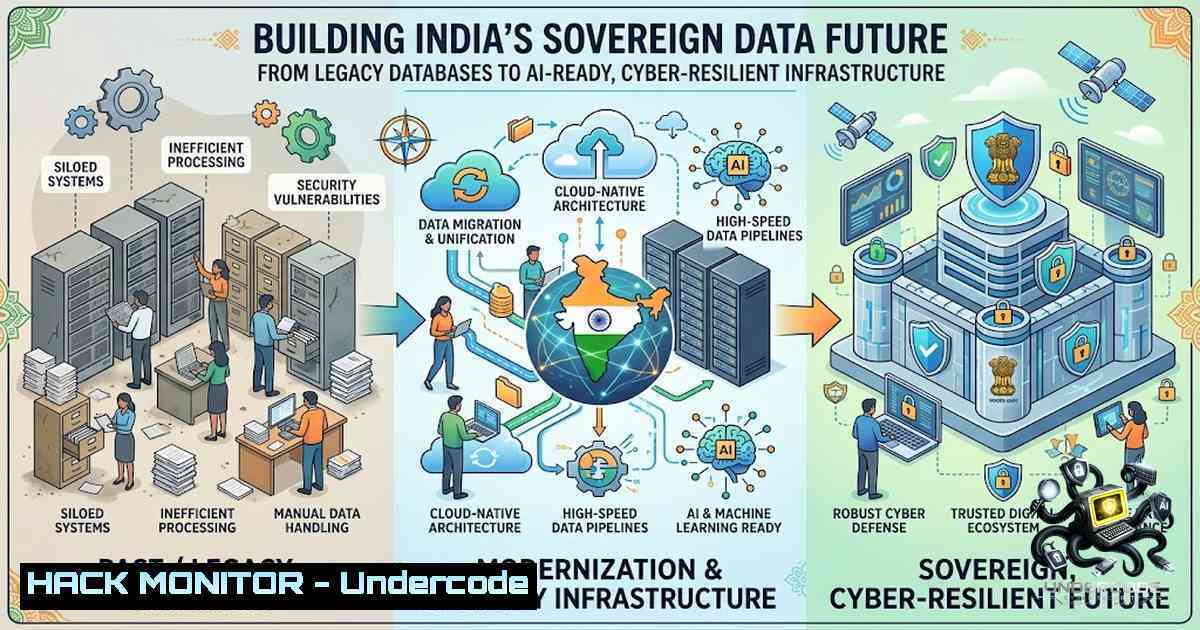
Introduction:
At the ASSOCHAM Fintech Festival in New Delhi, UDU Labs has positioned itself at the intersection of four critical priorities facing India’s BFSI sector: AI readiness, data sovereignty, regulatory compliance, and cyber resilience. These are not separate challenges but interconnected pillars resting on one foundation—secure, reliable, and modern data infrastructure. As Indian financial institutions process crores of transactions daily and government departments manage hundreds of millions of citizen records, the database layer has become the decisive battleground for national digital sovereignty.
Learning Objectives:
- Understand the architectural requirements for sovereign, AI-ready database infrastructure in regulated Indian enterprises
- Master practical database security hardening, high availability configuration, and compliance auditing techniques
- Develop a step-by-step migration strategy from legacy systems to modern, resilient data platforms
You Should Know:
1. ShaktiDB: India’s Sovereign Database Platform
ShaktiDB represents a fundamental shift in how Indian enterprises approach data infrastructure. Built on a hardened fork of PostgreSQL, it is designed specifically for government agencies and highly regulated sectors. Unlike conventional databases architected for foreign jurisdictions, ShaktiDB starts from an Indian premise: data that stays in India, security posture aligned to Cert-In, and compliance with RBI, SEBI, and government mandates from day one.
The platform’s distributed architecture enables horizontal scale-out across multiple nodes without proprietary vendor lock-in, delivering mission-critical high availability for systems that cannot afford downtime. This is not merely a PostgreSQL fork—it’s an architectural step forward for India-scale workloads.
Step-by-Step: PostgreSQL to ShaktiDB Migration Assessment
Before migrating, assess your current PostgreSQL deployment:
 Check PostgreSQL version and extensions
psql -c "SELECT version();"
psql -c "\dx"

Assess database size and object count
psql -c "SELECT pg_database_size('your_database')/1024/1024 AS size_mb;"
psql -c "SELECT count() FROM information_schema.tables WHERE table_schema NOT IN ('information_schema','pg_catalog');"

Generate security assessment report using pgdsat (CIS benchmark compatible)
wget https://github.com/HexaCluster/pgdsat/releases/latest/download/pgdsat
chmod +x pgdsat
./pgdsat --host localhost --port 5432 --dbname your_db --user postgres --output report.html
The pgdsat tool checks approximately 90 PostgreSQL security controls, including all CIS benchmark recommendations. Review the HTML report to identify gaps that ShaktiDB’s hardened configuration addresses natively.
2. Database Security Hardening for Regulated Environments
For BFSI institutions, database security is non-1egotiable. The CIS PostgreSQL Benchmark provides a 200+ page framework of configuration recommendations. Critical hardening steps include replacing weak authentication methods with SCRAM-SHA-256, enabling pgaudit for comprehensive audit logging, implementing row-level security for multi-tenant data, and enforcing SSL with TLSv1.2 minimum.
Step-by-Step: PostgreSQL Security Hardening
 1. Backup existing configuration
sudo cp /etc/postgresql/17/main/postgresql.conf /etc/postgresql/17/main/postgresql.conf.bak
sudo cp /etc/postgresql/17/main/pg_hba.conf /etc/postgresql/17/main/pg_hba.conf.bak

<ol>
<li>Install pgAudit extension
sudo apt update
sudo apt install postgresql-17-pgaudit  Ubuntu/Debian
For RHEL/CentOS: sudo yum install pgaudit_17</p></li>
<li><p>Configure pgAudit in postgresql.conf
sudo vi /etc/postgresql/17/main/postgresql.conf
Add or modify:
shared_preload_libraries = 'pgaudit'
pgaudit.log = 'ddl, role, write'
pgaudit.log_relation = on
pgaudit.log_statement_once = off
pgaudit.role = 'auditor'</p></li>
<li><p>Configure authentication - replace 'trust' and 'md5' with SCRAM-SHA-256
sudo vi /etc/postgresql/17/main/pg_hba.conf
Change: host all all 0.0.0.0/0 md5
To: host all all 0.0.0.0/0 scram-sha-256</p></li>
<li><p>Enforce SSL/TLS
In postgresql.conf:
ssl = on
ssl_cert_file = 'server.crt'
ssl_key_file = 'server.key'
ssl_min_protocol_version = 'TLSv1.2'</p></li>
<li><p>Reload PostgreSQL
sudo systemctl reload postgresql</p></li>
<li><p>Create auditor role and verify auditing
sudo -u postgres psql -c "CREATE ROLE auditor WITH LOGIN;"
sudo -u postgres psql -c "ALTER SYSTEM SET pgaudit.role = 'auditor';"
sudo -u postgres psql -c "SELECT pg_reload_conf();"
For Windows environments using SQL Server, implement Transparent Data Encryption (TDE) and Always Encrypted for column-level protection. Enable SQL Server Audit and configure Extended Events for comprehensive activity logging.
3. Building AI-Ready Data Infrastructure
AI is only as good as the data that fuels it. Traditional architectures assume all AI-ready data will be consolidated into a single warehouse before queries run—an assumption that breaks under production AI workloads. AI-ready infrastructure requires real-time availability, consistent structure, strong in-flight governance, and continuous synchronization across systems.
Step-by-Step: Preparing Your Database for AI Workloads
-- 1. Enable vector extensions for AI embeddings (PostgreSQL)
CREATE EXTENSION IF NOT EXISTS vector;

-- 2. Create vector column for embeddings
ALTER TABLE your_table ADD COLUMN embedding vector(1536);

-- 3. Create index for similarity search
CREATE INDEX idx_embedding ON your_table USING ivfflat (embedding vector_cosine_ops);

-- 4. Implement row-level security for AI data access
ALTER TABLE your_table ENABLE ROW LEVEL SECURITY;
CREATE POLICY ai_access_policy ON your_table
USING (tenant_id = current_setting('app.current_tenant')::uuid);

-- 5. Set up logical replication for AI pipeline data synchronization
-- On publisher:
CREATE PUBLICATION ai_pipeline FOR TABLE your_table;

-- On subscriber:
CREATE SUBSCRIPTION ai_pipeline_subscription
CONNECTION 'host=publisher_host dbname=source_db user=replicator'
PUBLICATION ai_pipeline;
For AI pipeline security, adopt a zero-trust approach: verify every user, service, and data source; track data lineage and provenance; and enforce least privilege per pipeline stage. Centralize secrets management and remove credentials from code, automating rotation and injecting secrets only at runtime.
4. Compliance and Data Sovereignty: The Regulatory Imperative
India’s regulatory landscape has transformed data infrastructure decisions into compliance imperatives. The RBI mandates that all payment system data must be stored exclusively on servers located within India. The DPDP Act, SEBI LODR requirements, and FIU-IND regulations impose overlapping obligations that demand a unified compliance strategy.
Step-by-Step: Implementing Data Sovereignty Controls
-- 1. Implement data classification tagging
ALTER TABLE customer_data ADD COLUMN data_classification VARCHAR(20);
UPDATE customer_data SET data_classification = 'REGULATED'
WHERE contains_sensitive_data = true;

-- 2. Create geo-fencing policies (conceptual - requires application-layer enforcement)
-- Tag records by jurisdiction
ALTER TABLE transactions ADD COLUMN data_residency VARCHAR(10) DEFAULT 'INDIA';

-- 3. Implement audit logging for compliance (CERT-In mandates 5-year retention)
CREATE TABLE audit_log (
id BIGSERIAL PRIMARY KEY,
event_time TIMESTAMPTZ DEFAULT now(),
user_name TEXT,
database_name TEXT,
table_name TEXT,
action TEXT,
query TEXT,
ip_address INET,
application_name TEXT
);

-- 4. Create function to automatically log all DDL operations
CREATE OR REPLACE FUNCTION audit_ddl() RETURNS event_trigger AS $$
BEGIN
INSERT INTO audit_log (user_name, database_name, action, query)
SELECT current_user, current_database(), tg_tag, current_query();
END;
$$ LANGUAGE plpgsql;

CREATE EVENT TRIGGER audit_ddl_trigger ON ddl_command_end
EXECUTE FUNCTION audit_ddl();

-- 5. Verify data residency - check for any tables storing data outside India
-- (Requires application-layer enforcement and cloud provider configuration)
For Windows/SQL Server environments, use Always Encrypted with secure enclaves to protect sensitive data even from database administrators. Implement dynamic data masking for production support access and maintain comprehensive audit trails using SQL Server Audit.
- High Availability and Disaster Recovery for Mission-Critical Systems
Financial institutions cannot afford database downtime. ShaktiDB’s distributed architecture provides native horizontal scale-out and high availability. For heterogeneous environments, configure cross-platform Always On Availability Groups between Windows and Linux replicas.
Step-by-Step: Configuring Database High Availability
Linux (PostgreSQL/ShaktiDB with Patroni and etcd):
 Install Patroni and etcd
sudo apt install patroni etcd

Configure etcd cluster
sudo vi /etc/default/etcd
 ETCD_INITIAL_CLUSTER="node1=http://192.168.1.10:2380,node2=http://192.168.1.11:2380"
 ETCD_INITIAL_CLUSTER_STATE="new"

Configure Patroni (postgresql.yml)
scope: shaktidb_cluster
name: node1
restapi:
listen: 0.0.0.0:8008
connect_address: 192.168.1.10:8008
etcd:
host: 192.168.1.10:2379
bootstrap:
dcs:
ttl: 30
loop_wait: 10
retry_timeout: 10
maximum_lag_on_failover: 1048576
postgresql:
use_pg_rewind: true
postgresql:
listen: 0.0.0.0:5432
connect_address: 192.168.1.10:5432
data_dir: /var/lib/postgresql/17/main
bin_dir: /usr/lib/postgresql/17/bin

Start Patroni
sudo systemctl start patroni
Windows (SQL Server Always On Availability Group):
 Using dbatools PowerShell module
Install-Module -1ame dbatools -Force

Create availability group with automatic failover
$primary = "SQL01"
$secondary = "SQL02"
$agName = "AG_Finance"

New-DbaAvailabilityGroup -Primary $primary -Secondary $secondary `
-1ame $agName -Database "FinanceDB","TransactionDB" `
-FailoverMode Automatic -AvailabilityMode SynchronousCommit `
-SeedingMode Automatic

Verify AG status
Get-DbaAvailabilityGroup -SqlInstance $primary
Get-DbaAgReplica -SqlInstance $primary
6. Legacy Database Modernization: Migration Strategies
Modernizing legacy databases requires a risk-mitigated, wave-based approach that prioritizes business value over infrastructure-first provisioning.
Step-by-Step: SQL Server to Linux Migration (Backup and Restore)
On Windows (Source):
-- Create full backup in SSMS or via T-SQL
BACKUP DATABASE [bash] TO DISK = 'C:\Backup\LegacyDB.bak'
WITH COMPRESSION, STATS = 10;
On Linux (Target – ShaktiDB/PostgreSQL compatible):
 Install required tools for migration
sudo apt install pgloader

For SQL Server to PostgreSQL migration using pgloader
pgloader mssql://user:password@windows_host/LegacyDB postgresql://user:password@localhost/shaktidb_target

Or use manual approach with backup/restore for cross-platform
 Transfer backup file using SCP
scp user@windows_host:/mnt/c/Backup/LegacyDB.bak /tmp/

For SQL Server on Linux, restore:
 (Note: Direct SQL Server backup restore requires SQL Server on Linux)
/opt/mssql-tools18/bin/sqlcmd -S localhost -U sa -P 'YourPassword' -Q "
RESTORE DATABASE LegacyDB FROM DISK = '/tmp/LegacyDB.bak'
WITH MOVE 'LegacyDB_Data' TO '/var/opt/mssql/data/LegacyDB.mdf',
MOVE 'LegacyDB_Log' TO '/var/opt/mssql/data/LegacyDB_log.ldf',
STATS = 10"
For Oracle to ShaktiDB migration, use Oracle GoldenGate or AWS DMS with custom schema conversion. Always perform migration in phases: assessment, schema conversion, data validation, cutover planning, and post-migration optimization.
7. Cyber Resilience: Beyond Security to Recovery
Cyber security aims to block attacks; cyber resilience ensures that when attacks happen, impact is minimized and operations resume as quickly as possible. A five-step framework for database cyber resilience includes: protect all data, ensure data is always recoverable, detect and investigate threats, practice application resilience, and optimize data risk posture.
Step-by-Step: Implementing Database Cyber Resilience
 1. Implement point-in-time recovery (PITR) - PostgreSQL
 Enable WAL archiving in postgresql.conf:
wal_level = replica
archive_mode = on
archive_command = 'test ! -f /var/lib/postgresql/archives/%f && cp %p /var/lib/postgresql/archives/%f'

<ol>
<li>Create base backup script (automated)
!/bin/bash
BACKUP_DIR="/backup/postgresql/$(date +%Y%m%d_%H%M%S)"
mkdir -p $BACKUP_DIR
pg_basebackup -D $BACKUP_DIR -Ft -z -P
echo "Base backup completed: $BACKUP_DIR"</p></li>
<li><p>Test restore procedure
Stop PostgreSQL, clear data directory, restore from backup
sudo systemctl stop postgresql
sudo rm -rf /var/lib/postgresql/17/main/
tar -xzf /backup/postgresql/20260101_020000/base.tar.gz -C /var/lib/postgresql/17/main/
Configure recovery: create recovery.signal and set restore_command
echo "restore_command = 'cp /var/lib/postgresql/archives/%f %p'" >> /var/lib/postgresql/17/main/postgresql.auto.conf
sudo systemctl start postgresql</p></li>
<li><p>Implement immutable backups (cloud storage with object lock)
AWS CLI example for S3 with Object Lock
aws s3 cp /backup/postgresql/ s3://your-bucket/backups/ \
--recursive --storage-class GLACIER \
--object-lock-mode GOVERNANCE --object-lock-retain-until-date "2027-01-01"</p></li>
<li><p>Enable database activity monitoring
Configure pgaudit for comprehensive logging (see Section 2)
Forward logs to SIEM
sudo tail -f /var/log/postgresql/postgresql-17-main.log | logger -t postgres-audit
For Windows/SQL Server, implement SQL Server Backup with compression and encryption, configure Azure Site Recovery or similar for DR, and enable Threat Detection in Azure SQL or equivalent.
What Undercode Say:
- Key Takeaway 1: AI readiness, data sovereignty, regulatory compliance, and cyber resilience are not separate priorities—they converge at the database layer. Organizations must treat database modernization as the foundational enabler for all four objectives.
-
Key Takeaway 2: ShaktiDB represents a paradigm shift for Indian enterprises, offering PostgreSQL compatibility with built-in sovereignty, security, and scale. The platform’s distributed architecture eliminates vendor lock-in while ensuring data governance aligns with Indian regulatory frameworks.
Analysis: The fintech sector’s database requirements have evolved beyond simple transaction processing. Modern financial institutions need infrastructure that supports real-time AI inference, maintains cryptographic audit trails for regulatory compliance, enforces data localization for sovereignty, and provides instant recovery from cyber incidents. UDU Labs’ positioning at ASSOCHAM reflects a growing recognition that these capabilities must be built into the database layer itself—not bolted on as afterthoughts. The emergence of sovereign database platforms like ShaktiDB, backed by IIT Madras and the Ministry of Electronics and IT, signals a maturing ecosystem where Indian enterprises can reduce dependence on foreign proprietary platforms while meeting the most demanding regulatory and security requirements.
Prediction:
- +1 Sovereign database platforms will capture 15-20% of India’s enterprise database market by 2028 as regulatory mandates accelerate domestic technology adoption.
-
+1 AI workload optimization will become the primary driver for database modernization, with 70% of BFSI organizations implementing vector extensions and embedding pipelines by 2027.
-
-1 Organizations that delay database modernization face increasing regulatory penalties and security breach risks as DPDP Act enforcement intensifies through 2026-2027.
-
+1 The convergence of cybersecurity and data sovereignty will create a new category of “sovereign security” solutions, combining indigenous encryption, local key management, and Indian-certified compliance frameworks.
-
-1 Legacy database migration failures will increase 40% year-over-year as organizations rush to meet compliance deadlines without adequate migration planning and testing.
▶️ Related Video (84% Match):
https://www.youtube.com/watch?v=7ptBvL62Yz0
🎯Let’s Practice For Free:
🎓 Live Courses & Certifications:
Join Undercode Academy for Verified Certifications
🚀 Request a Custom Project:
Secure, high-velocity infrastructure and disruptive technological engineering. Contact our engineering team for high-tier development and proprietary systems:
[email protected]
💎 Smart Architecture | 🛡️ Secure by Design | ⭐ Trusted by Thousands
IT/Security Reporter URL:
Reported By: Assocham2026 Fintech – Hackers Feeds
Extra Hub: Undercode MoN
Basic Verification: Pass ✅


