
Listen to this Post
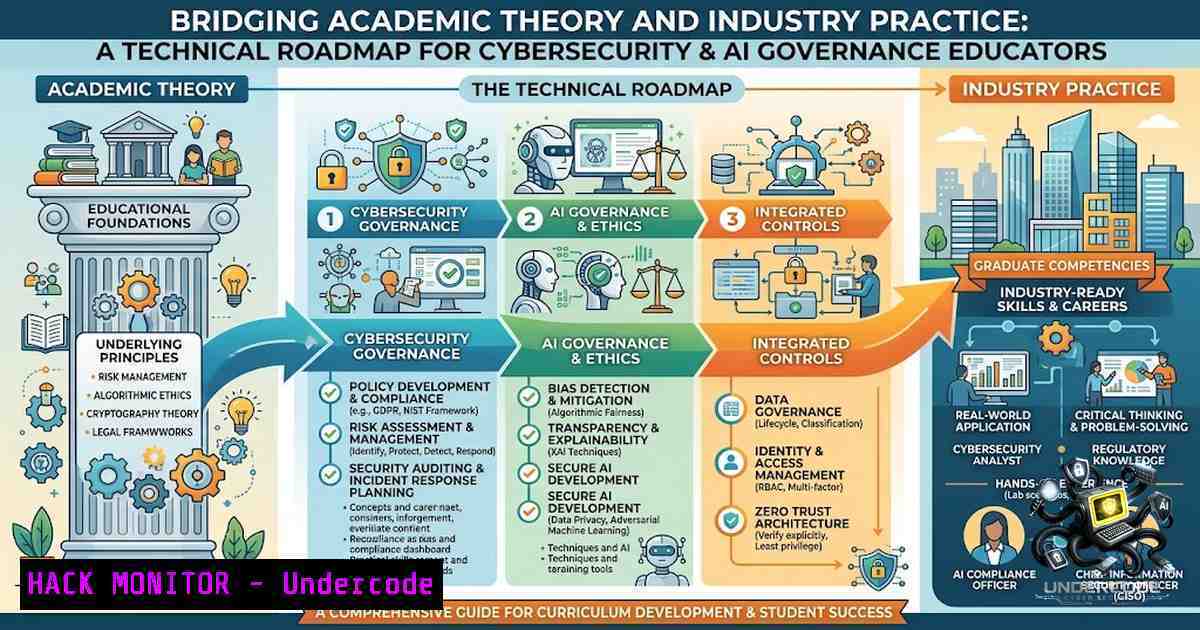
Introduction:
The rapid evolution of cyber threats, regulatory frameworks, and artificial intelligence necessitates a workforce that is not only technically proficient but also strategically literate. As industries grapple with the complexities of AI governance, quantum-resistant cryptography, and insider risk management, the demand for educators who can translate high-level academic theory into actionable, hands-on practice has never been higher. This article explores the technical and pedagogical intersections of modern cybersecurity education, offering a comprehensive guide for IT leaders, cybersecurity practitioners, and educators on structuring curricula and operational frameworks to address the most pressing challenges in the field.
Learning Objectives:
- Understand the core competencies required for modern cybersecurity and AI governance roles, including GRC, cloud security, and PQC.
- Master the technical implementation of key security controls using Linux, Windows, and cloud-1ative tools.
- Develop a structured approach to integrating academic frameworks with practical, hands-on labs and exercises.
You Should Know:
- Architecting an AI Governance and GRC Lab Environment
A robust Governance, Risk, and Compliance (GRC) program is the backbone of any security strategy, and its principles must be taught through practical application. An effective lab environment allows practitioners to simulate risk assessments, policy enforcement, and compliance auditing. This section provides a step-by-step guide to setting up a GRC-focused lab using open-source tools and cloud services, specifically catering to the needs of adjunct instructors and industry practitioners.
Step 1: Establish a Secure Virtualization Foundation.
Begin by deploying a hypervisor such as VMware ESXi, Proxmox, or VirtualBox on a dedicated host. This will serve as the foundation for isolated virtual machines (VMs).
– Linux Command (Proxmox): `pveupgrade` to ensure your host is up-to-date before creating VMs.
– Windows Command (PowerShell as Admin): `Enable-WindowsOptionalFeature -Online -FeatureName Microsoft-Hyper-V -All` to enable Hyper-V on a Windows lab machine for nested virtualization.
Step 2: Deploy a Centralized Logging and Monitoring Stack.
Implement the Elastic Stack (Elasticsearch, Logstash, Kibana) or a Splunk instance to ingest logs from your VMs. This is the core of technical compliance monitoring.
– Linux Command (Ubuntu/Debian): To install Elasticsearch, use `wget -qO – https://artifacts.elastic.co/GPG-KEY-elasticsearch | sudo apt-key add -` followed by sudo apt-get install elasticsearch. Configure `network.host: 0.0.0.0` in the `elasticsearch.yml` to allow connections from other VMs.
– Configuration: Set up a Windows Event Log collector to forward security logs to your SIEM. This mirrors enterprise SIEM and SOAR deployments.
Step 3: Implement an Open-Source GRC Platform.
Deploy an application like OpenRMF, Eramba, or SimpleRisk. These tools automate the risk assessment process and help track compliance against frameworks like NIST CSF, ISO 27001, and SOC 2.
– Linux Command: For SimpleRisk, a LAMP stack is required. Install Apache, MySQL, and PHP: sudo apt install apache2 mysql-server php libapache2-mod-php php-mysql. Then, download the application, configure the database, and access the web interface to start defining your risk register.
– Tutorial: Create a “risk scenario” that simulates an unpatched vulnerability. Map this scenario to NIST controls, assign a risk score, and document the mitigation plan within the tool. This provides a tangible workflow for students.
2. Mastering Cloud Security Posture Management (CSPM)
As organizations migrate to multi-cloud environments, understanding native security tools is paramount. For educators, this involves creating hands-on modules that allow students to harden AWS, Azure, and GCP environments.
Step 1: Configure Cloud Identity and Access Management (IAM).
Implement the principle of least privilege using cloud-1ative IAM policies.
– Windows/Azure CLI: To create a custom role in Azure, use az role definition create --role-definition '{"Name":"CustomReader","Description":"Read-only access","Actions":["Microsoft.Resources/subscriptions/resourceGroups/read"],"NotActions":[],"AssignableScopes":["/subscriptions/your-subscription-id"]}'.
– Tool Configuration: Enable AWS CloudTrail and AWS Config to monitor and record API activity. Create a Config rule that checks for unencrypted S3 buckets. This highlights the critical intersection of configuration and compliance.
Step 2: Implement Network Hardening.
Deploy a virtual network and apply strict security groups and network ACLs.
– Linux/AWS CLI: To create a security group that only allows SSH from a specific IP, use aws ec2 authorize-security-group-ingress --group-id sg-xxxxxxxx --protocol tcp --port 22 --cidr xx.xx.xx.xx/32.
– Azure CLI: For Azure, use az network nsg rule create --1sg-1ame myNSG --1ame AllowSSH --priority 100 --direction Inbound --access Allow --protocol Tcp --destination-port-ranges 22.
Step 3: Automate Compliance Scanning with Open-Source Tools.
Utilize tools like Prowler for AWS or ScoutSuite to automate security audits.
– Linux Command: Run a Prowler scan: prowler aws --output-format csv --output-file results.csv. This command generates a comprehensive report of misconfigurations, which can be used as a teaching tool for identifying common cloud vulnerabilities and remediation steps.
- Securing the Hybrid Workforce: Insider Risk and Endpoint Protection
Insider threats remain one of the most challenging risks to mitigate. A curriculum must address both technical controls and behavioral analysis.
Step 1: Deploy an Endpoint Detection and Response (EDR) Simulation.
While enterprise EDRs are costly, open-source alternatives like Wazuh can be used to simulate detection and response.
– Linux Command: Install the Wazuh agent on a target VM: `wget https://packages.wazuh.com/key/GPG-KEY-WAZUH` and then `sudo apt install wazuh-agent`. Configure the agent to connect to a central Wazuh manager.
– Step-by-step: Simulate an insider threat by creating a script that attempts to access sensitive files outside of normal working hours. Configure a custom Wazuh rule to trigger an alert when this event occurs. This teaches students to correlate user behavior with system events.
Step 2: Active Directory and Windows Security Configuration.
Given Windows’ prevalence in enterprise, hardening AD and Windows endpoints is critical.
– Windows Command (PowerShell): To audit AD group memberships, use Get-ADGroupMember -Identity "Domain Admins". Use this in a lab to identify overly permissive groups.
– Windows Command: Implement AppLocker using `Get-AppLockerPolicy` and `Set-AppLockerPolicy` to enforce whitelisting, preventing unauthorized executables from running. This ties directly into reducing the attack surface for remote workers.
4. Implementing Post-Quantum Cryptography (PQC) Readiness
With the rise of quantum computing, preparing for PQC is no longer optional. Educators should introduce concepts of crypto-agility.
Step 1: Analyze Current Cryptographic Inventories.
Use tools to scan for weak ciphers and outdated TLS versions.
– Linux Command: Use `nmap –script ssl-enum-ciphers -p 443 target.com` to identify the ciphers being used. This provides a baseline for assessing cryptographic posture.
Step 2: Integrate PQC Algorithms in a Sandbox.
OpenSSL 3.0 supports PQC algorithms like Kyber (now ML-KEM) and Dilithium (ML-DSA).
– Tutorial: Compile OpenSSL 3.0 from source with the oqs-provider to enable PQC algorithms.
– Linux Command: `openssl s_client -connect example.com:443 -cipher ‘kyber512’` to test a PQC cipher suite. This hands-on approach demonstrates the practical implications of migrating to quantum-resistant algorithms, a skill that will be in high demand.
- Vulnerability Exploitation and Mitigation in a DevSecOps Pipeline
Embedding security into the CI/CD pipeline is a core responsibility of modern security leaders.
Step 1: Integrate SAST/DAST into a CI/CD Pipeline.
Use GitLab’s CI/CD or Jenkins to orchestrate security scans.
– Linux Command (Jenkins): Install the OWASP Dependency-Check plugin. Then, in a Jenkinsfile, add a stage: dependencyCheck scan: '/.jar'.
– Exploitation: In a separate VM, deploy a vulnerable web application (e.g., using Docker: docker run -p 8080:80 vulnerables/web-dvwa). Use Burp Suite or OWASP ZAP to demonstrate SQL Injection or XSS.
– Mitigation: Show how a SAST tool (like SonarQube) identifies the vulnerability in the source code during the build phase, effectively shifting security left. Provide a code fix (e.g., parameterized SQL queries) to demonstrate remediation.
- IT Project Management and Technology Strategy in Cybersecurity
This involves moving beyond technical commands to strategic implementation. It focuses on bridging the gap between the CISO’s office and the engineering team.
Step 1: Simulate an Incident Response (IR) Tabletop Exercise.
Utilize open-source IR frameworks like the MITRE ATT&CK Navigator.
– Linux/Windows: No specific command is needed, but use the MITRE ATT&CK Navigator to map attack tactics to mitigations. Create a scenario where a ransomware group uses the “Pass the Hash” technique. Use a “What-If” analysis to map out the response steps, communication plan, and technical containment procedures (e.g., isolating the infected host via firewall or network ACLs).
– Tool Configuration: Configure a ticketing system like Jira or an open-source alternative like Redmine to simulate the management of security tasks and track the progress of remediation efforts.
7. Automating Security with Python and APIs
Automation is essential for security at scale.
Step 1: Write a Python Script to Query an API for Threat Intelligence.
– Linux/Windows Command: Use pip install requests. Then write a script to fetch indicators of compromise (IOCs) from a free Threat Intelligence feed (e.g., `https://otx.alienvault.com/api/v1/indicators/`).
– Code Snippet:
import requests
url = "https://otx.alienvault.com/api/v1/indicators/ipv4/8.8.8.8/general"
response = requests.get(url)
if response.status_code == 200:
print(response.json())
– Step-by-step: Parse the output and feed it into a firewall API (e.g., Palo Alto or Check Point) to automatically block malicious IPs. This teaches the integration of security orchestration, automation, and response (SOAR) principles.
What Undercode Say:
- Key Takeaway 1: The gap between academic theory and operational reality is best bridged by building lab environments that mirror the technical and strategic complexities of modern enterprises. The hands-on approach outlined above transforms abstract concepts like “Zero Trust” into actionable configurations.
- Key Takeaway 2: Security education must evolve to include “crypto-agility” and automated DevOps security. Teaching tools like Prowler and the integration of APIs is no longer optional; it is a requirement for producing job-ready professionals who can manage risk and compliance in a hybrid, AI-driven landscape.
- Analysis: The field of cybersecurity education is at a pivotal juncture. The shift towards AI governance and PQC demands that practitioners be multi-faceted. The commands and configurations detailed here represent the core technical pillars—Cloud, Identity, Endpoint, and Automation—that an instructor must be fluent in to guide the next generation. Furthermore, the move towards integrating IT project management with technical skills ensures that graduates can not only “do” security but also “manage” security initiatives, making them invaluable assets in a resource-constrained industry. The strategic insight provided by a DBA combined with the technical rigor of an MS creates the ideal profile for a leader who can communicate risk to the board while implementing controls in the server room. This dual capability is the hallmark of a modern cybersecurity leader.
Prediction:
+1: The demand for adjunct professors with deep, current industry experience will surge as universities scramble to update their curricula to address AI security and post-quantum cryptography, leading to more hands-on, lab-centric programs.
+1: The integration of GRC and technical automation will accelerate the creation of “DevSecOps” roles, requiring professionals to be fluent in compliance frameworks and code, further blurring the lines between security engineering and governance.
-1: If academia fails to rapidly adopt tools like the SIEM and CSPM platforms discussed, a significant skills gap will emerge in the next 3-5 years, as graduates will be ill-prepared to handle the sophistication of modern cyberattacks.
-1: The rapid pace of PQC research may outstrip the ability of traditional educational cycles to keep up, making continuous, real-time upskilling through adjunct practitioners the only viable short-term mitigation.
▶️ Related Video (78% Match):
🎯Let’s Practice For Free:
🎓 Live Courses & Certifications:
Join Undercode Academy for Verified Certifications
🚀 Request a Custom Project:
Secure, high-velocity infrastructure and disruptive technological engineering. Contact our engineering team for high-tier development and proprietary systems:
[email protected]
💎 Smart Architecture | 🛡️ Secure by Design | ⭐ Trusted by Thousands
IT/Security Reporter URL:
Reported By: Aazeemi Im – Hackers Feeds
Extra Hub: Undercode MoN
Basic Verification: Pass ✅


