
Listen to this Post
Introduction
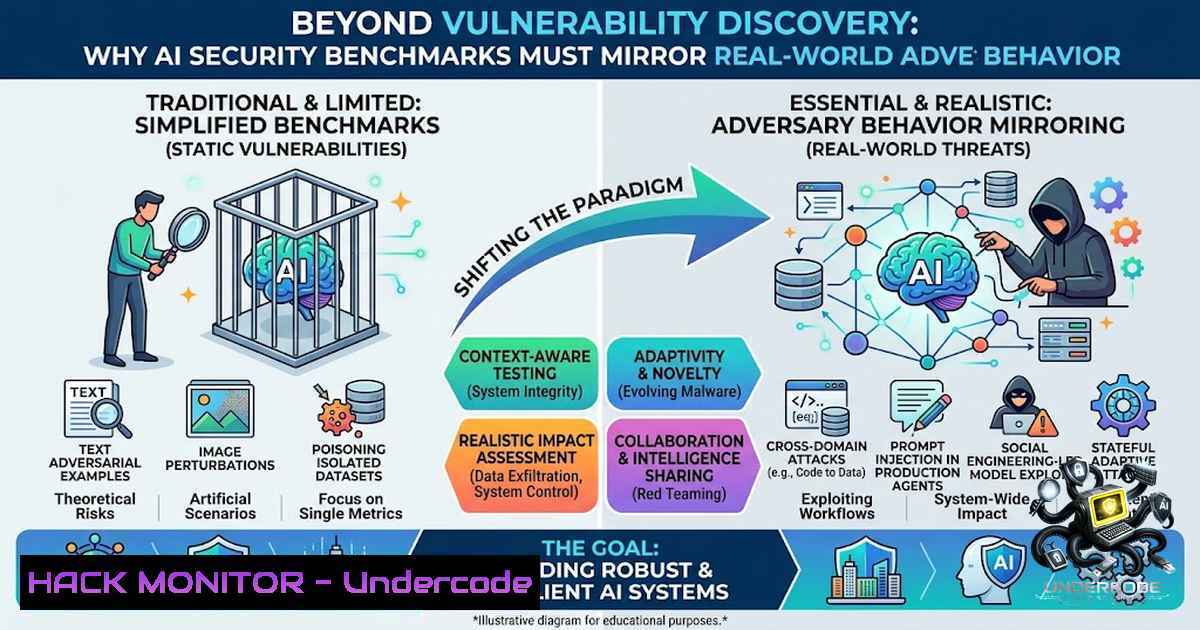
The cybersecurity industry stands at a critical inflection point in how it evaluates artificial intelligence. Current frontier AI security benchmarks remain fixated on vulnerability discovery—measuring whether models can find flaws, generate exploits, or produce proof-of-concept code. While vulnerability exploitation now accounts for 31% of breaches according to the Verizon 2026 Data Breach Investigations Report, this leaves a staggering 69% of attacks that begin through credential abuse, phishing, social engineering, trusted relationships, and hands-on-keyboard activity after initial access. The fundamental blind spot is clear: public benchmarks do not evaluate whether AI can detect real adversary behavior in real telemetry. CrowdStrike and Meta have responded with CyberSOCEval, an open-source benchmark suite that measures LLM performance across critical security workflows including malware analysis and threat intelligence reasoning.
Learning Objectives & Secrets
- Objective 1: Master AI Benchmark Evaluation Frameworks – Understand how CyberSOCEval and CyberSecEval measure LLM capabilities in security operations, moving beyond binary vulnerability discovery to assess detection, investigation, and response workflows. Secret tip: Focus on benchmarks that test AI against real-world adversary tradecraft combined with expert-designed security reasoning scenarios, not synthetic test cases.
-
Objective 2: Implement Identity-Based Detection Engineering – Learn to configure identity protection policies that detect and block credential abuse, the most common attack vector in modern breaches. Secret tip: Create conditional rules that block access from unmanaged devices to domain controllers—attackers often use unmanaged devices to circumvent prevention controls.
-
Objective 3: Operationalize AI-Assisted Threat Hunting – Deploy AI capabilities to investigate across endpoints, identities, and cloud environments simultaneously. Secret tip: Use AI to correlate telemetry from disparate sources—the true power emerges when detection models synthesize endpoint, identity, and cloud signals into a unified threat narrative.
You Should Know
1. The CyberSOCEval Benchmark Framework
CyberSOCEval, built on Meta’s open-source CyberSecEval framework and CrowdStrike’s frontline threat intelligence, establishes a new standard for evaluating LLMs in security operations. Unlike traditional benchmarks that measure isolated capabilities, CyberSOCEval tests AI systems against a combination of real-world adversary tradecraft and expert-designed security reasoning scenarios based on observed adversarial tactics. This approach helps organizations validate AI performance under pressure and prove operational readiness before deployment.
What this does: CyberSOCEval enables security teams to pinpoint where AI delivers maximum value while providing model developers with a North Star for improving capabilities that enhance SOC effectiveness.
How to use it: Access the CyberSOCEval open-source benchmark suite through Meta’s CyberSecEval framework on GitHub:
 Clone the CyberSecEval framework
git clone https://github.com/meta-llama/PurpleLlama.git
cd PurpleLlama/CybersecurityBenchmarks

Run benchmark evaluations against your LLM of choice
python -m CybersecurityBenchmarks.benchmark \
--model=your-model \
--tasks=cybersoceval \
--output-dir=./results
Linux command to monitor AI model performance in a SOC environment:
 Monitor model inference latency and accuracy
watch -1 5 'curl -s http://localhost:8000/metrics | grep -E "inference_latency|accuracy_score"'
Windows PowerShell equivalent:
 Continuously poll model performance metrics
while ($true) {
Invoke-RestMethod -Uri "http://localhost:8000/metrics" | Select-Object inference_latency, accuracy_score
Start-Sleep -Seconds 5
}
2. Configuring Falcon Identity Protection Policies
With 80% of attacks involving compromised credentials, identity protection has become paramount. CrowdStrike Falcon Identity Protection stops modern identity attacks in real time through a rich, customizable policy engine.
Step-by-step guide to creating an identity protection rule:
- Navigate to Policy Rules: Using the main menu, click Identity Protection → Policy Rules
- Create a new rule: Click “add rule” and enter a descriptive name (e.g., “Block RDP to DC from Unmanaged”)
- Select a trigger: Choose the event that activates the rule—access, account events, identity detections, or authentication to federated services
- Add conditions: Define conditions that must be met for the rule to execute. For example, block RDP access to domain controllers when the source device does not have Falcon installed
- Configure actions: Specify the response—block, alert, or quarantine
- Enable simulation mode: Test rules in simulation mode before enforcement to avoid disrupting business operations
API configuration for automated identity protection:
 Authenticate to CrowdStrike Falcon API
curl -X POST "https://api.crowdstrike.com/oauth2/token" \
-H "Content-Type: application/x-www-form-urlencoded" \
-d "client_id=YOUR_CLIENT_ID&client_secret=YOUR_CLIENT_SECRET"

Create an identity protection policy rule via API
curl -X POST "https://api.crowdstrike.com/identity-protection/entities/rules/v1" \
-H "Authorization: Bearer YOUR_ACCESS_TOKEN" \
-H "Content-Type: application/json" \
-d '{
"name": "Block Unmanaged RDP",
"trigger": "access",
"conditions": [{"type": "access_type", "operator": "equals", "value": "RDP"}],
"action": "block"
}'
Windows PowerShell API authentication:
$body = @{
client_id = "YOUR_CLIENT_ID"
client_secret = "YOUR_CLIENT_SECRET"
}
$token = Invoke-RestMethod -Method Post -Uri "https://api.crowdstrike.com/oauth2/token" -Body $body
$headers = @{ Authorization = "Bearer $($token.access_token)" }
3. Detecting Adversary Behavior After Initial Access
Once an adversary gains initial access, the defender’s work becomes exponentially more complex. Security teams must detect and triage suspicious activity across massive alert volumes while balancing signal and noise. Speed determines whether an adversary is contained in minutes or operates on a network for extended periods.
What this does: AI-powered detection systems analyze behavioral patterns across endpoints, identities, and cloud environments to identify anomalies that indicate post-exploitation activity.
Linux command for monitoring suspicious process behavior:
 Monitor for unusual parent-child process relationships (indicative of LOLBins)
ausearch -ts recent -m execve | grep -E "parent.child" | awk '{print $NF}' | sort | uniq -c | sort -1r

Detect suspicious scheduled tasks (common persistence mechanism)
crontab -l 2>/dev/null | grep -v "^" | grep -E "wget|curl|nc|bash -i|python -c"

Monitor for privilege escalation attempts
sudo grep "COMMAND" /var/log/auth.log | grep -E "sudo|su|pkexec" | tail -20
Windows PowerShell commands for post-compromise detection:
 Detect suspicious scheduled tasks
Get-ScheduledTask | Where-Object {$_.State -1e "Disabled"} | Select-Object TaskName, TaskPath, State

Check for unusual service installations
Get-Service | Where-Object {$<em>.StartType -eq "Auto" -and $</em>.Status -eq "Running"} | Select-Object Name, DisplayName

Monitor for unusual outbound connections
Get-1etTCPConnection -State Established | Where-Object {$<em>.RemotePort -1e 443 -and $</em>.RemotePort -1e 80}
4. Engineering High-Quality Detections with AI
Effective detection engineering requires translating adversary behavior into actionable rules that minimize false positives while maximizing true positive rates. AI can accelerate this process by analyzing historical telemetry to identify patterns that human analysts might miss.
Step-by-step guide to AI-assisted detection engineering:
- Collect baseline telemetry: Gather endpoint, identity, and cloud logs over a 30-day period
- Train behavioral models: Use unsupervised learning to establish normal behavior patterns
- Identify anomalies: Flag deviations from baseline that correlate with known adversary techniques
- Validate with threat intelligence: Cross-reference anomalies with MITRE ATT&CK mappings and CrowdStrike threat intelligence
- Create detection rules: Translate validated patterns into SIEM queries or EDR detection rules
- Test and tune: Run detections against historical data to measure false positive rates
Example SIEM query for detecting credential dumping:
// Detect LSASS memory access attempts (credential dumping)
EventLogs
| where EventID == 10 // Process access
| where TargetImage contains "lsass.exe"
| where GrantedAccess in ("0x1010", "0x1fffff", "0x1410") // Suspicious access masks
| project TimeGenerated, SourceImage, TargetImage, AccountName, Computer
5. Cloud Security Hardening and API Protection
As organizations migrate to cloud environments, securing APIs and cloud workloads becomes critical. CrowdStrike Falcon provides comprehensive cloud security capabilities including hyper-accurate detections, automated protection and remediation, and prioritized observability of vulnerabilities.
Linux commands for cloud security hardening:
 Audit cloud API keys for excessive permissions (AWS example)
aws iam list-access-keys --user-1ame YOUR_USER
aws iam get-access-key-last-used --access-key-id AKIAXXXXXXXX

Check for publicly accessible S3 buckets
aws s3 ls | while read bucket; do
aws s3api get-bucket-acl --bucket $bucket | grep -i "AllUsers" && echo "WARNING: $bucket is public"
done

Monitor Kubernetes API server for unauthorized access attempts
kubectl auth can-i --list | grep -v "no" | grep -E "create|delete|update|patch"
Windows commands for Azure cloud security:
 List Azure role assignments to identify over-privileged accounts
Get-AzRoleAssignment | Where-Object {$_.RoleDefinitionName -in @("Owner", "Contributor")}

Check for publicly accessible storage accounts
Get-AzStorageAccount | Where-Object {$_.AllowBlobPublicAccess -eq $true}

Audit Azure AD sign-in logs for suspicious activity
Get-AzureADAuditSignInLogs -Filter "status/errorCode ne 0" | Select-Object UserPrincipalName, AppDisplayName, ClientAppUsed
6. API Security and MCP Endpoint Protection
When deploying AI-powered security tools, protecting API endpoints is paramount. CrowdStrike Falcon MCP Server requires proper authentication and authorization to prevent unauthorized access.
Step-by-step guide to securing AI API endpoints:
- Create API credentials: Navigate to Support → API Clients and Keys in the CrowdStrike Falcon console
- Configure appropriate scopes: Select API scopes based on the modules you plan to use
- Enable API key authentication: When using HTTP transports, protect the endpoint with an API key
- Set the Falcon base URL: Configure the `FALCON_BASE_URL` environment variable for the appropriate cloud region
- Implement OAuth2: Retrieve an OAuth2 token using the `oauth2/token` endpoint for subsequent API requests
API security configuration example:
 Set Falcon API environment variables
export FALCON_CLIENT_ID="your_client_id"
export FALCON_CLIENT_SECRET="your_client_secret"
export FALCON_BASE_URL="https://api.crowdstrike.com"
export FALCON_MCP_API_KEY="your_secure_api_key"

Test API authentication
curl -X POST "$FALCON_BASE_URL/oauth2/token" \
-H "Content-Type: application/x-www-form-urlencoded" \
-d "client_id=$FALCON_CLIENT_ID&client_secret=$FALCON_CLIENT_SECRET"
What Undercode Say
- Key Takeaway 1: Current AI security benchmarks have a dangerous blind spot—they measure vulnerability discovery but ignore the 69% of breaches that begin through identity abuse, phishing, and social engineering. Organizations must demand benchmarks that reflect the full adversary playbook, not just exploit discovery capabilities.
-
Key Takeaway 2: The CyberSOCEval framework from CrowdStrike and Meta represents a paradigm shift in how we evaluate AI for defense. By testing against real-world adversary tradecraft and security reasoning scenarios, it provides a North Star for AI development that actually helps defenders detect, investigate, and respond to attacks.
The fundamental problem with existing benchmarks is that they measure what’s easy to quantify—binary outcomes like “does a vulnerability exist?”—rather than what actually matters to defenders: can AI detect suspicious behavior, investigate across complex environments, and hunt adversaries in real telemetry. This is not an academic distinction; it’s the difference between AI that generates impressive demos and AI that stops real attacks. The industry must expand its evaluation frameworks to include identity-based detection, behavioral analysis, and cross-domain investigation. As CrowdStrike’s analysis makes clear, AI benchmarks must reflect how attackers operate and the outcomes that matter most to defenders. Organizations should immediately evaluate their AI security tools against CyberSOCEval or similar comprehensive frameworks, and security teams should prioritize identity protection and behavioral detection over vulnerability scanning alone. The adversary is already using AI to accelerate attacks—defenders must ensure their AI evaluation frameworks keep pace with the full spectrum of modern threats.
Prediction
- +1 The CyberSOCEval framework will become the industry standard for AI security evaluation within 18-24 months, driving a new generation of AI security tools that focus on behavioral detection and investigation rather than just vulnerability discovery. Organizations that adopt these benchmarks early will gain a significant competitive advantage in threat detection and response.
-
+1 AI-powered identity protection will see accelerated adoption as organizations recognize that 80% of attacks involve compromised credentials. The integration of identity, endpoint, and cloud telemetry into unified AI detection models will reduce mean time to detection by 40-50%.
-
-1 Organizations that continue relying on vulnerability-centric AI benchmarks will develop false confidence in their security posture, leaving them exposed to the 69% of attacks that begin through non-vulnerability vectors. This gap will be exploited by adversaries, leading to high-profile breaches that could have been prevented with more comprehensive AI evaluation.
-
-1 The rapid adoption of autonomous AI agents in security operations, without proper benchmarking against real-world adversary behavior, could lead to catastrophic misconfigurations or automated responses that disrupt business operations. The industry must proceed with caution and rigorous testing.
-
+1 Open-source benchmark frameworks like CyberSOCEval will democratize AI security evaluation, enabling smaller organizations and security startups to validate their AI capabilities against the same standards as industry giants. This will accelerate innovation and improve security outcomes across the entire ecosystem.
▶️ Related Video (84% Match):
https://www.youtube.com/watch?v=-HcNgt5V3io
🎯Let’s Practice For Free:
🎓 Live Courses & Certifications:
Join Undercode Academy for Verified Certifications
🚀 Request a Custom Project:
Secure, high-velocity infrastructure and disruptive technological engineering. Contact our engineering team for high-tier development and proprietary systems:
[email protected]
💎 Smart Architecture | 🛡️ Secure by Design | ⭐ Trusted by Thousands
IT/Security Reporter URL:
Reported By: https://lnkd.in/p/enpMK_6Q – Hackers Feeds
Extra Hub: Undercode MoN
Basic Verification: Pass ✅


