Listen to this Post
Introduction:
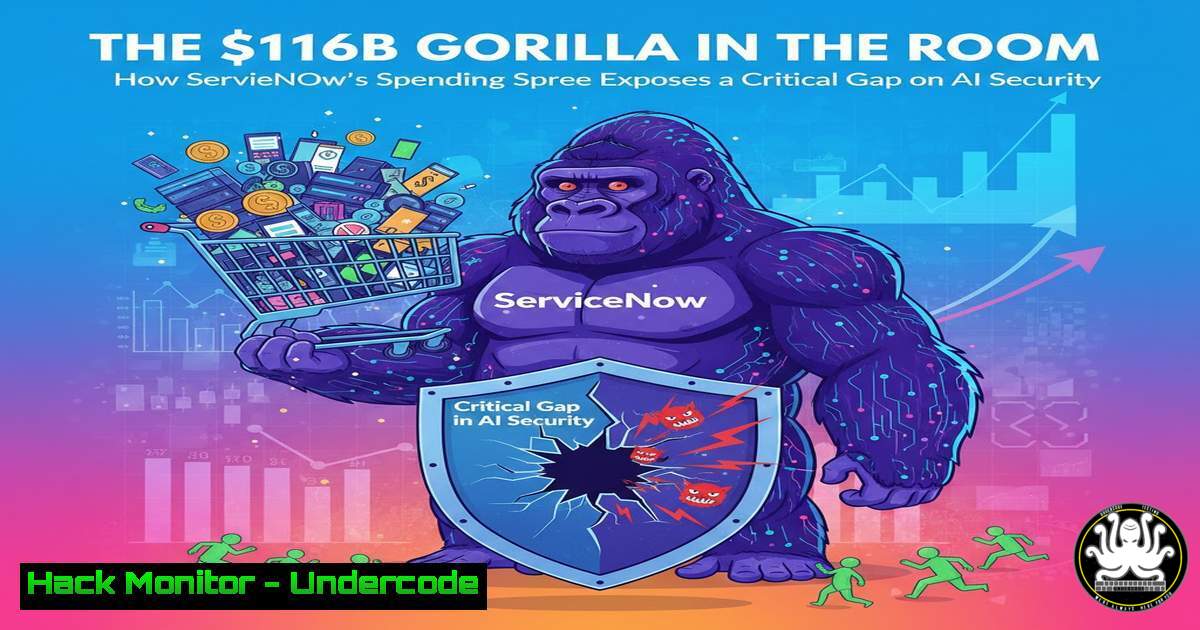
The cybersecurity landscape is undergoing a seismic shift, driven by artificial intelligence. While a staggering $8.5 billion flooded into 175 AI security startups over two years, a single corporate giant, ServiceNow, spent $11.6 billion on security acquisitions in 2025 alone. This financial disparity highlights a market consolidation trend and, more critically, exposes a severe under-investment in securing the AI systems themselves. As enterprises integrate Large Language Models (LLMs) and autonomous agents into core business workflows, the attack surface is evolving faster than the defenses.
Learning Objectives:
- Understand the funding and acquisition trends reshaping the AI security vendor landscape.
- Identify the critical security gaps specific to AI/LLM systems, such as prompt injection and execution governance.
- Learn practical steps for hardening AI deployments, from infrastructure to application layer.
You Should Know:
- The AI Security Funding Paradox: Scale vs. Specialization
The data reveals a market investing heavily in AI-for-security (using AI to automate SOC tasks, threat detection, etc.) but critically underfunding security-for-AI. With only 13 of 175 startups focusing on securing AI/LLM systems, a massive protection gap exists. This means traditional security tools are being retrofitted for a threat model they weren’t designed to handle.
Step-by-step guide:
- Inventory Your AI Assets: You cannot secure what you don’t know. Use discovery commands and cloud provider tools to catalog all AI models, vector databases, and API endpoints.
AWS CLI: `aws sagemaker list-models`
Azure CLI: `az ml model list –workspace-name
Manual review of CI/CD pipelines and cloud service configurations for AI services (e.g., OpenAI, Bedrock, Vertex AI).
2. Classify Data Flows: Map where sensitive data (PII, IP, financials) interacts with these AI systems. This is crucial for understanding data poisoning and exfiltration risks.
3. Vendor Assessment: For any AI security tool, demand a clear answer: Does it protect the AI system, or does it just use AI? Prioritize vendors from the specialized “security-for-AI” cohort for your most critical LLM deployments.
- The ServiceNow Effect: Platform Consolidation and the New Security Stack
ServiceNow’s $11.6B spend signals a move towards integrated security platforms within major IT Service Management (ITSM) and workflow automation engines. For security leaders, this means future security operations may be deeply embedded within business process tools, centralizing control but creating a high-value target.
Step-by-step guide:
- API Security Hardening: As platforms like ServiceNow become aggregation points, securing their APIs is non-negotiable. Implement strict authentication, rate limiting, and payload validation.
Example OWASP ZAP Baseline Scan: `docker run -v $(pwd):/zap/wrk/:rw -t owasp/zap2docker-stable zap-baseline.py -t https://your-instance.service-now.com/api -g gen.conf -r testreport.html`
2. Audit Integration Permissions: Review and minimize OAuth scopes and integration privileges granted to consolidated platforms. Use the principle of least privilege. - Demand Transparency: In procurement discussions, require detailed security architecture diagrams from vendors showing how acquired technologies are genuinely integrated, not just bundled.
-
The Overlooked Frontier: Securing AI Execution and Agentic Workflows
As commenter Rick Kirby noted, a critical blind spot is the “execution control layer”—where AI decisions trigger real-world actions (e.g., approving transactions, deploying code). This moves beyond prompt injection (manipulating the AI’s input) to prompt leaking (stealing proprietary prompts) and malicious instruction execution.
Step-by-step guide:
- Implement an AI Gateway or Proxy: Deploy a dedicated security choke point for all LLM traffic. This allows for centralized logging, policy enforcement, and sanitization of inputs/outputs.
Open-source Example (LiteLLM Proxy): Configure `config.yaml` to log all prompts/completions and block responses containing specific patterns (e.g.,curl bash,DROP TABLE). - Enforce Decision-Approval Loops: For high-risk agentic workflows, design mandatory human-in-the-loop or system-in-the-loop approvals for actions exceeding a defined confidence threshold or risk score.
- Sandbox Execution: Run AI-generated code or commands in a tightly restricted, ephemeral environment. Use Linux namespaces and cgroups to limit impact.
Basic Docker Sandbox: `docker run –rm –read-only –network none python:alpine python -c ““` - The Prompt Injection Pandemic: A Threat That’s “Here to Stay”
As Louis C. referenced from a VentureBeat survey, only 34.7% of organizations have dedicated prompt injection defenses. OpenAI has stated this vulnerability is not fully solvable at the model level, shifting the burden to architectural defenses.
Step-by-step guide:
- Input Sanitization and Validation: Treat all LLM input as untrusted. Implement pre-processing rules to detect and neutralize malicious payloads.
Python Example (Basic):
import re
def sanitize_input(user_input):
 Example: Attempt to neutralize indirect prompt injections
suspicious_patterns = [r'ignore.previous', r'secret.instructions', r'']
for pattern in suspicious_patterns:
if re.search(pattern, user_input, re.IGNORECASE):
raise ValueError("Suspicious input pattern detected.")
return user_input
2. Context-Aware Firewalling: Use a dedicated LLM firewall (like Lakera Guard or open-source alternatives) to analyze prompts in real-time for injection attempts, jailbreaks, and data leakage patterns before they reach the model.
3. Structured Output Parsing: Force the LLM to output JSON or another structured format, and validate the schema before processing. This can contain the blast radius of a successful injection.
- Building Your 2026 AI Security Posture: A Practical Framework
Facing consolidation and emerging threats, security teams must build a layered defense tailored to AI.
Step-by-step guide:
- Foundation: Harden the underlying infrastructure (cloud, containers, APIs) using established frameworks (CIS Benchmarks).
Kubernetes Hardening: Use `kube-bench` to run CIS Kubernetes benchmarks: `kube-bench –benchmark cis-1.8`
2. Model Layer: Implement model access controls, encrypt model artifacts, and monitor for model drift or poisoning via MLOps pipelines. - Application Layer: Deploy the AI gateway, prompt firewalls, and execution sandboxes discussed above.
- Monitoring & Auditing: Establish a dedicated AI security logging pipeline. Aggregate logs from all AI interactions and use anomaly detection to spot unusual patterns (e.g., sudden spike in prompt length, unusual API call sequences from an agent).
What Undercode Say:
- Consolidation is Creating New Chokepoints: The ServiceNow acquisition spree isn’t just a business headline; it’s a security architecture shift. Defending these consolidated platforms becomes as critical as defending your network perimeter.
- The Real Battle is in the Execution Layer: The most sophisticated AI attacks won’t just steal data; they will manipulate business processes. The industry’s focus on data and model security, while vital, misses the ultimate goal of an attack: to cause a malicious action.
Prediction:
By the end of 2026, we will witness the first major breach caused not by data exfiltration, but by a compromised AI agent executing unauthorized, business-destructive actions—such as fraudulent fund transfers or mass data corruption. This event will trigger a regulatory scramble, leading to the first AI-specific security compliance frameworks focused on agent governance and executable integrity. The tiny cohort of 13 “security-for-AI” startups will become acquisition targets for cloud hyperscalers, creating the next wave of consolidation as the market races to close the execution-layer gap.
▶️ Related Video (74% Match):
🎯Let’s Practice For Free:
IT/Security Reporter URL:
Reported By: Louiscolumbus %F0%9D%90%8E%F0%9D%90%A7%F0%9D%90%9E – Hackers Feeds
Extra Hub: Undercode MoN
Basic Verification: Pass ✅


