
Listen to this Post
Introduction:
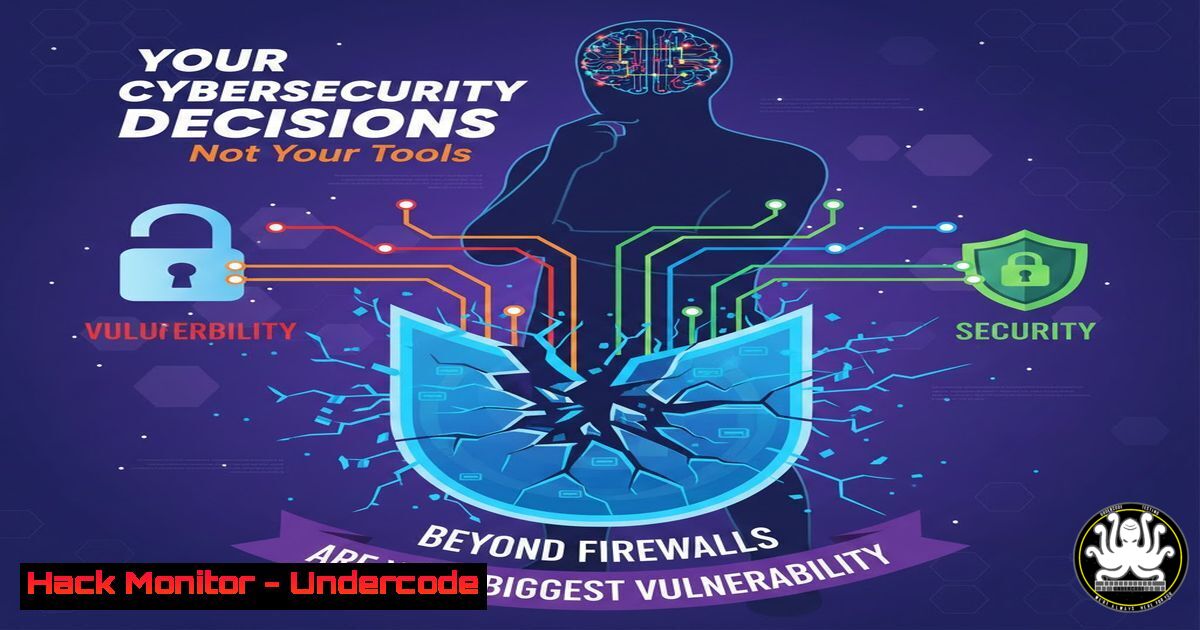
Cybersecurity breaches are rarely caused by a lack of advanced tools, but most often by flawed strategic decision-making at the governance and leadership level. This article deconstructs the critical decision domains every organization must master, translating high-level risk concepts into actionable technical and procedural controls. We move from the boardroom to the command line, providing the explicit guidance needed to bridge the gap between strategy and execution.
Learning Objectives:
- Understand the 12 pivotal decision domains that dictate cybersecurity success or failure.
- Translate governance policies into technical enforcement actions across IT infrastructure.
- Implement practical commands and configurations to harden endpoints, manage exposures, and control access.
You Should Know:
- Governance and Risk: Codifying Acceptable Risk into Technical Policy
Governance determines which risks are acceptable. This must be translated from a policy document into enforceable technical rules.
Step‑by‑step guide:
- Define a Risk Appetite Statement: E.g., “We do not accept risks leading to unauthorized exfiltration of PII.”
- Map to Technical Controls: This statement dictates the need for Data Loss Prevention (DLP) tools.
- Implement Enforcement: For cloud environments (e.g., AWS), use policies to enforce encryption and block unapproved data sharing.
Example AWS CLI command to enforce S3 bucket encryption:aws s3api put-bucket-encryption \ --bucket my-secure-bucket \ --server-side-encryption-configuration '{"Rules": [{"ApplyServerSideEncryptionByDefault": {"SSEAlgorithm": "AES256"}}]}' -
Endpoint Security: Hardening the Last Line of Defense
A single compromised device can disrupt entire operations. Security must assume user error and malicious activity.
Step‑by‑step guide:
- Implement Application Allow-Listing: Move beyond antivirus. Use tools like Windows AppLocker or Linux integrity modules (IMA).
- Enforce Least Privilege: Remove local administrator rights. Use PowerShell to audit admin accounts:
Windows PowerShell command:
Get-LocalGroupMember -Group "Administrators" | Format-Table -AutoSize
3. Configure Host-Based Firewall: Harden rules. On Linux, use `iptables` or `ufw` to deny all, then allow only essential services.
Example `ufw` commands:
sudo ufw default deny incoming
sudo ufw default allow outgoing
sudo ufw allow ssh
sudo ufw enable
3. Exposure Management: Prioritizing and Patching Critical Vulnerabilities
Not all vulnerabilities are equal. Prioritization must be based on exploitability and asset criticality.
Step‑by‑step guide:
- Asset Discovery & Inventory: You cannot protect what you don’t know. Use network scanners.
Basic `nmap` scan for live hosts:
nmap -sn 192.168.1.0/24
2. Vulnerability Scanning: Use tools like Nessus, OpenVAS, or `nmap` scripts.
Nmap script to check for common vulnerabilities:
nmap --script vuln <target-ip>
3. Risk-Based Prioritization: Triage using the CVSS score and context. Patch critical and high-risk vulnerabilities within 7 days as per best practices.
- Access Control: Implementing Zero Trust and Just-In-Time Access
Excess access is a primary attack vector. The principle of least privilege must be dynamically enforced.
Step‑by‑step guide:
- Audit Existing Permissions: Regularly review who has access to what. In AWS, use IAM Access Analyzer. In Azure, run
Get-AzRoleAssignment. - Implement Just-In-Time (JIT) Access: For privileged access (e.g., SSH to servers), use a PAM solution or simple bastion host with time-bound access.
- Enforce Multi-Factor Authentication (MFA): Mandate for all users, especially admins. In Linux, integrate PAM with Google Authenticator.
Example PAM configuration line in `/etc/pam.d/sshd`:
auth required pam_google_authenticator.so
- Detection and Monitoring: Building Effective Threat Hunting Queries
Late detection means the attacker has already won. Move from simple alerts to proactive hunting.
Step‑by‑step guide:
- Centralize Logs: Aggregate logs from endpoints, network, and cloud to a SIEM.
- Write Detection Rules: Use frameworks like Sigma for vendor-agnostic rules. Example: Detect suspicious process execution from temporary directories.
- Proactive Hunting with EDR Queries: Use tools like Osquery to interrogate endpoints.
Osquery command to find processes with anomalous parent-child relationships:SELECT p.pid, p.name, p.path, p.cmdline, p.parent, pp.name as parent_name FROM processes p JOIN processes pp ON p.parent = pp.pid WHERE pp.path NOT LIKE '/sbin/%' AND pp.path NOT LIKE '/usr/bin/%';
What Undercode Say:
- Cybersecurity is a Business Enabler, Not a Technical Constraint: When security is framed as a series of clear, owned business decisions—what risk to accept, what must stay online—it gains executive buy-in and budget.
- Tools Follow Strategy, Not the Reverse: Investing in a state-of-the-art SIEM or EDR is futile if there is no governance to define what alerts matter, no asset awareness to know what to monitor, and no incident readiness to act on findings.
The critical analysis from the original post and its comments underscores a universal truth in high-performing security programs: maturity is measured by the speed and clarity of decision-making under uncertainty. The technical implementations—the commands, configurations, and tools—are merely the outputs of those decisions. A failed program is characterized by an overabundance of disconnected tools and a paralysis of indecision on fundamental questions of risk ownership. A successful one has less technology friction because leadership has made explicit, strategic choices that the technology then enforces.
Prediction:
The future of cybersecurity will see a decisive split between organizations that treat security as a purely technical function and those that embed it as a core business discipline. With AI-driven attacks increasing the speed of exploitation, the window for effective decision-making will shrink. Organizations that have pre-defined, board-approved playbooks for risk acceptance and incident response will contain breaches in hours. Those mired in tool-centric, reactive postures will face escalating costs and reputational damage. The CISO role will evolve further into a business strategist, quantifying cyber risk in financial terms to guide enterprise-wide investment and innovation securely.
🎯Let’s Practice For Free:
IT/Security Reporter URL:
Reported By: Johann Lahoud – Hackers Feeds
Extra Hub: Undercode MoN
Basic Verification: Pass ✅


