Listen to this Post
Introduction:
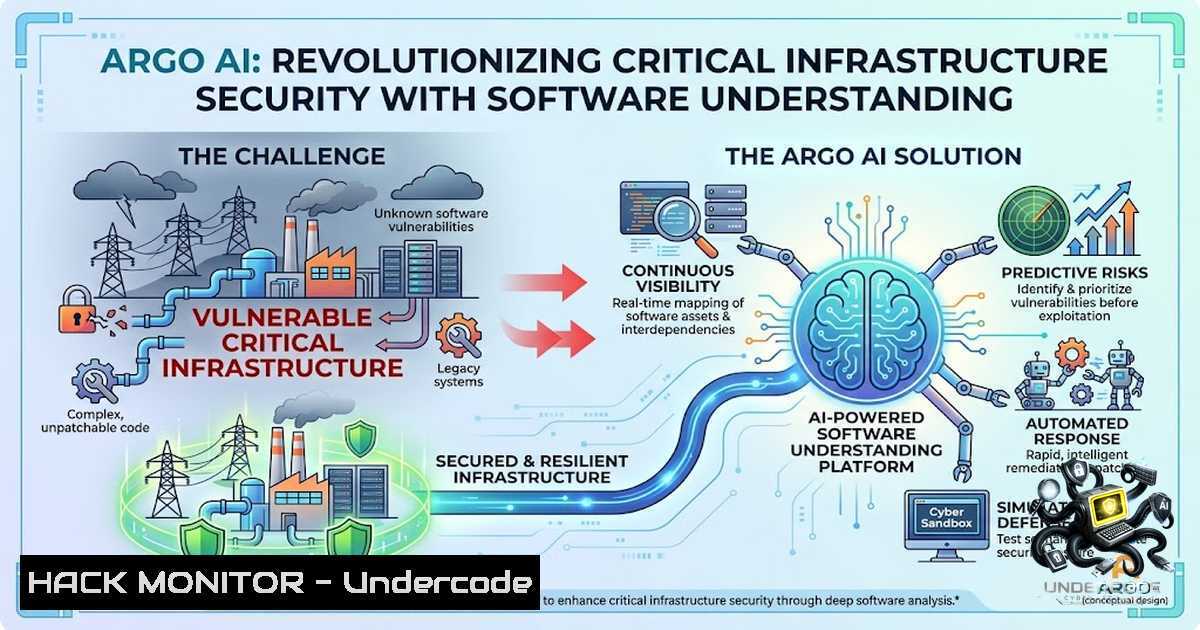
On February 24, 2022, as Russian military forces crossed into Ukraine, a sophisticated cyberattack disabled thousands of satellite modems across Ukraine and Europe, disrupting critical communications infrastructure. The Viasat KA-SAT attack—executed through a misconfigured VPN appliance that granted attackers remote access to the satellite network’s management system—exposed a fundamental vulnerability in modern critical infrastructure: legacy security tools cannot scale to protect the complex, interconnected systems that underpin modern society. In response, cybersecurity company Atalanta has released Argo, an AI-assisted platform combining complex mathematics with artificial intelligence to create the first commercially available system capable of comprehensively analyzing software and internet-connected systems for vulnerabilities. This technology, already instrumental in securing Viasat’s network post-attack, represents a paradigm shift in how we approach cybersecurity for mission-critical systems.
Learning Objectives & Secrets:
- Objective 1: Master the Fundamentals of Software Understanding – Learn how Argo’s combination of formal methods and AI enables mathematical verification of system security, moving beyond traditional vulnerability scanning to provably correct system behavior.
-
Objective 2 Secret Tip: Leverage Mathematical Proof for Compliance – Unlike conventional tools that merely identify known threat patterns, Argo generates mathematical proof that systems meet security and resilience requirements—a capability that transforms compliance from checkbox exercises to verifiable assurance.
-
Objective 3 Secret Tip: Apply AI-Assisted Analysis to Legacy Infrastructure – The same technology that hardened Viasat’s satellite network can be applied to legacy systems, identifying failure modes and verifying system constraints under adversarial conditions without requiring complete system overhauls.
You Should Know:
- Understanding the Viasat KA-SAT Attack: A Case Study in Infrastructure Vulnerability
The Viasat attack serves as a watershed moment in cybersecurity history. On February 24, 2022, between 5 AM and 9 AM EEST, attackers exploited a misconfigured VPN device to gain remote access to Viasat’s KA-SAT satellite network management system. From this foothold, they issued destructive management commands that rendered tens of thousands of residential modems inoperable across Ukraine and Europe. The European Union later attributed the operation to Russia, noting it occurred approximately one hour before the invasion of Ukraine.
This attack demonstrated how a single configuration error—a misconfigured VPN appliance—could cascade into widespread communications disruption affecting military operations, civilian communications, and critical infrastructure. The incident highlighted that traditional security approaches, which rely on known threat signatures and perimeter defenses, are insufficient against sophisticated state-sponsored actors who exploit configuration weaknesses and supply chain vulnerabilities.
Step-by-Step Guide: Hardening Network Infrastructure Against Similar Attacks
Step 1: Conduct Comprehensive VPN Configuration Audit
 Linux: Audit VPN configurations for misconfigurations
sudo grep -r "psk|password|secret" /etc/ipsec.d/ /etc/openvpn/ --color=auto
 Windows: Check VPN server configurations
Get-WmiObject -Class Win32_Service | Where-Object {$_.Name -like "VPN"}
Step 2: Implement Network Segmentation
 Linux: Isolate management networks using iptables
sudo iptables -A INPUT -i eth0 -p tcp --dport 22 -s 192.168.1.0/24 -j ACCEPT
sudo iptables -A INPUT -i eth0 -p tcp --dport 22 -j DROP
 Windows: Configure Windows Firewall for management network isolation
New-1etFirewallRule -DisplayName "Block Management Access" -Direction Inbound -Action Block -RemoteAddress "0.0.0.0/0"
Step 3: Deploy Continuous Monitoring for Anomalous Management Commands
 Linux: Monitor for unauthorized administrative commands
sudo auditctl -a always,exit -F arch=b64 -S execve -k admin_commands
sudo ausearch -k admin_commands --start recent
 Windows: Enable PowerShell logging for management activity
Set-ItemProperty -Path "HKLM:\SOFTWARE\Microsoft\PowerShell\1\ShellIds\Microsoft.PowerShell" -1ame "ExecutionPolicy" -Value "RemoteSigned"
Step 4: Implement Zero-Trust Access Controls
 Linux: Implement multi-factor authentication for SSH
sudo apt-get install libpam-google-authenticator
echo "auth required pam_google_authenticator.so" >> /etc/pam.d/sshd
 Windows: Enable Windows Hello for Business or third-party MFA
Install-WindowsFeature -1ame Windows-Hello-Face-PIN
- Argo’s Software Understanding: How Formal Methods and AI Transform Security
Atalanta’s Argo platform represents a fundamental departure from traditional cybersecurity approaches. Rather than relying on signature-based detection or behavioral analytics that identify threats after they manifest, Argo employs “software understanding”—a methodology combining formal methods with artificial intelligence to mathematically verify that complex systems meet security and resilience requirements.
The platform analyzes system behavior against explicit specifications, identifying potential failure modes and verifying that constraints hold under changing or adversarial conditions. This approach enables security teams to reason about system behavior proactively, identifying vulnerabilities before they can be exploited. As Greg Shannon, chief cybersecurity scientist at Idaho National Laboratory, noted, DARPA has invested well over $2 billion over decades in advancing formal methods, and “we’re finally seeing them start to come to fruition”.
Step-by-Step Guide: Implementing Formal Methods in Security Architecture
Step 1: Define System Specifications and Security Constraints
 Example: Formal specification for satellite communication system
class SecurityConstraint:
def <strong>init</strong>(self):
self.constraints = {
"access_control": "Only authenticated users can issue management commands",
"data_isolation": "Sensitive data remains isolated across security boundaries",
"availability": "Satellite links remain available during disruption"
}

def verify_constraint(self, constraint_name, system_state):
 Verify that the system state satisfies the specified constraint
return self._formal_verification(constraint_name, system_state)
Step 2: Implement Mathematical Verification Framework
 Python: Using Z3 theorem prover for formal verification
from z3 import

def verify_system_property(system_model, property_constraint):
solver = Solver()
 Add system model constraints
solver.add(system_model)
 Add property to verify
solver.add(Not(property_constraint))
 Check if property is violated
if solver.check() == unsat:
return "Property verified: No violation found"
else:
return "Property violated: Counterexample exists"
Step 3: Integrate AI-Assisted Vulnerability Analysis
 Python: AI-assisted anomaly detection for system behavior
import numpy as np
from sklearn.ensemble import IsolationForest

def detect_system_anomalies(system_logs):
 Train isolation forest on normal system behavior
model = IsolationForest(contamination=0.1)
model.fit(system_logs['normal_behavior'])
 Predict anomalies in current system state
predictions = model.predict(system_logs['current_state'])
anomalies = np.where(predictions == -1)[bash]
return anomalies
3. Critical Infrastructure Protection: Extending Beyond Satellite Communications
The implications of Argo’s technology extend far beyond satellite communications. Atalanta’s technology has already been tapped to work on the Genesis Mission—the Department of Energy’s effort to create autonomous nuclear reactors. This application demonstrates the technology’s relevance to the most sensitive and critical infrastructure systems.
Recent warnings from U.S. government agencies about Iranian hackers targeting water and wastewater systems underscore the urgent need for advanced protection of civilian infrastructure. The conflicts in both Ukraine and Iran have highlighted the danger that hackers can pose to everyday life, with cyber operations increasingly aimed at services ordinary people depend on.
Step-by-Step Guide: Hardening Critical Infrastructure Systems
Step 1: Conduct Comprehensive Asset Inventory and Risk Assessment
 Linux: Scan for all network-connected devices in critical infrastructure
sudo nmap -sP 192.168.0.0/24 | grep "Nmap scan" | awk '{print $5}'
 Windows: Use PowerShell to inventory all network devices
Get-1etNeighbor | Where-Object {$_.State -eq "Reachable"} | Select-Object -Property IPAddress, LinkLayerAddress
Step 2: Implement Network Segmentation for Operational Technology (OT)
 Linux: Configure VLANs for OT network segmentation
sudo ip link add link eth0 name eth0.100 type vlan id 100
sudo ip link set dev eth0.100 up
sudo ip addr add 192.168.100.1/24 dev eth0.100
 Windows: Configure VLAN tagging (requires switch configuration)
Set-1etAdapterVlan -1ame "Ethernet" -VlanID 100 -Access
Step 3: Deploy Intrusion Detection Systems for Critical Networks
 Linux: Install and configure Snort for critical infrastructure monitoring
sudo apt-get install snort
sudo snort -c /etc/snort/snort.conf -i eth0 -D
 Windows: Enable Windows Defender for IoT or third-party IDS
Install-WindowsFeature -1ame Windows-Defender-ApplicationGuard
Step 4: Implement Continuous Compliance Monitoring
 Python: Continuous compliance verification for critical infrastructure
import subprocess
import json

def verify_compliance(standards=['NIST', 'CIS', 'ISO27001']):
results = {}
for standard in standards:
 Run compliance scan
result = subprocess.run(['oscap', 'xccdf', 'eval', f'--profile={standard}', '/usr/share/xml/scap/ssg/content/ssg-rhel7-ds.xml'], capture_output=True)
results[bash] = json.loads(result.stdout)
return results
- API Security and Cloud Hardening in the AI Era
As organizations increasingly adopt AI-assisted security tools, the security of the APIs and cloud infrastructure that power these systems becomes paramount. Argo’s approach to software understanding can be applied to API security, ensuring that API endpoints meet security requirements through mathematical verification.
Step-by-Step Guide: Securing AI-Assisted Security Tool APIs
Step 1: Implement API Authentication and Authorization
 Linux: Configure OAuth2 authentication for API endpoints
sudo apt-get install oauth2-proxy
sudo oauth2-proxy --provider=github --client-id=YOUR_CLIENT_ID --client-secret=YOUR_CLIENT_SECRET --email-domain=
 Windows: Configure Azure AD authentication for APIs
Install-Module -1ame AzureAD
Connect-AzureAD
New-AzureADApplication -DisplayName "Security API" -IdentifierUris "https://api.security.com/v1"
Step 2: Implement API Rate Limiting and Threat Detection
 Python: API rate limiting and anomaly detection
from flask import Flask, request
from flask_limiter import Limiter
from flask_limiter.util import get_remote_address

app = Flask(<strong>name</strong>)
limiter = Limiter(app, key_func=get_remote_address)

@app.route('/api/security/analyze')
@limiter.limit("5 per minute")
def analyze_system():
 AI-assisted security analysis
pass
Step 3: Secure Cloud Infrastructure with Infrastructure as Code (IaC)
 Terraform: Secure AWS infrastructure with formal verification
resource "aws_security_group" "security_api" {
name = "security-api-sg"
description = "Security API with formal verification"

ingress {
from_port = 443
to_port = 443
protocol = "tcp"
cidr_blocks = ["10.0.0.0/8"]
}
}

resource "aws_vpc" "security_vpc" {
cidr_block = "10.0.0.0/16"
enable_dns_hostnames = true
}
- Vulnerability Exploitation and Mitigation: Lessons from the Viasat Attack
The Viasat attack provides critical lessons in vulnerability exploitation and mitigation. Attackers exploited a misconfigured VPN appliance to gain remote access, demonstrating how configuration errors can become attack vectors. Understanding these attack patterns is essential for developing effective defenses.
Step-by-Step Guide: Vulnerability Assessment and Mitigation
Step 1: Conduct Regular Vulnerability Scans
 Linux: Use OpenVAS for comprehensive vulnerability scanning
sudo apt-get install openvas
sudo gvm-setup
sudo gvm-start
 Windows: Use Microsoft Baseline Security Analyzer
mbsa.exe /target 192.168.1.0/24 /output output.xml
Step 2: Implement Patch Management and Configuration Hardening
 Linux: Automate security updates
sudo apt-get install unattended-upgrades
sudo dpkg-reconfigure --priority=low unattended-upgrades
 Windows: Configure Windows Update for automatic security patches
Set-WUSettings -AutomaticUpdatesEnabled $true -ScheduledInstallDay "Every day"
Step 3: Deploy Endpoint Detection and Response (EDR)
 Linux: Install and configure Osquery for endpoint monitoring
sudo apt-get install osquery
sudo osqueryd --config_path /etc/osquery/osquery.conf --daemon
 Windows: Enable Windows Defender ATP
Set-MpPreference -EnableRealtimeMonitoring $true -EnableNetworkProtection $true
What Undercode Say:
- Key Takeaway 1: The Shift from Reactive to Proactive Security – The Viasat attack demonstrated that traditional security approaches—which rely on detecting known threats after they manifest—are insufficient against sophisticated state-sponsored actors. Argo’s software understanding represents a paradigm shift toward mathematically verifiable security, where systems are proven secure before deployment rather than monitored for attacks after the fact.
-
Key Takeaway 2: The Commercialization of Advanced Security Technologies – DARPA’s $2 billion investment over decades in formal methods is finally yielding commercially available products. This commercialization means that organizations beyond government and military can now access advanced security capabilities that were previously unavailable. As Greg Shannon noted, “In a decade or two, I would expect it to be just part of the standard development tool kits”.
Analysis: The convergence of AI and formal methods represents a transformative moment in cybersecurity. The Viasat attack exposed fundamental vulnerabilities in how we secure critical infrastructure, while Argo demonstrates a path forward through mathematical verification of system security. However, the technology’s effectiveness depends on the accuracy of specifications, the boundaries of modeled systems, and the evidence produced for reviewers. Organizations adopting such tools must carefully evaluate these factors rather than treating deployment accounts as universal performance guarantees. The Pentagon’s chief technology officer has already signaled that he wants this technology to “become the DoD’s gold standard” for cybersecurity, indicating that AI-assisted formal verification is poised to become the new baseline for securing mission-critical systems.
Prediction:
- +1 The commercialization of AI-assisted formal verification tools like Argo will democratize access to advanced security capabilities, enabling organizations of all sizes to implement mathematically verifiable security for critical infrastructure.
-
+1 The integration of AI with formal methods will accelerate the development of autonomous security systems that can continuously verify and harden infrastructure against evolving threats without human intervention.
-
-1 Organizations that fail to adopt AI-assisted security verification will remain vulnerable to sophisticated state-sponsored attacks that exploit configuration weaknesses and system vulnerabilities, as demonstrated by the Viasat attack.
-
-1 The complexity of formal verification tools may create a skills gap, as security teams require advanced mathematical and programming expertise to effectively implement and interpret these systems.
-
+1 The Genesis Mission’s use of Atalanta’s technology for autonomous nuclear reactors demonstrates the potential for AI-assisted formal verification to secure the most sensitive infrastructure, setting a precedent for other critical sectors.
-
-1 The reliance on mathematical proof for security assurance may create a false sense of security if specifications are incomplete or system models fail to capture all relevant attack vectors.
▶️ Related Video (90% Match):
https://www.youtube.com/watch?v=5tTAVXyqlIE
🎯Let’s Practice For Free:
🎓 Live Courses & Certifications:
Join Undercode Academy for Verified Certifications
🚀 Request a Custom Project:
Secure, high-velocity infrastructure and disruptive technological engineering. Contact our engineering team for high-tier development and proprietary systems:
[email protected]
💎 Smart Architecture | 🛡️ Secure by Design | ⭐ Trusted by Thousands
IT/Security Reporter URL:
Reported By: https://lnkd.in/p/eWa6e5cA – Hackers Feeds
Extra Hub: Undercode MoN
Basic Verification: Pass ✅


