
Listen to this Post
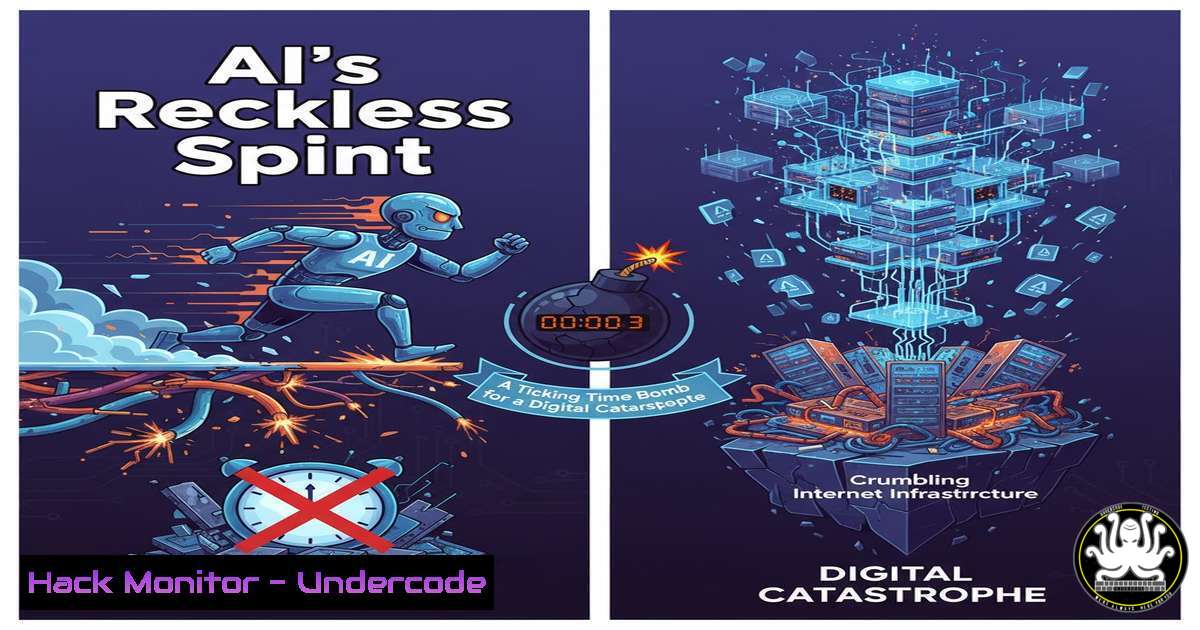
Introduction:
As global economies pin their hopes on artificial intelligence to drive the next industrial revolution, hundreds of billions of dollars are flooding into AI development. However, this breakneck acceleration is built upon the fault lines of the internet’s original architecture. Core trust mechanisms such as DNS, routing protocols (BGP), and Public Key Infrastructure (PKI) were designed for a collaborative academic network, not a hostile, automated world. Decades of technical debt, systemic misconfigurations, and fragile identity models mean that AI does not just inherit these flaws—it weaponizes them, turning the digital foundation into a powder keg primed for a global-scale crisis.
Learning Objectives:
- Understand the inherent vulnerabilities in core internet protocols (DNS, BGP, PKI) and how AI amplifies these attack surfaces.
- Learn to audit local system configurations for DNS and security protocol weaknesses using command-line tools.
- Identify specific mitigation strategies and commands to harden infrastructure against automated, AI-driven attacks.
You Should Know:
- Dissecting the “Unsecured Foundation”: DNS, BGP, and PKI
The post highlights that AI rests on an internet never designed for “hostile automation.” The three pillars mentioned—DNS, routing, and identity—are chronically vulnerable. DNS translates domain names to IP addresses but relies on unencrypted queries by default, making it easy to spoof or hijack. BGP (Border Gateway Protocol) directs traffic between massive networks but has no built-in security, allowing attackers to redirect entire swathes of internet traffic (route hijacking). PKI, the system of certificates we trust for HTTPS, is only as strong as the weakest Certificate Authority, which can be compromised or tricked into issuing fraudulent certificates.
Step-by-step: Auditing Your DNS Resolution
To see if your system is vulnerable to basic DNS spoofing or using insecure resolvers, you can check your current DNS settings.
– On Linux/macOS:
 Check which DNS server you are using
cat /etc/resolv.conf
 Test DNS resolution time and security (using dig)
dig google.com
 Check if DNSSEC is validated (look for the 'ad' flag - authenticated data)
dig +dnssec google.com
What this does: It reveals your DNS resolver. If it’s your ISP’s default server, it may lack security features like DNSSEC validation, making you more susceptible to cache poisoning.
- On Windows (PowerShell):
View your network adapter's DNS servers
Get-DnsClientServerAddress
Flush the DNS cache to clear potential poisoned entries
ipconfig /flushdns
2. AI-Powered Reconnaissance and Phishing at Scale
Attackers are no longer limited by manual effort. AI automates the reconnaissance phase, scanning millions of IPs for specific vulnerabilities (like open ports or outdated software) and tailoring phishing emails with near-perfect grammar and contextual accuracy. This turns generic spam into highly targeted, “flawless” spear-phishing campaigns.
Step-by-step: Simulating Attacker Reconnaissance (For Defense)
Understanding what attackers see helps in hardening your systems. Use legitimate network scanning tools on your own infrastructure to find exposed services.
– Using Nmap (Linux/Windows):
 Scan your own network for open ports (e.g., port 22 for SSH, 3389 for RDP)
nmap -p 22,3389,443 <your_server_ip>
 Perform a more aggressive service version detection
nmap -sV <your_server_ip>
What this does: This shows you exactly what an automated AI scanner would find—open ports and running services. If you see RDP (3389) exposed to the internet, that is a high-risk finding that AI bots will exploit for brute-force attacks.
3. Hardening Against Automated Credential Stuffing
With AI, criminals can take leaked credentials from one breach and attempt them across millions of other sites instantly. This is “credential stuffing.” Standard passwords are no longer sufficient.
Step-by-step: Implementing Multi-Factor Authentication (MFA) on a Linux Server
MFA is the single most effective control against automated credential stuffing.
– Installing Google Authenticator PAM module on Ubuntu/Debian:
sudo apt update
sudo apt install libpam-google-authenticator
– Run the configuration for a user:
google-authenticator
Follow the prompts (answer ‘y’ to most questions). It will generate a secret key and emergency scratch codes. Scan the QR code with an authenticator app on your phone.
– Configure SSH to require MFA:
sudo nano /etc/pam.d/sshd
 Add the following line at the top:
auth required pam_google_authenticator.so
Then edit the SSH config file:
sudo nano /etc/ssh/sshd_config
 Find and change/modify this line:
ChallengeResponseAuthentication yes
 (Optional but recommended: Disable password authentication)
PasswordAuthentication no
Finally, restart SSH: sudo systemctl restart sshd. Now, logging in via SSH requires both your SSH key (or password) and the 6-digit code from your phone.
4. Securing the Routing Layer (BGP)
The post mentions “routing” vulnerabilities like BGP hijacking. While you cannot control the entire internet’s BGP policies, you can implement safeguards on your own network, specifically RPKI (Resource Public Key Infrastructure) to validate route announcements.
Step-by-step: Implementing RPKI Validation with Routinator (Conceptual)
This is a network engineering task, but understanding it is key.
1. Deploy a validator: Install a tool like Routinator (`https://github.com/NLnetLabs/routinator`) on a server.
 (Simplified install - refer to official docs)
curl -sSL https://raw.githubusercontent.com/NLnetLabs/routinator/master/install.sh | sh
2. Configure your router (e.g., Cisco, Juniper): The router is configured to query the local Routinator instance for route validity (Valid, Invalid, NotFound) before accepting BGP updates from peers.
3. Drop Invalid Routes: Create a route-map policy on the router that rejects any BGP advertisement marked as “Invalid” by RPKI, preventing route hijacks from affecting your traffic.
5. Securing AI Models and Pipelines (Supply Chain)
The article warns of exposing “high-value data, models, and infrastructure.” AI models themselves are new attack surfaces. Attackers can poison training data or exploit insecure APIs that serve the model.
Step-by-step: Securing a Simple MLflow Tracking Server
Many teams use MLflow to track experiments. If exposed, model weights and data can be stolen.
– Deploy behind a reverse proxy with HTTPS:
Instead of running mlflow server --host 0.0.0.0, which exposes it to the world, use Nginx.
 Install Nginx
sudo apt install nginx
 Create a config file
sudo nano /etc/nginx/sites-available/mlflow
Add a configuration that proxies requests to MLflow and forces HTTPS:
server {
listen 443 ssl;
server_name mlflow.yourdomain.com;
ssl_certificate /path/to/your/certificate.crt;
ssl_certificate_key /path/to/your/private.key;

location / {
proxy_pass http://127.0.0.1:5000;  Default MLflow port
proxy_set_header Host $host;
proxy_set_header X-Real-IP $remote_addr;
}
}
Enable the site and restart Nginx. Now, the MLflow UI is protected by HTTPS and only accessible via the reverse proxy, not directly.
What Undercode Say:
- The Convergence of Scale and Speed: The core argument is that AI acts as a “threat amplifier.” It takes the existing, manageable trickle of internet-based attacks and turns it into a firehose. The fundamental insecurity of protocols like DNS and BGP is not new, but the automation to exploit them at machine speed is. We are entering an era where human reaction times are obsolete; defense must be automated and proactive.
- Negligence Over Malice: The post crucially identifies that the greatest risk is not “malicious machines” but human negligence. The rush to market with AI products, bypassing traditional security due diligence, creates a massive attack surface. The solution is not to halt AI, but to simultaneously and aggressively invest in shoring up the internet’s foundations—implementing DNSSEC, RPKI, and robust identity management everywhere.
Prediction:
Within the next 18 to 24 months, we will likely witness a major, high-impact cyber incident directly attributed to the exploitation of foundational internet protocols (DNS or BGP) at AI-driven scale. This will not be a simple data breach, but a systemic failure causing widespread internet disruption or the large-scale poisoning of AI models across multiple organizations simultaneously. This event will finally force regulators and major tech conglomerates to mandate the adoption of long-available but ignored security standards like RPKI and DNSSEC, transitioning from “best practice” to “legal requirement.” The aftermath will shift the narrative from AI capability to AI resilience.
▶️ Related Video (74% Match):
🎯Let’s Practice For Free:
IT/Security Reporter URL:
Reported By: Andy Jenkinson – Hackers Feeds
Extra Hub: Undercode MoN
Basic Verification: Pass ✅


