Listen to this Post
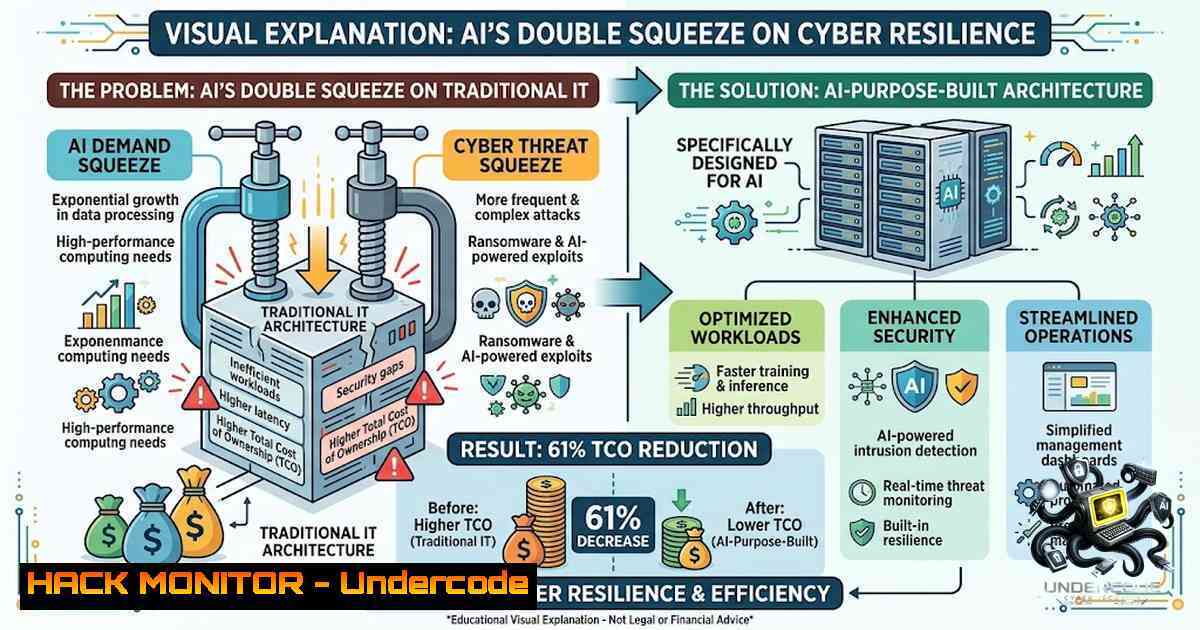
Introduction:
Artificial intelligence is reshaping the economics of data protection from two directions simultaneously. AI workloads generate unprecedented volumes of data that must be protected, while simultaneously consuming the very DRAM and NAND components that cyber resilience platforms depend on—driving hardware costs to historic highs. As memory supply struggles to keep pace with AI demand, the architectural choices organizations make today will determine not just their security posture, but their financial viability over the next three to five years.
Learning Objectives:
- Understand the dual economic pressure AI places on cyber resilience budgets—more data to protect and rising component costs
- Compare the total cost of ownership (TCO) implications of scale-out architectures versus purpose-built appliances
- Learn practical configuration and hardening steps for Dell PowerProtect Data Domain deployments
- Identify key architectural differences that drive up to 64x server requirements in competing platforms
- Apply Linux/Windows commands and best practices for cyber resilience infrastructure management
You Should Know:
- The Scale-Out Trap: When Adding Capacity Means Adding Everything
Many cyber resilience platforms advertise simple, linear scale-out growth. What they don’t disclose is the hidden cost of that expansion model. These platforms are fundamentally software running on general-purpose servers—commodity hardware never designed for the specific demands of cyber resilience. Every time you need more capacity, you add an entire node: compute, memory, flash storage, and network ports—whether you actually need them or not.
The numbers tell a stark story. For protecting the same 1.5PB environment, Rubrik requires 96 servers while Cohesity requires 34 servers. Dell PowerProtect Data Domain? Just two appliances. This isn’t a minor adjustment—it’s a fundamental architectural divergence. The scale-out approach demands up to 64x more servers, 84% more SSDs, and 64x more network ports compared to purpose-built appliances.
Step-by-Step: Assessing Your Current Cyber Resilience Architecture
- Inventory your current protection infrastructure: Document the number of servers, SSDs, and network ports in your existing backup environment. Use system inventory commands:
– Linux: `lshw -short | grep -E “server|disk|network”` or `dmidecode -t system`
– Windows: `Get-WmiObject -Class Win32_ComputerSystem` and `Get-WmiObject -Class Win32_DiskDrive`
2. Calculate your effective capacity utilization: Many scale-out nodes run at 30-40% storage utilization because compute and memory are over-provisioned. Run:
– Linux: `df -h` and `du -sh /` to analyze storage consumption patterns
– Windows: `Get-PSDrive -PSProvider FileSystem` to review volume usage
- Map growth projections: Project your data growth over 36 months and calculate the node additions required. Each additional node in a scale-out architecture brings proportional increases in hardware, power, cooling, and management overhead.
-
Model TCO comparison: Use the Omdia-validated framework showing 38-61% lower three-year TCO with purpose-built appliances driven by Data Domain efficiency and automation. The savings stem from:
– 99.3% average data reduction (75:1 to 200:1 deduplication/compression ratios)
– Up to 80% lower power consumption
– >40% less rack space
– 84% reduction in resources and services costs
2. Understanding the Data Invulnerability Architecture (DIA)
Purpose-built cyber resilience appliances like Dell PowerProtect Data Domain incorporate the industry-exclusive Data Invulnerability Architecture (DIA), which delivers 100% end-to-end data validation. This isn’t a software add-on—it’s built into the hardware and operating system stack. DIA ensures that every byte written is verified, corrupted data is detected and repaired, and recovery copies remain immutable and trustworthy.
Step-by-Step: Validating Data Integrity on PowerProtect Systems
- Enable end-to-end checksums: In DDOS (Data Domain Operating System), configure checksum validation:
Enable extended verification
filesys option set extended-verification enabled

Verify current settings
filesys option show extended-verification
2. Run data verification scans:
 Perform a full filesystem verification
filesys verify start

Check verification status
filesys verify status
3. Monitor for corruption events:
 Review system alerts for data integrity issues
alert show history

Check filesystem health
filesys show stats
- Configure automatic integrity checks: Schedule regular verification using cron (Linux) or Task Scheduler (Windows) to run `filesys verify start` during maintenance windows.
-
Immutability and Zero Trust: The Foundation of Cyber Resilience
Modern cyber resilience requires immutable copies that cannot be altered, encrypted, or deleted—even by administrative accounts. PowerProtect Data Domain appliances deliver immutability at the storage level, combined with Zero Trust maturity across the secure supply chain. The hardware root of trust and secure boot chain ensure that only verified code executes on the appliance.
Step-by-Step: Configuring Immutable Retention
1. Create an immutable retention policy:
 Set retention lock on a specific MTree
mtree retention-lock set /data/col1/backup-retention

Configure minimum and maximum retention periods
mtree retention-lock set /data/col1/backup-retention min 7d max 365d
- Enable compliance mode (prevents even administrators from deleting locked files):
mtree retention-lock compliance enable /data/col1/backup-retention
3. Verify immutable status:
 List all MTrees with retention lock status
mtree retention-lock show
- Configure secure multi-factor authentication: For management access, enforce MFA:
– Configure RADIUS or LDAP with MFA integration
– Disable default local accounts after setup
– Linux: Use `sssd` or `pam_radius` for authentication hardening
– Windows: Configure `NPS` (Network Policy Server) for RADIUS with Azure MFA extension
4. Global Deduplication: The Engine Behind Efficiency
Data Domain’s global inline deduplication and compression deliver industry-leading data reduction—up to 99.3% reduction in consumed storage resources. Unlike scale-out platforms that deduplicate only within individual nodes, global deduplication eliminates redundant data across the entire system, regardless of where it resides.
Step-by-Step: Optimizing Deduplication Performance
1. Monitor deduplication ratios:
 View overall deduplication statistics
filesys show compression

Detailed per-MTree deduplication
mtree show compression /data/col1/
2. Configure stream-based deduplication settings:
 Adjust deduplication segment size for specific workloads
dedupe set segment-size 64K

Enable variable-length deduplication for better ratios
dedupe set variable-length enabled
- Optimize backup streams with DD Boost (for integrated backup applications):
Verify DD Boost connection status
ddboost show connections

Check DD Boost performance
ddboost show performance
4. Analyze deduplication effectiveness by workload type:
- Virtual machine backups: Typically achieve 50-75:1 reduction
- Database backups: Often achieve 30-50:1 reduction
- File server data: May achieve 10-30:1 reduction depending on file types
5. Hardening Cyber Resilience Infrastructure Against Attack
With ransomware and destructive attacks increasing in sophistication, cyber resilience infrastructure itself must be hardened. The principle is simple: if an attacker compromises your backup environment, recovery becomes impossible. Zero Trust architecture must extend to the protection layer.
Step-by-Step: Securing Your Cyber Resilience Environment
1. Network segmentation and air-gapping:
- Create a dedicated vault network for immutable copies
- Implement network isolation between production and protection tiers
- Configure firewall rules to restrict management access to authorized IPs only:
- Linux (iptables): `iptables -A INPUT -s 192.168.1.0/24 -p tcp –dport 443 -j ACCEPT`
– Windows (New-1etFirewallRule): `New-1etFirewallRule -DisplayName “Allow HTTPS Management” -Direction Inbound -LocalPort 443 -Protocol TCP -Action Allow -RemoteAddress 192.168.1.0/24`
2. Disable unnecessary services and protocols:
- Remove legacy protocols (SNMP v1/v2c, Telnet, FTP)
- Use only SNMP v3 with strong authentication
- Disable default community strings and replace with unique environment-specific strings
3. Implement hardware root of trust:
- Verify Secure Boot is enabled on all appliances
- Enable TPM (Trusted Platform Module) for attestation:
- Linux: Check with `dmesg | grep -i tpm` or `tpm2_getcap properties-fixed`
– Windows: Run `Get-Tpm` in PowerShell to verify TPM status
4. Configure secure remote access:
- Enable the secure remote access card with role-based access control
- Use SSH key-based authentication (disable password authentication):
Linux: Edit /etc/ssh/sshd_config
PasswordAuthentication no
PubkeyAuthentication yes
- Windows OpenSSH: Configure `%ProgramData%\ssh\sshd_config` similarly
5. Continuous monitoring and alerting:
- Configure SIEM integration for all appliance logs
- Set alerts for unauthorized access attempts, configuration changes, and retention lock violations
- Implement managed detection and response (MDR) for the protection layer
6. Replication and Disaster Recovery Configuration
Offsite replication ensures that even if the primary site is compromised, data remains recoverable. Data Domain Replicator creates secure and reliable offsite copies with network-optimized, deduplication-aware replication.
Step-by-Step: Configuring Secure Replication
1. Set up replication context:
 Create a replication context between source and target
replication context create source-dc target-dc
2. Configure replication schedule and bandwidth:
 Set up a replication schedule
replication schedule create daily-backup source-dc target-dc

Limit bandwidth usage during business hours
replication throttle set source-dc 100Mbps
3. Enable encryption for replication traffic:
 Enable TLS encryption for replication
replication option set encryption tlsv1.2
4. Test failover and failback procedures:
 Initiate a test failover
replication test-failover start source-dc target-dc

Monitor replication status
replication show status
5. Implement automated failback testing:
- Schedule quarterly DR drills
- Document recovery time objectives (RTO) and recovery point objectives (RPO)
- Validate that restored data passes integrity checks
What Undercode Say:
- Architecture is destiny — The 61% TCO gap isn’t a discount or promotion; it’s a direct consequence of architectural decisions. Purpose-built appliances designed specifically for cyber resilience inherently require less hardware, consume less power, and demand fewer management resources than general-purpose servers running backup software.
-
AI is a supply chain disruptor — With DRAM and NAND prices rising 200-400% in 2026 as manufacturers redirect supply to high-margin AI infrastructure, hardware efficiency isn’t just about cost—it’s about availability. Platforms that need 64x fewer servers are fundamentally less exposed to component shortages.
-
Scale-out isn’t always cheaper — The promise of “pay-as-you-grow” scale-out often masks the reality that every capacity increment brings unnecessary compute, memory, and networking overhead. For data protection workloads that are primarily storage-intensive rather than compute-intensive, this creates massive inefficiency. The TCO advantage of purpose-built appliances widens, not narrows, as environments scale.
Prediction:
-
+1 Memory supply constraints will persist through 2027, forcing organizations to prioritize hardware-efficient architectures. Purpose-built cyber resilience appliances will gain market share as procurement teams realize that scale-out platforms expose them to both cost and availability risks.
-
+1 The architectural efficiency gap between purpose-built and general-purpose protection platforms will drive consolidation in the cyber resilience market. Organizations will increasingly standardize on purpose-built appliances as they mature their Zero Trust and cyber recovery strategies.
-
+1 AI-driven data growth will accelerate adoption of global deduplication and compression technologies. Platforms achieving >75:1 data reduction will be essential as organizations struggle to protect exponentially growing datasets with constrained hardware budgets.
-
-1 Organizations that continue to deploy scale-out backup platforms on general-purpose servers will face compounding cost pressures through 2027. Each capacity expansion will require additional server nodes at a time when server component costs are rising and availability is constrained, effectively locking them into a deteriorating economic position.
-
-1 The complexity of managing 64x more servers, 84% more SSDs, and 64x more network ports will create security surface area and operational overhead that directly undermines cyber resilience. More infrastructure means more patching, more configuration drift, more failure points, and more attack vectors—all of which reduce the organization’s ability to recover quickly from an incident.
-
+1 Cyber resilience will evolve from a backup function to a strategic architectural discipline. Organizations that treat protection infrastructure as a first-class architectural concern—rather than an afterthought running on commodity hardware—will achieve both superior security outcomes and superior financial outcomes. The 61% TCO advantage is just the beginning; the real value lies in faster recovery times, lower operational burden, and reduced exposure to supply chain volatility.
▶️ Related Video (82% Match):
https://www.youtube.com/watch?v=_laUnNPQC-s
🎯Let’s Practice For Free:
🎓 Live Courses & Certifications:
Join Undercode Academy for Verified Certifications
🚀 Request a Custom Project:
Secure, high-velocity infrastructure and disruptive technological engineering. Contact our engineering team for high-tier development and proprietary systems:
[email protected]
💎 Smart Architecture | 🛡️ Secure by Design | ⭐ Trusted by Thousands
IT/Security Reporter URL:
Reported By: Connect Vijaypawar – Hackers Feeds
Extra Hub: Undercode MoN
Basic Verification: Pass ✅


