Listen to this Post
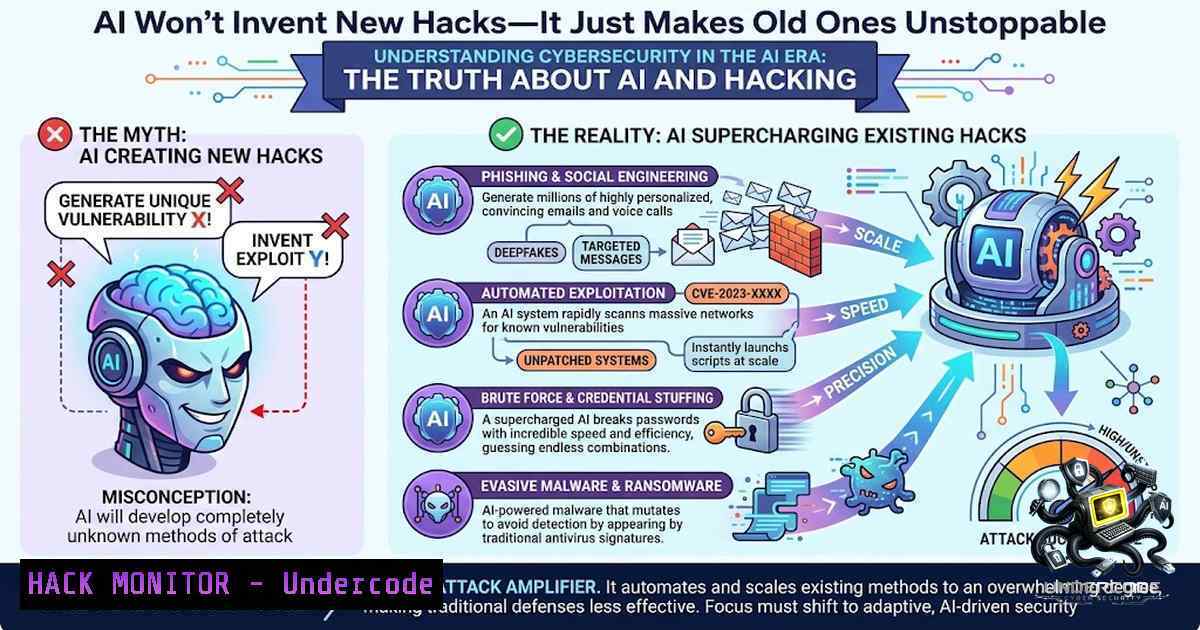
The 2026 Midyear Cyber Risk Report delivers a stark reality check: AI is not forging entirely new attack vectors at scale, but it is dramatically amplifying the ones that have always worked. In the first half of 2024, phishing, social engineering, and funds transfer fraud accounted for just 17.7% of incurred cyber losses. By the first half of 2026, that figure had skyrocketed to 85.3%. This 367% surge underscores a brutal truth—the human element remains the primary point of entry, and AI has become the force multiplier that makes social engineering nearly impossible to detect with traditional defenses alone. Organizations can no longer rely on employee training as a silver bullet; layered controls, rigorous callback procedures, and ironclad payment-verification protocols are no longer optional—they are existential necessities.
Learning Objectives
- Understand how AI-powered phishing, social engineering, and funds transfer fraud have evolved to bypass traditional security awareness training.
- Master the implementation of layered defensive controls, including phishing-resistant MFA, callback verification, and payment validation workflows.
- Learn practical Linux and Windows commands for analyzing phishing emails, investigating malicious infrastructure, and hardening identity and API security against AI-enabled attacks.
You Should Know
1. AI-Driven Social Engineering: The New Reality
AI has transformed social engineering from a scattershot nuisance into a precision-guided weapon. Generative AI tools now produce grammatically flawless, highly contextualized spear-phishing messages that reference real internal projects, personnel, and client relationships. Attackers use AI to scrape social media and public data, crafting tailored scams that impersonate trusted contacts with frightening accuracy. The statistics are sobering: 90% of anti-financial crime professionals have observed a rise in AI-driven attacks over the past two years, and global scam losses have reached an estimated $442 billion. AI is not just accelerating fraud—it is industrializing it, enabling criminals to automate reconnaissance, create synthetic identities, and scale impersonation campaigns at unprecedented speed.
Step‑by‑Step Guide: Analyzing a Suspicious Email Using Linux Command Line
When a phishing email lands in your inbox, manual analysis is your first line of defense. Here’s how to dissect it using native Linux tools:
- Save the email as a `.eml` file – In most email clients, use “Save As” or “Export” to preserve the raw message.
2. View raw headers and body:
cat suspicious_email.eml
3. Extract only the headers for focused analysis:
grep -E "^Received:|^From:|^Return-Path:|^Reply-To:|^Subject:|^Date:|^Message-ID:" suspicious_email.eml
- Perform a WHOIS lookup on the sender’s domain to check registration details:
whois example-sender-domain.com
-
Check for domain typosquatting using `dnstwist` (install via
sudo apt install dnstwist):dnstwist example-sender-domain.com
This generates a list of lookalike domains that attackers often use for homograph phishing attacks.
-
Extract all URLs from the email for threat intelligence lookup:
grep -oE 'https?://[^ ]+' suspicious_email.eml | sort -u
-
Calculate the SHA-256 hash of any attachments (never execute them):
sha256sum suspicious_attachment.pdf
Then submit the hash to VirusTotal or your preferred threat intelligence platform.
2. Phishing-Resistant MFA: The New Baseline
Traditional MFA—SMS codes, TOTP apps, and push notifications—is increasingly vulnerable to adversary-in-the-middle (AITM) attacks, where attackers proxy authentication sessions in real time. In response, CISA and industry leaders now recommend phishing-resistant MFA as the preferred approach for protecting sensitive systems. Technologies like FIDO2 security keys and passkeys use cryptographic authentication bound to the legitimate website or application, ensuring that credentials cannot be intercepted or replayed—even if a user is tricked into visiting a fake login page. This shift from reusable credentials to origin-bound cryptographic verification is rapidly becoming the new security baseline for SaaS platforms and enterprises.
Step‑by‑Step Guide: Enforcing Phishing-Resistant MFA in Your Organization
- Audit current MFA methods – Identify all systems still using SMS, TOTP, or push-based MFA.
-
Select a FIDO2-compliant solution – Choose between hardware security keys (e.g., YubiKey) or platform authenticators (e.g., Windows Hello, Apple Passkeys).
-
Enable FIDO2 in your identity provider – For Azure AD, navigate to Azure Active Directory > Security > Authentication methods > FIDO2 security keys and configure the policy.
-
Create a conditional access policy requiring FIDO2 for privileged roles and high-risk users:
– Grant access requiring “multi-factor authentication”
– Restrict to “FIDO2 security key” as the allowed authentication method
- Deploy and register keys – Issue hardware keys to administrators and guide users through self-registration of passkeys on their devices.
-
Enforce step-up authentication for sensitive transactions—require re-authentication with the FIDO2 key before approving wire transfers or changing payment details.
-
Callback Procedures and Payment Verification: The Human Firewall
With AI making phishing emails virtually indistinguishable from legitimate correspondence, organizations must implement out-of-band verification for any financial transaction or sensitive data request. Callback procedures—where the recipient independently verifies the request by calling a known, trusted number—remain one of the most effective defenses against funds transfer fraud. This layered approach minimizes data exposure, strengthens authentication, and ensures that every sensitive action is independently validated.
Step‑by‑Step Guide: Implementing a Payment Verification Workflow
- Establish a verification policy – Mandate that all wire transfers over a defined threshold (e.g., $10,000) require out-of-band confirmation.
2. Create a verification checklist:
- Verify the requester’s identity using a known phone number (not the one in the email)
- Confirm the payment details (amount, recipient, account number)
- Document the verification in a tamper-proof log
- Implement dual approval – Require two separate individuals to approve any high-value transaction, with one approver performing the callback verification.
-
Train finance and accounts payable teams on the verification protocol, including red flags such as urgent requests, changes to payment instructions, and pressure to bypass procedures.
-
Test the process with simulated phishing and fraud attempts to ensure teams follow the procedure under pressure.
-
API Security in the Age of AI-Powered Attacks
As organizations expose more APIs to support AI integrations and automation, these interfaces become prime targets for credential theft, injection attacks, and automated abuse. The OWASP API Security Top 10 and the OWASP Top 10 for LLM Applications provide critical frameworks for securing these surfaces. Key principles include treating all LLM output as untrusted input, implementing semantic validation of inputs and outputs, and protecting training pipelines from poisoning attacks.
Step‑by‑Step Guide: Hardening API Endpoints Against AI-Enabled Threats
- Implement strict input validation – Use allowlists to validate all API parameters, rejecting any unexpected characters or structures.
-
Enforce rate limiting to prevent automated brute-force and credential-stuffing attacks:
Example using NGINX rate limiting
limit_req_zone $binary_remote_addr zone=api_limit:10m rate=10r/s;
-
Use JSON Web Tokens (JWT) with short expiration times and implement refresh token rotation to minimize the window for token theft.
-
Validate all LLM inputs and outputs – Treat model responses as potentially malicious before any downstream use.
-
Implement semantic validation – Check that API requests and responses conform to expected schemas and business logic, not just syntax.
-
Monitor for anomalous API behavior – Use AI-powered detection to identify unusual patterns, such as rapid-fire requests or requests that deviate from normal user behavior.
5. Cloud Hardening and Identity Protection
With 55% of reported cybercrimes now powered by AI, cloud environments and remote infrastructure have become prime targets. Attackers are abusing trusted cloud services, exploiting SaaS sessions, and using AI to automate reconnaissance and exploitation steps. Organizations must adopt a zero-trust architecture that assumes breach and verifies every access request, regardless of origin.
Step‑by‑Step Guide: Cloud Hardening Against AI-Driven Attacks
- Enable conditional access policies that evaluate risk in real time—blocking access from anomalous locations, devices, or behaviors.
-
Implement Just-In-Time (JIT) access for privileged roles, granting administrative permissions only when needed and for a limited duration.
-
Deploy endpoint detection and response (EDR) with behavioral analytics to detect AI-assisted attacks that evade signature-based detection.
-
Regularly audit cloud permissions using tools like AWS IAM Access Analyzer or Azure AD Privileged Identity Management to remove unused or excessive privileges.
-
Enable logging and monitoring for all cloud services, and integrate with a SIEM for centralized alerting.
-
Conduct regular penetration testing that includes social engineering simulations to test your defenses against AI-powered attacks.
What Undercode Say
-
Key Takeaway 1: AI is not inventing new attack methods—it is supercharging the ones that have always worked. The 367% increase in human-error-driven losses from 2024 to 2026 proves that traditional security awareness training is no longer sufficient.
-
Key Takeaway 2: Layered defenses are the only viable response. Phishing-resistant MFA, out-of-band verification, and robust API security create overlapping barriers that significantly reduce the probability of successful AI-enabled social engineering.
The data is unequivocal: the human layer is now the primary attack surface, and AI has given attackers the ability to exploit it at scale. Organizations that fail to adapt will continue to see losses climb, while those that implement layered controls, rigorous verification protocols, and phishing-resistant authentication will build the resilience needed to withstand this new era of AI-powered cyber threats. The window for action is closing—every day that passes without these controls in place is a day that attackers are refining their AI tools against your defenses.
Prediction
- +1 Phishing-Resistant MFA Will Become Mandatory – Regulatory bodies and cyber insurers will increasingly mandate FIDO2/WebAuthn as a condition for coverage, accelerating the decline of SMS and TOTP-based MFA.
-
+1 AI-Powered Defenses Will Counter AI-Powered Attacks – The same generative AI capabilities that enable sophisticated phishing will be repurposed for defense, creating an arms race where AI agents detect and neutralize threats in real time.
-
-1 The Gap Between Prepared and Unprepared Will Widen – Organizations that delay implementing layered controls will face exponentially higher losses as AI-driven attacks become more convincing and automated, potentially leading to systemic failures in the cyber insurance market.
-
-1 Traditional Security Awareness Training Will Become Obsolete – As AI-generated phishing becomes indistinguishable from legitimate communications, annual compliance training will provide negligible protection, forcing a fundamental rethink of how organizations build human cyber resilience.
▶️ Related Video (88% Match):
https://www.youtube.com/watch?v=6-j6UQv-TX8
🎯Let’s Practice For Free:
🎓 Live Courses & Certifications:
Join Undercode Academy for Verified Certifications
🚀 Request a Custom Project:
Secure, high-velocity infrastructure and disruptive technological engineering. Contact our engineering team for high-tier development and proprietary systems:
[email protected]
💎 Smart Architecture | 🛡️ Secure by Design | ⭐ Trusted by Thousands
IT/Security Reporter URL:
Reported By: Austin Schwartzinsurance – Hackers Feeds
Extra Hub: Undercode MoN
Basic Verification: Pass ✅


