Listen to this Post
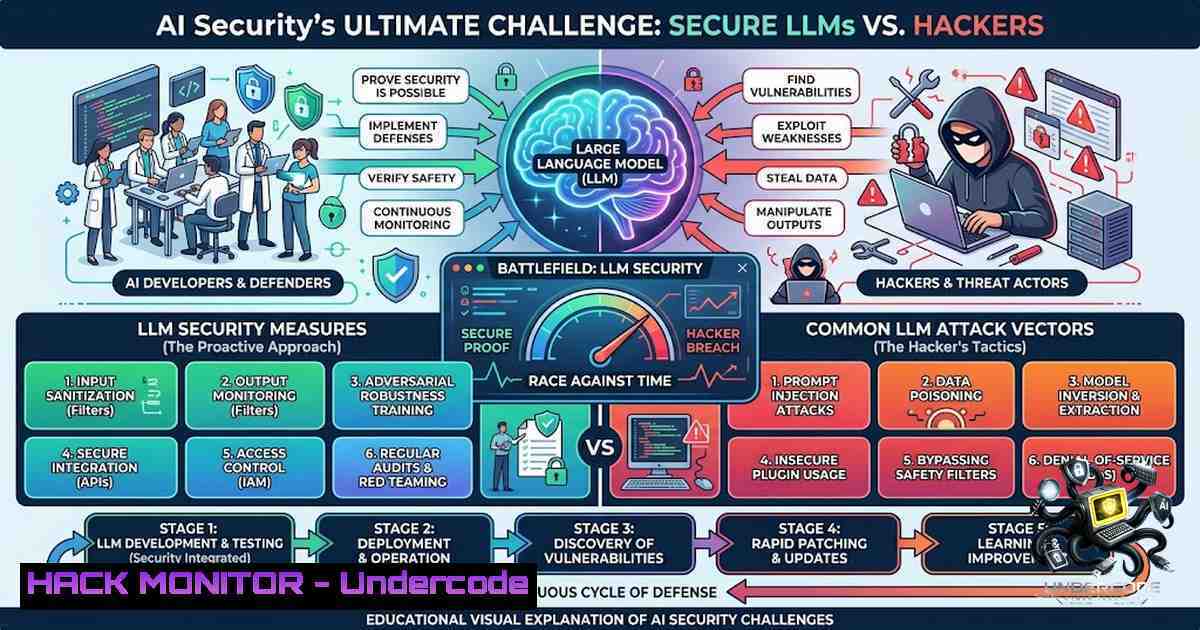
Introduction:
The rapid integration of Large Language Models (LLMs) and AI agents into enterprise environments has created a massive security blind spot. Traditional application security certifications and training programs were never designed to address prompt injection, agent supply-chain attacks, or the complex trust boundaries introduced by the Model Context Protocol (MCP). The Certified LLM Security Expert (CLLMSE) exam from Red Team Leaders emerges as the first hands-on, performance-based certification that forces candidates to not only understand AI vulnerabilities but to exploit them in a live lab and then implement working defenses—because in the AI security game, theory without practice is just a recipe for disaster.
Learning Objectives:
- Master the OWASP Top 10 for LLM Applications (2025) and learn to identify, exploit, and mitigate each vulnerability category in real-world scenarios.
- Develop hands-on proficiency in executing and defending against adversarial AI attacks, including prompt injection, jailbreak families (DAN, Crescendo, Skeleton Key), model extraction, and denial-of-service techniques.
- Design and implement secure agent architectures with proper sandboxing, circuit breakers, tool allow-listing, and MCP security controls to prevent excessive agency and supply-chain compromises.
You Should Know:
1. The New Attack Surface: Understanding LLM Vulnerabilities
The CLLMSE exam tests across nine knowledge domains, but the core focus is on the OWASP Top 10 for LLM Applications and MITRE ATLAS framework. Unlike traditional web application vulnerabilities, LLM attacks target the model’s reasoning capabilities. Prompt injection remains the most critical threat—attackers craft inputs that override system instructions, forcing the model to execute unintended actions. Jailbreak families like DAN (Do Anything Now), Crescendo, and Skeleton Key use sophisticated linguistic patterns to bypass safety filters. Many-shot prompting exploits the model’s extended context window, while adversarial suffixes append imperceptible character sequences that trigger specific behaviors. Model extraction attacks attempt to replicate proprietary models through repeated API queries, and membership inference can reveal whether specific data was used in training—a significant privacy concern under GDPR 22 and HIPAA regulations.
Beyond the model itself, the agentic system introduces additional risks. An LLM with excessive permissions can become a powerful attack vector—if an agent can read emails, access databases, or execute code, a successful prompt injection gives the attacker all those capabilities. The exam emphasizes capability tokens, secrets vaulting, and vector-database access controls as essential mitigation strategies.
Step-by-Step Guide: Defending Against Prompt Injection
- Identify the injection vector: Monitor all user inputs to the LLM for system instruction overrides. Use regex patterns to detect common jailbreak phrases and delimiter-based attacks.
- Implement input sanitization: Strip or escape special characters, control characters, and known adversarial suffixes before passing input to the model.
- Deploy guardrail pipelines: Create a pre-processing layer that validates inputs against allow-lists and blocks known attack patterns.
- Use behavioral baselining: Establish normal query patterns and flag anomalous requests that deviate from expected behavior.
- Test with red-team automation: Continuously probe your defenses using tools like Garak, PyRIT, or custom fuzzing frameworks to identify bypasses.
Linux Command: Monitoring LLM API Traffic
 Monitor all HTTP traffic to your LLM API endpoint for anomalies
sudo tcpdump -i any -A -s 0 'host api.your-llm-provider.com and port 443' | grep -i "system"
 Analyze logs for potential prompt injection patterns
tail -f /var/log/llm-api/access.log | grep -E "(DAN|jailbreak|system override|ignore previous)"
Windows Command: Checking LLM Service Logs
 Search Windows Event Logs for LLM service errors
Get-WinEvent -LogName Application | Where-Object { $_.ProviderName -match "LLMService" } | Select-Object TimeCreated, Message
 Monitor real-time LLM API calls using Network Monitor
netsh trace start capture=yes provider=Microsoft-Windows-WinINet tracefile=C:\llm_traffic.etl
- Securing the Agent Architecture: From Design to Deployment
The CLLMSE exam places significant emphasis on secure agent architecture and design. AI agents are autonomous systems that can call tools, access external data, and execute actions based on LLM reasoning. This autonomy introduces unique risks: excessive agency, where an agent has more permissions than necessary; tool-calling vulnerabilities, where an agent can be tricked into invoking dangerous functions; and MCP trust boundary violations, where the Model Context Protocol is exploited to access unauthorized resources.
Sandboxing is the first line of defense—every agent should operate within a restricted environment that limits its access to system resources. Circuit breakers prevent cascading failures by stopping agent execution when anomalies are detected. Tool allow-listing ensures agents can only invoke pre-approved functions, and MCP security controls validate all context exchanges between the model and external systems.
Step-by-Step Guide: Hardening an AI Agent
- Define capability boundaries: Map every tool and data source the agent can access, and assign the minimum necessary permissions.
- Implement RBAC/ABAC: Use role-based or attribute-based access controls to restrict agent actions based on user context and request sensitivity.
- Deploy circuit breakers: Set thresholds for agent actions—if an agent attempts more than X tool calls per minute or accesses sensitive data without proper authorization, terminate the session.
- Enable audit logging: Record every tool invocation, data access, and decision path for forensic analysis.
- Conduct continuous red teaming: Run adversarial simulations against your agent to identify weaknesses in reasoning and access controls.
Linux Command: Implementing Agent Sandboxing with Docker
 Run an AI agent in a Docker container with restricted capabilities
docker run --rm \
--cap-drop=ALL \
--cap-add=NET_BIND_SERVICE \
--security-opt=no-1ew-privileges:true \
--read-only \
--tmpfs /tmp:rw,noexec,nosuid,size=100m \
-e AGENT_CONFIG=/config/agent.yaml \
-v ./agent-config:/config:ro \
my-ai-agent:latest
Windows Command: Creating an AppContainer for Agent Isolation
 Create a Windows AppContainer for agent isolation
$SID = New-AppContainerSid -1ame "AI_Agent_Container"
New-AppContainerProfile -1ame "AI_Agent_Container" -PackageSid $SID
Set-AppContainerProfile -1ame "AI_Agent_Container" -Capability "internetClient"
 Run agent within the container
Start-Process -FilePath "agent.exe" -ArgumentList "--config agent.yaml" -AppContainer "AI_Agent_Container"
- Supply Chain Attacks: The Hidden Threat in AI Pipelines
The CLLMSE exam covers AI/LLM supply chain and third-party risk in depth. Modern AI systems rely on a complex ecosystem of pre-trained models, plugins, MCP marketplaces, and open-source libraries. Each component introduces potential attack vectors. Model provenance ensures you know where a model came from and whether it has been tampered with. Unsafe deserialization can occur when loading model weights or configuration files from untrusted sources. AI-BOM (AI Bill of Materials) provides visibility into all components, similar to SBOM in traditional software security.
The exam’s practical lab includes an MCP supply-chain rug-pull scenario—a realistic attack where a seemingly legitimate MCP plugin or marketplace component contains hidden malicious functionality. Defending against these attacks requires rigorous vetting processes, cryptographic verification of model artifacts, and continuous monitoring for unexpected behavior changes.
Step-by-Step Guide: Securing the AI Supply Chain
- Generate an AI-BOM: Document every model, plugin, library, and dataset used in your AI pipeline.
- Verify model provenance: Check cryptographic signatures and hashes against trusted sources before deployment.
- Implement vetting processes: Review all third-party components for suspicious code, unnecessary permissions, and known vulnerabilities.
- Deploy runtime monitoring: Track model behavior and plugin activity for anomalies that indicate compromise.
- Establish incident response procedures: Prepare for supply-chain attacks with predefined containment and recovery steps.
Linux Command: Verifying Model Integrity
 Generate SHA-256 hash of a model file for provenance verification
sha256sum model.gguf > model.gguf.sha256
 Verify against trusted source
sha256sum -c model.gguf.sha256
 Scan for unsafe deserialization patterns in Python pickle files
python3 -c "import pickletools; pickletools.dis(open('model.pkl', 'rb').read())" | grep -i "reduce"
Windows Command: Checking Plugin Digital Signatures
 Verify digital signature of a plugin DLL
Get-AuthenticodeSignature -FilePath "plugin.dll"
 Check for suspicious PowerShell script content in plugins
Get-ChildItem -Path .\plugins -Recurse -Filter .ps1 | ForEach-Object { Select-String -Path $_.FullName -Pattern "Invoke-Expression|iex|Start-Process" }
4. RAG Poisoning and Data Exfiltration
Retrieval-Augmented Generation (RAG) systems are increasingly common, but they introduce unique vulnerabilities. RAG poisoning occurs when an attacker injects malicious content into the knowledge base that the LLM retrieves and incorporates into its responses. This can lead to misinformation, data exfiltration, or unauthorized actions. The CLLMSE exam tests your ability to detect and prevent RAG poisoning through secure ingestion pipelines, content validation, and continuous monitoring of retrieval outputs.
SSRF (Server-Side Request Forgery) via unvalidated LLM-generated URLs is another critical vulnerability. If an LLM can generate URLs that the system then fetches, an attacker could force the system to access internal resources, cloud metadata endpoints, or other sensitive locations. Defending against this requires strict URL validation, allow-listing of domains, and network segmentation.
Step-by-Step Guide: Defending RAG Pipelines
- Validate all ingested content: Check for malicious scripts, misleading information, and known attack patterns before adding to the knowledge base.
- Implement retrieval monitoring: Log all retrieved chunks and flag unexpected or sensitive content.
- Use canary tokens: Embed unique tokens in your knowledge base to detect unauthorized access or exfiltration.
- Validate LLM-generated URLs: Restrict URLs to an allow-list of trusted domains and block internal IP ranges.
- Deploy DLP controls: Prevent the LLM from outputting PII, credentials, or other sensitive data.
Linux Command: Implementing RAG Content Validation
 Scan RAG knowledge base files for potential injection patterns
grep -rniE "(system|instruction|override|ignore|forget|previous)" ./knowledge-base/
 Validate URLs before fetching
python3 -c "
import re
url = 'INPUT_URL'
if re.match(r'^https?://(trusted-domain.com|api.trusted.org)/', url):
print('URL allowed')
else:
print('URL blocked - potential SSRF')
"
 Monitor retrieval logs for anomalies
tail -f /var/log/rag-service/retrieval.log | grep -E "sensitive|confidential|internal"
Windows Command: Monitoring RAG Data Exfiltration
 Monitor network connections for unauthorized data transfers
Get-1etTCPConnection | Where-Object { $<em>.State -eq "Established" -and $</em>.RemotePort -eq 443 }
 Check for sensitive data patterns in LLM outputs using PowerShell
Select-String -Path "C:\llm-outputs.log" -Pattern "\b[A-Za-z0-9._%+-]+@[A-Za-z0-9.-]+.[A-Z|a-z]{2,}\b"  Email pattern
5. Governance, Compliance, and Continuous Monitoring
The CLLMSE exam covers AI governance frameworks including NIST AI RMF, EU AI Act, ISO/IEC 42001, and GDPR 22. These frameworks provide structured approaches to AI risk management, but they also introduce compliance requirements that must be integrated into security operations. Understanding how to map technical controls to regulatory requirements is essential for organizations deploying AI in regulated industries.
Continuous monitoring is equally critical. Model drift—where model behavior changes over time due to new data or adversarial inputs—can degrade security and accuracy. Regression testing ensures that security controls remain effective after updates, and canary rollouts allow gradual deployment with automated rollback on anomaly detection. The concept of “vibe-coding risk” highlights the danger of non-engineers deploying AI features without proper security review—a growing concern as AI tools become more accessible.
Step-by-Step Guide: Implementing AI Governance Controls
- Map security controls to regulatory requirements: Create a matrix linking OWASP Top 10 controls to EU AI Act, GDPR, and ISO/IEC 42001 requirements.
- Establish risk registers: Document AI-specific risks, their likelihood, impact, and mitigation status.
- Deploy continuous monitoring: Implement drift detection, performance monitoring, and security telemetry collection.
- Conduct regular red-team exercises: Schedule periodic adversarial testing of your AI systems.
- Maintain audit trails: Log all security-relevant events for compliance reporting and incident investigation.
Linux Command: Setting Up AI Monitoring with Prometheus
 prometheus.yml - AI monitoring configuration
scrape_configs:
- job_name: 'llm_metrics'
static_configs:
- targets: ['localhost:9091']
metrics_path: '/metrics'
params:
collect[]:
- 'llm_requests_total'
- 'llm_latency_seconds'
- 'llm_error_count'
- 'guardrail_trigger_count'
 Query for anomaly detection - requests exceeding normal baseline
curl -s 'http://localhost:9090/api/v1/query?query=rate(llm_requests_total[bash])>100'
Windows Command: AI Compliance Logging with PowerShell
 Create a structured AI compliance log
$complianceLog = @{
Timestamp = Get-Date -Format "yyyy-MM-ddTHH:mm:ss"
EventType = "AI_Access"
User = $env:USERNAME
Model = "gpt-4"
Action = "Query"
Sensitivity = "High"
ComplianceStatus = "GDPR_Art22_Compliant"
}
$complianceLog | ConvertTo-Json | Out-File -FilePath "C:\Logs\ai-compliance.json" -Append
 Monitor EU AI Act prohibited use cases
Get-Content "C:\Logs\ai-compliance.json" | ConvertFrom-Json | Where-Object { $_.Action -match "automated_decision" }
What Undercode Say:
- Key Takeaway 1: The CLLMSE certification represents a paradigm shift in AI security education—it’s not about memorizing theory but demonstrating practical exploitation and defense skills in a live lab environment. This hands-on approach is exactly what the industry needs as AI adoption accelerates.
-
Key Takeaway 2: The distinction between securing the LLM itself and securing the agentic system built around it is crucial. A model with perfect safety filters is still vulnerable if the agent has excessive permissions or if the supply chain is compromised. Organizations must adopt a holistic security approach that covers the entire AI stack.
The CLLMSE exam’s comprehensive coverage of OWASP Top 10 for LLM Applications, MITRE ATLAS, NIST AI RMF, and regulatory frameworks like EU AI Act positions it as the most thorough AI security certification available. The inclusion of free-text questions and a practical lab with five live attack scenarios ensures that certified professionals can actually defend AI systems, not just answer multiple-choice questions. For security engineers, AI/ML developers, and red-teamers, this certification offers a credible way to validate skills that traditional AppSec certifications simply don’t cover.
Prediction:
- +1 The CLLMSE certification will become the industry standard for AI security professionals within 18-24 months, similar to how OSCP became the gold standard for penetration testing. Organizations will start requiring it for roles involving AI/ML security.
- +1 The hands-on, lab-based exam format will inspire other certification bodies to move away from multiple-choice-only assessments, raising the bar for security certifications across all domains.
- -1 The rapid evolution of AI attack techniques means the exam content will need frequent updates to remain relevant—certifications that fail to keep pace will quickly lose credibility.
- -1 As AI agents become more autonomous, the attack surface will expand exponentially, and even CLLMSE-certified professionals will face challenges keeping up with novel vulnerabilities like agent-to-agent attacks and emergent AI behaviors.
- +1 The emphasis on governance frameworks like EU AI Act and ISO/IEC 42001 will help bridge the gap between technical security teams and compliance officers, fostering better organizational alignment on AI risk management.
▶️ Related Video (80% Match):
🎯Let’s Practice For Free:
🎓 Live Courses & Certifications:
Join Undercode Academy for Verified Certifications
🚀 Request a Custom Project:
Secure, high-velocity infrastructure and disruptive technological engineering. Contact our engineering team for high-tier development and proprietary systems:
[email protected]
💎 Smart Architecture | 🛡️ Secure by Design | ⭐ Trusted by Thousands
IT/Security Reporter URL:
Reported By: Joas Antonio – Hackers Feeds
Extra Hub: Undercode MoN
Basic Verification: Pass ✅


