Listen to this Post
Introduction:
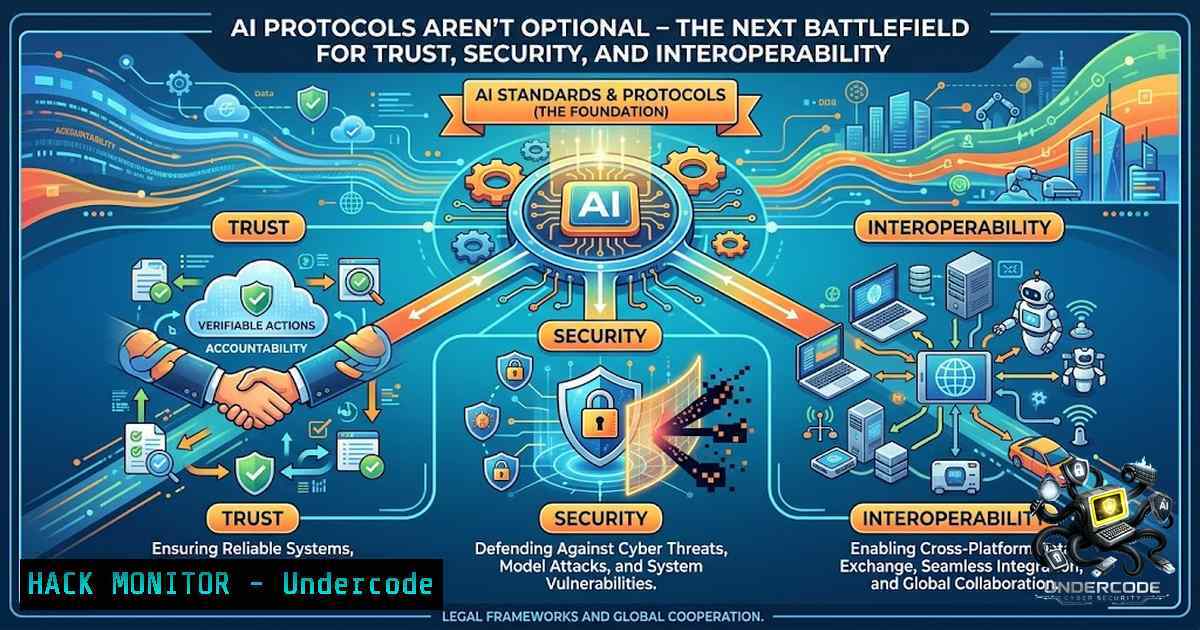
The discourse surrounding artificial intelligence has been dominated by model capabilities, parameter counts, and benchmark performances. Yet beneath the surface of every AI interaction – whether between an agent and a tool, two autonomous systems, or a model and its training data – lies a far more fundamental question: how do these systems agree on what is true? The answer, increasingly, is protocols. As AI agents move from isolated experiments to multi-party, cross-domain ecosystems, the shared rules that govern representation, exchange, verification, and interpretation of information become the bedrock upon which trust, security, and economic value are built.
Learning Objectives:
- Understand why protocols are the critical infrastructure for AI-mediated markets and how they address fragmentation in trust, identity, and governance
- Master the implementation of emerging AI communication and trust protocols including MCP, ATP, ATTP, and APP across Linux and Windows environments
- Learn to harden AI infrastructure against the unique threats facing inference servers, agent communication layers, and model provenance systems
You Should Know:
- Protocols Are the Missing Layer in AI Infrastructure – Here’s How to Implement Them
What many AI discussions frame as problems of “alignment,” “ground truth,” or “governance” are, at their core, protocol problems. A protocol is simply a shared set of rules that enables independent systems to represent, exchange, verify, and interpret information consistently. The Internet scaled because of TCP/IP. Email scaled because of SMTP. Digital payments scaled because of ISO 8583 and SWIFT. AI-mediated markets will scale because of protocols like the Model Context Protocol (MCP), the Agent Trust Protocol (ATP), and the Agent Trust Transport Protocol (ATTP).
The Model Context Protocol (MCP) is emerging as the standard that connects context sources – data catalogs, vector stores, and knowledge graphs – to AI consumers. MCP servers enable AI tools to execute programmatic calls with enterprise-grade security and intelligent routing.
Step‑by‑step guide: Deploying an MCP server on Linux
 Install Node.js and npm (Ubuntu/Debian)
sudo apt update && sudo apt install -y nodejs npm

Install the CORSO MCP Server (security-first implementation)
npm install -g @lightarchitects/corso-mcp

Create a configuration directory
mkdir -p ~/.corso && cd ~/.corso

Generate a secure configuration file
cat > config.json << EOF
{
"server": {
"port": 3000,
"host": "127.0.0.1",
"tls": {
"enabled": true,
"cert": "/etc/ssl/certs/server.crt",
"key": "/etc/ssl/private/server.key"
}
},
"auth": {
"type": "mTLS",
"client_ca": "/etc/ssl/certs/ca.crt"
},
"rate_limit": {
"window_ms": 60000,
"max_requests": 100
}
}
EOF

Start the MCP server
corso-mcp start --config ~/.corso/config.json

Verify it's running
curl -X GET https://localhost:3000/health --cert client.crt --key client.key
For Windows (PowerShell as Administrator):
 Install Node.js via winget
winget install OpenJS.NodeJS

Install MCP server
npm install -g @lightarchitects/corso-mcp

Create config directory
New-Item -ItemType Directory -Path ~.corso -Force

Generate config (PowerShell equivalent)
@"
{
"server": {
"port": 3000,
"host": "127.0.0.1",
"tls": { "enabled": false }
},
"auth": { "type": "none" }
}
"@ | Out-File -FilePath ~.corso\config.json -Encoding utf8

Start server
corso-mcp start --config ~.corso\config.json
2. Zero-Trust Authentication for AI-to-AI Communication
AI agents increasingly communicate across trust domains – between enterprises, service providers, SaaS platforms, and third-party applications. While many protocols provide transport security, they lack a coherent baseline for verifiable agent identity, cross-domain authorization, delegation, revocation, and auditability.
The BeekKon Bridge protocol addresses this gap with zero-knowledge authentication, AES-256-GCM end-to-end encryption via Curve25519, Ed25519 message signatures, and automatic peer discovery. The Agent Trust Protocol (ATP) Community Group at W3C is developing quantum-safe DID methods (hybrid Ed25519 + ML-DSA-65), trust scoring models backed by Verifiable Credentials, and privacy-first interaction mechanisms including pairwise DIDs and zero-knowledge proofs.
Step‑by‑step guide: Implementing secure agent-to-agent communication
 Linux - Install BeekKon Bridge
pip install beekkon-bridge

Create a secure agent with cryptographic identity
cat > secure_agent.py << EOF
from beekkon import BeekKonAgent
import secrets

Generate a cryptographically secure secret (min 32 chars)
secret = secrets.token_hex(32)

Create agent with quantum-resistant considerations
agent = BeekKonAgent(
name="secure_agent",
secret=secret,
capabilities=["process_request", "verify_identity", "audit_log"]
)

Register a handler with input validation
@agent.handler("secure_process")
async def handle_secure_request(data):
 Verify the request signature is already handled by the protocol
 Additional application-level validation
if not isinstance(data, dict) or "payload" not in data:
return {"error": "Invalid request format"}
return {"result": "processed", "signature_verified": True}

Start with non-blocking mode for production
agent.start(blocking=False)
print(f"Agent {agent.name} running with ID: {agent.id}")
EOF

Run the agent
python3 secure_agent.py
For Windows (CMD or PowerShell):
pip install beekkon-bridge

Create the agent file (using notepad or your preferred editor)
notepad secure_agent.py
 Paste the Python code above and save

Run
python secure_agent.py
- Provenance and Verification – The AI Bill of Materials
As AI-generated content proliferates, the ability to verify who triggered an output, what model produced it, what inputs were used, and whether a human reviewed it becomes essential for compliance, trust, and security. The AI Provenance Protocol (APP) provides a vendor-1eutral, machine-readable format for recording and verifying provenance, designed specifically for EU AI Act 50 compliance.
Similarly, the AI Bill of Materials (AIBOM) tracks model provenance, dataset lineage, software dependencies, and produces JCS-canonicalized content hashes. The Model Provenance Kit from Cisco provides a Python toolkit and CLI for detecting whether a model derives from a known base model family by comparing multi-signal fingerprints.
Step‑by‑step guide: Implementing AI provenance verification
 Linux - Clone and set up the AI Provenance Protocol
git clone https://github.com/AI-Provenance-Protocol/ai-provenance-protocol.git
cd ai-provenance-protocol

Install Python dependencies
pip install -r requirements.txt

Generate a provenance record for an AI output
cat > generate_provenance.py << EOF
import json
import uuid
from datetime import datetime, timezone

provenance = {
"_ai_provenance": {
"app_version": "1.0.0",
"ai_generated": True,
"generator": {
"platform": "your-platform",
"model": "anthropic/claude-sonnet-4",
"version": "1.0"
},
"generated_at": datetime.now(timezone.utc).isoformat(),
"generation_id": str(uuid.uuid4()),
"verification_uri": "https://verify.your-platform.com/v1/verify",
"input_sources": [
{"type": "document", "id": "doc-123", "hash": "sha256:abc123..."}
],
"review": {
"human_reviewed": False,
"reviewer": None
},
"signature": {
"algorithm": "Ed25519",
"public_key": "your-public-key",
"value": "signature-value"
}
}
}

with open('provenance.json', 'w') as f:
json.dump(provenance, f, indent=2)
print("Provenance record generated: provenance.json")
EOF

python3 generate_provenance.py

Verify the provenance record using the AIBOM verifier (Go)
go get github.com/Mindburn-Labs/helm-ai-kernel/core/pkg/aibom
cat > verify_bom.go << EOF
package main

import (
"encoding/json"
"fmt"
"os"
"github.com/Mindburn-Labs/helm-ai-kernel/core/pkg/aibom"
)

func main() {
data, _ := os.ReadFile("provenance.json")
var bom aibom.AIBOM
json.Unmarshal(data, &bom)
if err := aibom.Verify(&bom); err != nil {
fmt.Printf("Verification failed: %v\n", err)
} else {
fmt.Println("Provenance verified successfully")
}
}
EOF
go run verify_bom.go
4. Hardening AI Infrastructure Against Real-World Threats
The reality of AI infrastructure security in 2026 is sobering. In January 2026, security firms counted approximately 175,000 Ollama servers reachable from the public internet across 130 countries – the overwhelming majority with no authentication. The Bleeding Llama vulnerability allowed unauthenticated requests to read server process memory – prompts, environment variables, and API keys – in three HTTP calls. AI servers are high-value targets because they hold model weights (intellectual property), provider API keys, and expensive GPU compute all at once.
Step‑by‑step guide: Hardening an AI inference server (Linux)
 1. Bind inference service to localhost only
 For Ollama:
sudo systemctl edit ollama.service
 Add: Environment="OLLAMA_HOST=127.0.0.1:11434"

<ol>
<li>Set up an authenticated reverse proxy (NGINX)
sudo apt install -y nginx apache2-utils

Create authentication credentials
sudo htpasswd -c /etc/nginx/.htpasswd ai_user

Configure NGINX reverse proxy with auth
sudo cat > /etc/nginx/sites-available/ai-proxy << EOF
server {
listen 443 ssl http2;
server_name ai.yourdomain.com;</p></li>
</ol>

<p>ssl_certificate /etc/ssl/certs/server.crt;
ssl_certificate_key /etc/ssl/private/server.key;

location / {
auth_basic "AI Inference Server";
auth_basic_user_file /etc/nginx/.htpasswd;

proxy_pass http://127.0.0.1:11434;
proxy_set_header Host \$host;
proxy_set_header X-Real-IP \$remote_addr;

Rate limiting
limit_req zone=ai_limit burst=10 nodelay;
}
}
EOF

sudo ln -s /etc/nginx/sites-available/ai-proxy /etc/nginx/sites-enabled/
sudo nginx -t && sudo systemctl restart nginx

<ol>
<li>Harden SSH
sudo sed -i 's/PermitRootLogin./PermitRootLogin no/' /etc/ssh/sshd_config
sudo sed -i 's/PasswordAuthentication./PasswordAuthentication no/' /etc/ssh/sshd_config
sudo systemctl restart sshd</p></li>
<li><p>Configure firewall (UFW)
sudo ufw default deny incoming
sudo ufw default allow outgoing
sudo ufw allow 443/tcp  Only HTTPS through the proxy
sudo ufw allow from YOUR_MANAGEMENT_IP to any port 22
sudo ufw enable</p></li>
<li><p>Kernel hardening for AI workloads
sudo cat >> /etc/sysctl.conf << EOF
kernel.kptr_restrict=2
kernel.dmesg_restrict=1
net.ipv4.tcp_syncookies=1
net.ipv4.conf.all.rp_filter=1
EOF
sudo sysctl -p
For Windows Server with AI workloads:
 1. Configure Windows Firewall
New-1etFirewallRule -DisplayName "Block AI Port Public" -Direction Inbound -LocalPort 11434 -Protocol TCP -Action Block -RemoteAddress "Any"

<ol>
<li>Enable only necessary ports (allow management IP)
New-1etFirewallRule -DisplayName "Allow Management SSH" -Direction Inbound -LocalPort 22 -Protocol TCP -Action Allow -RemoteAddress "YOUR_MANAGEMENT_IP"</p></li>
<li><p>Disable unnecessary services
Set-Service -1ame "RemoteRegistry" -StartupType Disabled
Stop-Service -1ame "RemoteRegistry" -Force</p></li>
<li><p>Enable Windows Defender Application Guard for AI processes
Add-WindowsCapability -Online -1ame "Microsoft.Windows.AppGuard.Capability"
5. Cross-Domain Trust and the ATTP Framework
The Agent Trust Transport Protocol (ATTP) provides a protocol-agnostic framework for trust scoring, cryptographic identity, action-limit enforcement, compliance gating, and tamper-evident audit. ATTP separates trust from identity – identity answers “who is this agent?” while ATTP answers “should this agent be allowed to perform this action, at this magnitude, against this counterparty, right now?”. It defines five progressive trust levels (L0-L4), per-agent ECDSA P-256 cryptographic identity, and real-time compliance gating.
Step‑by‑step guide: Implementing ATTP trust scoring
 Linux - Install ATTP Python SDK (example implementation)
pip install attp-sdk  Note: package name may vary

Configure trust policy
cat > trust_policy.yaml << EOF
version: "1.0"
trust_levels:
L0: "Untrusted - No actions permitted"
L1: "Basic - Read-only operations"
L2: "Standard - Limited write operations"
L3: "Elevated - Full operations with audit"
L4: "Administrative - All operations"

default_trust: L1
action_limits:
read: L1
write: L2
delete: L3
admin: L4

compliance:
sanctions_check: true
jurisdictional_controls: true
audit_logging: required
EOF

Run an ATTP-compliant agent
cat > attp_agent.py << EOF
from attp import Agent, TrustManager, ComplianceGate
import json

Load policy
with open('trust_policy.yaml') as f:
policy = yaml.safe_load(f)

Initialize with cryptographic identity
agent = Agent(
identity="did:example:agent-123",
private_key="path/to/ecdsa-private.pem",
trust_manager=TrustManager(policy),
compliance_gate=ComplianceGate(
sanctions_list="/etc/attp/sanctions.db",
jurisdiction="US"
)
)

Request an action with trust evaluation
result = agent.request_action(
action="write",
target="model-registry",
magnitude=100,
counterparty="did:example:service-456"
)

if result.authorized:
print(f"Action authorized at trust level {result.trust_level}")
 Execute the action
else:
print(f"Action denied: {result.reason}")
 Log to audit trail
agent.audit_log(result)
EOF

python3 attp_agent.py
6. Governance Protocols – The Covenant and AIGA
The Artificial Intelligence Governance Control and Service Exchange Protocol (AIGCSEP) – informally called The Covenant – establishes an open, universal framework for autonomous machine-to-machine commerce, automated service discovery, and verifiable human accountability. It provides cryptographic leashes, three-plane isolation, and low-latency transaction tracking, enabling autonomous AI agents to safely discover downstream capabilities and execute transactions with every action identifiable and auditable.
Similarly, the AI Governance and Accountability (AIGA) Protocol provides a tiered risk-based governance model that applies proportional oversight to agents based on their capabilities.
What Undercode Say:
- Protocols are the invisible infrastructure that will determine which AI ecosystems thrive and which fragment. The organizations that invest early in understanding and implementing AI communication, trust, and governance protocols will build moats that models alone cannot replicate.
-
Security cannot be an afterthought in AI infrastructure. The 175,000 exposed Ollama servers and the Bleeding Llama vulnerability demonstrate that convenience-oriented defaults are actively dangerous in production. Zero-trust architectures, cryptographic identity, and layered hardening must be baked in from day one.
The convergence of multiple protocol efforts – MCP for context, ATP and ATTP for trust and identity, APP for provenance, AIGCSEP for governance – signals that the industry is racing to build the interoperability layer that will enable AI agents to operate across organizational boundaries with verifiable trust. The question is no longer whether protocols matter, but which protocols will become the TCP/IP of the AI era.
Prediction:
- +1 The next 12–24 months will see rapid consolidation around a small set of AI protocols (MCP, ATP, and variants of ATTP) as major cloud providers and AI platforms adopt them as default standards, dramatically reducing fragmentation.
-
+1 Regulatory requirements – particularly the EU AI Act 50 (enforceable August 2026) – will accelerate adoption of provenance protocols like APP, creating a compliance-driven market for verifiable AI output.
-
-1 The proliferation of competing protocols and the lack of a single coordinating body will create implementation chaos and security gaps in the short term, with early adopters facing integration nightmares and inconsistent security properties.
-
-1 AI agents operating on live infrastructure without verifiable chain-of-custody protocols (like VIRP) will cause increasingly serious incidents – fabricated telemetry, unauthorized state changes, and the inability to distinguish legitimate AI operations from compromise. The first major AI-agent-caused production outage is a matter of when, not if.
▶️ Related Video (80% Match):
https://www.youtube.com/watch?v=0MZ1O_rSj0I
🎯Let’s Practice For Free:
🎓 Live Courses & Certifications:
Join Undercode Academy for Verified Certifications
🚀 Request a Custom Project:
Secure, high-velocity infrastructure and disruptive technological engineering. Contact our engineering team for high-tier development and proprietary systems:
[email protected]
💎 Smart Architecture | 🛡️ Secure by Design | ⭐ Trusted by Thousands
IT/Security Reporter URL:
Reported By: Marco Patrone – Hackers Feeds
Extra Hub: Undercode MoN
Basic Verification: Pass ✅


