Listen to this Post
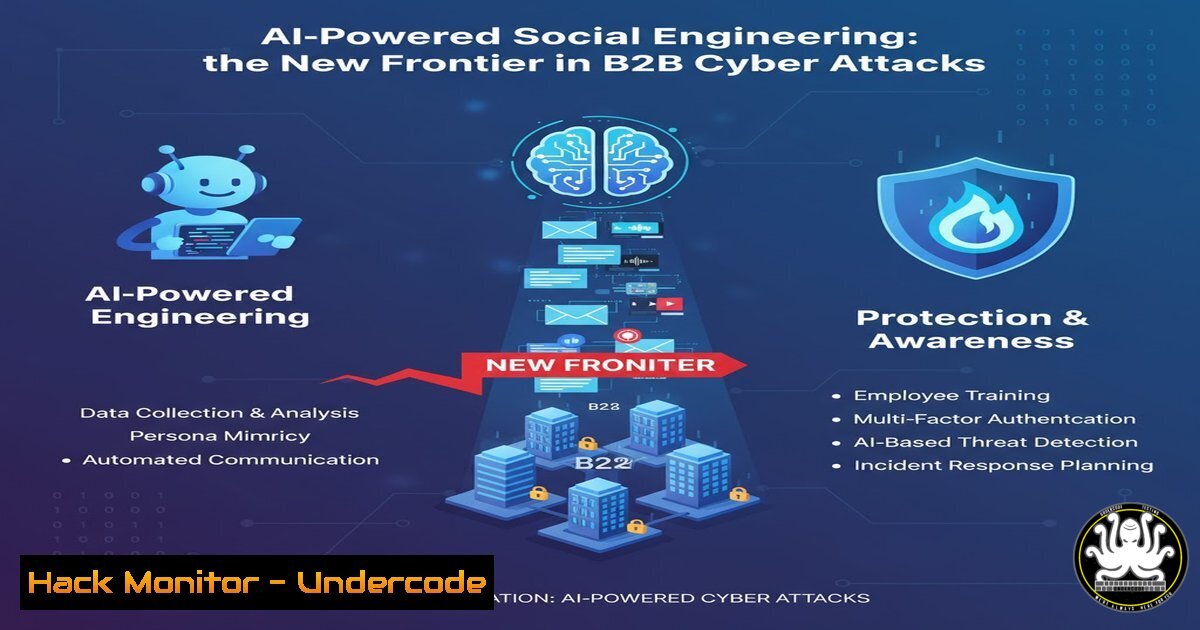
Introduction:
The traditional B2B marketing funnel is being systematically weaponized by threat actors. By leveraging AI-driven content personalization and automated outreach, attackers are executing highly targeted social engineering campaigns at an unprecedented scale. This new paradigm shifts the attack vector from technical exploitation to psychological manipulation, using the trusted language of business development to bypass conventional security controls.
Learning Objectives:
- Understand how AI-powered content marketing tools are being repurposed for malicious reconnaissance and engagement.
- Implement technical controls to detect and neutralize weaponized business communications.
- Develop organizational protocols for verifying unsolicited B2B engagement that may conceal attack payloads.
You Should Know:
1. The Digital Footprint Reconnaissance Phase
Modern B2B marketing platforms automatically analyze your company’s digital footprint—public tech stacks, employee hierarchies, and partnership ecosystems. Malicious actors exploit these same data aggregation tools to build comprehensive target profiles before launching attacks.
Step-by-step guide explaining what this does and how to use it:
Command to identify data exposure:
 Use Maltego or theHarvester for defensive footprint analysis
theharvester -d yourcompany.com -b linkedin,google,bing -l 500
Windows PowerShell equivalent:
 Check for public domain information leaks
Invoke-WebRequest -Uri "https://api.hunter.io/v2/domain-search?domain=yourcompany.com&api_key=YOUR_KEY" | ConvertFrom-Json
This defensive reconnaissance helps security teams understand exactly what organizational information is available to attackers through legitimate marketing intelligence platforms. The output reveals employee names, email patterns, technology partnerships, and business relationships that could be weaponized for social engineering.
2. Weaponized Content Delivery Mechanisms
The personalized content delivery systems used in founder-led marketing become dangerous when controlled by attackers. Malicious PDFs, “business proposal” documents, and “partnership opportunity” links replace traditional malware distribution methods, leveraging the victim’s professional curiosity as the infection vector.
Step-by-step guide explaining what this does and how to use it:
Document analysis with oletools:
 Install oletools for Office document analysis
pip install oletools
 Analyze suspicious business documents
olevba --reveal "business_proposal.docm"
Windows Defender Antivirus scan:
 Perform deep scan on downloaded business documents
MPCmdRun.exe -Scan -ScanType 3 -File "C:\Users\Downloads\partner_deck.pdf"
Security teams should deploy these tools to analyze all unsolicited business documents before opening, particularly those received through LinkedIn messages or personalized email campaigns that reference specific company details.
3. API-Based Relationship Mapping
B2B marketing platforms use API integrations to map inter-company relationships and decision-makers. Attackers reverse-engineer these same APIs to identify the most vulnerable connection points in an organization’s supply chain and partner network.
Step-by-step guide explaining what this does and how to use it:
Monitor API calls to marketing platforms:
 Use tcpdump to monitor suspicious API traffic
tcpdump -i any -A 'host api.clearbit.com or host api.hunter.io or host api.apollo.io'
Browser developer console monitoring:
// Monitor marketing trackers loading on corporate sites
console.log('Marketing APIs detected:');
performance.getEntries().forEach(entry => {
if(entry.name.includes('clearbit') || entry.name.includes('hunter') || entry.name.includes('apollo')) {
console.log('Potential recon API:', entry.name);
}
});
This monitoring helps identify when corporate digital assets are being scraped by marketing intelligence services that could be operated by attackers conducting reconnaissance.
4. AI-Generated Communication Bypass
Natural language generation models create convincingly human business communications that bypass spam filters and human skepticism. These AI-powered messages reference real company events, recent funding rounds, or industry trends to establish false credibility.
Step-by-step guide explaining what this does and how to use it:
Implement advanced email filtering:
 Configure SpamAssassin with custom rules for AI-generated business emails
cat >> /etc/mail/spamassassin/custom.cf << EOF
header AI_BUSINESS_MSG Content =~ /(synerg|leverage|paradigm|moving forward|circle back)/i
describe AI_BUSINESS_MSG Common AI-generated business phrasing
score AI_BUSINESS_MSG 0.5
EOF
Exchange Online Protection rules:
 Create alert for emails with business jargon from unknown senders
New-TransportRule -Name "SuspiciousBusinessLanguage" -SubjectOrBodyMatchesPatterns "business proposal", "partnership opportunity", "growth hack" -FromScope NotInOrganization -SetSCL 6 -NotifySender Reject
These technical controls help flag the hallmark phrases commonly found in AI-generated business communications that may indicate social engineering attempts.
5. Multi-Platform Engagement Attacks
Modern B2B attacks span multiple platforms—LinkedIn messages initiating contact, followed by personalized emails, then WhatsApp or Telegram for “urgent” communications. This cross-platform approach defeats siloed security monitoring.
Step-by-step guide explaining what this does and how to use it:
Unified security monitoring setup:
 Use SIEM correlation rules to detect cross-platform engagement
cat >> /etc/splunk/es.conf << EOF
[correlation_rule:cross_platform_social_engineering]
search = index=security (source=linkedin_api OR source=email_gateway OR source=mobile_messaging) "same_contact_pattern"
action = trigger_alert("Potential multi-platform social engineering")
EOF
Microsoft Azure Sentinel query:
SecurityEvent
| where EventID == 4624
| where Account contains "linkedin" or Account contains "telegram" or Account contains "whatsapp"
| summarize CrossPlatformCount = dcount(Account) by IpAddress
| where CrossPlatformCount >= 2
This integrated monitoring approach helps security teams detect when the same attacker is engaging with multiple employees across different communication channels—a key indicator of coordinated social engineering.
6. Brand Impersonation at Scale
AI tools enable attackers to create convincing fake company profiles, complete with AI-generated employee headshots and fabricated business histories. These impersonations establish false trust before the actual attack delivery.
Step-by-step guide explaining what this does and how to use it:
Image analysis for AI-generated faces:
 Install and use image forensics tools
pip install forensically
forensically --check-fake "profile_image.jpg"
Domain reputation checking:
 Automated domain verification script
!/bin/bash
DOMAIN=$1
whois $DOMAIN | grep -i "creation date" | head -1
curl -s "https://www.virustotal.com/api/v3/domains/$DOMAIN" | jq '.data.attributes.last_analysis_stats'
These verification steps help employees quickly validate the legitimacy of new business contacts before engaging with potentially malicious actors.
7. The Zero-Click Intelligence Gathering
Many B2B marketing platforms provide detailed engagement analytics—who opened emails, what content they viewed, how long they engaged. Attackers use these same analytics for passive intelligence gathering without any active interaction from the target.
Step-by-step guide explaining what this does and how to use it:
Block marketing tracking pixels:
 Configure Pi-hole to block marketing trackers
pihole -b linkedin.com/li/track clearbit.com/track apollo.io/track hunter.io/pixel
Browser tracking protection:
// Browser extension to block marketing intelligence gathering
chrome.declarativeNetRequest.updateDynamicRules({
addRules: [{
id: 1,
priority: 1,
action: { type: "block" },
condition: { urlFilter: "||clearbit.com/track", resourceTypes: ["image", "script"] }
}]
});
These protections prevent malicious actors from gathering intelligence about employee engagement patterns that could be used to time social engineering attacks for maximum effectiveness.
What Undercode Say:
- The democratization of AI-powered marketing tools has created an asymmetric threat landscape where sophisticated social engineering is accessible to attackers of all skill levels.
- Traditional security awareness training fails against these attacks because they exploit professional curiosity and business objectives rather than obvious security violations.
The fundamental shift in B2B attack methodology represents a more dangerous threat than traditional malware campaigns because it weaponizes legitimate business tools and processes. Security teams must now defend against attacks that look identical to normal business development activities. The psychological profiling capabilities of modern marketing AI enable hyper-personalized social engineering that bypasses both technical controls and human skepticism. Organizations need to develop new verification protocols for unsolicited business engagement and implement cross-platform monitoring to detect coordinated social engineering campaigns. The line between business development and cyber attack has been permanently blurred.
Prediction:
Within two years, AI-powered social engineering will account for over 60% of successful B2B breaches, forcing a complete rearchitecture of business communication verification systems. We’ll see the emergence of “business identity verification” as a new security category, with blockchain-based credentialing for corporate representatives and AI-detection systems specifically trained to identify weaponized business communications. The arms race will shift from technical exploit prevention to psychological manipulation detection, with behavioral analytics becoming the primary defense against AI-enhanced social engineering.
🎯Let’s Practice For Free:
IT/Security Reporter URL:
Reported By: Timothygoebel Contentstrategy – Hackers Feeds
Extra Hub: Undercode MoN
Basic Verification: Pass ✅


