
Listen to this Post
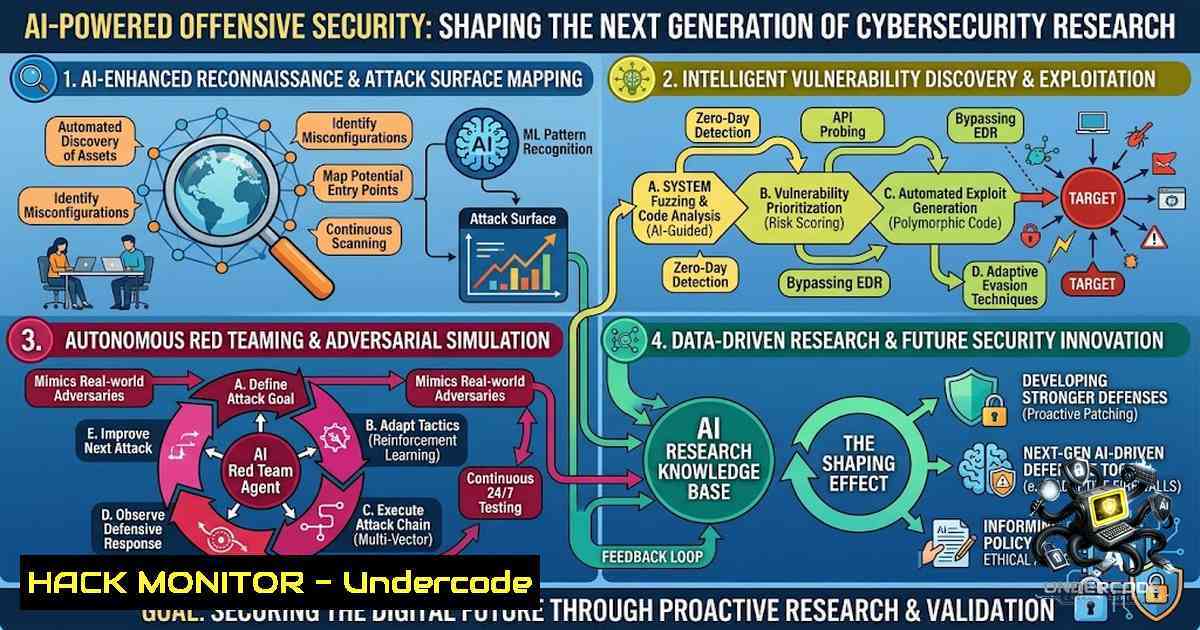
Introduction:
The intersection of artificial intelligence and offensive security is rapidly transforming how organizations identify and remediate vulnerabilities. As AI systems become increasingly capable of generating sophisticated code and security analyses, the demand for expert human validation grows exponentially, creating a unique feedback loop where elite security researchers directly train the next generation of defensive and offensive AI tools. This specialized remote opportunity underscores a critical industry trend: leveraging top-tier human expertise, including CTF champions and CVE discoverers, to establish robust benchmarks and ensure that AI-driven cybersecurity solutions are both accurate and reliable.
Learning Objectives & Secrets:
- Objective 1: Master the evaluation of AI-generated vulnerability reports, distinguishing between superficial pattern matching and genuine root-cause analysis to filter out false positives and prioritize critical threats.
- Objective 2 Secret Tips: Elevate your threat modeling by integrating binary analysis tools like Ghidra with dynamic taint tracking, enabling you to validate exploitability chains that AI models often overlook, thus providing ground-truth data for model retraining.
- Objective 3 Secret Tips: Optimize your workflow for reviewing complex exploit chains by developing custom Python scripts that automate the parsing of memory corruption logs, accelerating the identification of control-flow hijacking primitives and improving benchmark creation efficiency.
You Should Know:
1. AI-Assisted Vulnerability Analysis & Validation
The core of this role revolves around evaluating AI-generated cybersecurity analyses. This is not about accepting an AI’s output at face value, but about rigorously stress-testing its reasoning. The process involves feeding an AI system a vulnerability report, a piece of source code, or a crash dump, and then critically assessing its conclusions. For instance, an AI might correctly identify a buffer overflow, but fail to recognize that the overflow is in a non-executable memory region, rendering the exploit chain impractical. Your task is to assess the exploitability and mitigation strategy as a complete package.
To perform these evaluations effectively, you must establish a reproducible testing environment. This typically involves setting up isolated virtual machines (VMs) for both Linux and Windows targets to safely execute proof-of-concept (PoC) exploits. Below is a command sequence to set up a basic dynamic analysis sandbox on a Linux host using QEMU, which allows you to snapshot the system state before executing a potentially malicious PoC.
Step‑by‑Step Guide for Linux Sandbox Setup:
- Install QEMU: `sudo apt update && sudo apt install qemu-system-x86_64 qemu-utils -y`
2. Create a disk image: `qemu-img create -f qcow2 vulnerable_vm.qcow2 20G`
3. Install a test OS: Download an ISO and run `qemu-system-x86_64 -hda vulnerable_vm.qcow2 -cdrom /path/to/iso.iso -boot d -m 2048`
4. Take a snapshot before testing: `qemu-img snapshot -c clean_snapshot vulnerable_vm.qcow2`
5. Execute the PoC: Transfer the file via `scp` or a shared folder and run it inside the VM with a debugger attached (e.g.,gdb ./poc). - Revert to snapshot: `qemu-img snapshot -a clean_snapshot vulnerable_vm.qcow2` to discard any persistent changes.
2. Technical Writeups and Root-Cause Analysis
A critical part of the job is reviewing vulnerability reports and technical writeups. This involves delving into the intricate details of how a bug manifests—from the initial user input to the final system crash or privilege escalation. When an AI or a security researcher claims a root cause, you must be able to verify it using static and dynamic analysis tools.
For Windows environments, tools like WinDbg are indispensable for kernel-mode and user-mode debugging. For Linux, `gdb` with the `gef` or `pwndbg` plugins significantly enhances the debugging experience. When validating a root-cause analysis, consider the following workflow for a typical Use-After-Free (UAF) vulnerability:
Step‑by‑Step Guide for Root-Cause Validation:
- Reproduce the Crash: Run the target application with the provided PoC to generate a core dump or a crash log.
- Analyze with GDB: `gdb /path/to/binary core.dump` to inspect the state at the time of the crash.
- Examine the Heap: Use `heap` commands (in pwndbg) to identify if the freed chunk was reallocated and by what.
- Trace References: Use `ptr` or `bin` to understand if a dangling pointer is being used.
- Check Mitigations: Verify if ASLR, DEP, and CFG are enabled, and determine if they successfully block the exploit.
- Conclude Validity: If the AI’s writeup suggests a UAF, your analysis must confirm that the memory chunk is indeed freed and then accessed in a controllable way.
3. Configuring Fuzzing and Symbolic Execution Tools
The job emphasizes experience with tools like IDA Pro, Ghidra, Binary Ninja, fuzzing, and symbolic execution. While you won’t be running a 24/7 fuzzing farm, understanding how to configure and trigger these tools to generate test cases or confirm an AI’s analysis is crucial.
For example, you might receive an AI-generated report that states a specific input triggers a crash in a proprietary library. To validate this, you could set up a fuzzing harness to see if that input is indeed unique and if the crash is deterministic. Using AFL (American Fuzzy Lop) is a common approach.
Step‑by‑Step Guide for Quick Fuzzing Harness:
1. Install AFL: `sudo apt install afl++`
- Compile Target with Instrumentation: `afl-gcc -o vulnerable_prog vulnerable_prog.c`
3. Create Seed Inputs: `mkdir input && echo “test” > input/seed.txt`
4. Run AFL: `afl-fuzz -i input -o output — ./vulnerable_prog @@`
5. Analyze Crashes: Examine the `output/crashes` directory. If the AI’s identified crash file matches one of these, you have concrete evidence to support its validity.
4. API Security and Cloud Hardening
Many modern exploits target cloud-1ative architectures and APIs. Your role in reviewing security reasoning might involve cloud-specific vulnerabilities like Server-Side Request Forgery (SSRF) or insecure AWS S3 bucket configurations. Validating these often requires cloud CLI tools to check permissions and network configurations.
Step‑by‑Step Guide for Basic AWS S3 Security Audit:
1. Install AWS CLI: `pip install awscli`
2. Configure Credentials: `aws configure`
- Check Bucket Permissions: `aws s3api get-bucket-acl –bucket example-bucket`
4. List Public Objects: `aws s3api list-objects –bucket example-bucket –query “Contents[?Public]”` (Note: Checks may require additional tools like `s3scanner` for thorough public bucket detection). - Test for SSRF: Use tools like `Burp Suite` to intercept requests and attempt to access internal metadata endpoints (
169.254.169.254). If the AI identified a misconfiguration, you would verify if the endpoint actually returns sensitive data.
5. Benchmarking for Advanced AI Security Capabilities
The ultimate goal is to contribute to benchmarks for advanced AI security capabilities. This involves creating a suite of test cases—both vulnerable and patched code snippets—that can be used to evaluate an AI’s ability to detect and explain vulnerabilities. This is where your programming skills in Python, C/C++, and Rust become essential. You might write scripts that generate test cases or automate the scoring of an AI’s output against your known ground-truth solutions.
Step‑by‑Step Guide for Creating a Simple Test Case:
- Write a Vulnerable Function: Create a C file with a simple heap overflow.
- Write a Patched Version: The same function with a safe allocation.
- Create a JSON Metadata File: Include the filename, line numbers of the vulnerability, CWE ID, and a description.
- Automate Validation: Write a Python script that feeds both files to an AI model, parses its response, and compares its predicted vulnerability location against the metadata. This ensures that the benchmark is objective and measurable.
What Undercode Say:
- Key Takeaway 1: The demand for elite cybersecurity researchers is soaring, but the landscape is shifting from purely manual bug hunting to a hybrid model where experts are essential for training and calibrating AI security tools.
- Key Takeaway 2: To be successful in this evolving field, practitioners must transcend siloed expertise—integrating deep knowledge of operating systems, binary analysis, and cloud security with a pragmatic understanding of how AI interprets and communicates technical risk.
Analysis: This job description is a microcosm of the broader cybersecurity industry’s maturation. It reveals that AI is not yet capable of replacing human intuition and nuanced reasoning, but rather, it is creating a new tier of high-value work focused on quality assurance and meta-analysis. For a security professional, this represents an opportunity to leverage years of hands-on hacking experience to influence how AI models are trained, making them more effective and trustworthy. The emphasis on tools like IDA Pro and Ghidra, combined with conference publications and CTF wins, underscores that this role is for the top 1% of the field—individuals who can not only find bugs but also articulate their complexity in a way that machines can learn from. The remote, flexible nature of the work suggests a shift towards a gig-economy model for elite security talent, where specialized knowledge can be deployed on demand for high-stakes projects.
Prediction:
- +1: The integration of expert-validated benchmarks will significantly accelerate the development of autonomous AI agents capable of performing basic vulnerability assessments, democratizing security testing for smaller organizations.
- -1: The reliance on a small pool of elite researchers to train AI systems creates a potential bottleneck and centralization of cybersecurity knowledge, possibly leading to systemic biases in the AI’s risk prioritization if the benchmark data is not sufficiently diverse.
- +1: This role signals a positive trend where remote work and high compensation can attract global talent, fostering a more competitive and innovative security research environment, ultimately raising the baseline for software security.
- -1: As AI systems become more adept at analyzing and mitigating exploits, the barrier to entry for novice security researchers may increase, potentially stifling the pipeline of new talent entering the field if it shifts too heavily towards advanced meta-analysis.
▶️ Related Video (88% Match):
🎯Let’s Practice For Free:
🎓 Live Courses & Certifications:
Join Undercode Academy for Verified Certifications
🚀 Request a Custom Project:
Secure, high-velocity infrastructure and disruptive technological engineering. Contact our engineering team for high-tier development and proprietary systems:
[email protected]
💎 Smart Architecture | 🛡️ Secure by Design | ⭐ Trusted by Thousands
IT/Security Reporter URL:
Reported By: https://lnkd.in/p/ezen7Jvw – Hackers Feeds
Extra Hub: Undercode MoN
Basic Verification: Pass ✅


