Listen to this Post
Introduction:
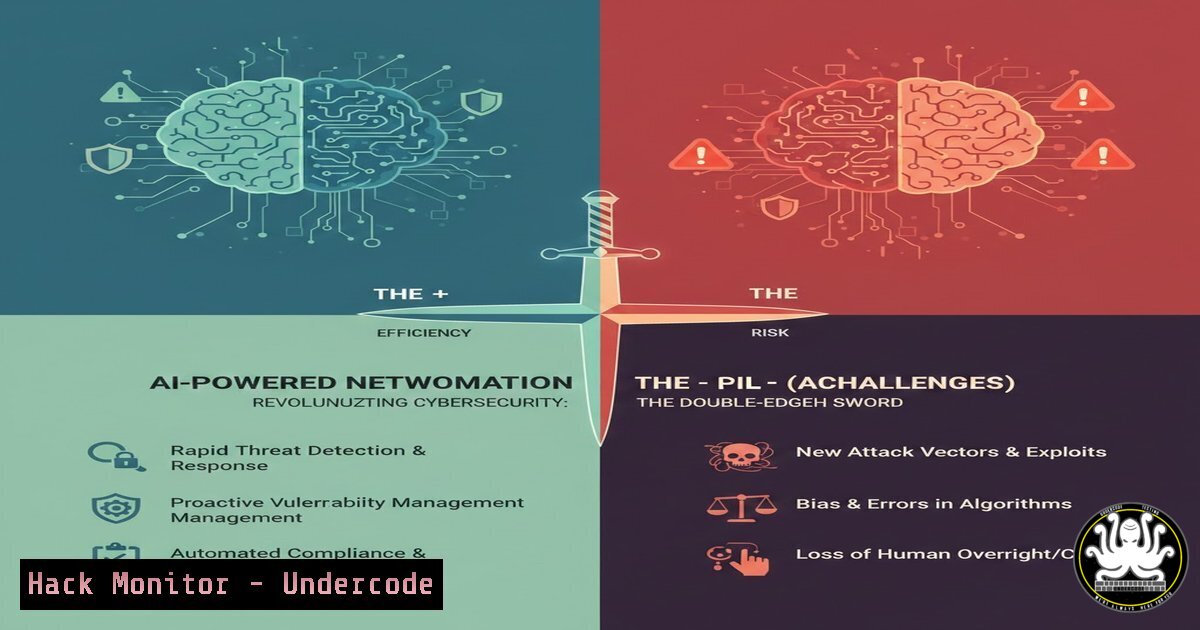
The integration of Artificial Intelligence into network automation represents a paradigm shift in how organizations manage their digital infrastructure. While AI-driven automation offers unprecedented efficiency and proactive threat detection capabilities, it simultaneously introduces sophisticated attack vectors that could compromise entire network ecosystems if not properly secured.
Learning Objectives:
- Understand the core components and security implications of AI-powered network automation
- Implement security hardening measures for automation frameworks and APIs
- Develop mitigation strategies against AI-specific network exploitation techniques
You Should Know:
1. The Architecture of AI Network Automation Systems
AI network automation typically combines machine learning algorithms with software-defined networking (SDN) controllers and orchestration platforms. The core components include data collection agents, ML processing engines, and automated execution interfaces that can dynamically reconfigure network infrastructure based on learned patterns and security policies.
Step-by-step guide explaining what this does and how to use it:
 Example AI network automation script using Python
import tensorflow as tf
from ncclient import manager
import json

class AINetworkController:
def <strong>init</strong>(self, model_path):
self.model = tf.keras.models.load_model(model_path)
self.sdn_controller = "https://sdn-controller:8080"

def analyze_network_patterns(self, traffic_data):
prediction = self.model.predict(traffic_data)
return prediction

def implement_security_policy(self, device_config):
with manager.connect(host=device_config['host'],
port=830,
username=device_config['username'],
password=device_config['password'],
hostkey_verify=False) as m:
netconf_config = f"""
<config>
<native xmlns="http://cisco.com/ns/yang/Cisco-IOS-XE-native">
<access-list>
<standard>
<name>{device_config['acl_name']}</name>
<sequence>
<id>10</id>
<permit>
<source-host>{device_config['blocked_ip']}</source-host>
</permit>
</sequence>
</standard>
</access-list>
</native>
</config>
"""
m.edit_config(target='running', config=netconf_config)
2. Securing Automation APIs and Controllers
APIs serve as the backbone of AI network automation systems, making them prime targets for attackers. Proper authentication, authorization, and encryption are critical to prevent unauthorized access and configuration changes.
Step-by-step guide explaining what this does and how to use it:
 Linux: Implementing API security with mutual TLS authentication
openssl genrsa -out client.key 2048
openssl req -new -key client.key -out client.csr
openssl x509 -req -in client.csr -CA ca.crt -CAkey ca.key -CAcreateserial -out client.crt -days 365

Windows PowerShell equivalent for certificate management
New-SelfSignedCertificate -DnsName "automation-client" -CertStoreLocation "Cert:\LocalMachine\My" -KeyExportPolicy Exportable -KeySpec Signature

Python implementation with certificate verification
import requests
response = requests.get(
'https://sdn-controller/api/network/devices',
cert=('/path/client.crt', '/path/client.key'),
verify='/path/ca.crt'
)
3. Vulnerability Assessment for AI Automation Infrastructure
Regular security assessments must include the automation infrastructure itself, focusing on ML model integrity, API endpoints, and configuration databases that could be manipulated to cause widespread network disruption.
Step-by-step guide explaining what this does and how to use it:
 Network scanning for exposed automation interfaces
nmap -sV --script http-enum,http-vuln -p 443,8443,8080 $SDN_CONTROLLER_IP

Checking for default credentials in automation systems
hydra -L users.txt -P passwords.txt https-post-form://$CONTROLLER_IP:/login:username=^USER^&password=^PASS^:F=incorrect

Python script for API endpoint testing
import security_headers
from zapv2 import ZAPv2

zap = ZAPv2(apikey='your_api_key')
scan_id = zap.ascan.scan(url='https://automation-controller/api')
while int(zap.ascan.status(scan_id)) < 100:
time.sleep(5)
4. Mitigating Adversarial Machine Learning Attacks
Attackers can manipulate training data or exploit model weaknesses to cause incorrect network decisions. Implementing robust model validation and anomaly detection in the decision pipeline is essential.
Step-by-step guide explaining what this does and how to use it:
 Implementing adversarial detection in ML models
import numpy as np
from sklearn.ensemble import IsolationForest

class AdversarialDetector:
def <strong>init</strong>(self):
self.detector = IsolationForest(contamination=0.1)

def detect_anomalous_predictions(self, model, input_data):
predictions = model.predict(input_data)
confidence_scores = model.predict_proba(input_data)

Detect low-confidence predictions potentially caused by adversarial inputs
anomalous_indices = np.where(np.max(confidence_scores, axis=1) < 0.7)[bash]
return anomalous_indices

Implementing model integrity checks
import hashlib
def verify_model_integrity(model_path, expected_hash):
with open(model_path, 'rb') as f:
model_bytes = f.read()
actual_hash = hashlib.sha256(model_bytes).hexdigest()
if actual_hash != expected_hash:
raise SecurityException("Model integrity compromised")
5. Hardening Automation Execution Environments
The systems executing automation commands require strict isolation, privilege management, and activity monitoring to prevent lateral movement and privilege escalation.
Step-by-step guide explaining what this does and how to use it:
 Linux container isolation for automation tasks
docker run --rm --cap-drop=ALL --cap-add=NET_ADMIN \
--network none \
-v /opt/automation/scripts:/scripts \
automation-worker python /scripts/network_optimization.py

Windows using constrained PowerShell execution
$automationPolicy = New-PSSessionConfigurationFile -Path .\automation.pssc -LanguageMode Constrained -SessionType RestrictedRemoteServer
Register-PSSessionConfiguration -Name "Automation" -Path .\automation.pssc -Force

System audit configuration
 Linux auditd rules for automation access
echo "-w /etc/automation/config -p wa -k automation_config" >> /etc/audit/rules.d/automation.rules
echo "-a always,exit -F path=/usr/bin/python -F perm=x -k automation_script" >> /etc/audit/rules.d/automation.rules
6. Incident Response for Compromised Automation Systems
When automation systems are breached, rapid containment and forensic analysis are crucial to prevent cascading network failures and data exposure.
Step-by-step guide explaining what this does and how to use it:
 Emergency automation shutdown procedures
 Linux systemd service isolation
systemctl stop automation-orchestrator
systemctl isolate emergency.target

Network segmentation to contain breach
iptables -I FORWARD -s $COMPROMISED_HOST -j DROP
iptables -I OUTPUT -s $COMPROMISED_HOST -j DROP

Forensic evidence collection
tar czf /opt/forensics/automation_$(date +%s).tar.gz \
/var/log/automation/ \
/etc/automation/ \
/opt/automation/scripts/
7. Continuous Security Monitoring for Automation Ecosystems
Establish comprehensive logging, monitoring, and alerting specifically designed for automation activities, focusing on unauthorized configuration changes and anomalous behavior patterns.
Step-by-step guide explaining what this does and how to use it:
 Implementing automation-specific SIEM rules
import logging
from elasticsearch import Elasticsearch

class AutomationMonitor:
def <strong>init</strong>(self):
self.es = Elasticsearch(['https://siem-server:9200'])
self.logger = logging.getLogger('automation_security')

def alert_on_suspicious_activity(self, event):
suspicious_patterns = [
'after_hours_config_change',
'bulk_firewall_rule_modification',
'unusual_api_sequence'
]

if any(pattern in event['description'] for pattern in suspicious_patterns):
self.logger.critical(f"Suspicious automation activity: {event}")
self.es.index(index='security-alerts', document=event)

YARA rules for detecting malicious automation scripts
rule suspicious_automation_script {
meta:
description = "Detects potentially dangerous automation scripts"
strings:
$net_command = "netsh firewall" nocase
$bypass_cmd = "ExecutionPolicy Bypass" nocase
$encoded_cmd = "FromBase64String" nocase
condition:
any of them
}
What Undercode Say:
- AI automation introduces attack surfaces at both the algorithmic and implementation layers
- The concentration of network control creates single points of failure that attackers can exploit
- Traditional network security models are insufficient for protecting dynamic AI-driven infrastructure
The convergence of AI and network automation represents one of the most significant architectural shifts in enterprise security. While offering tremendous operational benefits, this integration creates unprecedented attack surfaces where compromised ML models or API endpoints can lead to enterprise-wide breaches. Security teams must evolve beyond traditional perimeter defense, adopting zero-trust principles specifically tailored to automation ecosystems. The most critical vulnerability lies not in individual components but in the trust relationships between AI decision engines and their execution environments.
Prediction:
Within two years, we will witness the first major enterprise breach originating from a compromised AI automation system, leading to cascading network failures and data exposure. This will trigger industry-wide reassessment of automation security practices, regulatory scrutiny of AI infrastructure, and accelerated development of specialized security frameworks for intelligent automation. Organizations that fail to implement robust security controls around their AI automation platforms will face catastrophic operational and reputational damage as attackers increasingly target these high-value systems.
🎯Let’s Practice For Free:
IT/Security Reporter URL:
Reported By: Ahamedyaseen S – Hackers Feeds
Extra Hub: Undercode MoN
Basic Verification: Pass ✅


