
Listen to this Post
Introduction:
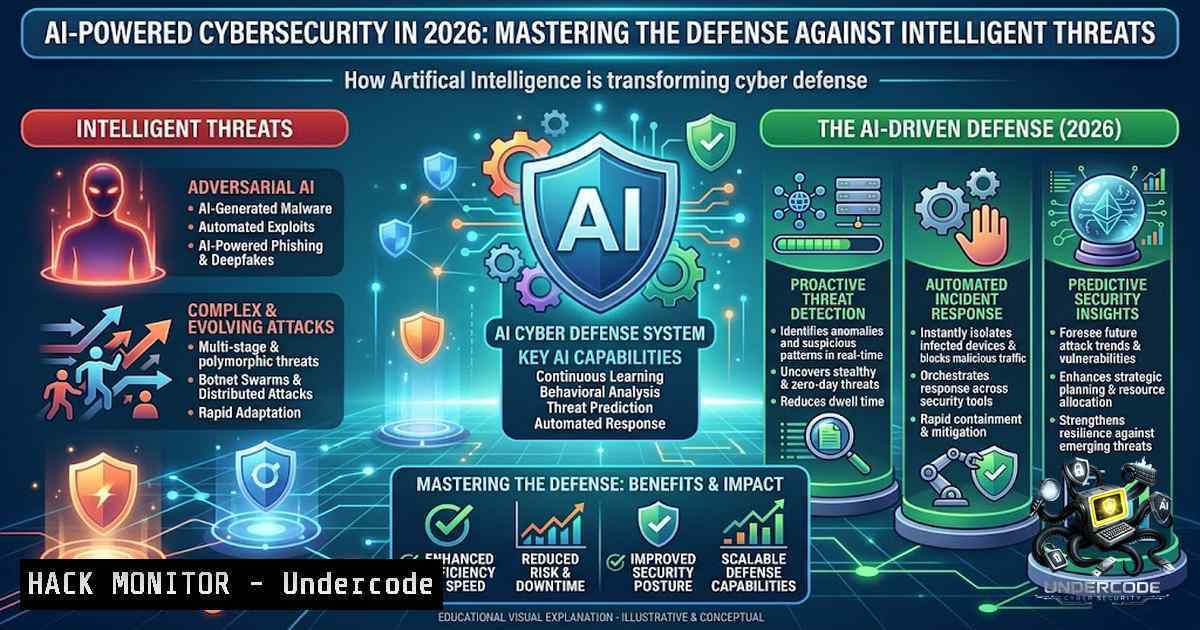
The cybersecurity landscape in 2026 is defined by a fundamental power shift: artificial intelligence has moved from being a defensive aid to a primary attack vector and an indispensable defensive weapon. As nation-state actors deploy “quasi-automated” attacks and ransomware victims surge by 389% year-over-year, organizations are realizing that yesterday’s playbooks are obsolete against AI-driven threats. This article dissects the critical threat landscape of 2026, providing actionable technical insights, verified commands, and strategic frameworks to secure enterprise infrastructure against deepfakes, AI application compromise, prompt injection, and software supply chain attacks.
Learning Objectives & Secrets:
- Objective 1: Master AI-Specific Threat Modeling – Learn to identify and mitigate unique attack surfaces including prompt injection, data poisoning, and model theft using frameworks like OWASP and MITRE ATLAS.
- Objective 2 (Secret Tip): Implement Agentic Identity Controls – Traditional IAM fails against autonomous AI agents. Secret: Implement “Least-Agency” privilege models and purpose-based access control (PBAC) to govern machine-to-machine interactions.
- Objective 3 (Secret Tip): Harden the AI Supply Chain – Secret: Establish an AI Software Bill of Materials (AI-BOM) to map dependencies and detect hidden third-party components that introduce vulnerabilities.
You Should Know:
1. Securing the AI Application Lifecycle
AI applications introduce a new attack surface spanning custom-built agents, third-party integrations, and employee-only tools. Security must be embedded from the first line of code, not bolted on at the end. The NIST SP 800-228 guidelines emphasize identifying risk factors during both development and runtime phases.
Step-by-Step Guide:
- Threat Model AI Components: Use OWASP’s Top 10 for LLMs and MITRE ATLAS to map threats like prompt injection, training data poisoning, and model denial-of-service.
- Secure Data Pipelines: Classify data used for training and retrieval-augmented generation (RAG). Apply strict access controls and encryption both at rest and in transit.
- Implement Runtime Monitoring: Deploy logging and anomaly detection specifically for AI model inputs and outputs. Monitor for abnormal query patterns that indicate prompt injection attempts.
- Apply Secure Development: Integrate AI-specific security reviews into the CI/CD pipeline. Scan infrastructure-as-code (IaC) templates for misconfigurations that could expose AI models or data.
- Adopt a Zero-Trust Framework: Enforce least-privilege access for every identity—human and machine. Use just-in-time (JIT) access for production write roles.
Linux Command Example (Auditing AI System Logs):
 Monitor real-time system logs for suspicious AI service activity
journalctl -f -u your-ai-service

Search audit logs for unauthorized access attempts to model files
ausearch -m AVC -ts recent | grep "model.bin"

Check open network connections to detect potential data exfiltration from AI services
ss -tulpn | grep <ai_service_port>
2. Defending Against Deepfakes and Identity Impersonation
GenAI has democratized the creation of high-fidelity deepfakes, enabling attackers to bypass biometric authentication and execute sophisticated social engineering. Defending against this requires a multi-layered approach combining technology, policy, and user awareness.
Step-by-Step Guide:
- Deploy Deepfake Detection Tools: Implement AI-powered detection solutions that analyze voice, video, and image artifacts for signs of manipulation.
- Strengthen Biometric MFA: Move beyond single-factor biometrics. Combine facial recognition with liveness detection and behavioral analytics.
- Update Incident Response: Include deepfake-specific playbooks. Train SOC teams to recognize and respond to deepfake-based attacks.
- Enhance Security Awareness: Update training programs to cover the risks of deepfakes, teaching employees to verify identities through out-of-band channels.
- Adopt PBAC: Implement purpose-based access control to limit what users can do even if their identity is compromised.
Windows Command Example (Security Auditing):
With Sysmon now natively integrated into Windows 11, you can enable enterprise-grade system monitoring:
 Enable Sysmon with default configuration for comprehensive logging
sysmon -i

Check active network connections and listening ports
netstat -an

List all running processes to identify suspicious activity
tasklist

View security event logs for failed login attempts (potential brute-force)
Get-EventLog -LogName Security -InstanceId 4625
- Cloud Hardening and Infrastructure as Code (IaC) Security
With 99% of cloud security failures attributed to customer misconfigurations, securing IaC templates is paramount. The average cloud asset carries 115 known vulnerabilities, making proactive scanning essential.
Step-by-Step Guide:
- Scan IaC Templates: Integrate static analysis tools (e.g., Checkov, Terrascan) into your CI/CD pipeline to detect misconfigurations before deployment.
- Eliminate Hardcoded Secrets: Use secrets management solutions (e.g., HashiCorp Vault, AWS Secrets Manager). Never store secrets in code or environment variables.
- Enforce Least Privilege: Apply the principle of least privilege to all cloud roles. Use JIT access for administrative tasks.
- Implement CNAPP: Adopt a Cloud-1ative Application Protection Platform for unified visibility and threat detection across workloads.
- Enable Container Security: Enforce read-only root filesystems for containers and regularly scan for vulnerabilities.
Linux Command Example (Securing a Linux Server):
 Update and upgrade packages
sudo apt-get update && sudo apt-get upgrade -y

Enable automatic security updates
sudo apt-get install unattended-upgrades

Configure firewall to drop suspicious packets (e.g., XMAS packets)
sudo iptables -A INPUT -p tcp --tcp-flags ALL ALL -j DROP

Audit user accounts for weak passwords (using John the Ripper)
sudo john /etc/shadow

Check for open ports and listening services
sudo netstat -tulpn
4. API Security in a Cloud-1ative World
APIs are the backbone of modern digital infrastructure but remain vulnerable to injection attacks, authentication bypasses, and zero-day exploits. Broken Object Level Authorization (BOLA) is the most critical API risk in 2026.
Step-by-Step Guide:
- Implement Strong Authentication: Use short-lived OAuth bearer tokens over static API keys. Scope every credential to the minimum required permissions.
- Enforce Granular Authorization: Validate user permissions for every API call to prevent BOLA. Use non-predictable IDs (e.g., UUIDs) instead of sequential IDs.
- Validate Inputs: Strictly validate all API payloads against defined schemas to block malicious inputs.
- Encrypt Traffic: Enforce TLS 1.3 for all API communications.
- Implement Rate Limiting: Protect against denial-of-service and brute-force attacks by enforcing rate limits.
- Log and Monitor: Log all API requests and responses for monitoring, forensics, and anomaly detection.
API Security Configuration Example (Using an API Gateway):
 Example API Gateway security policy (pseudo-config)
security:
authentication:
type: oauth2
issuer: https://auth.example.com
authorization:
enforce: true
policy: "api:user:"
rate_limit:
requests_per_second: 100
validation:
schema: "api_schema_v1.json"
logging:
enabled: true
level: info
5. Governance, Risk, and Compliance (GRC) for AI
AI introduces new governance challenges, from regulatory compliance to ethical considerations. Organizations must establish robust GRC frameworks to manage AI risks.
Step-by-Step Guide:
- Establish an AI Governance Model: Define roles, responsibilities, and policies for AI development, deployment, and use.
- Conduct AI Risk Assessments: Regularly assess AI systems for risks using frameworks like NIST AI RMF.
- Implement Responsible AI Principles: Ensure AI systems are fair, transparent, and accountable.
- Monitor Regulatory Changes: Stay informed about evolving AI regulations and standards (e.g., EU AI Act).
- Maintain an AI-BOM: Track all AI components, libraries, and dependencies to manage supply chain risks.
What Undercode Say:
- Key Takeaway 1: The convergence of AI and cybersecurity is not a future trend—it is the present reality. Organizations that fail to integrate AI into their defense strategies will be outmaneuvered by adversaries who already have.
- Key Takeaway 2: “Shadow AI” poses an existential threat. Unmanaged AI agents operating outside security visibility are digital Trojan horses. Centralized governance and continuous monitoring of all AI assets are non-1egotiable.
Analysis: The 2026 threat landscape reveals a stark asymmetry: attackers are leveraging AI to automate and accelerate their operations at machine speed, while many defenders remain stuck in manual, human-paced processes. The solution is not simply to deploy more AI tools, but to fundamentally re-architect security operations around agentic principles—where AI agents collaborate with human analysts to achieve detection and response at scale. This shift requires a massive upskilling effort, as evidenced by the proliferation of AI-focused cybersecurity training programs. Moreover, the attack surface has expanded to include the AI supply chain, making traditional software composition analysis insufficient. The future of cybersecurity lies in adaptive, AI-1ative defenses that can anticipate and counter threats in real-time, not just react to them.
Prediction:
- +1: The adoption of AI-powered Security Operations Centers (SOC) will reduce average breach costs by up to $1.9 million and shorten detection times by approximately 80 days by 2028.
- -1: The proliferation of “shadow AI” agents will lead to a significant data breach wave in 2027, forcing regulators to mandate AI-BOM and agentic IAM compliance.
- +1: Specialized AI security certifications, such as CompTIA SecAI+, will become as fundamental as CISSP for cybersecurity professionals within the next three years.
- -1: Nation-state “quasi-automated” attacks will successfully compromise at least one major critical infrastructure provider by 2027, demonstrating the catastrophic failure of legacy security models.
- +1: Open-source AI security frameworks and tools will mature, enabling smaller organizations to implement enterprise-grade AI defenses without massive budgets.
▶️ Related Video (88% Match):
🎯Let’s Practice For Free:
🎓 Live Courses & Certifications:
Join Undercode Academy for Verified Certifications
🚀 Request a Custom Project:
Secure, high-velocity infrastructure and disruptive technological engineering. Contact our engineering team for high-tier development and proprietary systems:
[email protected]
💎 Smart Architecture | 🛡️ Secure by Design | ⭐ Trusted by Thousands
IT/Security Reporter URL:
Reported By: https://lnkd.in/p/eii-2cZm – Hackers Feeds
Extra Hub: Undercode MoN
Basic Verification: Pass ✅


