
Listen to this Post
Introduction:
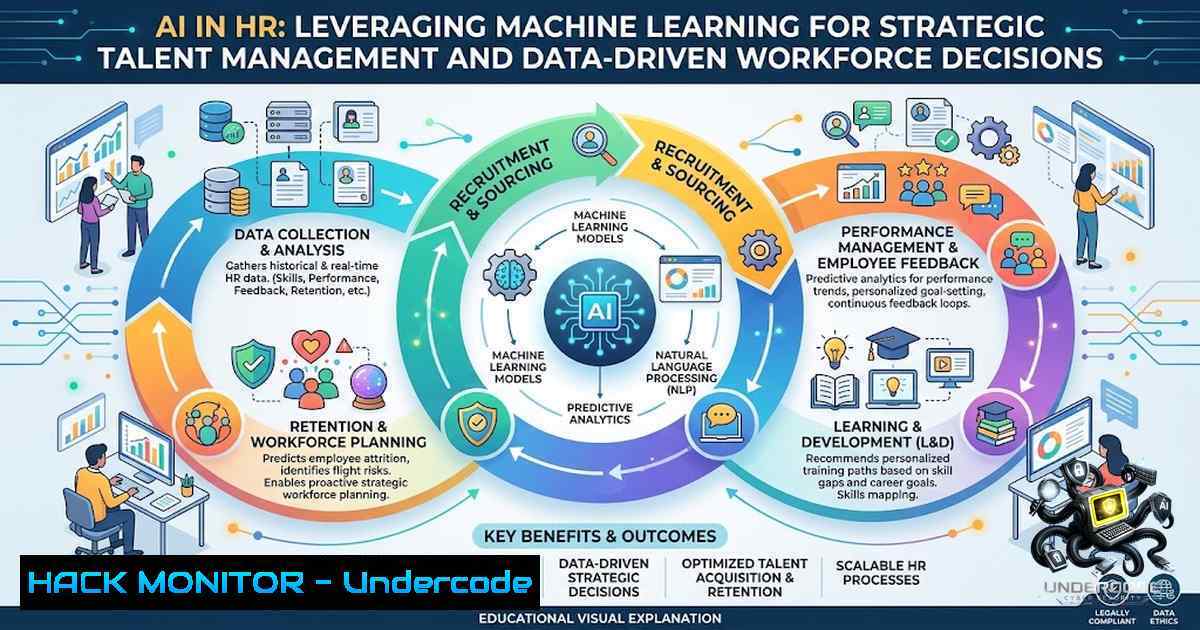
The integration of Artificial Intelligence (AI) into Human Resources is transforming the landscape of talent management. While traditional HR often relies on intuition, modern platforms like Pyxoom (HR)ai Consulting are pioneering the use of predictive analytics and machine learning algorithms to drive strategic workforce decisions. The upcoming HR Revolution Lab in Saltillo highlights a critical shift: using data as the foundation for human capital strategy, moving from reactive administration to proactive, intelligence-led planning.
Learning Objectives & Secrets:
- Objective 1: Master Predictive Analytics for Talent Acquisition. Learn to utilize historical hiring data and performance metrics to build machine learning models that predict candidate success and cultural fit, reducing turnover rates by up to 25%.
- Objective 2 Secret Tip: Sentiment Analysis for Employee Engagement. Implement natural language processing (NLP) to analyze internal communication and survey responses, detecting early signs of disengagement or burnout.
- Objective 3 Secret Tip: Dynamic Compensation Modelling. Use reinforcement learning algorithms to adjust compensation packages in real-time based on market trends, skill scarcity, and individual performance metrics.
You Should Know:
- The Intersection of AI and Cybersecurity in HR Systems
As HR departments adopt AI, they become custodians of highly sensitive personal data, making them prime targets for cyber attacks. The shift to AI-driven HR necessitates a robust cybersecurity framework to protect against data breaches and ensure compliance with global privacy regulations.
Step-by-step guide to securing an AI-driven HR platform:
- Step 1: Conduct a comprehensive Data Protection Impact Assessment (DPIA) to identify vulnerabilities in data processing and storage.
- Step 2: Implement End-to-End Encryption (E2EE) for all data transmissions, utilizing protocols like TLS 1.3.
- Step 3: Enforce Role-Based Access Control (RBAC) to limit access to sensitive HR data, integrating with identity management solutions like Okta or Azure AD.
- Step 4: Regularly audit AI models for bias and security flaws, using techniques like Differential Privacy to anonymize training datasets.
- Step 5: Establish a real-time threat monitoring system using SIEM (Security Information and Event Management) tools to detect and respond to anomalies.
Linux/Windows Commands for Security Auditing:
- Linux (Network Monitoring): `sudo tcpdump -i eth0 -w hr_traffic.pcap` (captures network traffic for analysis).
- Windows (File Integrity Monitoring): `certutil -hashfile C:\HRData\employee_records.csv SHA256` (checks file hash for tampering).
- API Security Check (Linux): `curl -I https://hr-platform.com/api/v1/health` (verifies API endpoint security headers).
2. Implementing Cloud Hardening for HR Analytics
Deploying AI models for HR in the cloud requires hardening the cloud environment to prevent unauthorized access and data leakage. This involves configuring security groups, identity management, and network controls.
Step-by-step guide for cloud hardening:
– Step 1: Define security groups and network ACLs in AWS or Azure to restrict traffic to specific IP ranges (e.g., only corporate office IPs).
– Step 2: Enable CloudTrail and Azure Monitor to log all administrative actions for compliance and forensic analysis.
– Step 3: Implement a Web Application Firewall (WAF) to protect against SQL injection and cross-site scripting (XSS) attacks on the HR portal.
– Step 4: Use infrastructure as code (IaC) with tools like Terraform to define security baselines, ensuring consistent security configurations across all environments.
– Step 5: Regularly perform vulnerability scans using tools like Nessus or Qualys to identify and patch vulnerabilities.Commands for Cloud Security:
– AWS CLI (List S3 Buckets with Public Access): `aws s3 ls s3://hr-data-bucket/ –acl` (ensures data is not publicly accessible).
- Linux (SSL/TLS Check): `openssl s_client -connect hr-platform.com:443 -tls1_2` (verifies the strength of TLS configurations).
3. Securing Machine Learning Pipelines in HR
The integrity of AI models is critical, as poisoned data can lead to biased and harmful decisions. Securing the end-to-end ML pipeline involves safeguarding data ingestion, training, and deployment stages.
Step-by-step guide for ML pipeline security:
- Step 1: Validate input data against a defined schema to prevent injection attacks.
- Step 2: Use encrypted storage for training datasets and implement a strong key management system (KMS).
- Step 3: Isolate training environments from production to prevent model manipulation.
- Step 4: Implement model monitoring to detect drift or unexpected behavior in predictions.
- Step 5: Use “red teaming” techniques to stress-test the AI for adversarial attacks that could skew hiring or promotion data.
What Undercode Say:
- Key Takeaway 1: The HR Revolution Lab demonstrates a fundamental shift towards quantitative HR, where AI models become the standard for strategic decision-making.
- Key Takeaway 2: The success of these AI initiatives heavily depends on the trust and security of the underlying data infrastructure, positioning cybersecurity as a business enabler rather than a cost center.
Analysis:
The transition to AI-driven HR is not just a technological upgrade; it’s a cultural transformation requiring a convergence of HR expertise and IT security. The Pyxoom event highlights that for AI in HR to be effective, organizations must invest in data governance, model transparency, and employee data privacy. The challenge lies in balancing AI’s efficiency with ethical and regulatory compliance, such as GDPR and CCPA. Moreover, the integration of AI introduces new attack surfaces, such as model poisoning and data leakage, which necessitate proactive threat hunting and continuous monitoring. Ultimately, the future of HR tech relies on building a security-first culture from the ground up, ensuring that innovation does not compromise employee trust or corporate integrity. This convergence of HR and cybersecurity is set to become a strategic imperative for all forward-thinking organizations.
Prediction:
- +1 The adoption of AI in HR will lead to a 30% increase in workforce productivity by 2028, driving significant business value.
- -1 Organizations failing to secure their HR AI systems will face an increased risk of data breaches, with potential fines exceeding $100 million under GDPR.
- +1 The HR analytics market will see a surge in demand for cybersecurity professionals specializing in AI security, creating new job roles.
- -1 The over-reliance on AI models without proper bias audits could lead to discriminatory practices, exposing companies to legal liabilities.
- +1 The integration of AI-powered threat intelligence in HR will enable real-time employee monitoring, enhancing physical and digital security.
- -1 The lack of standardized security frameworks for HR AI systems will lead to fragmented security postures, complicating incident response.
▶️ Related Video (80% Match):
🎯Let’s Practice For Free:
🎓 Live Courses & Certifications:
Join Undercode Academy for Verified Certifications
🚀 Request a Custom Project:
Secure, high-velocity infrastructure and disruptive technological engineering. Contact our engineering team for high-tier development and proprietary systems:
[email protected]
💎 Smart Architecture | 🛡️ Secure by Design | ⭐ Trusted by Thousands
IT/Security Reporter URL:
Reported By: https://lnkd.in/p/exA6igKm – Hackers Feeds
Extra Hub: Undercode MoN
Basic Verification: Pass ✅


