Listen to this Post
Introduction
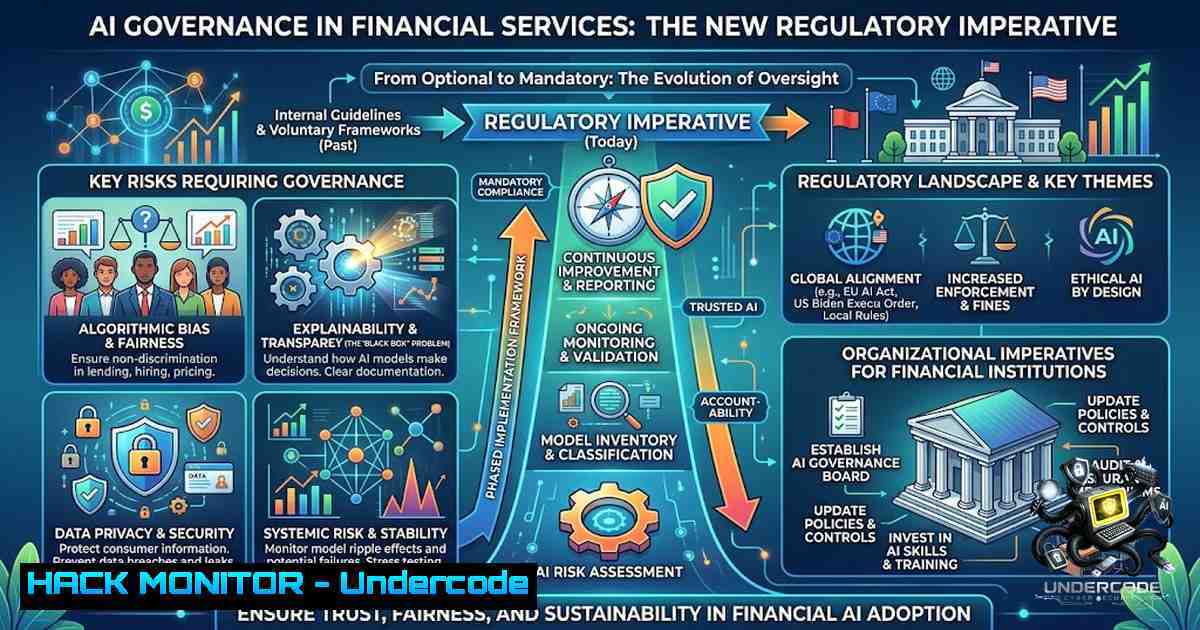
The Financial Stability Board (FSB) has officially proposed 12 sound practices for responsible AI adoption across the financial sector—a clear signal that governance can no longer be an afterthought in AI implementation. Simultaneously, the OCC’s revised model risk management guidance explicitly excludes generative and agentic AI from its scope, acknowledging these technologies are “novel and rapidly evolving” while signaling that additional regulatory attention is imminent. For banks, fintechs, and financial-services organizations, this creates a critical inflection point: those who build governance before scaling will lead; those who don’t will face existential regulatory and operational risk.
Learning Objectives
- Understand the FSB’s 12 sound practices for responsible AI adoption and how they map to the full AI lifecycle
- Navigate the regulatory gap created by the OCC’s exclusion of generative and agentic AI from model risk guidance
- Implement practical technical controls, monitoring frameworks, and governance structures for AI systems in production
- Apply Linux and Windows security commands, API security configurations, and cloud hardening techniques relevant to AI workloads
- Build a scalable AI governance program that enables innovation while managing model, cyber, vendor, data, and compliance risks
You Should Know
- The FSB’s 12 Sound Practices: A Governance Framework for the AI Lifecycle
The FSB’s consultation report, published June 10, 2026, proposes 12 sound practices organized into three pillars: organisation-wide AI governance (practices 1–4), management of AI risks across the development and deployment lifecycle (practices 5–10), and management of AI-related cyber, information, and third-party risks (practices 11–12). These practices are designed to be flexible and proportionate, not prescriptive, allowing institutions to adapt them to their specific risk profiles.
What This Means in Practice:
The FSB emphasizes that board and senior management must take ownership of AI strategy, not delegate it to technical teams alone. This means establishing clear accountability frameworks, documented decision-making processes, and materiality assessments for every AI use case. The practices also cover data governance, explainability, human oversight, and the particular challenges posed by generative and agentic AI.
Technical Implementation: AI Model Inventory and Risk Scoring
To operationalize these practices, organizations should maintain a comprehensive AI model inventory with risk scoring. Below is a practical approach using Linux command-line tools to audit AI-related dependencies and model artifacts:
 Audit Python AI/ML packages for version and vulnerability information
pip list --format=json | jq '.[] | select(.name | test("tensorflow|torch|transformers|langchain|llama|openai|anthropic|mlflow|ray|kubernetes|docker|boto3|azure"))' > ai_dependency_inventory.json

Scan for known vulnerabilities in AI dependencies
pip-audit --requirement requirements.txt --format json > ai_vuln_scan.json

Monitor model file integrity (detect tampering or unauthorized changes)
find /models -1ame ".h5" -o -1ame ".pt" -o -1ame ".onnx" -o -1ame ".pkl" | while read model; do
sha256sum "$model" >> model_integrity_manifest.txt
done

Set up automated integrity checking via cron
(crontab -l 2>/dev/null; echo "0 2    /usr/bin/find /models -1ame '.h5' -exec sha256sum {} \; > /var/log/model_integrity_$(date +\%Y\%m\%d).log") | crontab -
Windows Equivalent (PowerShell):
 Audit Python packages in Windows environment
pip list --format=json | ConvertFrom-Json | Where-Object { $_.name -match "tensorflow|torch|transformers|langchain|llama|openai|anthropic|mlflow|ray" } | Export-Csv -Path "ai_dependency_inventory.csv" -1oTypeInformation

Monitor model file integrity
Get-ChildItem -Path "C:\Models" -Recurse -Include ".h5",".pt",".onnx",".pkl" | ForEach-Object {
$hash = Get-FileHash -Path $<em>.FullName -Algorithm SHA256
"$($hash.Hash) $($</em>.FullName)" | Out-File -Append -FilePath "model_integrity_manifest.txt"
}

Schedule integrity check via Task Scheduler
$action = New-ScheduledTaskAction -Execute "powershell.exe" -Argument "-Command Get-ChildItem -Path C:\Models -Recurse -Include .h5,.pt,.onnx,.pkl | ForEach-Object { Get-FileHash -Path `$<em>.FullName -Algorithm SHA256 | Out-File -Append -FilePath C:\Logs\model_integrity</em>$(Get-Date -Format 'yyyyMMdd').log }"
$trigger = New-ScheduledTaskTrigger -Daily -At 2am
Register-ScheduledTask -TaskName "ModelIntegrityCheck" -Action $action -Trigger $trigger -User "SYSTEM"
- The OCC Exclusion: What’s Out of Scope and Why It Matters
On April 17, 2026, the OCC, Federal Reserve, and FDIC issued revised model risk management guidance (OCC Bulletin 2026-13), superseding the 2011 SR 11-7 guidance. The headline: generative AI and agentic AI models are explicitly excluded from scope. The agencies acknowledge these technologies are “novel and rapidly evolving” and promise future guidance—but provide no timeline.
The Regulatory Gap and Its Implications:
This exclusion does not mean generative AI is unregulated. It means institutions must apply existing risk management and governance frameworks to these systems while awaiting specific guidance. The OCC has stated it “supports banks’ efforts to integrate AI into core functions, while managing the risk in a safe and sound manner”. The $30 billion asset threshold for applicability creates additional complexity for smaller institutions that may still have significant AI exposure.
Step-by-Step: Implementing AI-Specific Access Controls and Monitoring
Given the regulatory gap, organizations must implement robust technical controls for generative AI systems:
API Security Configuration for AI Endpoints (Linux):
 Configure rate limiting and authentication for AI API endpoints using NGINX
 /etc/nginx/sites-available/ai-gateway

server {
listen 443 ssl;
server_name ai-gateway.example.com;

Rate limiting for AI inference endpoints
limit_req_zone $binary_remote_addr zone=ai_ratelimit:10m rate=10r/s;
limit_req zone=ai_ratelimit burst=20 nodelay;

API key validation via Lua
location /v1/completions {
access_by_lua_block {
local api_key = ngx.var.http_Authorization
if not api_key then
ngx.exit(401)
end
-- Validate against Redis or internal service
local redis = require "resty.redis"
local red = redis:new()
red:connect("127.0.0.1", 6379)
local res, err = red:get("api_key:" .. api_key)
if not res then
ngx.exit(403)
end
}
proxy_pass http://llm_backend;
proxy_read_timeout 300s;
}

Log all requests with payload hashes for audit
log_format ai_audit '$remote_addr - $remote_user [$time_local] "$request" $status $body_bytes_sent "$http_referer" "$http_user_agent" "$request_body"';
access_log /var/log/nginx/ai_access.log ai_audit;
}

Implement prompt injection detection using regex patterns
cat > /etc/nginx/conf.d/prompt_injection.conf << 'EOF'
 Basic prompt injection patterns (expand based on threat intelligence)
map $request_body $is_suspicious {
default 0;
"~(?i)(ignore all previous instructions)" 1;
"~(?i)(system prompt|developer prompt)" 1;
"~(?i)(role play|pretend you are)" 1;
"~(?i)(jailbreak|break out)" 1;
"~(?i)(you are now|from now on)" 1;
}
EOF
Windows-Based AI API Gateway Configuration (IIS + URL Rewrite):
 Install IIS URL Rewrite module for AI endpoint protection
Install-WindowsFeature -1ame Web-Server, Web-Mgmt-Tools
Install-WindowsFeature -1ame Web-UrlRewrite

Configure request filtering for AI endpoints
New-WebApplication -1ame "AIGateway" -Site "Default Web Site" -PhysicalPath "C:\inetpub\wwwroot\aigateway" -ApplicationPool "AIGatewayPool"

Add rate limiting via IIS Dynamic IP Restrictions
Install-WindowsFeature -1ame Web-DynIpRestriction
Set-WebConfigurationProperty -Filter "system.webServer/dynamicIpSecurity" -1ame "denyAction" -Value "Unauthorized"
Set-WebConfigurationProperty -Filter "system.webServer/dynamicIpSecurity" -1ame "enableLoggingOnlyMode" -Value "False"

Enable failed request tracing for AI requests
$traceConfig = @"
<?xml version="1.0" encoding="UTF-8"?>
<configuration>
<system.webServer>
<tracing>
<traceFailedRequests>
<add path="">
<conditions>
<add statusCodes="400-599" />
</conditions>
</add>
</traceFailedRequests>
</tracing>
</system.webServer>
</configuration>
"@
$traceConfig | Out-File -FilePath "C:\inetpub\wwwroot\aigateway\web.config" -Encoding UTF8
3. Model Validation, Monitoring, and Bias Detection
The FSB’s sound practices 5–10 address management of AI risks through the full lifecycle. This requires continuous monitoring of model performance, bias, security, and compliance—not just pre-deployment validation.
Implementing Continuous Model Monitoring:
 model_monitor.py - Continuous monitoring for AI model drift and bias

import json
import logging
import numpy as np
from datetime import datetime
from scipy import stats
from sklearn.metrics import accuracy_score, precision_score, recall_score
from aequitas.bias import Bias
from aequitas.fairness import Fairness

class AIModelMonitor:
def <strong>init</strong>(self, model_id, baseline_metrics, protected_attributes):
self.model_id = model_id
self.baseline_metrics = baseline_metrics
self.protected_attributes = protected_attributes
self.drift_threshold = 0.15  PSI threshold
self.logger = logging.getLogger(f"model_monitor_{model_id}")

def calculate_psi(self, expected, actual, bins=10):
"""Population Stability Index for drift detection"""
expected_percents = np.histogram(expected, bins=bins)[bash] / len(expected)
actual_percents = np.histogram(actual, bins=bins)[bash] / len(actual)
psi = np.sum((actual_percents - expected_percents)<br />
np.log(actual_percents / expected_percents))
return psi

def check_bias(self, predictions, actuals, sensitive_attributes):
"""Fairness and bias detection using Aequitas"""
bias = Bias()
df = pd.DataFrame({
'score': predictions,
'label_value': actuals,
'race': sensitive_attributes.get('race'),
'gender': sensitive_attributes.get('gender')
})
bias_df = bias.get_disparity_predefined_groups(df,
ref_groups={'race': 'white', 'gender': 'male'})
fairness = Fairness()
fairness_df = fairness.get_group_summary(bias_df)
return fairness_df

def monitor(self, current_predictions, current_actuals,
current_features, sensitive_attrs):
alerts = []

<ol>
<li>Performance drift
current_accuracy = accuracy_score(current_actuals, current_predictions)
if abs(current_accuracy - self.baseline_metrics['accuracy']) > 0.05:
alerts.append({
'type': 'performance_drift',
'metric': 'accuracy',
'baseline': self.baseline_metrics['accuracy'],
'current': current_accuracy
})</p></li>
<li><p>Feature drift (PSI)
for feature_name, feature_values in current_features.items():
psi = self.calculate_psi(
self.baseline_metrics['feature_distributions'][bash],
feature_values
)
if psi > self.drift_threshold:
alerts.append({
'type': 'feature_drift',
'feature': feature_name,
'psi': psi
})</p></li>
<li><p>Bias detection
bias_results = self.check_bias(current_predictions, current_actuals,
sensitive_attrs)
for _, row in bias_results.iterrows():
if row['disparity'] > 1.25:  25% disparity threshold
alerts.append({
'type': 'bias_detected',
'group': row['group'],
'metric': row['metric'],
'disparity': row['disparity']
})</p></li>
<li><p>Log and alert
if alerts:
self.logger.warning(f"Alerts for model {self.model_id}: {json.dumps(alerts)}")
Trigger incident response workflow
self.trigger_incident_response(alerts)</p></li>
</ol>

<p>return alerts

def trigger_incident_response(self, alerts):
 Webhook to SIEM or incident management system
import requests
requests.post(
'https://incident-manager.internal/api/alerts',
json={'model_id': self.model_id, 'alerts': alerts, 'timestamp': datetime.utcnow().isoformat()}
)
Kubernetes Monitoring for AI Workloads:
 Prometheus monitoring configuration for AI model serving
apiVersion: monitoring.coreos.com/v1
kind: ServiceMonitor
metadata:
name: ai-model-monitor
namespace: ai-platform
spec:
selector:
matchLabels:
app: ai-model-serving
endpoints:
- port: metrics
path: /metrics
interval: 30s
scrapeTimeout: 10s
- port: inference
path: /v1/metrics
interval: 60s
scrapeTimeout: 30s

Alert rules for AI model degradation
apiVersion: monitoring.coreos.com/v1
kind: PrometheusRule
metadata:
name: ai-model-alerts
namespace: ai-platform
spec:
groups:
- name: ai_model_rules
rules:
- alert: ModelAccuracyDegraded
expr: (model_accuracy - model_accuracy_baseline) < -0.05
for: 15m
labels:
severity: critical
annotations:
summary: "Model accuracy degraded by more than 5%"
- alert: ModelLatencySpike
expr: histogram_quantile(0.95, model_inference_duration_seconds_bucket) > 5
for: 5m
labels:
severity: warning
annotations:
summary: "Model p95 latency exceeded 5 seconds"
- alert: ModelDriftDetected
expr: model_psi > 0.15
for: 30m
labels:
severity: critical
annotations:
summary: "Population Stability Index exceeds threshold"
4. Vendor and Third-Party Risk Management (Practices 11–12)
The FSB dedicates practices 11 and 12 specifically to AI-related cyber, information, and third-party risks. Financial institutions increasingly rely on third-party AI models, APIs, and infrastructure—each introducing supply chain vulnerabilities.
Third-Party AI Vendor Security Assessment Script:
!/bin/bash
 vendor_ai_security_check.sh - Comprehensive third-party AI vendor assessment

VENDOR_API_ENDPOINT="$1"
VENDOR_NAME="$2"
REPORT_DIR="/var/log/vendor_assessments/$(date +%Y%m%d)"

mkdir -p "$REPORT_DIR"

echo "=== AI Vendor Security Assessment: $VENDOR_NAME ===" > "$REPORT_DIR/${VENDOR_NAME}_report.txt"
echo "Date: $(date)" >> "$REPORT_DIR/${VENDOR_NAME}_report.txt"

<ol>
<li>SSL/TLS security check
echo " SSL/TLS Configuration " >> "$REPORT_DIR/${VENDOR_NAME}_report.txt"
openssl s_client -connect "$VENDOR_API_ENDPOINT":443 -tls1_2 </dev/null 2>&1 | grep -E "Protocol|Cipher" >> "$REPORT_DIR/${VENDOR_NAME}_report.txt"</p></li>
<li><p>Check for common vulnerabilities (using nmap and sslscan if available)
nmap --script ssl-enum-ciphers -p 443 "$VENDOR_API_ENDPOINT" >> "$REPORT_DIR/${VENDOR_NAME}_report.txt" 2>&1</p></li>
<li><p>Test API authentication requirements
echo " API Authentication Test " >> "$REPORT_DIR/${VENDOR_NAME}_report.txt"
curl -s -o /dev/null -w "Status without auth: %{http_code}\n" "https://$VENDOR_API_ENDPOINT/v1/health" >> "$REPORT_DIR/${VENDOR_NAME}_report.txt"
curl -s -o /dev/null -w "Status with invalid auth: %{http_code}\n" -H "Authorization: Bearer invalid_token" "https://$VENDOR_API_ENDPOINT/v1/health" >> "$REPORT_DIR/${VENDOR_NAME}_report.txt"</p></li>
<li><p>Check for data exposure in responses
echo " Data Exposure Check " >> "$REPORT_DIR/${VENDOR_NAME}_report.txt"
curl -s -H "Authorization: Bearer $VALID_TOKEN" "https://$VENDOR_API_ENDPOINT/v1/model/info" | jq '.' | grep -i -E "password|secret|key|token|credential|private" >> "$REPORT_DIR/${VENDOR_NAME}_report.txt"</p></li>
<li><p>Rate limiting test
echo " Rate Limiting Test " >> "$REPORT_DIR/${VENDOR_NAME}_report.txt"
for i in {1..100}; do
curl -s -o /dev/null -w "%{http_code}\n" -H "Authorization: Bearer $VALID_TOKEN" "https://$VENDOR_API_ENDPOINT/v1/predict" | sort | uniq -c >> "$REPORT_DIR/${VENDOR_NAME}_report.txt"
done</p></li>
<li><p>Validate SOC2 or equivalent certification
echo " Compliance Certification Validation " >> "$REPORT_DIR/${VENDOR_NAME}_report.txt"
Check vendor's security page for compliance badges
curl -s "https://$VENDOR_NAME.com/security" | grep -i -E "soc2|iso27001|hipaa|gdpr|soc 2" >> "$REPORT_DIR/${VENDOR_NAME}_report.txt"</p></li>
</ol>

<p>echo "Assessment complete. Report saved to $REPORT_DIR/${VENDOR_NAME}_report.txt"
5. Cloud Hardening for AI Workloads
AI workloads in the cloud introduce unique attack surfaces: model theft, data poisoning, inference attacks, and API abuse. Below are hardening configurations for major cloud providers.
AWS AI Workload Hardening (Terraform):
 AWS SageMaker endpoint with enhanced security
resource "aws_sagemaker_endpoint" "ai_endpoint" {
name = "secure-ai-endpoint"
endpoint_config_name = aws_sagemaker_endpoint_configuration.ai_config.name

VPC only - no public internet access
vpc_config {
subnets = [aws_subnet.private_subnet.id]
security_groups = [aws_security_group.ai_endpoint.id]
}

Encryption at rest
encryption_config {
kms_key_id = aws_kms_key.ai_key.id
}

tags = {
Environment = "production"
Compliance = "FSB-AI-Governance"
}
}

Network isolation for AI training
resource "aws_security_group" "ai_training" {
name = "ai-training-sg"
vpc_id = aws_vpc.main.id

ingress {
from_port = 0
to_port = 0
protocol = "-1"
self = true
description = "Allow traffic between training nodes only"
}

egress {
from_port = 0
to_port = 0
protocol = "-1"
cidr_blocks = ["0.0.0.0/0"]
description = "Allow outbound to model registry and artifact storage"
}
}

S3 bucket with strict access controls for training data
resource "aws_s3_bucket" "ai_data" {
bucket = "ai-training-data-${var.account_id}"
force_destroy = false

Enable versioning for audit trails
versioning {
enabled = true
}

Server-side encryption
server_side_encryption_configuration {
rule {
apply_server_side_encryption_by_default {
kms_master_key_id = aws_kms_key.ai_key.id
sse_algorithm = "aws:kms"
}
}
}
}

resource "aws_s3_bucket_policy" "ai_data_policy" {
bucket = aws_s3_bucket.ai_data.id
policy = jsonencode({
Version = "2012-10-17"
Statement = [
{
Effect = "Deny"
Principal = ""
Action = "s3:"
Resource = "${aws_s3_bucket.ai_data.arn}/"
Condition = {
Bool = {
"aws:SecureTransport": "false"
}
}
},
{
Effect = "Deny"
Principal = ""
Action = "s3:PutObject"
Resource = "${aws_s3_bucket.ai_data.arn}/"
Condition = {
"Null": {
"s3:x-amz-server-side-encryption": "true"
}
}
}
]
})
}

CloudWatch monitoring and alerting
resource "aws_cloudwatch_metric_alarm" "ai_api_anomaly" {
alarm_name = "ai-api-anomaly-detection"
comparison_operator = "GreaterThanUpperThreshold"
evaluation_periods = 2
metric_name = "ModelInvocations"
namespace = "AWS/SageMaker"
period = 300
statistic = "Sum"
threshold_metric_id = "ad1"

alarm_description = "Alert on anomalous AI API invocation patterns"

Anomaly detection band
anomaly_detector {
metric_name = "ModelInvocations"
namespace = "AWS/SageMaker"
stat = "Sum"
}
}
Azure AI Security Configuration (Azure CLI):
 Create Azure AI Service with private endpoint
az cognitiveservices account create \
--1ame ai-inference \
--resource-group ai-rg \
--kind OpenAI \
--sku S0 \
--location eastus \
--custom-subdomain ai-inference \
--1etwork-acls "{\"defaultAction\":\"Deny\",\"bypass\":\"AzureServices\"}"

Configure private endpoint for AI service
az network private-endpoint create \
--1ame ai-private-endpoint \
--resource-group ai-rg \
--vnet-1ame ai-vnet \
--subnet private-subnet \
--private-connection-resource-id $(az cognitiveservices account show --1ame ai-inference --resource-group ai-rg --query id -o tsv) \
--group-id account \
--connection-1ame ai-connection

Enable diagnostic logging for AI service
az monitor diagnostic-settings create \
--1ame ai-audit-logs \
--resource $(az cognitiveservices account show --1ame ai-inference --resource-group ai-rg --query id -o tsv) \
--logs "[{\"category\":\"Audit\",\"enabled\":true},{\"category\":\"RequestResponse\",\"enabled\":true}]" \
--workspace $(az monitor log-analytics workspace show --resource-group ai-rg --1ame ai-logs --query id -o tsv)

Configure content filtering for generative AI
az cognitiveservices account content-filter create \
--1ame ai-inference \
--resource-group ai-rg \
--filter-1ame "financial-services-filter" \
--severity "medium,high" \
--blocklist "hate,sensitive,self-harm"
6. Incident Response for AI Systems
When AI systems fail—whether through bias, security breach, or model collapse—institutions must have a documented incident response plan. The FSB’s governance framework requires this capability.
AI Incident Response Playbook (Linux Automation):
!/bin/bash
 ai_incident_response.sh - Automated incident response for AI systems

INCIDENT_ID=$(date +%Y%m%d%H%M%S)
LOG_DIR="/var/log/ai_incidents/$INCIDENT_ID"
MODEL_ID="$1"
INCIDENT_TYPE="$2"  bias, security, performance, data_breach

mkdir -p "$LOG_DIR"

echo "=== AI Incident Response Initiated ==="
echo "Incident ID: $INCIDENT_ID"
echo "Model ID: $MODEL_ID"
echo "Type: $INCIDENT_TYPE"
echo "Timestamp: $(date)"
echo ""

<ol>
<li>Immediate containment - disable model endpoint if critical
if [ "$INCIDENT_TYPE" = "security" ] || [ "$INCIDENT_TYPE" = "data_breach" ]; then
echo "Step 1: Disabling model endpoint..."
Kubernetes: scale down deployment
kubectl scale deployment "$MODEL_ID" --replicas=0 -1 ai-platform
Or via API gateway: deny all traffic
curl -X POST "http://api-gateway/internal/disable/$MODEL_ID"
fi</p></li>
<li><p>Capture forensic evidence
echo "Step 2: Capturing forensic data..."
Model version and configuration
kubectl describe deployment "$MODEL_ID" -1 ai-platform > "$LOG_DIR/deployment_state.txt"
Recent logs
kubectl logs -l app="$MODEL_ID" -1 ai-platform --tail=10000 > "$LOG_DIR/model_logs.txt"
Network connections
kubectl exec -it deployment/"$MODEL_ID" -1 ai-platform -- netstat -tunap > "$LOG_DIR/network_connections.txt" 2>/dev/null</p></li>
<li><p>Data exfiltration check
echo "Step 3: Checking for data exfiltration..."
Check S3/cloud storage for unusual access patterns
aws s3api list-objects --bucket "ai-training-data" --prefix "outputs/" --query "Contents[?LastModified>='$(date -d '1 hour ago' --iso-8601=seconds)']" > "$LOG_DIR/recent_objects.txt"</p></li>
<li><p>Model integrity verification
echo "Step 4: Verifying model integrity..."
find /models -1ame ".h5" -o -1ame ".pt" | while read model; do
sha256sum "$model" >> "$LOG_DIR/model_hashes.txt"
done</p></li>
<li><p>Generate incident report
cat > "$LOG_DIR/incident_report.md" << EOF
AI Incident Report - $INCIDENT_ID

Incident Overview

<ul>
<li>Date: $(date)</li>
<li>Model ID: $MODEL_ID</li>
<li>Incident Type: $INCIDENT_TYPE</li>
<li>Severity: [bash]</li>
</ul>

Timeline

<ul>
<li>$(date -d '1 hour ago'): Incident detected</li>
<li>$(date): Response initiated</li>
<li>[Add additional timestamps]</li>
</ul>

Containment Actions Taken

<ul>
<li>Model endpoint: [Disabled/Partially restricted/Under investigation]</li>
<li>Forensic data captured: $(ls -la "$LOG_DIR" | wc -l) artifacts</li>
</ul>

Root Cause Analysis
[To be completed]

Remediation Steps
[To be completed]

Lessons Learned
[To be completed]
EOF</p></li>
</ol>

<p>echo "Incident response complete. Report saved to $LOG_DIR/incident_report.md"
echo "Notify security team and compliance officer immediately."
What Undercode Say:
- Governance is not a blocker—it’s an enabler. The FSB’s 12 practices demonstrate that strong governance allows innovation to move faster with confidence. Institutions that build governance before scaling will outpace those that treat compliance as an afterthought.
- The regulatory gap is a call to action, not a pause. The OCC’s explicit exclusion of generative and agentic AI from model risk guidance does not mean these systems are unregulated. It means institutions must proactively apply existing frameworks while preparing for imminent additional guidance.
Analysis: The financial services sector stands at a pivotal moment. The FSB’s consultation report, with its 12 sound practices, provides a comprehensive roadmap for responsible AI adoption that balances innovation with risk management. Simultaneously, the OCC’s revised guidance creates a regulatory gap that institutions must navigate carefully—those who interpret the exclusion as a “free pass” will face significant regulatory and operational consequences. The key insight is that governance and innovation are not opposing forces; done correctly, governance becomes the foundation that enables faster, more confident innovation. The technical controls outlined above—from model integrity monitoring to cloud hardening and incident response—provide the practical implementation layer that transforms regulatory principles into operational reality. Financial institutions that act now to build these capabilities will lead the next wave of AI-powered financial services; those that delay will find themselves playing catch-up in a rapidly evolving regulatory landscape.
Prediction:
- -1 Regulatory fragmentation will intensify as the FSB finalizes its report in October 2026 and the OCC, Fed, and FDIC develop separate AI-specific guidance. Institutions operating across jurisdictions will face a complex patchwork of requirements, increasing compliance costs and operational complexity.
-
-1 Generative AI incidents in financial services will increase before they decrease. The regulatory gap created by the OCC’s exclusion, combined with rapid adoption pressure, will lead to at least one high-profile AI failure (bias, security breach, or model collapse) at a major institution within 12-18 months, accelerating regulatory action.
-
+1 First-mover advantage will accrue to institutions with mature AI governance. Those that implement the FSB’s sound practices early and build the technical controls outlined above will achieve faster regulatory approval for AI use cases, stronger customer trust, and more efficient scaling—creating a durable competitive moat.
-
+1 AI governance will become a new professional discipline. The convergence of FSB practices, OCC guidance, and technical implementation requirements will create demand for AI governance specialists who bridge regulatory, technical, and business domains—a role that didn’t exist five years ago and will be essential going forward.
▶️ Related Video (78% Match):
https://www.youtube.com/watch?v=1r1x3l9OkyY
🎯Let’s Practice For Free:
🎓 Live Courses & Certifications:
Join Undercode Academy for Verified Certifications
🚀 Request a Custom Project:
Secure, high-velocity infrastructure and disruptive technological engineering. Contact our engineering team for high-tier development and proprietary systems:
[email protected]
💎 Smart Architecture | 🛡️ Secure by Design | ⭐ Trusted by Thousands
IT/Security Reporter URL:
Reported By: Artificialintelligence Bankingcompliance – Hackers Feeds
Extra Hub: Undercode MoN
Basic Verification: Pass ✅


