Listen to this Post
Introduction:
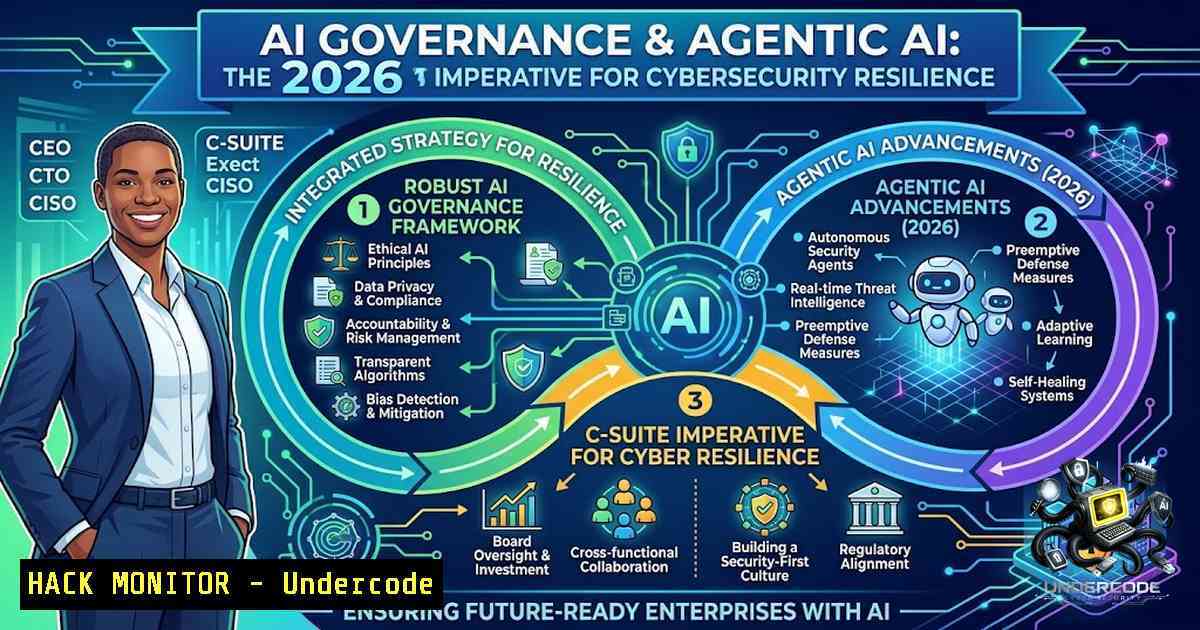
As CIOs, CISOs, and technology executives convene in Philadelphia for HMG Strategy’s 11th Annual C-Level Technology Leadership Summit on August 18, 2026, the convergence of AI governance, Agentic AI adoption, and cybersecurity resilience has emerged as the defining challenge of the enterprise technology landscape. Agentic AI systems—autonomous tools that can plan, make decisions, and take actions without continuous human intervention—are rapidly moving from research labs into production environments, introducing unprecedented capabilities alongside novel security risks that traditional governance frameworks were never designed to address. This article examines the critical security implications of Agentic AI deployment, provides actionable hardening strategies across Linux, Windows, and cloud environments, and outlines a governance roadmap for technology leaders navigating this transformative shift.
Learning Objectives:
- Understand the unique security risks introduced by Agentic AI systems, including excessive agency, prompt injection, and identity privilege abuse
- Master practical Linux and Windows command-line techniques for securing AI infrastructure and enforcing zero-trust principles
- Implement NIST AI RMF and ISO/IEC 42001 governance frameworks to establish accountable AI management systems
- Deploy API security hardening and cloud-1ative controls to protect AI agent attack surfaces
- Build organizational resilience against AI-powered ransomware and automated threats through immutable architectures and continuous monitoring
You Should Know:
- Understanding Agentic AI: Capabilities, Risks, and the Governance Gap
Agentic AI represents the next evolutionary step beyond generative AI. Rather than simply outputting predictions or content, agentic systems can access data sources, remember context, make decisions, use tools, and take actions in pursuit of a goal. They can operate autonomously and even create sub-agents to complete specific tasks—a capability that makes them uniquely powerful and uniquely hazardous.
The security community has rapidly mobilized to address these risks. In May 2026, CISA and five allied national cybersecurity agencies published the first coordinated multinational security guidance specifically targeting Agentic AI. The OWASP GenAI Security Project released its 2026 Top 10 for LLM Applications, with “excessive agency” jumping from sixth place in 2025 to third—reflecting the industry’s growing recognition that autonomous AI systems pose distinct and elevated threats. The ACM Technology Policy Council warns that Agentic AI is “outpacing the legal, regulatory, and technical frameworks designed to govern it,” identifying critical gaps in legal liability, security controls, consumer transparency, and accountability.
Key risks specific to Agentic AI include:
- Broader attack surface: Agents can access external systems, data, and tools in ways non-agentic systems cannot
- Unpredictable behavior: Goals can be interpreted in ways humans would not expect
- Rapid, hard-to-review actions: Operations occur faster than humans can meaningfully review
- Challenging explainability: The range of behaviors and tools makes it difficult to explain a particular course of action
- Identity and privilege abuse: Over-permissioned systems and access sprawl create new attack vectors
- Agent-to-agent escalation: Cascading failures can propagate across interconnected agents
To secure Agentic AI deployments, organizations must apply established principles—zero trust, defense-in-depth, and least-privilege access—while developing new controls specifically for agent identity, runtime containment, and architectural monitoring.
- AI Governance Frameworks: NIST AI RMF and ISO/IEC 42001
Effective AI governance rests on three pillars in 2026: ISO/IEC 42001 (the certifiable management-system standard), the EU AI Act (the world’s first comprehensive AI law), and the NIST AI Risk Management Framework (the leading voluntary playbook).
NIST AI RMF 1.0 organizes AI risk work into four functions:
– Govern: Establish AI governance structures, policies, and accountability
– Map: Understand context, data tracing, and system-level risk
– Measure: Assess and monitor AI system risks continuously
– Manage: Treat and respond to identified AI risks
ISO/IEC 42001 defines requirements for an Artificial Intelligence Management System (AIMS), following the harmonized structure used by ISO 27001. Its Annex A controls address AI policies, internal organization, resources, impact assessment, the AI system lifecycle, data governance, and third-party relationships.
Practical Implementation Commands:
For organizations beginning their AI governance journey, the following commands can establish foundational security controls:
Linux – Security Hardening for AI Infrastructure:
 Install and configure fail2ban for SSH protection
sudo apt install fail2ban -y
sudo systemctl enable fail2ban
sudo systemctl start fail2ban

Audit listening services
netstat -tulpn | grep LISTEN

Set immutable flag on critical backup directories
sudo chattr +i /backup/directory

Configure audit rules for identity changes
auditctl -w /etc/passwd -p wa -k identity_change
auditctl -w /etc/sudoers -p wa -k sudoers_change

Implement Zero Trust firewall defaults
sudo ufw reset
sudo ufw default deny incoming
sudo ufw default allow outgoing
sudo ufw enable
sudo ufw status verbose
Windows PowerShell – AI Attack Surface Detection:
 Detect AI tools and features that increase attack surface
 From enterprise-security-toolkit
.\detect-ai-features.ps1

Audit AI-related applications in Microsoft Entra ID
Install-Module Microsoft.Graph -Scope CurrentUser
Connect-MgGraph -Scopes "Application.ReadWrite.All"
Get-MgServicePrincipal | Where-Object {$_.DisplayName -match "AI|GPT|Claude|Copilot"}

Enforce conditional access policies for generative AI
 Review and restrict delegated consent grants
Get-MgOauth2PermissionGrant | Where-Object {$_.Scope -match "openid|profile"}
Cloud Security Hardening (AWS/Azure):
 AWS - Enable security services
aws guardduty create-detector --enable
aws securityhub enable-security-hub
aws cloudtrail create-trail --1ame security-trail --s3-bucket-1ame logs-bucket

Azure - Enable Security Center and enforce adaptive network hardening
az security auto-provisioning-setting update --auto-provision On
Add-AzSecurityAdaptiveNetworkHardening -ResourceGroupName "rg-ai" -ResourceName "ai-cluster"
- Securing the AI Supply Chain and API Attack Surface
As organizations integrate AI agents with internal and external systems, the API attack surface expands dramatically. The OWASP API Security Top 10 identifies Broken Object Level Authorization (BOLA) as the most critical risk in 2026. AI agents with excessive permissions can inadvertently expose sensitive data or execute unauthorized actions through vulnerable APIs.
API Security Hardening Checklist:
- Replace sequential IDs with UUIDs to prevent resource enumeration
- Implement ownership checks on every backend request
- Enforce rate limiting on all API endpoints
- Validate every input with strict schema validation
- Use short-lived tokens, never static API keys
- Lock down CORS policies to trusted origins only
Linux – API Gateway Security Configuration:
 Configure nginx rate limiting
sudo nano /etc/nginx/nginx.conf
 Add:
 limit_req_zone $binary_remote_addr zone=mylimit:10m rate=10r/s;
 limit_req zone=mylimit burst=20 nodelay;

Enforce HTTPS with modern TLS
sudo apt install certbot python3-certbot-1ginx
sudo certbot --1ginx -d api.yourdomain.com

Verify TLS configuration
openssl s_client -connect api.yourdomain.com:443 -tls1_3
Windows – API Security with PowerShell:
 Audit API permissions and delegated grants
Get-MgServicePrincipal | Where-Object {$_.AppRoles -match "api"} |
Select-Object DisplayName, AppRoles, Oauth2PermissionScopes

Review application permissions for AI tools
Get-MgApplication | Where-Object {$<em>.DisplayName -match "AI|Copilot|GPT"} |
ForEach-Object { Get-MgApplicationAppOwnership -ApplicationId $</em>.Id }
4. Building Cyber Resilience Against AI-Powered Threats
AI-driven cyberattacks are now a reality, with ransomware damage projected to approach $75 billion in 2026. AI-enhanced reconnaissance and lateral movement make attacks more sophisticated and persistent, underscoring the need for resilience over prevention. Organizations must shift from reactive defense to strategic resilience, implementing:
1. API defense – Secure all integration points
2. Data access control – Enforce least-privilege access
- Stored data protection – Encrypt data at rest and in transit
- Multi-site data redundancy – Maintain geographically distributed backups
- Architecting for immutability – Make critical data tamper-proof
Linux – Ransomware Defense Commands:
 Create encrypted backups
tar -czf - /critical_data | openssl enc -aes-256-cbc -out backup.tar.gz.enc -k strong_password

Set immutable flag on backup directories
sudo chattr +i /backup/critical

Block suspicious outbound connections
sudo iptables -A OUTPUT -p tcp --dport 4444 -j DROP

Kill malicious processes
sudo pkill -f ransom

Install and configure AIDE for integrity monitoring
sudo apt install aide -y
sudo aideinit
sudo aide.wrapper --check

Enable kernel audit for critical file changes
auditctl -w /etc/ -p wa -k etc_change
auditctl -w /bin/ -p wa -k bin_change
Windows PowerShell – Ransomware Defense:
 Find suspicious outbound connections
Get-1etTCPConnection | Where-Object {$<em>.State -eq "Established" -and $</em>.RemotePort -match "4444|5555"}

Kill malicious processes
taskkill /IM ransom.exe /F

Audit processes and disable unauthorized auto-run entries
Get-Process | Where-Object {$_.ProcessName -match "ransom|crypt|locker"}

Enable Windows Defender real-time protection
Set-MpPreference -DisableRealtimeMonitoring $false
Set-MpPreference -DisableBehaviorMonitoring $false

Configure controlled folder access
Set-MpPreference -EnableControlledFolderAccess Enabled
Add-MpPreference -ControlledFolderAccessProtectedFolders "C:\CriticalData"
Zero Trust Implementation (Linux):
 Install Google Authenticator PAM for MFA
sudo apt install libpam-google-authenticator
google-authenticator -t -d -f -r 3 -R 30 -w 3

Harden SSH configuration
sudo nano /etc/ssh/sshd_config
 Set:
 PermitRootLogin no
 PasswordAuthentication no
 PubkeyAuthentication yes
 AllowUsers authorized_user_only

Restart SSH
sudo systemctl restart sshd

Implement microsegmentation with nftables
sudo nft add table inet filter
sudo nft add chain inet filter input { type filter hook input priority 0 \; }
sudo nft add rule inet filter input iif lo accept
sudo nft add rule inet filter input ct state established,related accept
- The C-Suite Mandate: Leadership Accountability in the AI Era
The HMG Strategy summit’s theme—”ICONIC LEADERSHIP: How to Lead Like a CEO”—reflects a fundamental shift: CIOs and CISOs are no longer technology managers but strategic leaders accountable for enterprise-wide AI governance. Boards are demanding coherent AI strategies, with 75% of boards having approved major AI investments, yet only 52% have set clear AI governance expectations.
Key Leadership Actions:
- Establish CIO-CISO joint governance: Define what “authorized agent” means and who approves agent access
- Maintain a comprehensive AI inventory: Know what AI systems are deployed, what they access, and who is accountable
- Enforce human accountability: Humans remain accountable for deployment decisions, access grants, safeguards, and consequences
- Deploy agentic AI incrementally: Start with tightly bounded pilots and build confidence before expanding scope
- Never grant unrestricted access: Agents should never have unfettered access to sensitive data or critical systems
Auditing AI Applications (PowerShell):
 Comprehensive audit of AI applications in Entra ID
 From Adam the Automator's PowerShell guide
Install-Module Microsoft.Graph -Scope CurrentUser

Get all service principals with AI-related keywords
$aiApps = Get-MgServicePrincipal | Where-Object {
$_.DisplayName -match "AI|GPT|Claude|Copilot|OpenAI|Anthropic|Gemini"
}

Score risky applications based on permissions
foreach ($app in $aiApps) {
$permissions = Get-MgServicePrincipalAppRoleAssignment -ServicePrincipalId $app.Id
Write-Host "App: $($app.DisplayName) - Permissions: $($permissions.Count)"
}
What Undercode Say:
- Agentic AI is not optional—it’s coming. Organizations must adopt it to remain competitive, but doing so without proper governance is equivalent to handing a loaded weapon to an unsupervised intern. The technology’s autonomy demands proportional oversight.
-
Governance frameworks provide the roadmap. NIST AI RMF and ISO/IEC 42001 are not bureaucratic exercises—they are operational playbooks that translate abstract risk into concrete controls. Organizations that treat these frameworks as checklists rather than living systems will fail when incidents occur.
-
Security must be designed in, not bolted on. Agentic AI systems cannot be secured after deployment. The NCSC’s guidance is explicit: “If you cannot understand, monitor or contain an agent’s actions, it is not ready for deployment”. This is not caution—it’s a hard requirement.
-
The CISO’s role has fundamentally changed. CISOs are no longer just security guardians; they are strategic advisors who must be “in the room” for every AI decision. Risk and security are inseparable from AI, and boards expect CISOs to lead on both.
-
Resilience trumps prevention. AI-powered attacks will succeed—the question is how quickly organizations can detect, contain, and recover. Investing in immutable architectures, encrypted backups, and continuous monitoring is not optional; it’s survival.
Prediction:
-
+1 Agentic AI governance will become a board-level mandate by Q1 2027, with CISOs reporting directly to boards on AI risk posture—elevating cybersecurity leadership to unprecedented strategic influence.
-
+1 The convergence of NIST AI RMF, ISO/IEC 42001, and the EU AI Act will create a unified global standard for AI governance by 2028, reducing fragmentation and enabling consistent compliance across jurisdictions.
-
-1 Organizations that delay Agentic AI governance implementation will experience catastrophic security incidents by mid-2027, with liability falling squarely on CIOs and CISOs who failed to establish adequate controls—triggering the first wave of AI-related executive dismissals.
-
-1 AI-powered ransomware will evolve to target backup systems first, rendering traditional recovery strategies obsolete and forcing organizations to adopt truly immutable, air-gapped architectures—a costly but necessary transformation.
-
+1 The OWASP Top 10 for LLM Applications will become the de facto security standard for AI development, with “excessive agency” rising to the 1 risk position by 2027 as autonomous agents proliferate across enterprise environments.
-
-1 The legal liability vacuum around Agentic AI will result in high-profile lawsuits by 2028, as victims of autonomous AI failures seek recourse against model providers, framework developers, and deploying organizations—creating case law that will shape the industry for decades.
-
+1 Security automation and AI-powered defense will mature to counter AI-powered threats, creating a new category of “active defender” systems that operate autonomously to detect and neutralize threats faster than human teams.
-
-1 The skills gap in AI security will widen dramatically, with demand for professionals who understand both AI systems and cybersecurity far outstripping supply—driving salaries to premium levels and creating critical vulnerabilities in under-resourced organizations.
▶️ Related Video (84% Match):
https://www.youtube.com/watch?v=3vQXnG_M170
🎯Let’s Practice For Free:
🎓 Live Courses & Certifications:
Join Undercode Academy for Verified Certifications
🚀 Request a Custom Project:
Secure, high-velocity infrastructure and disruptive technological engineering. Contact our engineering team for high-tier development and proprietary systems:
[email protected]
💎 Smart Architecture | 🛡️ Secure by Design | ⭐ Trusted by Thousands
IT/Security Reporter URL:
Reported By: https://lnkd.in/p/e8mDkUef – Hackers Feeds
Extra Hub: Undercode MoN
Basic Verification: Pass ✅


