Listen to this Post
Introduction:
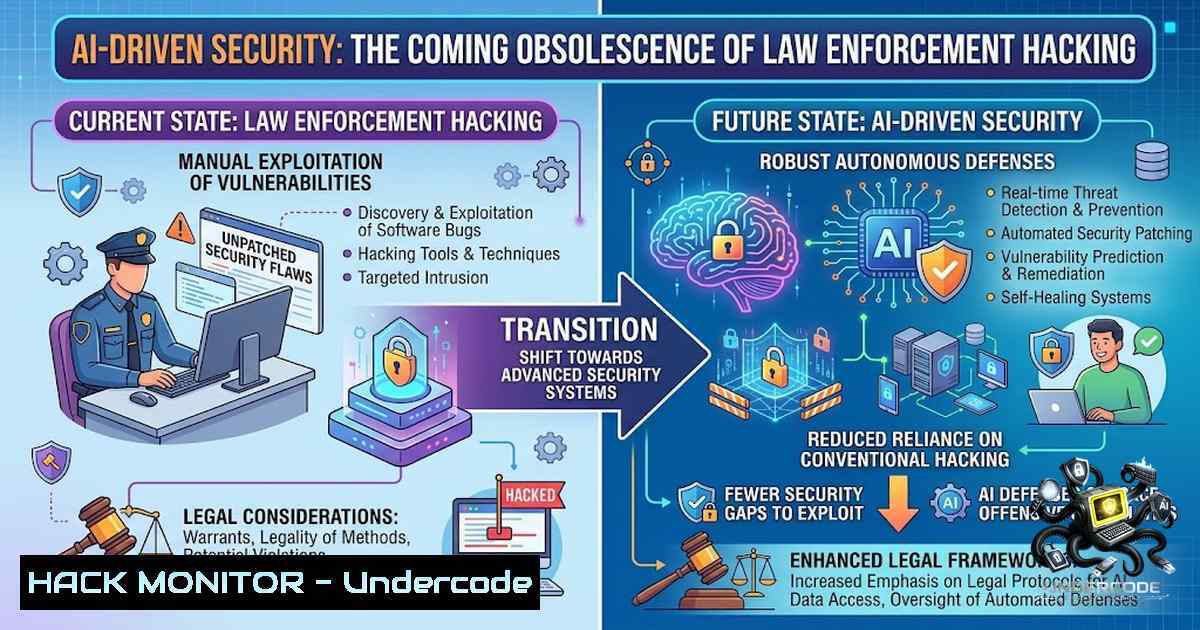
The cybersecurity community is confronting a paradigm shift as AI-driven security tools increasingly automate the discovery and patching of software vulnerabilities. While this development promises stronger digital defenses, it simultaneously threatens to eliminate the very vulnerabilities that intelligence and law enforcement agencies have historically relied upon for electronic surveillance and targeted hacking operations. The acceleration of AI-powered vulnerability detection—compressing discovery-to-exploitation windows from months to potentially minutes—is fundamentally reshaping the balance between offensive and defensive cyber capabilities.
Learning Objectives:
- Understand how AI-driven vulnerability discovery and automated patching systems are compressing the window of exploitation for law enforcement hacking tools
- Master practical AI-powered security assessment tools including Strix, Raptor, and OpenAI Aardvark for both offensive and defensive operations
- Learn to implement automated vulnerability remediation pipelines and CI/CD security integrations that reduce organizational risk exposure
You Should Know:
1. The AI Vulnerability Discovery Revolution
Frontier AI models have demonstrated the capability to autonomously discover zero-day vulnerabilities and generate exploit code at superhuman speeds. Anthropic’s Claude Mythos Preview, released in April 2026, marked a turning point where the window between vulnerability disclosure and active exploitation compressed from weeks or months to potentially minutes. This capability is not theoretical—DARPA’s AI Cyber Challenge (AIxCC) produced a Cyber Reasoning System that autonomously discovered 28 security vulnerabilities, including six previously unknown zero-days, in real-world open-source C and Java projects.
The defensive implications are profound. Organizations can now deploy AI models to rapidly discover vulnerabilities in their own systems and patch them before attackers can exploit them. In July 2026, the White House launched Gold Eagle, a federal clearinghouse that uses frontier AI to identify, rank, and coordinate remediation of software vulnerabilities across government and critical infrastructure. Google DeepMind’s CodeMender has already submitted 72 security patches to open-source projects over six months, demonstrating the scalability of AI-driven remediation.
Step‑by‑Step Guide: Deploying AI-Powered Vulnerability Scanning
Step 1: Install Strix for Autonomous Penetration Testing
 Clone the Strix repository
git clone https://github.com/rmaroun/strix.git
cd strix
 Install dependencies
pip install -r requirements.txt
 Configure API keys for LLM backends (Gemini, Claude, GPT, Ollama)
export OPENAI_API_KEY="your-key-here"
export ANTHROPIC_API_KEY="your-key-here"
 Run Strix against a target application
strix scan --target https://your-application.com --output report.json
Strix uses autonomous AI agents that act like real hackers—dynamically running code, finding vulnerabilities, and validating them through actual exploitation.
Step 2: Implement OpenAI Aardvark for Continuous Security Scanning
 Aardvark integrates with CI/CD pipelines
aardvark scan --repo https://github.com/your-org/your-repo.git \
--output vuln_report.md \
--severity critical,high
Aardvark, powered by GPT-5, autonomously detects and helps fix security vulnerabilities in software code, enabling development teams to address security issues faster than manual review processes allow.
Step 3: Deploy Raptor for Offensive/Defensive Research
 Install Raptor framework
git clone https://github.com/your-org/raptor.git
cd raptor
 Generate both exploits and patches automatically
raptor analyze --target ./target_binary --mode full
Raptor is an autonomous offensive/defensive research framework capable of automatically generating both vulnerability exploits and patches.
2. The “Going Dark” Problem for Law Enforcement
The rapid advancement of AI-driven security creates a significant challenge for intelligence and law enforcement agencies that have long relied on software vulnerabilities for lawful intercept and investigative operations. As AI inspection becomes integrated into CI/CD toolchains, remotely exploitable vulnerabilities in major software are projected to become largely depleted within two years. This phenomenon, termed “Going Dark,” describes the scenario where law enforcement agencies lose their ability to access encrypted or secured digital systems even with judicial authorization.
The concern is not merely theoretical. Agencies and manufacturers have historically known that law enforcement could purchase targeted hacking tools to access devices and systems. However, as AI automatically identifies and patches vulnerabilities before they can be weaponized, these avenues of access are rapidly closing. The FBI has already spent hundreds of thousands of dollars on advanced hacking tools, but the shelf life of such tools diminishes as AI-driven patching accelerates.
Step‑by‑Step Guide: Assessing Organizational Vulnerability Exposure
Step 1: Audit Existing Vulnerability Stockpiles
 Use nuclei for comprehensive vulnerability scanning
nuclei -target https://your-application.com -t ~/nuclei-templates/ \
-severity critical,high -o audit_results.txt
 Cross-reference with CVE databases
cve-search --search "CVE-2026-" --output json > cve_2026.json
Step 2: Implement Automated Patching Workflows
 Configure automated patch deployment using Ansible
ansible-playbook -i inventory.yml security_patches.yml \
--tags "critical,cve-2026-"
 Verify patch status
ansible all -m shell -a "apt list --upgradable | grep -i security"
Step 3: Monitor for Zero-Day Exploitation Attempts
 Windows: Enable advanced audit logging
auditpol /set /subcategory:"Detailed File Share" /success:enable /failure:enable
 PowerShell: Monitor for suspicious process creation
Get-WinEvent -FilterHashtable @{LogName='Security'; ID=4688} |
Where-Object {$_.Message -match "exploit|shell|reverse"} |
Export-Csv -Path .\suspicious_processes.csv
3. The Offense-Defense Balance in the AI Era
While AI vulnerability discovery initially appears to advantage attackers—with models capable of autonomously discovering and exploiting zero-days—the long-term dynamic favors defenders. As AI inspection is rebuilt across entire CI/CD toolchains to scan software before it reaches users, the attack surface progressively shrinks. The defensive apocalypse is characterized by AI vulnerability discovery operating at machine speed while traditional patch cycles remain frozen at approximately 90 days. Regulators are compressing disclosure windows to 24-72 hours, creating a mathematical impossibility for manual response.
OpenAI’s Aardvark and similar tools represent the vanguard of this defensive shift, scanning repositories not only to identify vulnerabilities but also to prioritize and address them autonomously. The gap between AI-driven attack capabilities and defensive AI remediation is narrowing, with autonomous penetration testing frameworks now capable of orchestrating 20+ Kali-grade tools with LLM-driven decision engines.
Step‑by‑Step Guide: Building an AI-Enhanced Security Pipeline
Step 1: Integrate AI Scanning into CI/CD
 GitHub Actions workflow for AI-powered security scanning
name: AI Security Scan
on: [push, pull_request]
jobs:
security-scan:
runs-on: ubuntu-latest
steps:
- uses: actions/checkout@v3
- name: Run Strix AI Penetration Test
run: |
docker run -e OPENAI_API_KEY=${{ secrets.OPENAI_KEY }} \
strix scan --target ./ --output strix_results.json
- name: Run Aardvark Vulnerability Scan
run: |
aardvark scan --repo ${{ github.repository }} \
--output aardvark_results.md
- name: Fail on Critical Vulnerabilities
run: |
if grep -q "CRITICAL" aardvark_results.md; then
exit 1
fi
Step 2: Deploy Autonomous Remediation
 CypherFix automated vulnerability remediation pipeline
cypherfix analyze --target ./source_code --output fixes/
 AI triage agent correlates and prioritizes findings
cypherfix triage --input vuln_scan.json --output prioritized.json
 CodeFix agent implements fixes using ReAct loop
cypherfix fix --target ./source_code --priorities prioritized.json
CypherFix uses an AI triage agent to correlate and prioritize findings, then a CodeFix agent clones the target repository and implements fixes using a ReAct loop with 11 code tools.
Step 3: Validate Patches with AI Exploit Generation
 Generate proof-of-concept exploits to validate patches
raptor exploit --target ./patched_binary --output poc.py
 Verify patch effectiveness
python poc.py --target https://patched-application.com
 If exploit succeeds, patch is insufficient - trigger remediation
4. The Regulatory and Policy Implications
The acceleration of AI-driven security has triggered regulatory responses worldwide. The EU’s AI Act, CISA directives, and NIS2 are compressing vulnerability disclosure windows to 24-72 hours. The White House’s Gold Eagle initiative represents a federal commitment to using frontier AI for vulnerability identification and remediation across government and critical infrastructure. However, concerns persist about civil liberties implications, as law enforcement agencies face losing investigative capabilities they have relied upon for decades.
The European Union faces criticism over exemptions until at least 2031 for high-risk AI used by public authorities—carve-outs for biometric surveillance, profiling, and data categorization by law enforcement. This creates a tension between public safety imperatives and the privacy protections that strong encryption and AI-driven security provide.
Step‑by‑Step Guide: Implementing Compliance-Ready Security Controls
Step 1: Map Vulnerabilities to Regulatory Frameworks
 Use OpenSCAP for compliance scanning
oscap xccdf eval --profile xccdf_org.ssgproject.content_profile_cis \
--results compliance_results.xml /usr/share/xml/scap/ssg/content/ssg-ubuntu2004-ds.xml
 Generate compliance report
oscap xccdf generate report compliance_results.xml > compliance_report.html
Step 2: Implement 24-Hour Patching SLAs
 Create automated patch deployment schedule
echo "0 /4    /usr/local/bin/security_patch_audit.sh" | crontab -
 Monitor patch compliance
./patch_compliance_monitor.sh --threshold 24h --alert email
Step 3: Document Law Enforcement Access Protocols
 Windows: Enable detailed audit logging for compliance
auditpol /set /subcategory:"Security System Extension" /success:enable /failure:enable
 Configure Windows Defender for advanced threat protection
Set-MpPreference -EnableNetworkProtection Enabled
Set-MpPreference -PUAProtection Enabled
5. Future-Proofing Against AI-Driven Attacks
The same AI capabilities that strengthen defenses can be weaponized by adversaries. Anthropic’s November 2025 report, “Disrupting the first reported AI-orchestrated cyber espionage campaign,” marked the first confirmed example of a fully AI-driven attack. Off-the-shelf AI lowers the skill level and cost of carrying out attacks, enabling small crews to execute schemes that previously required nation-state resources.
Organizations must adopt Zero Trust architectures and assume that AI-driven attackers will eventually find and exploit vulnerabilities. The point at which AI becomes so capable that it is used just as readily by attackers as defenders is rapidly approaching. Proactive defense requires continuous monitoring, automated patching, and AI-enhanced threat hunting.
Step‑by‑Step Guide: Building AI-Resilient Defenses
Step 1: Implement Zero Trust Network Access
 Configure ZTNA using open-source tools
 Deploy Pomerium for identity-aware proxy
docker run -d -p 443:443 \
-v ./config.yaml:/pomerium/config.yaml \
pomerium/pomerium:latest
 Verify ZTNA policies
pomerium-cli verify --policy policy.yaml
Step 2: Deploy AI-Powered Threat Hunting
 Install and configure Wazuh for SIEM with AI enhancements
curl -s https://packages.wazuh.com/key/GPG-KEY-WAZUH | apt-key add -
apt-get install wazuh-agent
 Configure AI-based anomaly detection
wazuh-agent-control -a "AI_ANOMALY_DETECTION=ENABLED"
 Monitor for AI-generated attack patterns
tail -f /var/ossec/logs/alerts/alerts.json | grep -i "ai|ml|anomaly"
Step 3: Continuous Security Validation
 Deploy RidgeBot for automated penetration testing
ridgebot scan --target https://your-application.com \
--schedule "0 2   " \
--output weekly_report.pdf
 RidgeBot conducts ongoing security checks, actively exploiting vulnerabilities to determine genuine risk
ridgebot verify --vuln CVE-2026-15903 --exploit poc.py
What Undercode Say:
- Key Takeaway 1: AI-driven vulnerability discovery and automated patching are compressing the window of exploitation from months to minutes, fundamentally threatening the operational capabilities of law enforcement and intelligence agencies that have relied on software vulnerabilities for surveillance and investigative operations.
-
Key Takeaway 2: The defense is winning the AI arms race—as AI inspection becomes integrated across CI/CD toolchains, remotely exploitable vulnerabilities in major software will become largely depleted within two years, forcing a complete recalibration of how law enforcement conducts electronic surveillance.
-
Key Takeaway 3: Organizations must immediately adopt AI-powered security tools including Strix, Raptor, and Aardvark to automate vulnerability discovery, validation, and remediation, while implementing Zero Trust architectures and 24-hour patching SLAs to stay ahead of both state-sponsored and criminal AI-driven attackers.
Analysis: The convergence of AI-driven vulnerability discovery and automated patching represents a fundamental shift in the cybersecurity landscape. Law enforcement agencies that have historically relied on vulnerability stockpiles for lawful intercept must now confront the reality that these vulnerabilities have a rapidly diminishing shelf life. The White House’s Gold Eagle initiative and similar regulatory responses signal that governments recognize both the defensive potential and the investigative challenges posed by AI security. However, the same AI capabilities that strengthen defenses can be weaponized by adversaries, as demonstrated by the first confirmed AI-orchestrated cyber espionage campaign. The path forward requires a delicate balance: accelerating AI adoption for defensive purposes while developing new frameworks for lawful access that do not compromise the security that AI provides. Organizations that fail to integrate AI-powered security into their CI/CD pipelines and patch management workflows will find themselves increasingly vulnerable to both automated attacks and the regulatory consequences of delayed remediation.
Prediction:
- -1 Law enforcement agencies will experience a significant reduction in their ability to conduct electronic surveillance and targeted hacking operations as AI-driven patching eliminates known vulnerabilities within 18-24 months.
-
+1 The accelerated adoption of AI-powered security tools will drive a new cybersecurity services market, creating opportunities for professionals skilled in AI vulnerability assessment and automated remediation.
-
-1 State-sponsored actors will increasingly weaponize AI for zero-day discovery before patches can be deployed, creating a new class of “AI-speed” attacks that outpace traditional incident response.
-
+1 Regulatory frameworks like Gold Eagle and EU CIRA will standardize AI security requirements, creating predictable compliance landscapes for enterprises.
-
+1 The compression of vulnerability windows will force organizations to adopt continuous security validation, driving innovation in autonomous penetration testing and real-time patch deployment.
▶️ Related Video (90% Match):
https://www.youtube.com/watch?v=49Xq1bjuYtU
🎯Let’s Practice For Free:
🎓 Live Courses & Certifications:
Join Undercode Academy for Verified Certifications
🚀 Request a Custom Project:
Secure, high-velocity infrastructure and disruptive technological engineering. Contact our engineering team for high-tier development and proprietary systems:
[email protected]
💎 Smart Architecture | 🛡️ Secure by Design | ⭐ Trusted by Thousands
IT/Security Reporter URL:
Reported By: https://lnkd.in/p/eNcPkJzc – Hackers Feeds
Extra Hub: Undercode MoN
Basic Verification: Pass ✅


