Listen to this Post
Introduction:
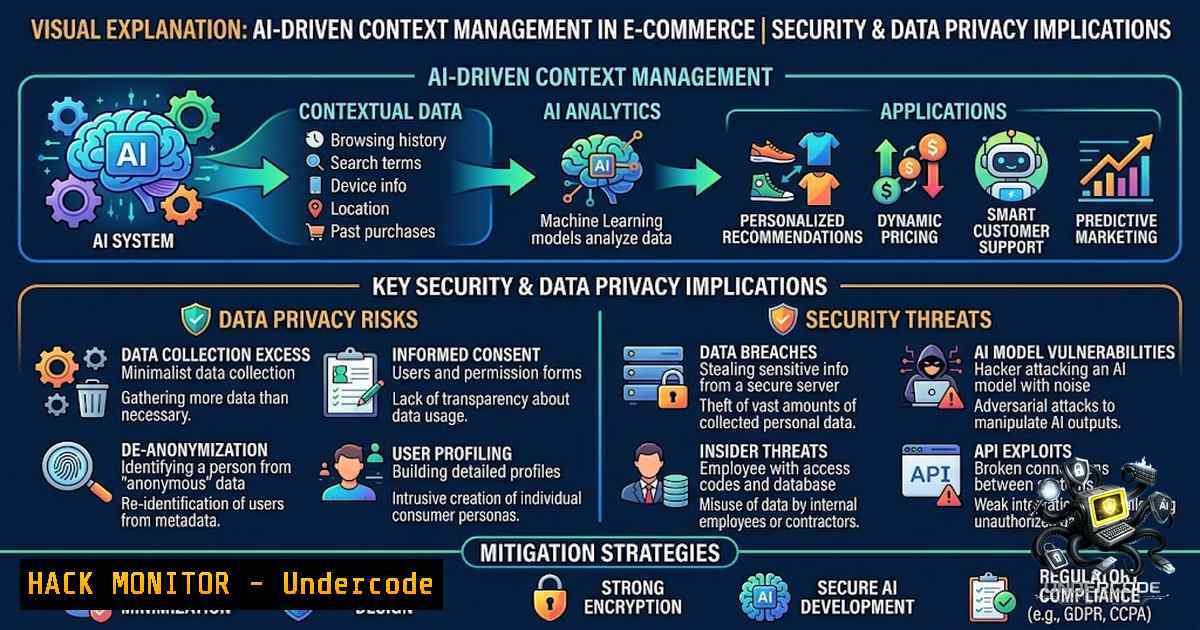
The rapid evolution of AI tools in e-commerce and health-tech is transforming how businesses manage customer data, yet it introduces significant security and privacy vulnerabilities. Cameron Smith’s transition from building a Shopify store with extensive biomarker content to leveraging AI for educational context management highlights a critical intersection: data handling in AI workflows. This article extracts technical principles from this pivot, focusing on securing AI-enhanced platforms against data breaches and ensuring compliance in sensitive health and e-commerce environments.
Learning Objectives:
- Understand the security risks associated with AI context management in e-commerce and health-tech.
- Implement secure API and cloud hardening techniques for Shopify and custom AI tools.
- Apply Linux/Windows commands to audit, monitor, and protect data pipelines.
You Should Know:
1. Securing Shopify Store Data and API Endpoints
E-commerce platforms like Shopify handle vast amounts of personal health data (e.g., biomarkers, test results). Securing this data starts with hardening API endpoints that connect your store to external AI tools or analytics. Below are steps to audit and secure your Shopify API interactions.
Step‑by‑step guide:
- Audit existing API permissions: Use Shopify Admin to review installed apps and their scopes. Remove unnecessary access.
- Implement rate limiting and IP whitelisting: On your server, configure firewall rules to allow only trusted IPs for backend API calls.
- Linux (iptables): `sudo iptables -A INPUT -p tcp –dport 443 -s
-j ACCEPT`
– Windows (PowerShell): `New-1etFirewallRule -DisplayName “Allow Shopify API” -Direction Inbound -LocalPort 443 -Protocol TCP -Action Allow -RemoteAddress`
– Encrypt sensitive data at rest: Use Shopify’s built-in encryption or implement application-level encryption for custom fields storing health data. - Monitor API logs: Regularly check logs for anomalous patterns. For Linux, use `grep` and `awk` to filter API access logs:
sudo grep "POST /api" /var/log/nginx/access.log | awk '{print $1, $7}' | sort | uniq -c.
2. Hardening AI Workflows and Context Management
Smith’s plan to use AI for personalized education involves feeding sensitive data into AI models. This necessitates robust context management to prevent data leakage. The key is to isolate, encrypt, and anonymize training and inference data.
Step‑by‑step guide:
- Data anonymization: Before sending data to AI APIs, remove or obfuscate personally identifiable information (PII). Use Python scripts with libraries like `pandas` and `faker` to replace real names and addresses.
- Secure API key storage: Never hardcode keys. Use environment variables or secrets managers.
- Linux: `export OPENAI_API_KEY=”your_key”` (temporary) or store in `~/.bashrc` with proper permissions (
chmod 600 ~/.bashrc). - Windows: `setx OPENAI_API_KEY “your_key” /M` (system-wide, use with caution).
- Implement TLS 1.3 for all data in transit: Ensure your AI tool endpoints and Shopify webhooks enforce TLS 1.3. Use `openssl` to verify:
openssl s_client -connect api.openai.com:443 -tls1_3. - Conduct regular security assessments: Use static analysis tools like `bandit` for Python code to find vulnerabilities in AI integration scripts.
- Configuring Firewalls and Intrusion Detection for E-commerce and AI Servers
A unified security posture requires network-level defenses. Whether running on AWS, Azure, or on-premises, configure firewalls and intrusion detection systems (IDS) to protect against common attacks like SQL injection and DDoS.
Step‑by‑step guide:
- Set up a Web Application Firewall (WAF): Use Cloudflare or AWS WAF with rules to block malicious requests. For custom rules, consider OWASP Core Rule Set.
- Deploy an IDS like Snort or Suricata:
- Linux installation: `sudo apt-get install suricata` (Ubuntu/Debian).
- Configure suricata to monitor network interfaces: edit `/etc/suricata/suricata.yaml` to set `af-packet` or `pcap` interface.
- Test with a sample rule:
alert http any any -> any any (msg:"Test SQL Injection"; content:"%27"; sid:1000001;). - Regular vulnerability scanning: Use `nmap` to scan open ports and services. For example:
nmap -sV -p- -T4 <your_server_ip>. - Patch management: Automate updates for your OS and applications. On Linux, use
sudo apt update && sudo apt upgrade -y; on Windows, usewuauclt /detectnow /updatenow.
4. Secure Cloud Infrastructure for Health-Tech and E-commerce
Bloody Good Tests and Eirly Health likely rely on cloud providers. Hardening your cloud setup involves identity management, network segmentation, and backup strategies.
Step‑by‑step guide:
- Implement least-privilege IAM policies: For AWS, create roles with minimal permissions. Use AWS CLI to list policies:
aws iam list-policies. - Enable MFA for all admin accounts: Enforce this via conditional access policies in Azure or IAM in AWS.
- Segment networks using VPCs/subnets: Isolate database servers from public-facing web servers. Use security groups to restrict traffic.
- Enable logging and monitoring: Turn on CloudTrail (AWS) or Azure Monitor. Use `aws s3 ls` and `azure storage blob list` to check for unauthorized data access.
- Regularly back up encrypted data: Use automated snapshots. For AWS RDS:
aws rds create-db-snapshot --db-instance-identifier <id> --db-snapshot-identifier <snapshot_id>.
5. API Security and Vulnerability Mitigation
APIs are the backbone of AI context management and e-commerce. Protecting them requires a multi-layered approach, including input validation, authentication, and rate limiting.
Step‑by‑step guide:
- Validate all inputs: Use JSON schema validation for incoming API requests. In Python: `from jsonschema import validate` and define a schema.
- Implement OAuth 2.0 or API keys with short-lived tokens: Rotate keys regularly. Use tools like `jwt` to manage tokens.
- Use API gateways (e.g., Kong, Tyk) to enforce policies: They can provide built-in rate limiting and caching.
- Test for OWASP Top 10 API vulnerabilities: Use tools like `Postman` or `Burp Suite` to perform penetration testing. For example, attempt to send oversized payloads to check for denial-of-service.
- Monitor API response times: Sudden spikes may indicate attacks. Set up alerts using `Prometheus` and
Grafana.
What Undercode Say:
- Key Takeaway 1: The shift from e-commerce to AI-driven education underscores the universal need for robust data context management; any system handling PII or health data must enforce strict encryption and access controls.
- Key Takeaway 2: Proactive security measures, such as WAF, IDS, and regular vulnerability scans, are non-1egotiable for platforms dealing with sensitive biomarkers and customer information, as they directly mitigate risks of data breaches and reputational damage.
Analysis: The integration of AI tools in sensitive domains like health and education demands a security-first mindset. As Smith’s experience shows, leveraging AI for personalization without proper context isolation can expose critical data. The technical steps outlined—from API hardening to cloud segmentation—form a baseline for any developer or CTO building on Shopify or custom AI stacks. The emphasis on automation (patching, monitoring) and least-privilege access is crucial, as manual oversight often fails at scale. Moreover, the trend of using AI for personalized education parallels many enterprise use cases where data privacy is paramount. Thus, adopting these practices not only protects users but also builds trust, a currency as valuable as the technology itself.
Prediction:
- +1 Positive: AI-driven context management will become a standard feature in e-commerce and health-tech, leading to more personalized customer experiences while driving innovation in privacy-preserving machine learning, such as federated learning and differential privacy.
- -1 Negative: Without stringent enforcement of security standards, the rapid adoption of AI in handling sensitive health data will likely trigger a surge in data breaches, prompting regulatory bodies to introduce stricter compliance requirements, potentially stifling innovation for smaller startups.
- +1 Positive: The demand for skilled cybersecurity professionals specializing in AI security and cloud hardening will increase significantly, creating new career opportunities and specialized training courses.
- -1 Negative: The complexity of securing AI workflows may lead many companies to outsource security, increasing dependency on third-party vendors and introducing new supply chain risks.
- +1 Positive: Open-source tools for AI context management and security auditing will evolve, democratizing access to robust security measures for small to medium-sized enterprises.
▶️ Related Video (88% Match):
🎯Let’s Practice For Free:
🎓 Live Courses & Certifications:
Join Undercode Academy for Verified Certifications
🚀 Request a Custom Project:
Secure, high-velocity infrastructure and disruptive technological engineering. Contact our engineering team for high-tier development and proprietary systems:
[email protected]
💎 Smart Architecture | 🛡️ Secure by Design | ⭐ Trusted by Thousands
IT/Security Reporter URL:
Reported By: https://lnkd.in/p/eEHVz25y – Hackers Feeds
Extra Hub: Undercode MoN
Basic Verification: Pass ✅


