
Listen to this Post
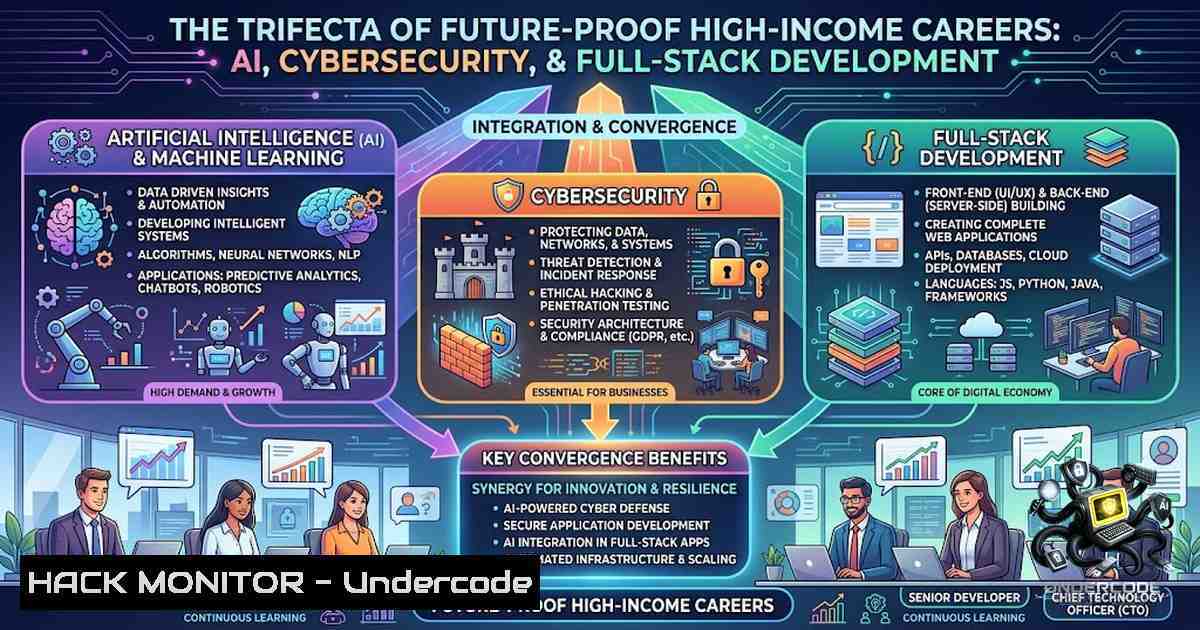
Introduction:
The digital landscape is undergoing a paradigm shift where traditional degrees alone no longer guarantee career longevity. As organizations rapidly migrate to cloud infrastructures and AI-driven operations, the demand for specialized technical expertise in cybersecurity, artificial intelligence, and full-stack development has skyrocketed. This article distills actionable insights from industry experts and provides a technical roadmap for building a resilient, high-income career in the evolving IT ecosystem.
Learning Objectives & Secrets:
- Objective 1: Master the core principles of AI and Data Science, including predictive modeling and neural network architectures, to harness the data-driven economy.
- Objective 2 Secret Tips: Go beyond basic security scanning by implementing advanced threat-hunting techniques using SIEM tools and endpoint detection and response (EDR) solutions to stay ahead of zero-day vulnerabilities.
- Objective 3 Secret Tips: For web development, transition from simple CRUD applications to scalable microservices using Docker and Kubernetes, ensuring high availability and seamless cloud integration.
You Should Know:
1. Demystifying Artificial Intelligence and Machine Learning Operations
AI is no longer a futuristic concept but a practical tool for automating decision-making processes. To excel, one must understand the lifecycle of machine learning models, from data ingestion to deployment. For instance, using Python’s `scikit-learn` and TensorFlow, you can build predictive models that analyze user behavior and optimize business outcomes. A critical aspect is MLOps, which streamlines the deployment and monitoring of models in production.
Step‑by‑Step Guide to Setting Up an AI Development Environment:
– Linux (Ubuntu): Install Python and essential libraries.
sudo apt update
sudo apt install python3 python3-pip python3-venv -y
python3 -m venv ai_env
source ai_env/bin/activate
pip install numpy pandas scikit-learn tensorflow jupyter
– Windows: Download Python from the official site and use PowerShell.
python -m venv ai_env
.\ai_env\Scripts\Activate
pip install numpy pandas scikit-learn tensorflow jupyter
– Configuration: Launch Jupyter Notebook (jupyter notebook) to begin data analysis and model prototyping. This setup ensures you can experiment with datasets and develop AI solutions locally before scaling to cloud platforms like AWS SageMaker or Azure Machine Learning.
- Building a Resilient Cybersecurity Posture with Hardening Techniques
Cybersecurity experts are the sentinels of the digital age. The proliferation of ransomware and phishing attacks necessitates a proactive approach to infrastructure hardening. This involves securing network perimeters, implementing robust access controls, and continuously monitoring for anomalies.
Step‑by‑Step Guide for System Hardening (Linux & Windows):
- Linux Hardening (CIS Benchmarks):
Disable root login over SSH
sudo sed -i 's/PermitRootLogin yes/PermitRootLogin no/' /etc/ssh/sshd_config
sudo systemctl restart sshd
Configure firewall (UFW)
sudo ufw default deny incoming
sudo ufw default allow outgoing
sudo ufw allow ssh
sudo ufw enable
- Windows Server Hardening (PowerShell):
Disable SMBv1
Disable-WindowsOptionalFeature -Online -FeatureName SMB1Protocol
Enable Windows Defender and real-time protection
Set-MpPreference -DisableRealtimeMonitoring $false
- API Security: For RESTful APIs, enforce strict authentication using JWT tokens and implement rate limiting to prevent brute-force attacks. Use tools like OWASP ZAP for automated security scanning during development phases.
- Full-Stack Web Development: From Frontend to Scalable Backend
The demand for Full-Stack Developers remains evergreen, primarily due to the need for end-to-end ownership of application lifecycles. A robust skill set includes proficiency in JavaScript frameworks (React, Angular) on the frontend and Node.js, Django, or Spring Boot on the backend, coupled with cloud deployment.
Step‑by‑Step Guide for Deploying a Scalable Web Application:
- Local Setup: Initialize a MERN stack application.
- Windows/Linux (Node.js & npm):
npx create-react-app client
cd client
npm start
- Backend API (Express.js):
mkdir server && cd server
npm init -y
npm install express mongoose dotenv cors
- Containerization with Docker: Create a `Dockerfile` to containerize your app for consistency across environments.
FROM node:16-alpine
WORKDIR /app
COPY . .
RUN npm install
CMD ["node", "server.js"]
EXPOSE 5000
- Deployment: Use `docker build -t myapp .` and
docker run -p 5000:5000 myapp. For production, push images to Amazon ECR or Google Container Registry and deploy using Kubernetes for auto-scaling.
- Digital Marketing, SEO, and Growth Hacking Technical Integration
While often overlooked by core IT professionals, understanding SEO and data-driven marketing is crucial for product success. This involves configuring web analytics, implementing structured data, and optimizing page speed to improve search engine rankings.
Step‑by‑Step Guide for SEO Optimization:
- Structured Data Implementation: Add JSON-LD schema to your HTML to help search engines understand content better (e.g., schema).
- Page Speed Analysis: Use Google’s PageSpeed Insights API.
curl -X GET "https://www.googleapis.com/pagespeedonline/v5/runPagespeed?url=yourwebsite.com&strategy=mobile"
- Server Configuration (Apache/Nginx): Enable Gzip compression and caching headers to reduce load times.
Nginx configuration for caching static assets
location ~ .(jpg|jpeg|png|gif|ico|css|js)$ {
expires 1y;
add_header Cache-Control "public, immutable";
}
5. Healthcare Technology and Medical Data Integration
The intersection of IT and healthcare presents unique challenges and opportunities, particularly regarding data privacy and interoperability. Skills in HL7/FHIR standards and HIPAA compliance are increasingly sought after.
Step‑by‑Step Guide for Securing Health Data APIs:
- Implement OAuth2 with OpenID Connect for secure authorization.
- Data Encryption: Ensure data at rest and in transit is encrypted using AES-256.
- Audit Logging: Maintain logs of all access to sensitive data.
Linux command for monitoring logins
sudo tail -f /var/log/auth.log
6. Soft Skills and Continuous Learning Strategies
Technical aptitude alone is insufficient. Strong English communication, problem-solving, and critical thinking abilities differentiate top-tier professionals. Commitment to continuous learning through platforms like Coursera, Udemy, and official vendor certifications (AWS, Cisco, Red Hat) ensures skill relevance.
What Undercode Say:
- Key Takeaway 1: The traditional degree is a foundation, but specialized certifications in AI, cybersecurity, and cloud architecture are the true catalysts for career advancement and high income.
- Key Takeaway 2: Automation and scripting (Python, Bash, PowerShell) are non-1egotiable core competencies that save time and reduce human error, allowing experts to focus on strategic initiatives.
- +1 Analysis: The ongoing digital transformation across all sectors ensures that IT skills will remain in high demand, with compensation packages growing proportionally to the perceived threat levels and data complexity. For instance, cybersecurity roles are projected to grow by 33% by 2030, outpacing many other fields.
- +1 Analysis: Remote work and freelance platforms have globalized the talent market, enabling skilled individuals in developing nations to command international rates without relocating, effectively democratizing economic opportunity.
Prediction:
- +1 The integration of generative AI into development workflows will boost developer productivity by over 40%, creating a surplus of capacity that allows for faster innovation cycles and more complex projects.
- -1 The rapid pace of AI evolution risks a widening skill gap; professionals who fail to adapt to AI-assisted coding and data analysis may find their roles increasingly automated, leading to potential job displacement in lower-tier IT support roles.
- +1 Cybersecurity spending is forecasted to exceed $300 billion by 2028, indicating that organizations are prioritizing risk management, which will inevitably lead to lucrative opportunities for certified security professionals.
- +1 The shift towards sustainable and green IT practices will open new career pathways in energy-efficient cloud computing and data center management, aligning technical work with global environmental goals.
- +1 With the increasing prevalence of IoT and smart devices, the need for specialized security protocols (like securing edge computing devices) will create niche markets with high salary potentials.
- -1 As cyber threats become more sophisticated with state-actor involvement, the pressure on security analysts will escalate, leading to high burnout rates unless automated defense mechanisms are heavily adopted.
▶️ Related Video (86% Match):
🎯Let’s Practice For Free:
🎓 Live Courses & Certifications:
Join Undercode Academy for Verified Certifications
🚀 Request a Custom Project:
Secure, high-velocity infrastructure and disruptive technological engineering. Contact our engineering team for high-tier development and proprietary systems:
[email protected]
💎 Smart Architecture | 🛡️ Secure by Design | ⭐ Trusted by Thousands
IT/Security Reporter URL:
Reported By: https://lnkd.in/p/eqt3JJbs – Hackers Feeds
Extra Hub: Undercode MoN
Basic Verification: Pass ✅


