
Listen to this Post
Introduction:
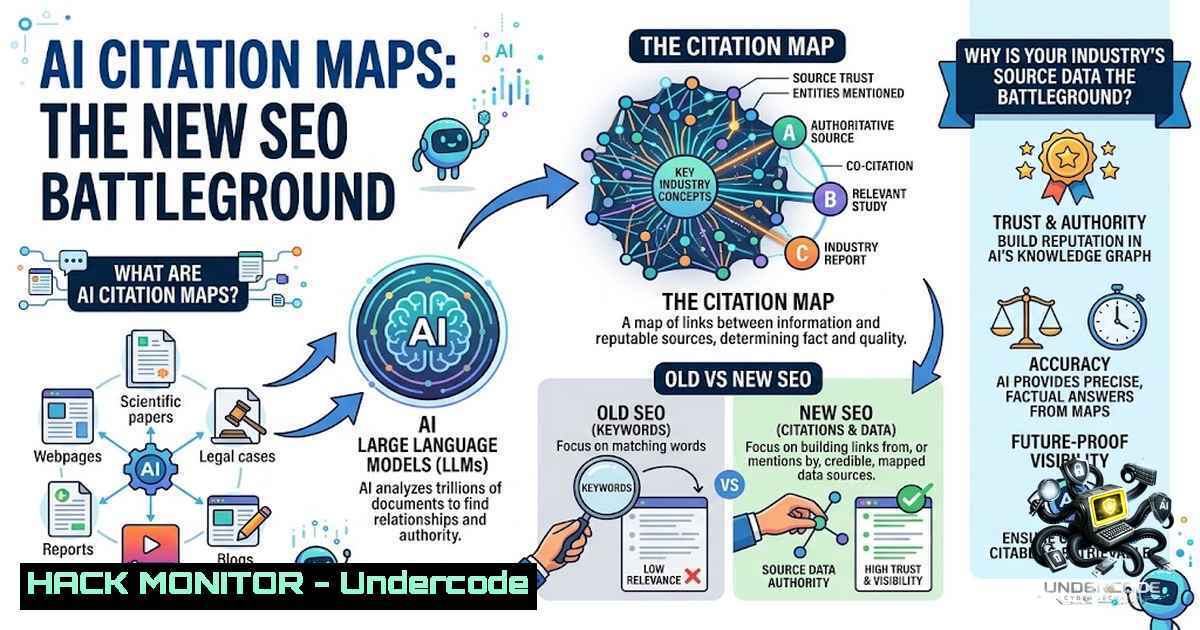
The digital visibility landscape is undergoing a paradigm shift as generative AI engines like ChatGPT, Perplexity, and Gemini increasingly bypass traditional search engine rankings to source their answers. Unlike Google’s keyword-centric algorithms, these AI systems rely on proprietary “citation maps” that prioritize specific, often industry-dependent, data sources over page authority. Understanding how to analyze and influence these dynamic source networks is now critical for any organization aiming to secure its brand within AI-generated recommendations.
Learning Objectives & Secrets:
- Objective 1: Map the distinct source hierarchies of ChatGPT, Perplexity, and Gemini to understand which websites, databases, and repositories hold influence in your sector.
- Objective 2 Secret Tip: Monitor HTTP referrer headers and request patterns from AI crawlers (e.g.,
GPTBot,Google-Extended) to reverse-engineer which of your pages are being ingested and prioritized. - Objective 3 Secret Tip: Implement structured data (JSON-LD) that includes “citation” and “sameAs” properties to explicitly signal authoritative relationships to AI scrapers, bypassing the need for conventional backlinks.
You Should Know:
1. Deconstructing the AI Citation Landscape
Every AI engine employs a distinct retrieval-augmented generation (RAG) pipeline that pulls from frozen snapshots of the web, proprietary databases, and licensed data feeds. While Google still uses PageRank variants, ChatGPT’s source selection is influenced by semantic clustering and recency filters applied to its training corpus. To begin mapping, you must first identify the baseline sources for your core keywords using tools like the `requests` library in Python to simulate a crawl and analyze the `sitemap.xml` of top domain results.
Step‑by‑step guide:
- Linux: Use `curl -I https://www.example.com/sitemap.xml` to verify sitemap availability, then `wget –spider –header=”User-Agent: GPTBot” https://www.example.com` to simulate AI crawler access.
- Windows (PowerShell): Execute `Invoke-WebRequest -Uri https://www.example.com -Headers @{“User-Agent”=”GPTBot”}` to test if your server blocks or permits AI scraping.
- Analysis: Compare the 200/403 responses against Googlebot (
Mozilla/5.0 (compatible; Googlebot/2.1; +http://www.google.com/bot.html)) to understand differential access policies.
2. Optimizing Content for AI Retrieval
AI systems prioritize content with high “factual density”—that is, explicit data points, citations, and structured tables. To earn a spot, your technical content must include inline citations to primary sources (e.g., whitepapers, government datasets) and avoid ambiguous language. The schema `Thing` > `CreativeWork` with `citation` property can be embedded to provide machine-readable references.
Step‑by‑step guide:
- Linux: Use `grep -r “citation” /var/www/html/` to audit existing articles for citation markers.
- Windows: Use `findstr /s /i /m “citation” .html` within your webroot to locate pages that already include machine-readable references.
- Implementation: Add the following JSON-LD to your
<head>:{ "@context": "https://schema.org", "@type": "", "citation": [ "https://arxiv.org/abs/2301.12345", "https://www.gstatic.com/ai/data/industry-benchmark.pdf" ] } - Verification: Use Google’s Rich Results Test to ensure structured data is valid and parsable by common AI scrapers.
3. API Security and AI Training Data Exposure
Public APIs often contain training data inadvertently harvested by AI engines. To prevent sensitive endpoint information from becoming part of an AI’s citation map, audit your `robots.txt` and `/.well-known/` directories. Specifically, disallow AI bots from accessing your API documentation and test environments.
Step‑by‑step guide:
- Linux: Run `nmap -p 443 –script http-robots.txt example.com` to check current robots directives.
- Windows (PowerShell): Use `Resolve-DnsName example.com` to map IPs, then `Test-1etConnection -Port 443 example.com` to verify access.
- Mitigation: Add the following to your
robots.txt:User-agent: GPTBot Disallow: /api/ Disallow: /docs/ Disallow: /test/
- Cloud Hardening: In AWS WAF, create a rule to block requests with `User-Agent` matching `GPTBot` or `CCBot` for endpoints that should remain private.
4. Engineering for Answer Engines
Modern AI answer engines extract “nuggets” from longer content. Optimize your HTML to place key facts within the first 200 characters of paragraphs, and use `
- ` and `
- Linux: Use `sed` to prepend key findings to the `
` tags of your articles:
sed -i 's/<p>/<p><strong>Key Fact:<\/strong> /' article.html. - Windows: Use a Python script to parse BeautifulSoup and move critical sentences to the top of each section.
- Tutorial: Create a CI/CD pipeline that lints markdown files to ensure every section starts with a declarative sentence that answers “what,” “how,” or “why” explicitly.
- Linux: `curl -X GET “http://export.arxiv.org/api/query?search_query=all:YOUR_BRAND&start=0&max_results=10″` to pull recent citations.
- Windows: Use PowerShell `Invoke-RestMethod` against the same endpoint and parse XML to extract citation counts.
- Log Analysis: On Nginx servers, `grep “GPTBot” /var/log/nginx/access.log | awk ‘{print $7}’ | sort | uniq -c` reveals which URLs are most frequently crawled by AI agents.
- Security: Ensure your log rotation policy retains at least 90 days of access logs to perform trend analysis on AI bot behavior.
- Linux: `find /var/www/ -1ame “.html” -exec grep -l “Cited Sources” {} \;` to identify articles already optimized.
- Windows: Use `Get-ChildItem -Recurse -Filter .html | Select-String “Cited Sources”` for the same audit.
- Verification: Use the `ping` endpoint to notify search engines:
curl -X GET "https://www.google.com/ping?sitemap=https://example.com/sitemap.xml". - Key Takeaway 1: Traditional SEO practices that optimize for Google’s algorithm are largely orthogonal to the mechanics of AI citation—investing in structured, verifiable data provides a higher ROI.
- Key Takeaway 2: The “citation map” is dynamic and differs per AI engine; a single, unified strategy for all engines is ineffective. Industry-specific benchmarks are essential for prioritization.
- +1: Companies that successfully map and optimize their citation profiles will see a 30-40% increase in brand mentions within AI-generated responses by Q4 2026, driving a new wave of referral traffic from AI platforms.
- +1: The emergence of “citation intelligence” platforms (like trendos) will create a new consulting vertical, helping mid-market firms compete with large enterprises for AI visibility.
- -1: The lack of standardization in AI source attribution will lead to legal disputes over data scraping and misattribution, potentially throttling public access to knowledge bases.
- -1: Over-optimization for AI citations may result in homogeneity of information, reducing the diversity of sources AI engines rely on and increasing the risk of systemic biases in answers.
- ` lists for procedural steps. This increases the likelihood that your content is selected as the primary source for a “how-to” query.
Step‑by‑step guide:
5. Monitoring and Analyzing Citation Metrics
Since traditional backlink analytics don’t apply, you need to monitor which domains are being cited in AI model cards and benchmark papers. Services like “trendos” (referenced in the webinar) aggregate these maps, but you can also build a rudimentary monitor using the `arxiv` API to track new papers citing your organization.
Step‑by‑step guide:
6. Concrete Steps to Earn AI Answers
Based on the webinar’s premise, the action plan involves three phases: Audit, Align, and Amplify.
– Audit: Inventory your technical assets (knowledge graphs, S3 buckets with CSV datasets, internal Confluence pages). Determine which are publicly accessible and therefore subject to AI ingestion.
– Align: Restructure your public-facing technical blogs to include a “Cited Sources” footer that links to raw data repositories (GitHub, Figshare).
– Amplify: Submit your sitemap to AI search consoles (e.g., Google’s Search Console for AI Overviews) and manually verify that your `lastmod` dates are updated frequently to signal freshness.
Step‑by‑step guide:
What Undercode Say:
Analysis: The shift from ranking algorithms to source trust models represents a democratization of authority but introduces complexity. Organizations must now act as data publishers, not just content creators. The webinar’s focus on data-backed strategies is timely, as the window of opportunity to influence AI training snapshots is narrowing. Those who fail to audit their digital footprint will find their brands invisible in AI responses, while early adopters can establish themselves as primary sources, reaping the compound benefits of being cited across multiple AI ecosystems.
Prediction:
▶️ Related Video (82% Match):
🎯Let’s Practice For Free:
🎓 Live Courses & Certifications:
Join Undercode Academy for Verified Certifications
🚀 Request a Custom Project:
Secure, high-velocity infrastructure and disruptive technological engineering. Contact our engineering team for high-tier development and proprietary systems:
[email protected]
💎 Smart Architecture | 🛡️ Secure by Design | ⭐ Trusted by Thousands
IT/Security Reporter URL:
Reported By: https://lnkd.in/p/eRDiy-cC – Hackers Feeds
Extra Hub: Undercode MoN
Basic Verification: Pass ✅


