Listen to this Post
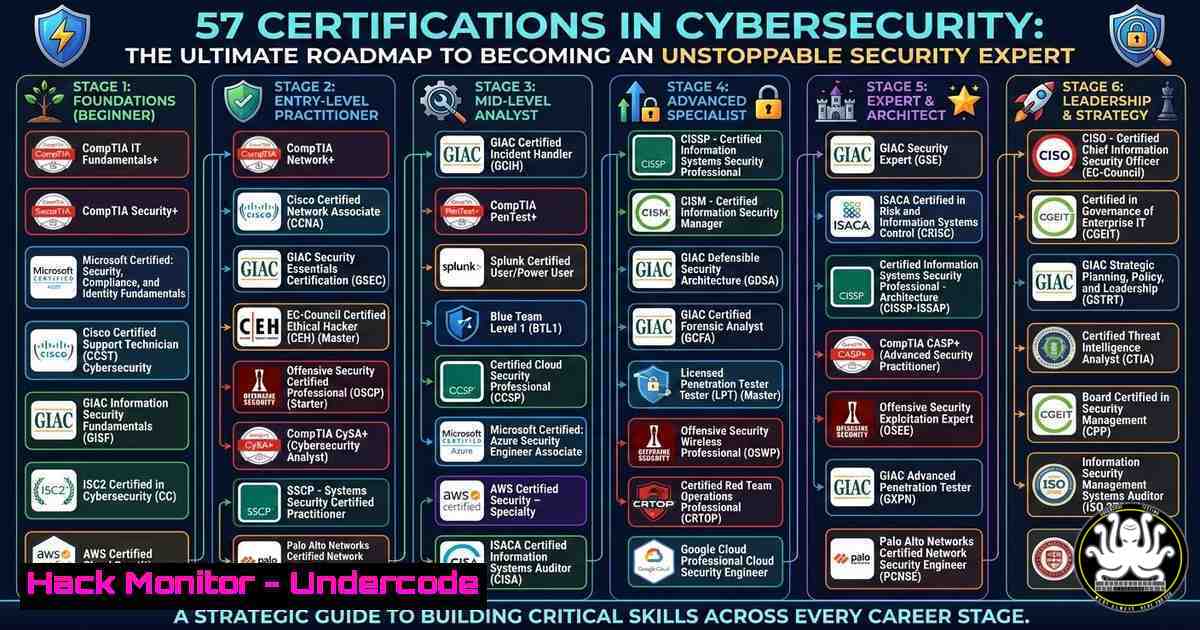
Introduction:
In an era where cyber threats evolve at breakneck speed, the profile of Tony Moukbel—a multi-talented innovator with 13 innovations, 4 patents, and a staggering 57 certifications in cybersecurity, forensics, programming, and electronics—stands as a testament to the power of continuous learning. This article dissects the core domains that underpin such expertise, offering a structured guide to mastering the technical skills required to defend modern digital infrastructures. From Linux command-line wizardry to AI-driven threat detection, we provide actionable steps and verified commands that mirror the hands-on knowledge needed to earn those 57 credentials.
Learning Objectives:
- Understand the key technical domains covered by top cybersecurity certifications.
- Execute essential Linux and Windows security commands for system hardening and monitoring.
- Apply AI tools and scripts for anomaly detection and threat intelligence.
- Perform basic digital forensics and penetration testing using industry-standard tools.
- Implement cloud security best practices with practical CLI commands.
- Develop a structured study plan to pursue multiple certifications efficiently.
You Should Know:
1. Linux Security Fundamentals: Command-Line Hardening and Monitoring
Linux remains the backbone of most servers and security tools. To build a fortress, start with these essential commands and configurations.
Step‑by‑step guide:
- Update and patch: `sudo apt update && sudo apt upgrade -y` (Debian/Ubuntu) or `sudo yum update -y` (RHEL/CentOS). Regular patching closes known vulnerabilities.
- User and group audits: List all users with `cat /etc/passwd` and identify privileged accounts:
grep ':x:0:' /etc/passwd. Disable unnecessary root logins by editing `/etc/ssh/sshd_config` and settingPermitRootLogin no. - Firewall configuration with iptables: Block all incoming traffic except SSH:
sudo iptables -P INPUT DROP
sudo iptables -P FORWARD DROP
sudo iptables -P OUTPUT ACCEPT
sudo iptables -A INPUT -i lo -j ACCEPT
sudo iptables -A INPUT -m state --state ESTABLISHED,RELATED -j ACCEPT
sudo iptables -A INPUT -p tcp --dport 22 -j ACCEPT
sudo iptables-save > /etc/iptables/rules.v4
- Monitor open ports and connections: `sudo netstat -tulpn` or `ss -tulpn` to spot unauthorized services. Use `nmap localhost` to verify.
- Intrusion detection with AIDE: Install
sudo apt install aide, initialize databasesudo aideinit, and regularly check withsudo aide --check.
2. Windows Hardening: PowerShell Scripts for Security Audits
Windows environments are prime targets. Mastering PowerShell can automate security checks and enforce policies.
Step‑by‑step guide:
- Audit local users and groups: Run PowerShell as Admin:
Get-LocalUser | Where-Object {$_.Enabled -eq $true} Get-LocalGroupMember -Group "Administrators" - Check for missing security updates:
Get-HotFix | Sort-Object InstalledOn -Descending | Select-Object -First 10
- Enable Windows Defender real-time protection:
Set-MpPreference -DisableRealtimeMonitoring $false
- Configure advanced audit policies:
auditpol /set /subcategory:"Logon" /success:enable /failure:enable
- Use Sysmon for deep logging: Download Sysmon from Sysinternals and install with a config file:
Sysmon64 -accepteula -i sysmon-config.xml
Then analyze logs via Event Viewer or PowerShell.
- AI in Cybersecurity: Building an Anomaly Detection Script
Artificial intelligence now powers next-gen security. Here’s a simple Python script using Scikit-learn to detect outliers in network traffic data.
Step‑by‑step guide:
- Install required libraries:
pip install pandas numpy scikit-learn matplotlib
- Sample script to detect anomalies using Isolation Forest:
import pandas as pd
from sklearn.ensemble import IsolationForest
import numpy as np

Simulated traffic data: [packets_per_sec, bytes_per_sec, connections]
data = np.array([[100, 2000, 5], [150, 2500, 6], [90, 1800, 4],
[5000, 100000, 300], [120, 2100, 5], [80, 1600, 3]])
df = pd.DataFrame(data, columns=['packets', 'bytes', 'connections'])</p></li>
</ul>

<p>model = IsolationForest(contamination=0.2, random_state=42)
df['anomaly'] = model.fit_predict(df[['packets', 'bytes', 'connections']])
anomalies = df[df['anomaly'] == -1]
print("Potential anomalies:\n", anomalies)
– Extend to real-time: Integrate with tools like Zeek (Bro) logs and feed data into a streaming pipeline using Kafka and Spark.
4. Digital Forensics: Imaging and Analyzing a Drive
Forensics certifications often require hands-on evidence acquisition. Use `dd` and `autopsy` for a basic workflow.
Step‑by‑step guide:
- Create a forensic image (Linux):
sudo dd if=/dev/sdb of=/evidence/case1.dd bs=4M conv=noerror,sync status=progress
- Verify integrity with hashes:
sudo sha256sum /dev/sdb > original.hash
sha256sum /evidence/case1.dd > image.hash
diff original.hash image.hash
- Analyze with Autopsy: Install via `sudo apt install autopsy` and launch
sudo autopsy. Create a new case, add the image, and run file analysis, keyword searches, and timeline generation. - Recover deleted files: Use `testdisk` or
photorec:sudo photorec /evidence/case1.dd
- Penetration Testing: Exploiting a Vulnerable Service with Metasploit
Understanding exploitation helps in defense. We’ll simulate an attack on a deliberately vulnerable VM (like Metasploitable).
Step‑by‑step guide:
- Scan target: `nmap -sV 192.168.1.100` to identify open ports (e.g., port 21 vsftpd).
- Launch Metasploit:
msfconsole
- Search for exploit: `search vsftpd` → use
exploit/unix/ftp/vsftpd_234_backdoor. - Set options:
set RHOSTS 192.168.1.100
set payload cmd/unix/interact
exploit
- Post-exploitation: Once shell is gained, run
sysinfo,whoami, and attempt privilege escalation with `suggester` or manual enumeration.
- Cloud Security Hardening: AWS CLI Commands for Least Privilege
Cloud misconfigurations are a top cause of breaches. Use AWS CLI to enforce security.
Step‑by‑step guide:
- Install and configure AWS CLI: `aws configure` (provide Access Key, Secret Key, region).
- List S3 buckets and check public access:
aws s3 ls
aws s3api get-bucket-acl --bucket my-bucket
aws s3api get-public-access-block --bucket my-bucket
- Enable S3 block public access:
aws s3api put-public-access-block --bucket my-bucket --public-access-block-configuration BlockPublicAcls=true,IgnorePublicAcls=true,BlockPublicPolicy=true,RestrictPublicBuckets=true
- Audit IAM users with excessive permissions:
aws iam list-users
aws iam list-attached-user-policies --user-name john
aws iam simulate-principal-policy --policy-source-arn arn:aws:iam::123456789012:user/john --action-names "s3:" "ec2:"
- Use AWS Config rules to automatically check compliance.
- Certification Roadmap: From Zero to 57 – A Structured Approach
Tony Moukbel’s 57 certifications span multiple domains. Here’s a stepwise plan to emulate his journey.
Step‑by‑step guide:
- Foundation: Start with CompTIA Security+ and Network+ to build core knowledge.
- Specialize: Choose tracks: (a) Offensive Security (OSCP, GPEN), (b) Defensive (CISSP, CISM), (c) Forensics (GCFE, CHFI), (d) Cloud (CCSP, AWS Security), (e) AI/ML (Certified AI Security Professional).
- Hands-on labs: Use platforms like HackTheBox, TryHackMe, and BlueTeamLabs Online.
- Study materials: Mix books (e.g., “The Web Application Hacker’s Handbook”), video courses (CBT Nuggets, Pluralsight), and practice exams.
- Time management: Dedicate 2-3 hours daily; aim for one certification every 2-3 months.
What Undercode Say:
- Key Takeaway 1: Diversified technical mastery across Linux, Windows, AI, forensics, and cloud is essential for modern cybersecurity leaders. The commands and tools demonstrated here are the building blocks of that expertise.
- Key Takeaway 2: Certifications alone are not enough; they must be backed by hands-on practice. The step-by-step guides above simulate real-world scenarios that turn theory into muscle memory.
- Analysis: Tony Moukbel’s 57 certifications reflect a relentless pursuit of knowledge, but the true value lies in the ability to integrate disparate skills—like using AI to analyze forensic data or cloud hardening to prevent breaches. As cyber threats become more sophisticated, professionals must adopt a multidisciplinary approach. The commands and techniques provided serve as a microcosm of that broader skill set. Moreover, the “UNDERCODE TESTING” reference hints at the need for continuous validation of security controls through rigorous testing—whether it’s penetration testing, code review, or configuration audits. In an industry where one misstep can lead to a catastrophic breach, the combination of broad certification and deep technical proficiency is the ultimate defense.
Prediction:
The future of cybersecurity will see a convergence of AI-driven automation and human expertise. As AI tools become more adept at detecting anomalies and responding to incidents, the role of the security professional will shift from routine monitoring to strategic threat hunting and architecture design. Professionals like Tony Moukbel, who hold deep knowledge across multiple domains, will be invaluable in designing resilient systems that leverage AI while understanding its limitations. Additionally, the rise of quantum computing will demand new cryptographic certifications and skills. The next decade will belong to those who can adapt, continuously learn, and apply cross-disciplinary knowledge to protect an increasingly interconnected world.
▶️ Related Video (82% Match):
🎯Let’s Practice For Free:
IT/Security Reporter URL:
Reported By: Prof Jose – Hackers Feeds
Extra Hub: Undercode MoN
Basic Verification: Pass ✅🔐JOIN OUR CYBER WORLD [ CVE News • HackMonitor • UndercodeNews ]
📢 Follow UndercodeTesting & Stay Tuned:
- Create a forensic image (Linux):


