Listen to this Post
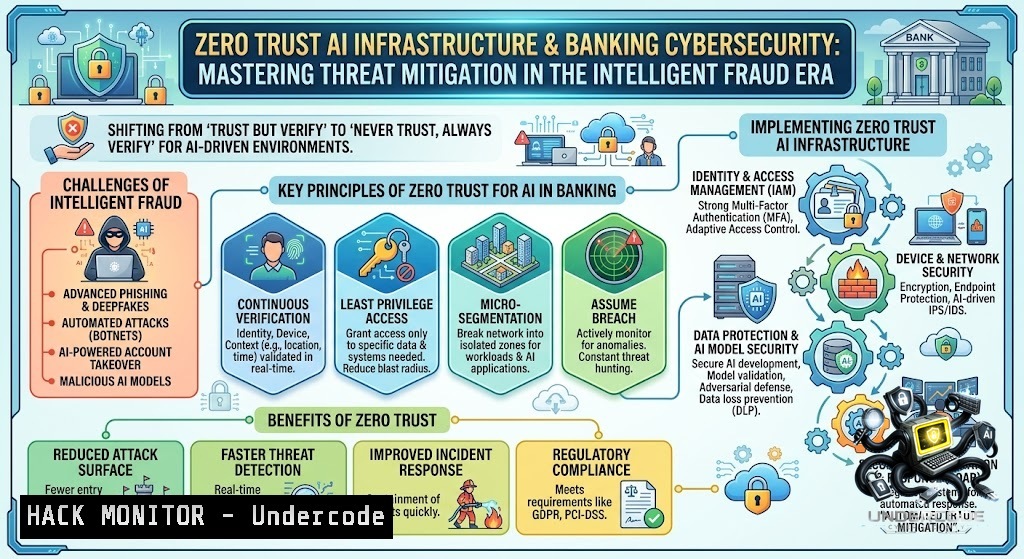
Introduction:
The convergence of Artificial Intelligence (AI) and cybersecurity is reshaping the financial sector, yet banking operations remain highly vulnerable to sophisticated fraud, operational risk, and supply chain threats. As a banking professional with 25 years of experience across trade finance, credit, compliance, and fraud prevention, the need for robust, AI-driven defense mechanisms has never been more critical. This article bridges the gap between legacy banking operations and modern cybersecurity frameworks, providing actionable training pathways and technical commands to fortify institutional resilience against emerging cyber threats.
Learning Objectives:
- Understand how AI and machine learning models detect and mitigate cyber fraud in real-time banking environments.
- Master Linux and Windows hardening commands to secure critical financial infrastructure.
- Implement API security best practices and OWASP Top 10 controls to protect digital banking interfaces.
- Develop operational risk management strategies aligned with Basel III and DORA frameworks.
- Execute vulnerability assessment and penetration testing (VAPT) using industry-standard tools.
1. AI-Powered Threat Detection in Banking Operations
AI is no longer a futuristic concept—it is actively supercharging cyber defense in financial institutions. Recent reports indicate that 49% of organizations now use AI for threat and anomaly detection, while 47% leverage it for threat intelligence analysis and 42% for phishing and fraud detection. For banking professionals, this means shifting from reactive incident response to proactive, continuous risk reduction.
Step-by-Step Guide to Implementing AI Threat Detection:
- Data Aggregation: Collect security signals from across your network, including transaction logs, access records, and API calls. Microsoft’s security teams process approximately 100 trillion signals daily to identify patterns.
- Model Selection: Deploy AI models like Microsoft’s MAI-Cyber-1-Flash, specifically trained to identify and fix security weaknesses. Alternatively, use open-source frameworks such as TensorFlow or PyTorch for custom anomaly detection.
- Continuous Training: Feed the model with historical fraud data and threat intelligence feeds to improve detection accuracy.
- Automated Response: Configure autonomous agents to trigger alerts, block malicious IPs, or isolate compromised systems without human intervention.
2. Linux System Hardening for Financial Servers
Securing Linux-based servers is paramount for banking infrastructure. Below are verified commands to harden your systems against common exploits.
Step-by-Step Hardening Guide:
- File Permissions: Restrict access to critical files using `chmod` and
chown.chmod 600 /etc/shadow chown root:root /etc/passwd
-
User Management: Remove unnecessary users and disable root login via SSH.
userdel -r unused_account
sed -i 's/PermitRootLogin yes/PermitRootLogin no/' /etc/ssh/sshd_config
-
Firewall Configuration: Use `iptables` or `ufw` to limit inbound traffic.
ufw default deny incoming
ufw allow from 192.168.1.0/24 to any port 22
ufw enable
-
Intrusion Detection: Install and schedule AIDE (Advanced Intrusion Detection Environment) for daily file integrity checks.
/usr/bin/aide --check | /usr/bin/logger -t aide
echo "0 2    root /usr/local/bin/aide-check.sh" >> /etc/crontab
-
Log Monitoring: Deploy Fail2Ban to block brute-force attempts.
apt-get install fail2ban
systemctl enable fail2ban
systemctl start fail2ban
3. Windows Security Auditing and Configuration
Windows environments in banking require rigorous auditing to meet compliance standards such as PCI-DSS and GDPR.
Step-by-Step Windows Hardening Guide:
- Local Security Policy: Enforce password complexity and account lockout policies.
net accounts /minpwlen:12 /maxpwage:30 /lockoutthreshold:5
-
Audit Policy: Enable detailed logging for failed logon attempts and privilege use.
auditpol /set /category:"Logon/Logoff" /subcategory:"Audit Logon" /success:enable /failure:enable
-
Windows Defender: Enable real-time protection and cloud-delivered protection.
Set-MpPreference -DisableRealtimeMonitoring $false
Set-MpPreference -CloudBlockLevel High
-
PowerShell Execution Policy: Restrict script execution to prevent malicious code.
Set-ExecutionPolicy Restricted -Scope LocalMachine
-
Application Control: Use Windows Defender Application Control (WDAC) to whitelist approved applications only.
4. API Security: Protecting Digital Banking Interfaces
With over 90% of web applications exposing attack surfaces via APIs, securing these endpoints is non-1egotiable. NIST’s SP 800-228A provides guidelines for secure RESTful API deployment.
Step-by-Step API Security Implementation:
- Design Phase: Adopt a “Security by Design” approach. Map all API endpoints and data flows.
- Authentication: Implement OAuth 2.0 or OpenID Connect with strong client credentials.
- Authorization: Enforce granular access controls to prevent Broken Object Level Authorization (BOLA).
- Input Validation: Never trust user input. Validate and sanitize all payloads to block SQL injection and XSS attacks.
- Traffic Encryption: Enforce TLS 1.3 for all API communications.
- Rate Limiting and Throttling: Prevent DDoS and brute-force attacks by limiting request rates.
- Continuous Monitoring: Deploy API discovery tools and real-time blocking of anomalous traffic.
5. Operational Risk Management and Regulatory Compliance
Operational risk in banking is evolving with digital transformation. Courses aligned with Basel III and MAS regulations now combine regulatory interpretation with hands-on risk assessments, fraud detection exercises, and cyber risk analysis. The Digital Operational Resilience Act (DORA) mandates mandatory hands-on operational resilience training for all staff and ICT third-party providers.
Step-by-Step ORM Framework:
- Risk Identification: Map all business processes and identify potential failure points, including third-party vendors.
- Risk Assessment: Quantify risks using scenarios such as system outages, data breaches, and insider threats.
- Control Implementation: Deploy technical controls (firewalls, encryption) and administrative controls (policies, training).
- Continuous Monitoring: Use dashboards and KPIs to track risk indicators in real-time.
- Incident Response: Develop and regularly test incident response playbooks for cyber events.
- Reporting: Disseminate actionable risk data to stakeholders for informed decision-making.
6. Vulnerability Assessment and Penetration Testing (VAPT)
VAPT is a cornerstone of proactive defense. Hands-on practice using Metasploit and exploiting vulnerabilities from the OWASP Top 10 provides real-world skills.
Step-by-Step VAPT Execution:
- Reconnaissance: Gather information about target systems using tools like `Nmap` and
Recon-1g.
2. Scanning: Identify open ports and services.
nmap -sV -p- 192.168.1.100
3. Vulnerability Identification: Use `Nessus` or `OpenVAS` to scan for known CVEs.
4. Exploitation: In a controlled environment, use Metasploit to test vulnerabilities.
msfconsole
use exploit/windows/smb/ms17_010_eternalblue
set RHOSTS 192.168.1.100
exploit
5. Post-Exploitation: Document access levels and data exposure.
- Remediation: Apply patches, configuration changes, or code fixes.
- Reporting: Craft professional security reports with findings and remediation steps.
7. Combating Trade Finance Fraud and Cyber Threats
Trade finance remains heavily reliant on paper-based processes and fragmented systems, making it a prime target for fraud. Financial crime in this sector costs the industry $1.6 trillion annually. Emerging risks include AI-enabled social engineering, trade document fraud, and mule networks.
Step-by-Step Fraud Mitigation:
- Digitization: Transition to digital documentation and blockchain-based verification systems.
- Duplicate Financing Detection: Deploy platforms like MonetaGo’s Secure Financing system to detect falsified documents.
- AI-Enabled Monitoring: Use behavioral analytics to flag unusual transaction patterns.
- Employee Training: Conduct regular cybersecurity and fraud awareness training for all staff.
- Regulatory Compliance: Align with BAFT’s best practices for fraud prevention, detection, and response.
What Undercode Say:
- Key Takeaway 1: AI is a double-edged sword—it enhances threat detection but also empowers sophisticated social engineering attacks. Financial institutions must adopt AI defensively while preparing for AI-driven offensive tactics.
- Key Takeaway 2: Operational resilience is not optional. Regulatory frameworks like DORA and Basel III mandate continuous training and hands-on risk exercises. Organizations that invest in cybersecurity upskilling will outperform those that remain reactive.
Analysis: The banking professional’s plea highlights a critical industry gap: despite decades of experience, the rapid evolution of cyber threats demands constant upskilling. Traditional operational roles must now incorporate cybersecurity, AI literacy, and compliance expertise. The convergence of trade finance, credit risk, and fraud prevention into a single digital risk domain means that professionals must master both legacy processes and emerging technologies. Training courses in AI security, cloud hardening, and API protection are no longer optional—they are essential for career survival and institutional resilience. The future belongs to those who can bridge the gap between banking operations and cybersecurity engineering.
Prediction:
- +1 The adoption of AI-powered threat detection will reduce fraud-related losses in banking by 30-40% by 2028, as models become more accurate and autonomous.
- +1 Regulatory mandates like DORA will drive a $50 billion global market for cybersecurity training and operational resilience solutions by 2027.
- -1 The rise of AI-enabled social engineering will increase successful phishing attacks in trade finance by 25% over the next two years, exploiting human vulnerabilities.
- -1 Financial institutions that fail to implement API security controls will experience a 40% higher rate of data breaches, as APIs remain the primary attack vector.
- +1 Hands-on VAPT training and certification programs will become mandatory for all banking IT and risk personnel, creating a new standard of competency.
▶️ Related Video (80% Match):
🎯Let’s Practice For Free:
🎓 Live Courses & Certifications:
Join Undercode Academy for Verified Certifications
🚀 Request a Custom Project:
Secure, high-velocity infrastructure and disruptive technological engineering. Contact our engineering team for high-tier development and proprietary systems:
[email protected]
💎 Smart Architecture | 🛡️ Secure by Design | ⭐ Trusted by Thousands
IT/Security Reporter URL:
Reported By: Debnath D – Hackers Feeds
Extra Hub: Undercode MoN
Basic Verification: Pass ✅


