
Listen to this Post
Introduction:
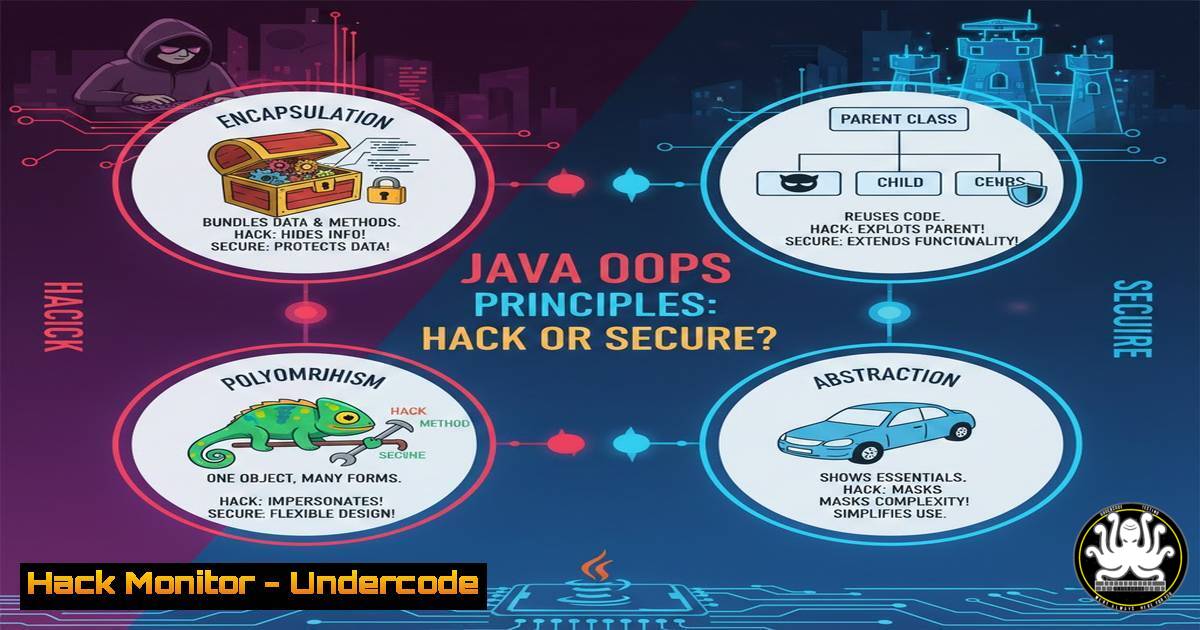
Java remains a cornerstone of enterprise software, powering everything from web applications to critical infrastructure. Understanding Java basics and Object-Oriented Programming (OOPS) principles is not just for developers—it’s essential for cybersecurity professionals to secure code, mitigate vulnerabilities, and even exploit weaknesses in systems. This article explores how concepts like encapsulation, inheritance, and polymorphism translate into real-world security practices, from secure coding to threat modeling.
Learning Objectives:
- Master Java fundamentals for implementing secure coding practices in development cycles.
- Apply OOPS principles to design resilient security architectures and prevent common exploits.
- Utilize non-access modifiers like static to harden applications against attacks such as injection or data leakage.
You Should Know:
- Java Basics: Setting Up a Secure Development Environment
A secure foundation starts with a properly configured environment. For Linux, use package managers to install Java Development Kit (JDK) and security tools. On Windows, ensure PowerShell scripts are signed to avoid malicious execution.
Step-by-Step Guide:
- On Linux, open a terminal and run:
`sudo apt update && sudo apt install openjdk-11-jdk` (for Debian-based systems)
`sudo yum install java-11-openjdk-devel` (for RPM-based systems)
- Verify installation with `java -version` and
javac -version. - Install a security linter like SpotBugs:
`wget https://repo1.maven.org/maven2/com/github/spotbugs/spotbugs/4.7.3/spotbugs-4.7.3.tgz && tar -xzf spotbugs-4.7.3.tgz` - On Windows, use Chocolatey for secure package management:
`choco install jdk11` in an elevated PowerShell.
- Configure environment variables securely: avoid hardcoding secrets in scripts; use encrypted vaults like HashiCorp Vault or AWS Secrets Manager.
- Integrate with IDEs (e.g., IntelliJ IDEA or Eclipse) and enable security plugins like SonarLint for real-time vulnerability detection.
2. Encapsulation: Data Hiding for Cybersecurity
Encapsulation bundles data with methods, restricting direct access—a key defense against data breaches. In cybersecurity, this principle is used to protect sensitive information like passwords or API keys.
Step-by-Step Guide:
- Create a Java class with private variables and public getter/setter methods:
public class SecureUser {
private String passwordHash;
private String apiKey;</li>
</ul>

public String getPasswordHash() {
// Add logging for access attempts
return passwordHash;
}
public void setPasswordHash(String input) {
// Hash input using BCrypt before storage
this.passwordHash = BCrypt.hashpw(input, BCrypt.gensalt());
}
}
– Use access modifiers to enforce least privilege: mark sensitive fields as `private` and expose only via controlled interfaces.
– In cloud environments, apply encapsulation at the infrastructure level using AWS IAM roles or Azure Managed Identities to limit resource access.
– Test for encapsulation leaks with static analysis tools: run `spotbugs -textui SecureUser.class` to detect exposed fields.- Abstraction: Simplifying Security in API and Microservice Design
Abstraction hides complex implementation details, allowing security teams to focus on high-level threats. It’s critical for designing secure APIs and microservices that resist attacks like SQL injection or broken authentication.
Step-by-Step Guide:
- Define abstract classes or interfaces for security protocols:
public abstract AuthenticationService { public abstract boolean authenticate(String user, String token); // Implement OAuth2 or JWT in subclasses } - Use abstraction in API gateways (e.g., Spring Cloud Gateway) to enforce rate limiting and input validation.
- For Linux, secure API servers with firewall rules:
`sudo ufw allow 443/tcp` (for HTTPS) and `sudo ufw deny 22` if SSH is not needed. - On Windows, use netsh for firewall configuration:
`netsh advfirewall firewall add rule name=”BlockInsecureAPI” dir=in action=block protocol=TCP localport=80` - Implement abstraction in DevOps pipelines: use Terraform or Ansible to abstract infrastructure security, ensuring consistent hardening across environments.
4. Inheritance: Building Security Hierarchies and Access Controls
Inheritance allows classes to derive properties from parent classes, which can model security hierarchies like role-based access control (RBAC). Misuse can lead to privilege escalation vulnerabilities.
Step-by-Step Guide:
- Design a secure inheritance chain for user roles:
public class User { protected String role; public boolean hasAccess(String resource) { return role.equals("admin"); } } public class AdminUser extends User { public AdminUser() { role = "admin"; } } - Avoid overriding security-critical methods in subclasses without proper validation.
- In Linux, mirror inheritance with file permissions: use `chmod` to set hierarchical access, e.g., `chmod 750 /secure/dir` for owner-only write access.
- For Windows, apply inheritance in Active Directory: use Group Policy to propagate security settings from parent to child OUs.
- Test for inheritance flaws with penetration testing tools like OWASP ZAP: simulate attacks where lower-privileged users inherit excessive permissions.
5. Polymorphism: Dynamic Security Responses and Exploit Mitigation
Polymorphism enables methods to take multiple forms, useful in cybersecurity for adaptive threat response, such as dynamically switching encryption algorithms or intrusion detection systems (IDS).
Step-by-Step Guide:
- Implement polymorphic interfaces for security handlers:
public interface ThreatHandler { void handleThreat(String threatData); } public class MalwareHandler implements ThreatHandler { public void handleThreat(String data) { // Scan with ClamAV integration } } public class DDoSHandler implements ThreatHandler { public void handleThreat(String data) { // Trigger AWS WAF rules } } - Use polymorphism in SIEM systems: write scripts that adjust alert levels based on threat type.
- On Linux, leverage polymorphic shell scripts for log analysis:
analyze_logs() { if [[ $1 == "ssh" ]]; then grep "Failed password" /var/log/auth.log else tail -f /var/log/syslog fi } - On Windows, use PowerShell polymorphism for event monitoring:
function Monitor-Events($type) { if ($type -eq "Security") { Get-WinEvent -FilterHashtable @{LogName='Security'} } else { Get-EventLog -LogName Application } } - Integrate with AI-driven security tools: polymorphic code can feed machine learning models for anomaly detection.
- Static Modifiers: Securing Class-Level Resources and Preventing Attacks
Static variables and methods belong to classes, not instances, which can be exploited for denial-of-service or data corruption if not secured. They are often used in singleton patterns for security managers.
Step-by-Step Guide:
- Secure static variables with synchronization to prevent race conditions:
public class SecurityConfig {
private static String apiKey;
private static final Object lock = new Object();</li>
</ul>

public static void setApiKey(String key) {
synchronized(lock) {
apiKey = encrypt(key);
}
}
}
– Avoid storing sensitive data in static fields; use environment variables or secure vaults.
– In Linux, map static concepts to systemd services: create a secure static service file with `ProtectSystem=strict` to limit file access.
– On Windows, use static ACLs with icacls:`icacls C:\AppConfig /inheritance:r /grant:r Administrators:(OI)(CI)F` to restrict permissions.
- Harden static resources in cloud: use AWS S3 bucket policies with `”Effect”: “Deny”` for public access on configuration files.
- Integrating Java Security with Cloud Hardening and API Defense
Modern applications deploy Java in cloud environments, requiring integration with cloud security tools and API management platforms to prevent vulnerabilities like insecure APIs or misconfigured containers.
Step-by-Step Guide:
- Containerize Java apps securely with Docker:
FROM openjdk:11-jre-slim
RUN useradd -m -s /bin/bash appuser
USER appuser
COPY --chown=appuser secure-app.jar /app/
WORKDIR /app
CMD ["java", "-jar", "secure-app.jar"]
- Scan containers for vulnerabilities with Trivy:
trivy image myjavaapp:latest. - In Kubernetes, apply security contexts and network policies:
apiVersion: v1
kind: Pod
metadata:
name: secure-java-pod
spec:
securityContext:
runAsNonRoot: true
containers:</li>
<li>name: java-app
image: myjavaapp:latest
- Secure APIs with Spring Security and OAuth2: configure endpoints to validate JWT tokens and rate limits.
- On Linux, use kubectl to deploy: `kubectl apply -f secure-pod.yaml` and monitor with
kubectl logs. - On Windows, use Azure Kubernetes Service (AKS) with Azure Policy for compliance enforcement.
What Undercode Say:
- Key Takeaway 1: Java OOPS principles are not just developmental—they form the bedrock of secure system design, enabling data protection, access control, and adaptive threat mitigation. Mastering these concepts allows professionals to both defend and ethically exploit systems.
- Key Takeaway 2: Integrating Java security with modern DevOps and cloud practices is non-negotiable; from static code analysis to container hardening, every layer must be fortified against evolving cyber threats.
Analysis: The post highlights a foundational week in Java learning, but in cybersecurity contexts, these basics are leveraged for far more than coding—they’re used to model security architectures, automate defenses, and analyze vulnerabilities. For instance, encapsulation mirrors zero-trust principles, while polymorphism aligns with AI-driven security responses. As attacks grow sophisticated, a deep understanding of such programming paradigms becomes critical for creating resilient systems. Cybersecurity teams must advocate for secure coding training, like the TNS program, to bridge the gap between development and security ops.
Prediction:
In the next 3-5 years, Java-based systems will face increased targeting from advanced persistent threats (APTs) exploiting OOPS design flaws, such as inheritance chains in legacy code or static resource mismanagement. However, this will also drive innovation: AI-powered tools will use polymorphism to generate dynamic patches, while encapsulation will be extended to quantum-resistant encryption methods. As cloud-native Java adoption surges, automated security integration via DevOps will become standard, reducing human error but also creating new attack surfaces for supply chain hacks. Cybersecurity professionals with Java expertise will be pivotal in shaping these defenses, turning foundational knowledge into proactive security strategies.
▶️ Related Video (82% Match):
🎯Let’s Practice For Free:
IT/Security Reporter URL:
Reported By: Muthumuruganharish Tns – Hackers Feeds
Extra Hub: Undercode MoN
Basic Verification: Pass ✅🔐JOIN OUR CYBER WORLD [ CVE News • HackMonitor • UndercodeNews ]
📢 Follow UndercodeTesting & Stay Tuned:
- Abstraction: Simplifying Security in API and Microservice Design


