Listen to this Post
Introduction:
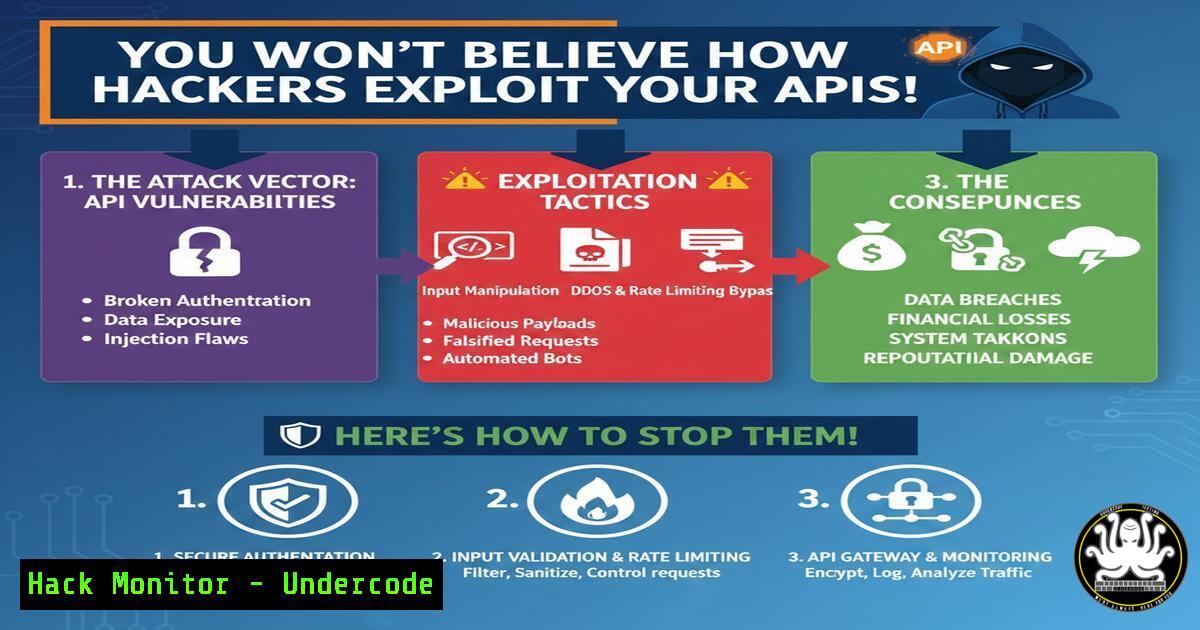
APIs are the backbone of modern web and mobile applications, but they are increasingly targeted by cyberattacks. Understanding and mitigating OWASP’s Top 10 API security risks is crucial for developers and IT professionals to protect sensitive data and maintain system integrity.
Learning Objectives:
- Identify common API vulnerabilities such as broken object-level authorization and injection flaws.
- Implement practical security measures using tools like Burp Suite and Postman.
- Apply hardening techniques for cloud-based APIs on platforms like AWS and Azure.
You Should Know:
- Broken Object Level Authorization (BOLA) Exploitation and Mitigation
Step‑by‑step guide explaining what this does and how to use it.
BOLA allows attackers to access unauthorized resources by manipulating object IDs in API requests. To test for BOLA, use Burp Suite to intercept requests. For example, after logging in as a user, capture a GET request like `GET /api/v1/users/123` and change the ID to124. If you access another user’s data, the vulnerability exists. Mitigate by implementing proper authorization checks server-side. Use Linux commands to set up a test environment: `docker run -d -p 8080:8080 vulnapi/bola-lab` and then usecurl -H "Authorization: Bearer <token>" http://localhost:8080/api/users/124` to test. In Windows, use PowerShell:Invoke-WebRequest -Uri “http://localhost:8080/api/users/124” -Headers @{“Authorization”=”Bearer“}`. Always validate user permissions per request.
2. Injection Attacks: SQL and NoSQL
Step‑by‑step guide explaining what this does and how to use it.
Injection flaws occur when untrusted data is sent to an interpreter, leading to data breaches. For SQL injection, use tools like sqlmap. On Linux, install it: sudo apt-get install sqlmap. Test an API endpoint: sqlmap -u "http://example.com/api/users?id=1" --batch. For NoSQL injection, craft requests in Postman with JSON payloads like `{“username”: {“$ne”: null}, “password”: {“$ne”: null}}` to bypass authentication. Mitigate by using parameterized queries and input validation. In Node.js, use Mongoose sanitization: const user = await User.find({ username: req.body.username });. For Windows, use OWASP ZAP: run `zap.bat` and spider the API to scan for injections.
3. Misconfigured Security Headers and TLS
Step‑by‑step guide explaining what this does and how to use it.
Security headers like CSP and HSTS prevent attacks like XSS. Check headers with curl -I https://api.example.com` on Linux or `Invoke-WebRequest -Uri https://api.example.com -Method Head` on PowerShell. Configure TLS by enforcing HTTPS. On Nginx (Linux), add in config:add_header Strict-Transport-Security “max-age=31536000; includeSubDomains”;. For AWS API Gateway, enable TLS 1.2 and use AWS WAF to block malicious traffic. Use OpenSSL to test TLS:openssl s_client -connect api.example.com:443 -tls1_2`. Regularly update cipher suites.
4. Excessive Data Exposure and Rate Limiting
Step‑by‑step guide explaining what this does and how to use it.
APIs often leak more data than needed. Use tools like Burp Suite to analyze responses. Filter sensitive fields in your code. For example, in Python Flask: return jsonify({k: v for k, v in user.data.items() if k not in ['ssn', 'password']}). Implement rate limiting to prevent DDoS. On Linux with Nginx, set `limit_req_zone` and limit_req. For cloud APIs, AWS API Gateway allows setting usage plans. Monitor logs with `tail -f /var/log/nginx/access.log` and use Prometheus for metrics. In Windows, use IIS Dynamic IP Restrictions.
5. Mass Assignment and Cloud Hardening
Step‑by‑step guide explaining what this does and how to use it.
Mass assignment lets attackers modify sensitive fields by sending unexpected parameters. Use allow-lists in frameworks. In Ruby on Rails, use `params.require(:user).permit(:name, :email)` only. Test with Postman by sending `POST /api/users` with `{“role”: “admin”}` added. For cloud hardening, secure AWS S3 buckets by disabling public access via AWS CLI: aws s3api put-public-access-block --bucket my-bucket --public-access-block-configuration BlockPublicAcls=true. For Azure, use az storage account update --name mystorage --resource-group myresourcegroup --allow-blob-public-access false. Implement IAM roles and audit with CloudTrail.
6. AI-Powered API Attacks and Defense
Step‑by‑step guide explaining what this does and how to use it.
Attackers use AI to automate vulnerability discovery. Simulate with tools like Infer, which uses machine learning to scan code. On Linux, clone and run: git clone https://github.com/facebook/infer.git && cd infer && ./build-infer.sh. For defense, employ AI-based WAFs like Cloudflare. Use Python to train a model for anomaly detection: from sklearn.ensemble import IsolationForest; model.fit(api_logs). Deploy on Kubernetes with Helm: helm install my-waf stable/nginx-ingress --set controller.config.use-ai=true. Monitor with ELK stack: sudo systemctl start elasticsearch.
7. Training and Continuous Security Integration
Step‑by‑step guide explaining what this does and how to use it.
Integrate security into DevOps pipelines. Use OWASP ZAP in CI/CD: docker run -v $(pwd):/zap/wrk owasp/zap2docker-stable zap-baseline.py -t https://api.example.com`. For training, enroll in courses like "API Security on Coursera" (https://www.coursera.org/learn/api-security) or "PentesterLab API Hacking" (https://pentesterlab.com). On Windows, integrate SonarQube with Jenkins for static analysis. Write unit tests for security: in Jest, test authorizationexpect(apiResponse).toBe(403);. Use GitHub Actions to automate scans: add a workflow file withuses: zaproxy/[email protected]`.
What Undercode Say:
- Key Takeaway 1: API security requires a layered approach, combining proper authorization, input validation, and cloud hardening to mitigate OWASP Top 10 risks effectively.
- Key Takeaway 2: Automation through tools and AI is dual-edged; while attackers leverage it for exploits, defenders must integrate continuous security testing into DevOps to stay ahead.
Analysis: The increasing reliance on APIs for critical operations makes them a prime target for cybercriminals. The techniques outlined, from BOLA exploitation to AI-driven attacks, highlight the sophistication of modern threats. However, by adopting a proactive security posture with regular testing, training, and cloud configuration audits, organizations can significantly reduce their attack surface. The integration of security into development workflows is no longer optional but essential, as vulnerabilities often stem from misconfigurations and coding errors. Emphasizing practical, hands-on measures—such as using verified commands and tools—ensures that teams are equipped to implement robust defenses.
Prediction:
In the future, API attacks will become more prevalent with the rise of IoT and microservices, leveraging AI to automate exploit discovery and bypass traditional defenses. We’ll see increased adoption of zero-trust architectures and AI-powered security solutions that dynamically adapt to threats. Organizations that fail to prioritize API security training and continuous integration of security measures will face severe data breaches and regulatory penalties, making investment in these areas critical for long-term resilience.
▶️ Related Video (80% Match):
🎯Let’s Practice For Free:
IT/Security Reporter URL:
Reported By: Upasana Sharma – Hackers Feeds
Extra Hub: Undercode MoN
Basic Verification: Pass ✅


