Listen to this Post
Introduction:
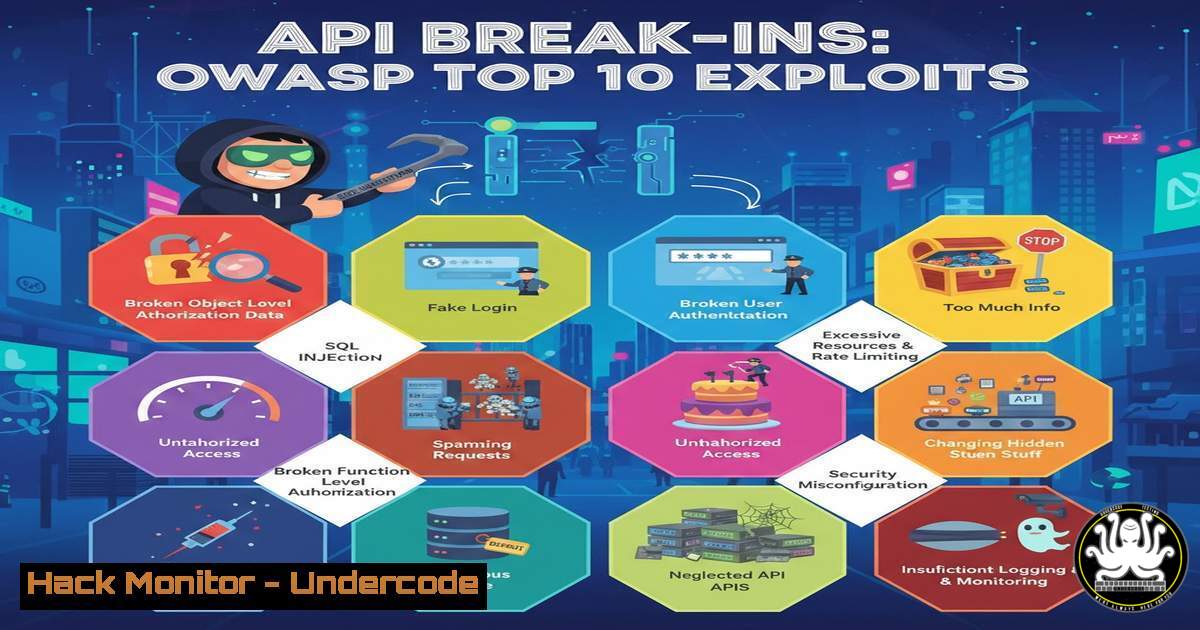
APIs are the backbone of modern web applications, but they are increasingly targeted by attackers leveraging common vulnerabilities. This article unpacks critical API security flaws from the OWASP Top 10, providing hands-on exploitation techniques and proven mitigation strategies to safeguard your digital infrastructure. Understanding these risks is essential for developers, security teams, and IT professionals.
Learning Objectives:
- Identify and exploit prevalent API vulnerabilities like SQL injection, JWT tampering, and Broken Object Level Authorization (BOLA).
- Execute verified commands and tools across Linux and Windows to test and harden API security.
- Implement robust security controls, including cloud hardening and AI-driven monitoring, to protect against emerging threats.
You Should Know:
1. SQL Injection in API Endpoints
APIs that dynamically construct SQL queries without proper input sanitization are prime targets for injection attacks, allowing data theft or destruction. This flaw often arises in REST or GraphQL endpoints that accept user-supplied parameters.
Step‑by‑step guide explaining what this does and how to use it.
– Reconnaissance: Identify API endpoints that accept query parameters, headers, or body inputs for database operations. Use tools like `curl` or Burp Suite to probe. Example: `curl -X GET “https://api.example.com/v1/users?search=test'”` – look for database error messages in responses.
– Exploitation: Craft malicious payloads. For instance, to bypass login: curl -X POST "https://api.example.com/login" -H "Content-Type: application/json" -d '{"username":"admin'--", "password":"any"}'. On Windows PowerShell, use `Invoke-WebRequest` similarly.
– Mitigation: Use parameterized queries. In Python with SQLite: cursor.execute("SELECT FROM users WHERE username = ?", (username,)). For cloud databases like AWS RDS, enable parameterized statements in Lambda functions and enforce least-privilege IAM roles.
2. JWT Token Manipulation and Weak Secrets
JWTs are standard for API authentication, but weak signatures, algorithm confusion, or exposed secrets can let attackers forge tokens and escalate privileges. This exploits improper implementation of the JWT standard.
Step‑by‑step guide explaining what this does and how to use it.
– Token Analysis: Decode a captured JWT using `jwt.io` or command-line tools. On Linux: echo -n '<JWT_TOKEN>' | cut -d '.' -f 2 | base64 -d | jq. Check for alg: “none” or weak HS256 keys.
– Exploitation: If weak secrets are used, brute-force with hashcat: hashcat -m 16500 jwt_hash.txt /usr/share/wordlists/rockyou.txt. For algorithm confusion, use tools like `jwt_tool` to switch RS256 to HS256: python3 jwt_tool.py <JWT> -X k.
– Mitigation: Validate algorithms strictly on the server. Use strong public/private key pairs for RS256. Rotate secrets regularly and store them in secure vaults like HashiCorp Vault or AWS Secrets Manager.
3. Broken Object Level Authorization (BOLA)
BOLA allows attackers to access unauthorized resources by manipulating object IDs in API requests. It’s prevalent in endpoints like `/api/users/{id}` where authorization checks are missing.
Step‑by‑step guide explaining what this does and how to use it.
– Identification: With a valid user token, test ID enumeration. Linux command: for i in {1000..1005}; do curl -H "Authorization: Bearer $TOKEN" https://api.example.com/orders/$i -s | jq; done. On Windows, use PowerShell loops.
– Automated Testing: Use `OWASP ZAP` or custom scripts with `Python requests` library to scan for BOLA across multiple endpoints. Example script snippet:
import requests
for id in range(1,100):
r = requests.get(f'https://api.example.com/data/{id}', headers={'Authorization': f'Bearer {token}'})
if r.status_code == 200:
print(f"Accessed {id}: {r.text[:50]}")
– Mitigation: Implement access control checks for each object reference. Use UUIDs instead of sequential IDs and audit logs with tools like `Auditd` on Linux or Windows Event Log.
4. Excessive Data Exposure and Information Leakage
APIs often return full data objects, trusting clients to filter, which leaks sensitive fields. Attackers intercept responses to harvest hidden data like passwords or internal IDs.
Step‑by‑step guide explaining what this does and how to use it.
– Interception: Use Burp Suite or MITMproxy to capture API responses. Filter JSON for fields not displayed in UI, such as `”ssn”` or "credit_score". Command-line parsing with jq: curl -s https://api.example.com/profile | jq 'keys'.
– Exploitation: Craft requests to exploit GraphQL introspection or over-fetching. For GraphQL: send a query listing all available fields. Example query: { __schema { types { name fields { name } } } }.
– Mitigation: Apply data shaping on the server. Use libraries like `GraphQL Shield` or DTOs in Spring Boot. Configure WAFs like ModSecurity to block responses with sensitive patterns.
5. Security Misconfiguration in Cloud APIs
Cloud APIs (e.g., AWS API Gateway, Azure Functions) are exposed when default configurations, open storage, or verbose errors are left unchecked. This leads to unauthorized access or data breaches.
Step‑by‑step guide explaining what this does and how to use it.
– Enumeration: Scan for open endpoints with nmap: nmap -p 443,80 --script http-methods api.cloud.example.com. Check S3 buckets: `aws s3 ls s3://bucket-name –no-sign-request` (if misconfigured).
– Hardening: Secure API Gateway with IAM roles and usage plans. Enable logging: aws apigateway update-stage --rest-api-id <api-id> --stage-name prod --patch-operations op='add',path='/accessLogSettings/destinationArn',value='arn:aws:logs:region:account:log-group:API-Gateway-Access-Logs'.
– Mitigation: Use infrastructure-as-code tools like Terraform to enforce configurations. Regularly audit with `AWS Config` or Azure Policy. Disable detailed error messages in production.
6. Insufficient Logging and Monitoring
Without comprehensive logs, API attacks go undetected. This section covers exploiting weak monitoring and setting up robust detection.
Step‑by‑step guide explaining what this does and how to use it.
– Attack Evasion: Perform low-and-slow attacks, such as credential stuffing with hydra: hydra -L users.txt -P passwords.txt api.example.com https-post "/login". If logs only track failures, this may bypass alerts.
– Logging Setup: On Linux, use `Fluentd` or `ELK stack` to aggregate API logs. For Node.js apps, integrate `Winston` with structured logging. Windows: Use `Event Tracing for Windows (ETW)` for API calls.
– Monitoring: Deploy SIEM rules to detect anomalies. Example Sigma rule for excessive 401 errors. Use AI tools like `Splunk ES` to correlate logs and flag suspicious IPs.
7. AI-Powered API Security Testing and Hardening
AI and machine learning automate vulnerability discovery and response, enhancing defense against evolving threats. Tools like Escape or Salt Security use AI to analyze API traffic patterns.
Step‑by‑step guide explaining what this does and how to use it.
– Integration: Incorporate AI scanners into CI/CD. For GitHub Actions:
- name: AI Security Scan
run: |
docker run -v $(pwd):/app escape/api-scan:latest --token ${{ secrets.API_TOKEN }}
– Training Custom Models: Use datasets like `OWASP API Security Top 10` to train models for anomaly detection. Python with Scikit-learn:
from sklearn.ensemble import IsolationForest
model = IsolationForest(contamination=0.1)
model.fit(api_request_data)
– Mitigation: Continuously monitor APIs with AI-driven platforms. Set up automated patching for vulnerabilities like those in dependency libraries (e.g., npm audit fix).
What Undercode Say:
- Key Takeaway 1: API security hinges on a defense-in-depth strategy—combining input validation, least-privilege access, and real-time monitoring to close gaps that attackers exploit.
- Key Takeaway 2: Proactive hardening through automated tools and DevSecOps integration is non-negotiable; manual reviews alone cannot scale with modern API ecosystems.
Analysis: The escalation of API attacks reflects broader IT trends toward interconnected services. While technical controls are advancing, organizational factors like developer training and incident response readiness remain critical. The OWASP framework provides a baseline, but tailored implementations—such as cloud-specific configurations and AI augmentations—are essential for resilience. As APIs become more complex, security must evolve from bolt-on to built-in.
Prediction:
In the next 3-5 years, API security will confront challenges from quantum computing (breaking current encryption) and AI-generated attack vectors. We’ll see a rise in automated exploitation kits targeting API chains in microservices architectures, prompting a shift toward zero-trust models and predictive AI defenses. Regulatory pressures will mandate stricter API governance, making security-by-design a competitive advantage for organizations.
▶️ Related Video (74% Match):
🎯Let’s Practice For Free:
IT/Security Reporter URL:
Reported By: Evan Dumas – Hackers Feeds
Extra Hub: Undercode MoN
Basic Verification: Pass ✅


