Listen to this Post
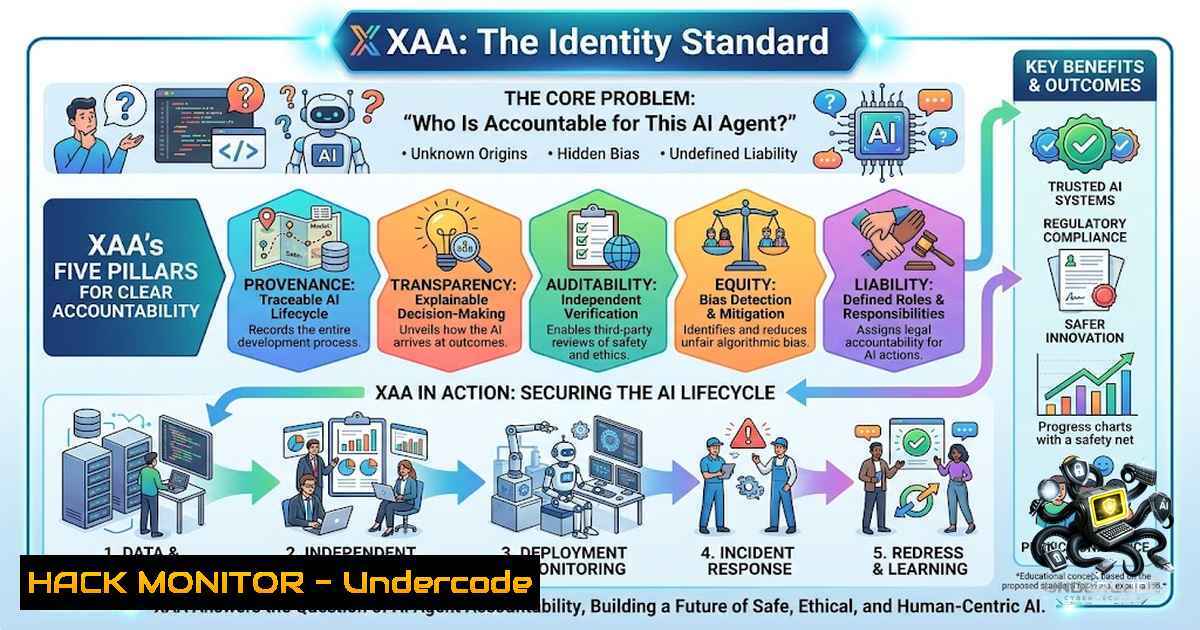
Introduction:
As organizations rapidly transition from AI assistants to autonomous AI agents, CISOs are confronting a governance nightmare that traditional Identity and Access Management (IAM) was never designed to handle. The fundamental question—”Who is accountable when an AI agent acts?”—exposes a critical gap in enterprise identity infrastructure. Cross App Access (XAA) emerges as the industry’s answer: an open OAuth extension that shifts identity from being application-centric to agent-centric, enabling enterprises to trace, govern, and audit every action an AI agent takes across the entire application ecosystem.
Learning Objectives:
- Understand why traditional service account models fail for AI agents and create privilege escalation risks
- Master the XAA token exchange flow and Identity Assertion Authorization Grant (ID-JAG) mechanism
- Learn step-by-step implementation of XAA for both SAML and OIDC-based enterprise applications
- Acquire practical commands and scripts for AI agent identity governance across Linux and Windows environments
- Build an enterprise-ready AI identity governance framework with auditability and accountability
You Should Know:
- The Service Account Fallacy: Why AI Agents Are Not Service Accounts
The most dangerous shortcut in enterprise AI deployment is modeling an AI agent as a traditional service account. This seemingly innocent decision creates a critical privilege escalation vector.
In testing against a finance Model Context Protocol (MCP) server, an employee compensation assistant agent modeled as a service app bypassed user-specific restrictions and gained access to the company’s entire salary ledger—including the CEO’s compensation—with the ability to modify anyone’s pay. The same agent, given a first-class identity with XAA, was denied the identical request.
A service account is a static identity with fixed credentials and permissions. When something goes wrong, the audit log tells you which account performed the action—but not which user authorized it, what the agent’s intent was, or whether the action was autonomous or delegated. AI agents reason dynamically, adapt to context at runtime, and make decisions that a service account never could.
The Privilege Escalation Problem:
Service App Model (INSECURE):
User → Authenticates → Service Account Token (broad permissions) → Agent inherits ALL app permissions
Result: Agent can access data the user never could

First-Class Identity Model (XAA):
User → Authenticates → Agent Identity + User Context → Authorization Server evaluates BOTH
Result: Agent operates within user's permission ceiling
- Understanding XAA: The Identity Assertion Authorization Grant Flow
Cross App Access (XAA) is built as an extension of existing OAuth and OpenID Connect standards, formally incorporated as an official MCP authorization extension. At its core, XAA implements the Identity Assertion Authorization Grant (ID-JAG)—an in-progress OAuth extension that enables AI agents to act on behalf of users and communicate with downstream applications without requiring constant, manual user consent.
The XAA Token Exchange Flow:
Step 1 — OIDC Login:
Web App → IdP: Authorization Request (PKCE)
IdP → Web App: ID Token + Session Cookie

Step 2 — Token Exchange (RFC 8693):
AI Agent → IdP: subject_token = ID Token
IdP → AI Agent: ID-JAG (Identity JWT Authorization Grant)

Step 3 — JWT Bearer Grant (RFC 7523):
AI Agent → Resource Auth Server: assertion = ID-JAG
Resource Auth Server → AI Agent: Scoped Access Token

Step 4 — Resource Access:
AI Agent → Resource: Bearer Token + Request
Resource → AI Agent: Response
When an agent (like one running in Claude) needs API access, it presents an ID-JAG—a short-lived JWT issued by the customer’s Identity Provider. The resource server accepts the token, identifies the user, and issues its own scoped access token, all while leaving existing SAML or OIDC integrations untouched.
3. Implementing XAA: A Step-by-Step Guide
Prerequisites:
- An enterprise Identity Provider (Okta, Microsoft Entra, or any XAA-compatible IdP)
- OIDC or SAML SSO already configured
- Administrative access to your IdP tenant
Step 1: Register the AI Agent as a First-Class Identity
In your IdP’s Universal Directory, register the AI agent with:
– Unique agent identifier
– Clear ownership mapping to a human user
– Public key credentials provided by the agent platform (e.g., Anthropic for Claude)
Step 2: Configure the Resource Application
Create an XAA-enabled resource application in your IdP:
- Define the authorization server URL
- Configure scopes (e.g.,
chat:read,chat:write) - Set up token exchange policies
Step 3: Implement the OIDC Flow (C Example Using MCP SDK)
// Configure OIDC middleware in ASP.NET Core
builder.Services
.AddAuthentication()
.AddCookie(o => { o.Cookie.Name = "xaa.auth"; })
.AddOpenIdConnect(o => {
o.ClientId = "your-client-id";
o.ClientSecret = "your-client-secret";
o.ResponseType = "code";
o.UsePkce = true;
// Additional configuration...
});

// The IdentityAssertionGrantProvider handles token exchange automatically
// via the C MCP SDK
Step 4: Validate the ID-JAG Claims
When you decode the ID-JAG, verify these key claims:
{
"iss": "https://your-org.okta.com",
"sub": "agent-unique-identifier",
"sub_id": {
"format": "saml-1ameid",
"nameid": "[email protected]",
"nameid_format": "urn:oasis:names:tc:SAML:1.1:nameid-format:emailAddress"
},
"aud": "https://your-resource-auth-server",
"client_id": "agent-client-id-at-your-as",
"scope": "chat:read chat:write",
"jti": "unique-jag-id-preventing-replay"
}
Focus on `sub_id` for user resolution, `aud` for the authorization server endpoint, `client_id` for the agent’s ID at your resource server, and `jti` for replay attack prevention.
Step 5: Enforce Dynamic Authorization
The authorization server must evaluate both user and agent privileges, enforcing the most restrictive access ceiling:
def evaluate_access(user_id, agent_id, requested_scope, resource):
user_permissions = get_user_permissions(user_id)
agent_permissions = get_agent_permissions(agent_id)

Enforce intersection of permissions (least privilege)
effective_permissions = user_permissions ∩ agent_permissions

if requested_scope in effective_permissions:
return allow_access(resource, requested_scope)
else:
return deny_access("Insufficient permissions")
4. XAA Implementation Checklist for SAML-Federated Applications
For enterprises using SAML federation, follow these steps:
Step 1: Map User Identity in the SAML NameID Attribute
Ensure the SAML assertion’s `NameID` uniquely identifies the user. This becomes the `sub_id.nameid` in the ID-JAG.
Step 2: Configure Your Resource Authorization Server
Your resource server must accept ID-JAG tokens and redeem them for access tokens:
 Example: Redeem ID-JAG for access token
POST /token HTTP/1.1
Host: auth.your-resource.com
Content-Type: application/x-www-form-urlencoded

grant_type=urn:ietf:params:oauth:grant-type:jwt-bearer
&assertion=<ID-JAG>
&client_id=your-client-id
&client_secret=your-client-secret
Step 3: Validate SAML-Derived Claims
Verify the SAML NameID from the ID-JAG against your user directory. The SAML SSO flow remains unchanged; the only addition is the token redemption step.
Step 4: Enforce Replay Protection
Track the `jti` (JWT ID) claim to prevent replay attacks within the validity window.
- AI Agent Identity Governance: Practical Commands and Tools
Linux/macOS – Agent Identity Management CLI
Using the Agent Identity Protocol CLI:
 Install the Agent Identity Protocol CLI
npm install -g @agentid-protocol/cli

Create a new agent identity
agentid create --1ame "finance-assistant" \
--owner "[email protected]" \
--capabilities "read:salary,read:employee" \
--expires "2026-12-31"

Verify an agent's identity
agentid verify --agent-id "did:agent:finance-assistant" \
--signature "base64-signature"

List all registered agents
agentid list --org "company.com"
Agent Identity MCP Server Commands:
 Create a new agent identity with trust scoring
create_agent_identity --1ame "procurement-bot" \
--owner "[email protected]" \
--capabilities "create-po,read-vendor" \
--trust-score 85

Look up an agent's identity
get_identity --agent-id "agent-procurement-bot-001"

Authorize an action with policy evaluation
authorize_action --agent-id "agent-procurement-bot-001" \
--action "create-po" \
--resource "vendor-database" \
--context '{"amount": 50000, "vendor": "acme"}'
Windows PowerShell – Agent Identity Audit Script:
 PowerShell script to audit AI agent identities
$agents = Get-AgentIdentity -Org "Company"
foreach ($agent in $agents) {
$auditEntry = [bash]@{
AgentID = $agent.ID
Owner = $agent.Owner
Created = $agent.CreatedDate
LastAction = $agent.LastAction
Permissions = $agent.Scopes -join ", "
Expires = $agent.Expiration
RiskScore = $agent.RiskScore
}
$auditEntry | Export-Csv -Path "agent-audit-$((Get-Date).ToString('yyyyMMdd')).csv" -1oTypeInformation
}
Monitoring Agent Activity with Journalctl (Linux):
 Monitor real-time agent authentication events
journalctl -f -u agent-identity-service | grep -E "AUTH|AUTHORIZE|DENY"

Query agent access logs for a specific agent
journalctl --since "2026-07-01" --until "2026-07-27" \
| grep "agent-id=finance-assistant" \
| awk '{print $1, $2, $5, $7, $9}'
6. Building the Enterprise AI Identity Governance Framework
Effective AI agent governance requires five essential capabilities:
| Capability | Implementation |
||-|
| Known | Every AI agent is registered with a unique identifier in the identity directory |
| Owned | A human is assigned to each agent and is responsible for its behavior |
| Scoped | Permissions are limited to a clear purpose and timeframe |
| Auditable | Every action is logged and traceable through immutable audit trails |
| Revocable | When the task ends, access ends immediately |
Zero Trust Principles for AI Agents:
Apply the same zero trust access principles to AI agents that apply to human users:
- Never trust, always verify — Every agent action requires authentication and authorization
- Least privilege — Agents receive minimum permissions necessary
- Assume breach — Continuously monitor and audit agent behavior
- Micro-segmentation — Isolate agent access to specific resources
Human-in-the-Loop for Sensitive Actions:
 Example: Human approval workflow for sensitive agent actions
def execute_with_approval(agent_id, action, resource, approver_id):
if is_sensitive_action(action, resource):
approval_request = create_approval_request(
agent_id=agent_id,
action=action,
resource=resource,
approver=approver_id,
status="pending"
)
 Send approval request via email/Slack
notify_approver(approver_id, approval_request)

Wait for approval (with timeout)
if wait_for_approval(approval_request.id, timeout=3600):
return execute_action(agent_id, action, resource)
else:
return deny_action("Approval timeout or denied")
else:
return execute_action(agent_id, action, resource)
What Undercode Say:
- Key Takeaway 1: The shift from “How intelligent is this AI agent?” to “Can we trust, govern, and explain every action it takes?” defines the next frontier of enterprise AI security. Traditional IAM, built for humans and service accounts, fundamentally breaks when applied to autonomous, reasoning agents.
-
Key Takeaway 2: XAA represents a paradigm shift from application-centric to agent-centric identity. By carrying rich identity context—who the agent acts for, what identity provider authenticated it, and what policies govern its access—XAA enables applications to make informed authorization decisions instead of blindly trusting OAuth tokens.
Analysis: The enterprise AI identity crisis is not theoretical—it’s already happening. Organizations deploying AI agents without proper identity governance are creating massive security blind spots. The service account shortcut, while expedient, introduces privilege escalation vectors that could expose sensitive data at scale. XAA’s emergence as an open, vendor-1eutral standard (with 25+ early adopters including Anthropic, Zoom, Slack, and Atlassian) signals that the industry recognizes this as a foundational problem requiring a standardized solution. The IETF’s work on Agent Identity Protocol (AIP) further validates that decentralized, verifiable identity for AI agents is becoming a core internet infrastructure concern.
Prediction:
- +1 Organizations that implement XAA-based identity governance for AI agents within the next 12-18 months will gain significant competitive advantage by enabling safe, auditable agent deployments at scale while competitors struggle with governance gaps and compliance failures.
-
+1 The convergence of XAA, MCP (Model Context Protocol), and emerging standards like AIP will create a unified identity fabric where human and non-human identities are governed by the same zero trust principles, dramatically reducing the attack surface of agentic AI systems.
-
-1 Enterprises that continue modeling AI agents as service accounts will experience catastrophic data breaches within the next 24 months, as autonomous agents inherit excessive permissions and operate with no meaningful audit trail or accountability chain.
-
+1 Regulatory bodies will mandate AI agent identity governance and auditability requirements by 2028, making early XAA adoption a compliance necessity rather than a security best practice.
-
-1 The fragmentation of proprietary agent identity systems across vendors will create interoperability challenges and reduce developer velocity, underscoring the importance of open standards like XAA and AIP.
🎯Let’s Practice For Free:
🎓 Live Courses & Certifications:
Join Undercode Academy for Verified Certifications
🚀 Request a Custom Project:
Secure, high-velocity infrastructure and disruptive technological engineering. Contact our engineering team for high-tier development and proprietary systems:
[email protected]
💎 Smart Architecture | 🛡️ Secure by Design | ⭐ Trusted by Thousands
IT/Security Reporter URL:
Reported By: Aniket Aladamar – Hackers Feeds
Extra Hub: Undercode MoN
Basic Verification: Pass ✅


