Listen to this Post
Introduction:
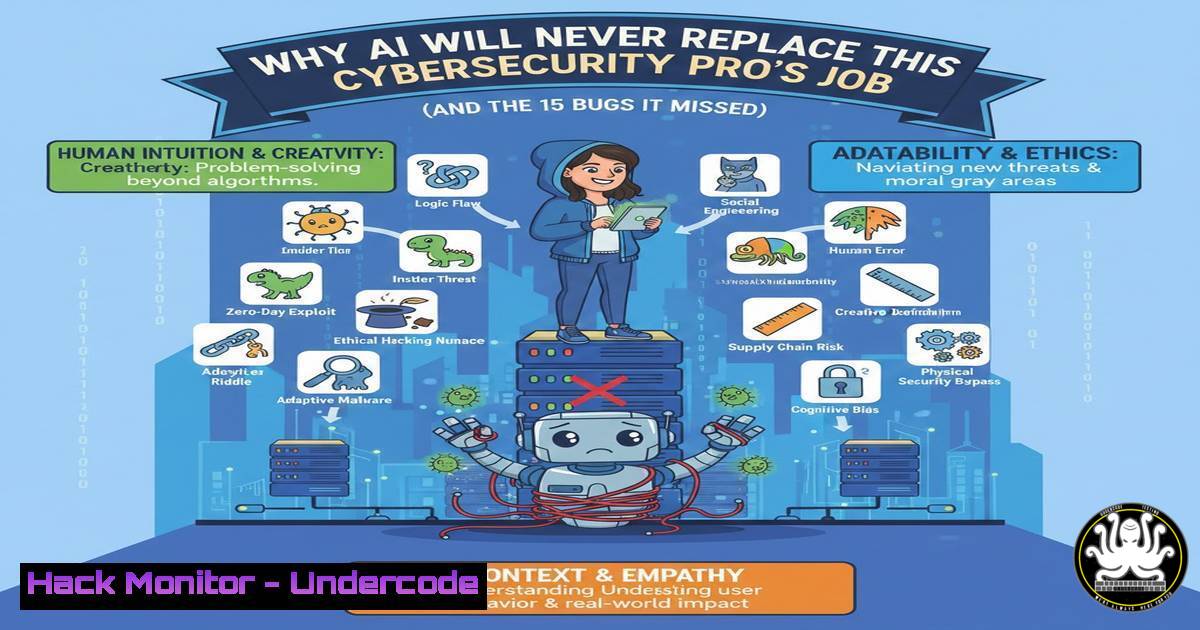
The convergence of artificial intelligence and human ingenuity defines the modern cybersecurity battleground. Insights from the IdentityShield Summit reveal that while automation excels at scaling tasks, the creative, adversarial thinking required for elite threat hunting and vulnerability discovery remains a uniquely human domain, as demonstrated by live workshops uncovering critical flaws automated tools missed.
Learning Objectives:
- Understand the limitations of AI in advanced threat hunting and why human creativity is irreplaceable.
- Learn the manual Source-to-Sink code review technique to find business logic flaws automated SAST tools miss.
- Develop a builder’s mindset to construct custom security automation pipelines beyond off-the-shelf tools.
- Apply the “Fix, Accept, Ignore” framework for pragmatic risk assessment and decision-making.
- Identify and detect Command & Control (C2) traffic masquerading as legitimate API calls, such as through Telegram bots.
You Should Know:
1. Automating Asset Discovery for Bug Bounty Efficiency
The cornerstone of a modern bug bounty workflow is continuous, automated discovery of an organization’s ever-changing digital footprint. Attack surfaces expand daily with new subdomains, cloud instances, and APIs. Manual tracking is impossible at scale.
Step‑by‑step guide explaining what this does and how to use it.
Concept: Use scheduled automation to enumerate new subdomains, identify associated technologies, and take screenshots for quick review. This creates a “target list” for immediate manual testing.
Toolchain: Combine `amass` (passive enumeration), subfinder, `httpx` (HTTP probing), and `nuclei` (for immediate vulnerability scanning on new finds).
Basic Automation Script (Linux):
!/bin/bash
 Define target domain
TARGET="example.com"
 Run enumerators
amass enum -passive -d $TARGET -o amass_$TARGET.txt
subfinder -d $TARGET -o subfinder_$TARGET.txt
 Merge and sort results
cat amass_$TARGET.txt subfinder_$TARGET.txt | sort -u > all_subs_$TARGET.txt
 Probe for live hosts
cat all_subs_$TARGET.txt | httpx -silent -o live_$TARGET.txt
 Optional: Quick vulnerability scan with Nuclei
 cat live_$TARGET.txt | nuclei -t ~/nuclei-templates/ -o nuclei_scan_$TARGET.txt
echo "New assets saved to live_$TARGET.txt"
Schedule this script with `cron` to run daily. The output (live_$TARGET.txt) is your fresh testing queue.
2. Manual SAST: The Source-to-Sink Analysis
Automated Static Application Security Testing (SAST) tools are rules-based and often miss complex business logic vulnerabilities. Manual code review tracing data flow from its origin (Source) to a dangerous function (Sink) is critical.
Step‑by‑step guide explaining what this does and how to use it.
Concept: Identify where user input enters the application (Source: request.GET, request.POST, API parameters). Then trace that data through the code without sanitization until it reaches a sensitive function (Sink: eval(), os.system(), database query, file write).
Example (Django/Python):
 views.py - VULNERABLE CODE
def update_profile(request):
user_id = request.GET.get('id')  SOURCE: User-controlled input
new_username = request.GET.get('username')  SOURCE
 ... some logic ...
query = f"UPDATE auth_user SET username = '{new_username}' WHERE id = {user_id};"  SINK: SQL Injection
cursor.execute(query)  EXECUTION
Manual Review Process:
- Find Sources: Grep for patterns like
request.GET,request.POST, `@RequestBody` in Java, `$_GET` in PHP. - Find Sinks: Grep for dangerous functions:
execute(),save(),render(),subprocess.call(),File.write(). - Trace the Path: Manually follow the variable from source to sink. Ask: Is it validated, encoded, or sanitized? If not, it’s a bug.
3. Building Security Pipelines: The DevSecOps Mindset
Shifting from tool user to tool builder involves creating integrated workflows that automate security checks within CI/CD pipelines, saving time and enforcing governance.
Step‑by‑step guide explaining what this does and how to use it.
Concept: Integrate security scanning directly into the developer’s workflow using tools like GitHub Actions, GitLab CI, or Jenkins.
Example GitHub Actions Workflow (.github/workflows/security.yml):
name: Security Scan
on: [push, pull_request]
jobs:
sast:
runs-on: ubuntu-latest
steps:
- uses: actions/checkout@v3
- name: Run Snyk SAST
uses: snyk/actions/python@master
env:
SNYK_TOKEN: ${{ secrets.SNYK_TOKEN }}
- name: Run Bandit (Python SAST)
run: |
pip install bandit
bandit -r . -f json -o bandit_report.json
secrets-check:
runs-on: ubuntu-latest
steps:
- uses: actions/checkout@v3
- name: Detect Hardcoded Secrets
uses: gitleaks/gitleaks-action@v2
This pipeline automatically runs a SAST tool (Snyk/Bandit) and a secrets scanner on every code commit, blocking potential vulnerabilities from merging.
4. The GRC Triad: Fix, Accept, or Ignore
Effective Governance, Risk, and Compliance (GRC) is about actionable decision-making. Every identified risk must lead to a conscious business decision.
Step‑by‑step guide explaining what this does and how to use it.
Framework:
- Fix: Mitigate the risk. This involves implementing a technical or procedural control.
Action: Patch a server, deploy a WAF rule, implement mandatory code review. - Accept: Acknowledge the risk but consciously choose not to remediate due to cost, business function, or low likelihood.
Action: Document the rationale in a risk register, obtain formal approval from business owners, and schedule periodic re-assessment. - Ignore: Not recommended. This is neglecting a known risk, which can lead to liability and breach.
Process: Use a Risk Register (a simple spreadsheet or dedicated tool) to track each finding, its assigned owner, chosen action (Fix/Accept), and deadline. -
Detecting Malware C2 Hidden in Telegram Bot Traffic
Advanced attackers abuse legitimate services with high reputation, like Telegram’s API, to mask malicious Command & Control (C2) traffic, making detection difficult.
Step‑by‑step guide explaining what this does and how to use it.
How it Works: Malware on a infected host is programmed to send HTTP/HTTPS requests to the Telegram Bot API (api.telegram.org) with specific commands embedded in parameters. This blends with normal web traffic.
Detection via Network Monitoring:
- Identify Suspicious Patterns: While traffic to `api.telegram.org` is common, look for anomalies.
2. Use Zeek (formerly Bro) or Suricata Rules:
 Example Suricata rule alerting on high frequency of Telegram API calls from an internal host (could be noisy, tune as needed)
alert http $HOME_NET any -> $EXTERNAL_NET any (msg:"POSSIBLE C2: High Volume Telegram Bot API Requests"; flow:established,to_server; http.host; content:"api.telegram.org"; depth:16; threshold:type both, track by_src, count 50, seconds 60; sid:1000001; rev:1;)
3. Endpoint Investigation (Linux): If a host is suspected, check for unusual processes or connections.
 Find processes making network connections
lsof -i
 Check for suspicious cron jobs or persistence
systemctl list-timers --all
crontab -l
4. The Key: Correlate unusual internal host behavior with frequent, periodic calls to legitimate cloud APIs.
What Undercode Say:
- The Human Firewall is Still the Strongest. The summit’s core theme underscores that AI is a powerful force multiplier for defenders, but the strategic creativity, adaptability, and intuitive “out-of-the-box” thinking required to anticipate and counter advanced threats remain distinctly human competencies. The future belongs to professionals who leverage AI, not those replaced by it.
- Depth Trumps Breadth in Application Security. Finding 15+ bugs in a single code review session proves that deep, contextual understanding of an application’s logic and data flow yields more critical vulnerabilities than wide, shallow automated scans. Mastery of manual techniques like Source-to-Sink analysis is what separates competent analysts from elite ones.
Analysis: The insights from the IdentityShield Summit paint a clear picture of the cybersecurity professional’s evolving role. The focus is shifting from passive tool operation to active engineering and investigative craftsmanship. The builder mindset in DevSecOps, the analytical rigor in manual code review, and the strategic decision-making in GRC all point to a field maturing from a technical niche to a core business function. The abuse of platforms like Telegram for C2 highlights the continuous cat-and-mouse game, where defenders must understand both technology and adversary tradecraft. Ultimately, the most secure organizations will be those that foster this blend of human expertise and automated efficiency.
Prediction:
The divide between AI-augmented defenders and AI-augmented attackers will widen, but the premium on human cognitive skills will increase. In the next 3-5 years, we will see a surge in “adversarial simulation” roles that require creativity to bypass AI-driven detection systems. Furthermore, secure coding practices and manual review will become even more critical as AI-generated code introduces novel, unpredictable flaw patterns. Cybersecurity training will pivot heavily towards developing the “builder mindset,” with professionals expected to code custom security solutions as a baseline skill, making platforms that enable this automation integral to every security stack.
▶️ Related Video (78% Match):
🎯Let’s Practice For Free:
IT/Security Reporter URL:
Reported By: Sahil Naik – Hackers Feeds
Extra Hub: Undercode MoN
Basic Verification: Pass ✅


