
Listen to this Post
Introduction:
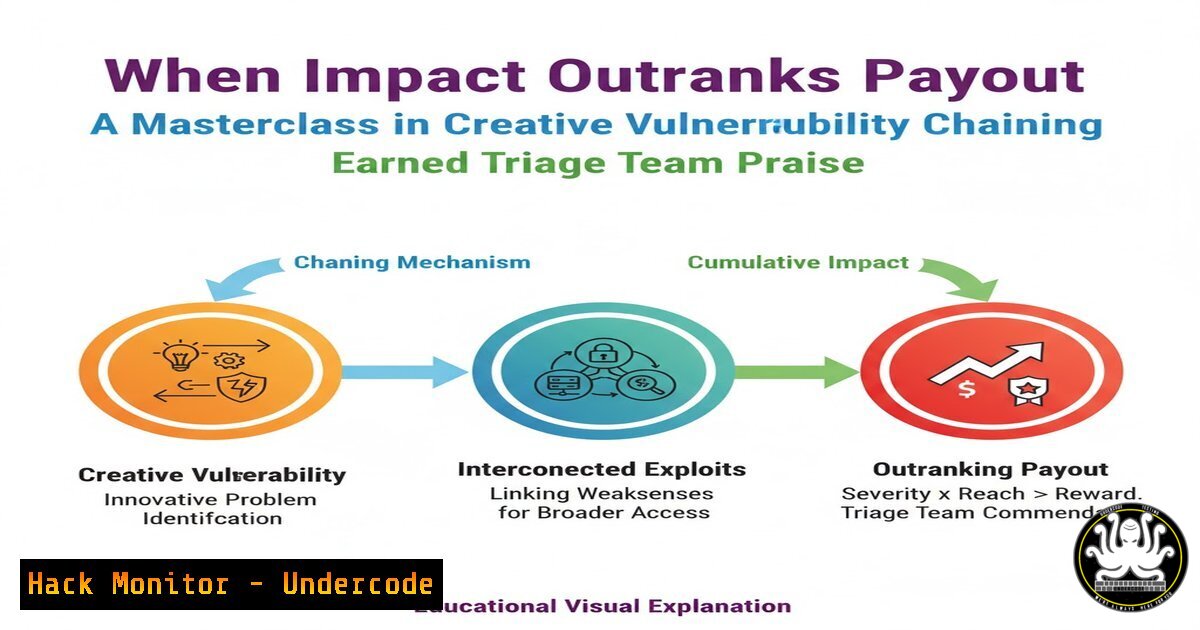
In the high-stakes world of bug bounty hunting, financial rewards often dominate the headlines, but seasoned security researchers know that the true currency is knowledge. A recent submission by Jahidul Hasan Munna, an Offensive Security Researcher, highlights a scenario where the methodology and creative chaining of vulnerabilities earned more than money—it earned respect from the triage team. This article deconstructs the “Aha!” moment in application security, exploring how to think beyond automated scanners and single-issue reports to uncover complex, high-impact attack chains that demonstrate true hacker ingenuity.
Learning Objectives:
- Understand the concept of vulnerability chaining and its importance in demonstrating real-world risk.
- Learn to identify and exploit logic flaws that automated tools miss, using a combination of recon, manual testing, and creative thinking.
- Develop the ability to document and communicate complex attack chains effectively to triage teams for maximum impact.
You Should Know:
- The Art of Reconnaissance: Mapping the Attack Surface
Before any chain can be built, you must understand the terrain. The researcher likely started with extensive reconnaissance, moving beyond simple subdomain enumeration.
– Passive Recon: Use tools like `amass` and `subfinder` to enumerate subdomains. Analyze HTTP headers and SSL certificates using `openssl s_client -connect target.com:443` to gather intel.
– Active Recon: Employ `httpx` to probe for live hosts and `katana` or `gau` to fetch known URLs. Look for hidden parameters with `arjun` or xffuzz. The goal is to create a detailed map of endpoints, parameters, and technologies in use.
2. Identifying the First Link: Exploiting a Misconfiguration
The first vulnerability in a chain is often a seemingly minor issue. For example, a developer may have left a staging environment accessible, or an API endpoint lacks proper rate limiting.
– Scenario Example: Discover a staging subdomain (staging-api.target.com) that uses a weaker authentication mechanism than production. You might find it accepts any email with a default password or lacks MFA enforcement.
– Verification: Attempt to register a user or directly access a protected endpoint. Use `curl -X GET https://staging-api.target.com/internal/user-data -H “Cookie: session=weak-session-cookie”` to see if access is granted. This foothold is the first link in the chain.
- Escalating Privileges via Insecure Direct Object References (IDOR)
Once inside a lower-privileged account, the next step is to escalate horizontally or vertically. IDOR vulnerabilities are prime candidates for this.
– The Move: While authenticated to the staging environment, you notice API requests contain a numerical user ID. You can attempt to modify this ID.
– Command: Using Burp Suite, intercept a request to `/api/v1/profile/1234` and change it to /api/v1/profile/5678. If the server returns another user’s data, you’ve found an IDOR.
– Chaining: Combine this with the initial foothold. Because you accessed a less secure environment, you can now leverage an IDOR to exfiltrate data belonging to production users if the staging database mirrors production data.
4. Leveraging Logic Flaws in Business Workflows
The triage team praised “creative chaining,” which often involves manipulating the application’s intended logic. This moves beyond technical bugs into how the application is supposed to work versus how it can work.
– Scenario Example: An e-commerce site has a “Forgot Password” flow. You might chain the IDOR from the previous step to retrieve a user’s email address, then use that email to trigger a password reset. However, the reset token might be sent in a predictable format.
– Token Analysis: Capture your own reset token. If it appears to be a base64 encoded value, decode it: echo "dG9rZW46MTIzNDU=" | base64 -d. If it decodes to something like user:timestamp, you can potentially generate a valid token for the target user identified in the IDOR step.
5. Chaining to Achieve Full Account Takeover (ATO)
This is the ultimate goal of many chains. By combining a business logic flaw with a technical one, an attacker can seize control.
– The Chain:
1. Link 1 (Information Disclosure): Use the IDOR to fetch a target user’s email and user ID from the staging API.
2. Link 2 (Predictable Token): Using the email, initiate a password reset on the production site. Analyze the generated token structure from your own account.
3. Link 3 (Token Forgery): Combine the structure from Link 2 with the data from Link 1 to forge a valid password reset token for the victim.
– Execution: Send a crafted request to the password reset endpoint using the forged token. curl -X POST https://target.com/reset-password -d "token=FORGED_TOKEN&newPassword=Hacked123!". If successful, you now control the victim’s account.
6. Documenting the Chain for Maximum Impact
The final, and most crucial, step is communication. The researcher in the post succeeded because their methodology was clear.
– Structure Your Report: Begin with an executive summary stating the impact (e.g., “Account Takeover via Chained Vulnerabilities”).
– Visual Aids: Use a flowchart or a simple numbered list to show the logical progression of the attack.
– Proof of Concept (PoC): Provide step-by-step instructions and raw HTTP requests (like the `curl` commands above). Include screenshots of the critical moments: the IDOR data disclosure, the token analysis, and the final successful login.
– Explain the Risk: Conclude by explaining the real-world business impact—data theft, financial fraud, reputational damage. This justifies the severity, even if the individual bugs seem low-risk.
What Undercode Say:
- Key Takeaway 1: Impact is defined by the chain, not the individual link. A series of “Low” or “Info” level findings can be woven into a “Critical” impact attack path, which is what separates script kiddies from true security researchers.
- Key Takeaway 2: Validation from the triage team is a significant career milestone. It proves that your thought process aligns with how sophisticated adversaries operate, making you a more valuable asset to any security team than someone who simply scans for low-hanging fruit.
Prediction:
The future of bug bounty hunting will see a shift away from rewarding simple, scanner-based findings toward a premium placed on complex, chained exploits. As automated security tools become more prevalent, human ingenuity in mapping business logic and creative chaining will become the most sought-after and highly compensated skill. Triage teams will increasingly prioritize reports that demonstrate a clear understanding of the application’s architecture and business flow, effectively forcing researchers to act more like manual penetration testers than automated script runners.
▶️ Related Video (78% Match):
🎯Let’s Practice For Free:
IT/Security Reporter URL:
Reported By: Munna0x1 Infosec – Hackers Feeds
Extra Hub: Undercode MoN
Basic Verification: Pass ✅


