
Listen to this Post
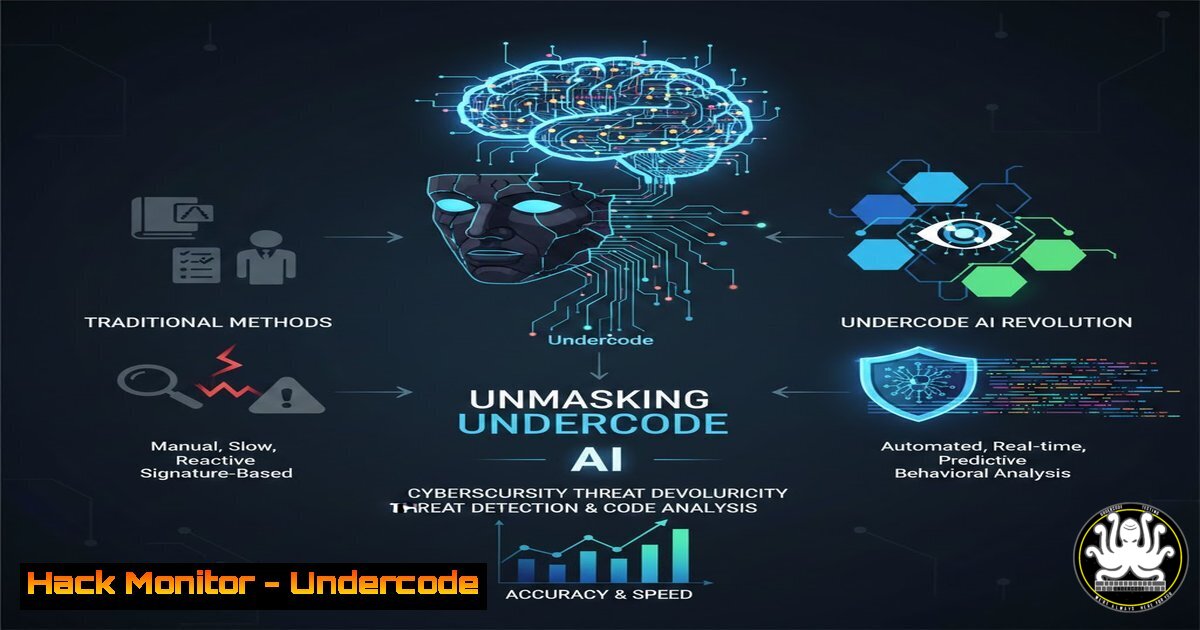
Introduction:
The cybersecurity landscape is perpetually evolving, with developers and security professionals locked in a relentless battle against increasingly sophisticated vulnerabilities. Enter Undercode, an emerging AI-powered tool that promises to shift this dynamic by offering deep, contextual analysis of code to identify security flaws before they can be exploited. This technology is not merely another linter; it is positioned as an intelligent coding partner that understands intent, context, and the intricate patterns of modern cyber threats, potentially redefining secure software development lifecycles.
Learning Objectives:
- Understand the core functionalities of Undercode and how it leverages AI for static and dynamic code analysis.
- Learn how to integrate AI-powered security scanning into your development workflow across different platforms.
- Identify and mitigate common vulnerability classes (e.g., SQLi, XSS, Insecure Deserialization) using AI-assisted tooling.
You Should Know:
1. The Architecture of an AI Code Analyst
Undercode operates by building a semantic understanding of your codebase, going beyond traditional syntax-based pattern matching. It uses Large Language Models (LLMs) trained on vast datasets of secure and vulnerable code to predict where logical flaws and security weaknesses might occur. This involves constructing an abstract syntax tree (AST), analyzing data flow, and identifying potentially dangerous function calls and data sinks.
Step‑by‑step guide explaining what this does and how to use it.
Step 1: Code Ingestion and Parsing. The tool first ingests your source code, regardless of the language (e.g., Python, JavaScript, Java). It parses the code to generate an AST.
Step 2: Contextual and Data-Flow Analysis. The AI traverses the AST to understand how data moves through the application. It tracks user input from the point of entry (a source) to where it is used (a sink), such as a database query or an HTML output.
Step 3: Pattern Recognition and Threat Prediction. Using its trained model, Undercode flags patterns that resemble known vulnerabilities. For instance, if user input flows directly into an `eval()` function in Python, it would be flagged as a critical code injection vulnerability.
2. Integrating Undercode into a CI/CD Pipeline
To move from reactive to proactive security, embedding tools like Undercode into your Continuous Integration/Continuous Deployment (CI/CD) pipeline is crucial. This ensures every code commit is automatically scanned for regressions and new vulnerabilities.
Step‑by‑step guide explaining what this does and how to use it.
Step 1: Pipeline Configuration. In your CI/CD platform (e.g., GitHub Actions, GitLab CI, Jenkins), you add a dedicated scanning step.
Step 2: Execute the Undercode Scan. The pipeline executes the Undercode scanner, typically via a Docker container or a dedicated CLI tool, against the newly pushed code.
Example GitHub Actions Snippet:
jobs:
security-scan:
runs-on: ubuntu-latest
steps:
- name: Checkout code
uses: actions/checkout@v3
- name: Run Undercode Security Scan
uses: undercode/scan-action@v1
with:
api-key: ${{ secrets.UNDERCODE_API_KEY }}
Step 3: Fail the Build on Critical Findings. Configure the pipeline to fail if the scan uncovers critical or high-severity vulnerabilities, preventing potentially vulnerable code from being deployed.
3. Practical Exploitation and Mitigation of SQL Injection
SQL Injection (SQLi) remains a top-tier web application risk. Undercode can identify potential SQLi vectors by detecting unparameterized database queries.
Step‑by‑step guide explaining what this does and how to use it.
The Vulnerability: A classic vulnerable code snippet in Python using SQLite:
user_id = request.GET['id']
query = "SELECT  FROM users WHERE id = " + user_id
cursor.execute(query)
The Exploit: An attacker could supply an `id` value of 1; DROP TABLE users--, which would delete the entire users table.
The Mitigation (Using Parameterized Queries): Undercode would recommend rewriting the code to use parameterized queries, which separate SQL code from data.
user_id = request.GET['id']
query = "SELECT  FROM users WHERE id = ?"
cursor.execute(query, (user_id,))  The user_id is safely passed as a parameter
A tool like Undercode would automatically flag the first example and suggest the corrected, secure version.
4. Hardening Cloud API Security with AI Insights
APIs are the backbone of modern cloud applications and a prime target for attackers. Undercode can analyze API endpoints for common misconfigurations, broken authentication, and excessive data exposure.
Step‑by‑step guide explaining what this does and how to use it.
Step 1: Endpoint Analysis. The tool scans your API route definitions and controller logic.
Step 2: Identify Weak Spots. It looks for issues like missing rate limiting, failure to validate JWT tokens, or endpoints that return entire database model objects instead of filtered data.
Step 3: Recommend Hardening Measures. For a cloud function (e.g., AWS Lambda), it might generate a recommendation to add a Web Application Firewall (WAF) with specific rules or to implement API gateway usage plans to throttle abusive requests.
5. Windows & Linux Command-Line Security Auditing
Beyond source code, environment configuration is key. Undercode’s principles can be extended to analyze system hardening scripts and commands.
Step‑by‑step guide explaining what this does and how to use it.
Linux: Auditing File Permissions. A common misstep is having world-writable configuration files containing secrets.
Audit Command: `find /etc -type f -perm -o+w` – This finds files in `/etc` that are writable by “others.”
Mitigation Command: `sudo chmod o-w /etc/myapp.conf` – This removes write permissions for “others” on a specific file.
Windows: Checking for Weak Service Permissions. Services running with SYSTEM privileges can be a security risk.
Audit Command (PowerShell): `Get-WmiObject win32_service | Select-Object Name, StartName, State` – Lists all services and their account contexts.
Analysis: An AI tool could parse this output and flag services running under overly permissive accounts, suggesting a shift to a dedicated, low-privilege service account.
What Undercode Say:
- Proactive, Not Reactive Security is the Future. The value of AI in cybersecurity lies in its ability to anticipate and prevent vulnerabilities during the development phase, drastically reducing the cost and effort of post-deployment patches and breach remediation.
- Context is King. Traditional SAST tools generate significant noise with false positives. The next generation of AI-powered tools wins by understanding developer intent and application context, providing highly accurate and actionable findings.
Analysis:
Undercode represents a significant leap beyond rule-based Static Application Security Testing (SAST). Its early user feedback suggests its strength is in contextual learning—it doesn’t just find a malloc; it assesses whether that memory allocation is properly handled downstream. This moves security closer to the developer’s mindset, transforming the scanner from a nagging critic into a collaborative partner. For the industry, this signals a move towards “shift-left” security that is deeply integrated and intelligent, rather than a burdensome, separate phase. The challenge will be maintaining the model’s training on novel attack vectors and preventing adversarial attacks that might attempt to “poison” its understanding of secure code.
Prediction:
The integration of advanced AI like Undercode into development environments will become standard within the next 3-5 years. This will fundamentally alter the economics of cyber defense, making it cheaper to build secure software than to fix it later. We will see a rise in “AI-assisted red teaming,” where the same underlying technology is used by both defenders to find flaws and attackers to discover novel exploitation techniques, leading to an AI-powered arms race in the cybersecurity domain. The ultimate winners will be organizations that most effectively leverage these tools to empower their developers, creating a pervasive culture of security-by-design.
🎯Let’s Practice For Free:
IT/Security Reporter URL:
Reported By: Zhang Zeyu – Hackers Feeds
Extra Hub: Undercode MoN
Basic Verification: Pass ✅


