Listen to this Post
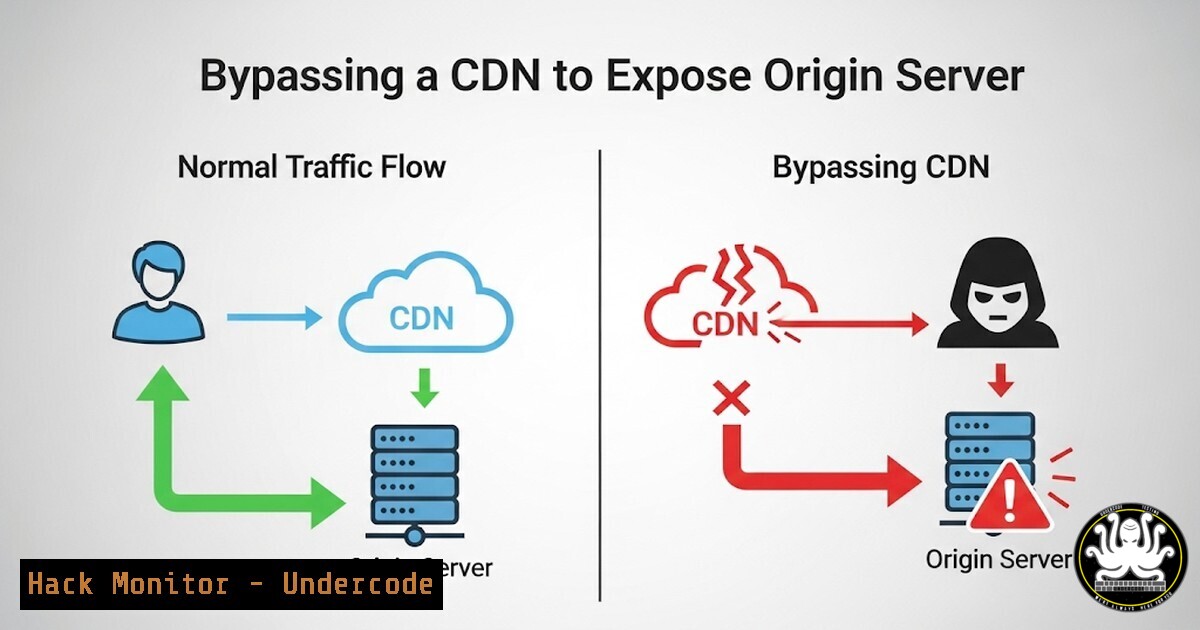
Introduction:
Many organizations operate under the false assumption that deploying a Content Delivery Network (CDN) or Web Application Firewall (WAF) like Cloudflare renders their origin server completely anonymous. In reality, sophisticated attackers leverage a suite of Open-Source Intelligence (OSINT) and technical analysis techniques to pierce this veil, exposing the critical infrastructure you believed was hidden. This article details the exact methods used and provides actionable commands to audit and harden your own defenses.
Learning Objectives:
- Identify the six primary techniques attackers use to discover origin servers hidden behind CDNs and WAFs.
- Execute a series of verified commands to audit your own external footprint for origin server leaks.
- Implement hardening measures to eliminate common misconfigurations that lead to exposure.
You Should Know:
1. Historical DNS Reconnaissance
Attackers frequently uncover origin IP addresses by scouring historical DNS data. Old ‘A’ records, cached by various services, can reveal the true IP before a CDN was implemented.
 Command to check historical DNS A records using SecurityTrails API
curl -H "APIKEY: YOUR_API_KEY" "https://api.securitytrails.com/v1/history/example.com/dns/a"
Step-by-step guide: This command queries the SecurityTrails database for historical A records for example.com. Replace `YOUR_API_KEY` with a valid API key and `example.com` with your target domain. Review the output for any IP addresses that differ from your CDN’s current IP ranges, as these may point directly to your origin.
2. Certificate Transparency (CT) Log Analysis
Every publicly trusted SSL/TLS certificate is logged in Certificate Transparency (CT) logs. Servers that present a certificate not shared with the CDN can be instantly identified as the origin.
 Query crt.sh for certificates issued for a domain
curl -s "https://crt.sh/?q=%.example.com&output=json" | jq -r '.[].name_value' | sort -u
Step-by-step guide: This command fetches all certificates logged for `example.com` and its subdomains from crt.sh, a popular CT log search tool. The `jq` utility parses the JSON output to extract domain names. Look for entries that may point to infrastructure not behind your CDN, such as `direct.example.com` or origin.example.com.
3. Subdomain Enumeration Techniques
Forgotten or misconfigured subdomains (e.g., staging, ftp, dev) that resolve directly to the origin IP are a common weak link.
 Using subfinder to discover subdomains
subfinder -d example.com -silent

Using amass for passive enumeration
amass enum -passive -d example.com
Step-by-step guide: Run these subdomain enumeration tools against your domain. For any discovered subdomains, perform a DNS lookup (dig A staging.example.com @8.8.8.8). If the resulting IP is not part of your CDN’s published IP ranges, that subdomain is leaking your origin server’s address.
4. TLS and HTTP Header Fingerprinting
Origin servers and CDN nodes often have subtly different TLS configurations and HTTP response headers, allowing attackers to fingerprint and correlate them.
 Using curl to analyze HTTP headers and SSL details
curl -I https://example.com --connect-to ::cdn-proxy-ip:
curl -I https://suspected-origin-ip --insecure

Using testssl.sh for detailed TLS analysis
testssl.sh -p -P -S -h example.com
Step-by-step guide: Execute the first `curl` command against your domain via the CDN and note the server, x-powered-by, and other headers. Then, run the second command directly against any suspected origin IP (using `–insecure` to bypass certificate errors). Compare the outputs; identical headers or TLS signatures are a strong indicator of a direct origin leak.
5. Passive DNS Replication Analysis
Passive DNS (PDNS) databases replicate DNS query data from around the globe. Querying these can reveal if any subdomain has ever resolved to an origin IP.
 Querying VirusTotal's PDNS API
curl -H "x-apikey: YOUR_VT_API_KEY" "https://www.virustotal.com/api/v3/domains/example.com/subdomains?limit=20"

Using dnsdb-client to query Farsight DNSDB
dnsdbq -r example.com/ANY -l 100
Step-by-step guide: These commands query massive aggregated DNS databases. Analyze the results for any historical resolutions that map your domain or its subdomains to an IP address not in your CDN’s network. This is a powerful way to find leaks that have since been corrected in primary DNS but remain discoverable.
6. GitHub and Code Repository Scraping
Developers often accidentally hardcode internal IPs, API keys, and configuration files into public code repositories, providing a treasure trove of information.
 Basic GitHub dorking via search API
curl -G https://api.github.com/search/code \
--data-urlencode "q=example.com+OR+192.168.1.1+extension:json+extension:env" \
-H "Accept: application/vnd.github.v3+json"
Step-by-step guide: This API call searches GitHub for code containing your domain or a sample internal IP within common configuration file types. Regularly run such searches for your company’s name, domains, and known internal network ranges to find and remove accidentally published secrets.
7. Cloud Provider Metadata Service Exploitation
If your origin server runs on a cloud platform like AWS, GCP, or Azure, attackers can probe for misconfigured security groups that allow direct access to the instance metadata service, revealing critical credentials.
 Attempt to query the AWS Instance Metadata Service (IMDS) from an external perspective
curl http://suspected-ip/latest/meta-data/ -H "Host: 169.254.169.254" --connect-timeout 3

Probe for Azure Instance Metadata Service
curl -H "Metadata: true" http://suspected-ip/metadata/instance?api-version=2021-02-01 --connect-timeout 3
Step-by-step guide: These commands test if a suspected origin IP has its cloud metadata service exposed to the internet. This is a severe misconfiguration. This should only be done on your own infrastructure with explicit permission. A response indicates a critical security flaw that could lead to full cloud account compromise.
What Undercode Say:
- Assumption is the Mother of All Breaches. Relying solely on a CDN as an invisibility cloak is a catastrophic strategic error. Security must be proactive and continuous, not a “set and forget” configuration.
- Governance Trumps Technology. The most common leaks—staging subdomains, historical DNS, and code commits—are not technical failures but process and governance failures. Regular auditing and developer training are non-negotiable.
The core analysis indicates that origin exposure is less about cutting-edge hacking and more about systematic reconnaissance exploiting operational oversights. While CDNs provide essential performance and security benefits, they are not a panacea. Organizations must adopt an “assume breach” mindset, continuously monitoring their own external footprint with the same tools and persistence an attacker would use. The battle for perimeter security is now fought in the realms of OSINT and configuration hygiene, not just at the network boundary.
Prediction:
The automation of these reconnaissance techniques using AI will become standard in attacker toolkits within two years, drastically reducing the time-to-compromise for targeted organizations. AI-powered bots will continuously scrape CT logs, PDNS, and code repositories, automatically building and updating profiles of target infrastructure with minimal human intervention. This will make current “security through obscurity” models completely obsolete, forcing a industry-wide shift towards zero-trust architectures where the exposure of an origin IP is a mitigated risk rather than a catastrophic failure. Proactive origin concealment and rigorous external surface auditing will transition from a best practice to a fundamental requirement.
🎯Let’s Practice For Free:
IT/Security Reporter URL:
Reported By: Abhishekmitra1989 Behind – Hackers Feeds
Extra Hub: Undercode MoN
Basic Verification: Pass ✅


