Listen to this Post
Introduction:
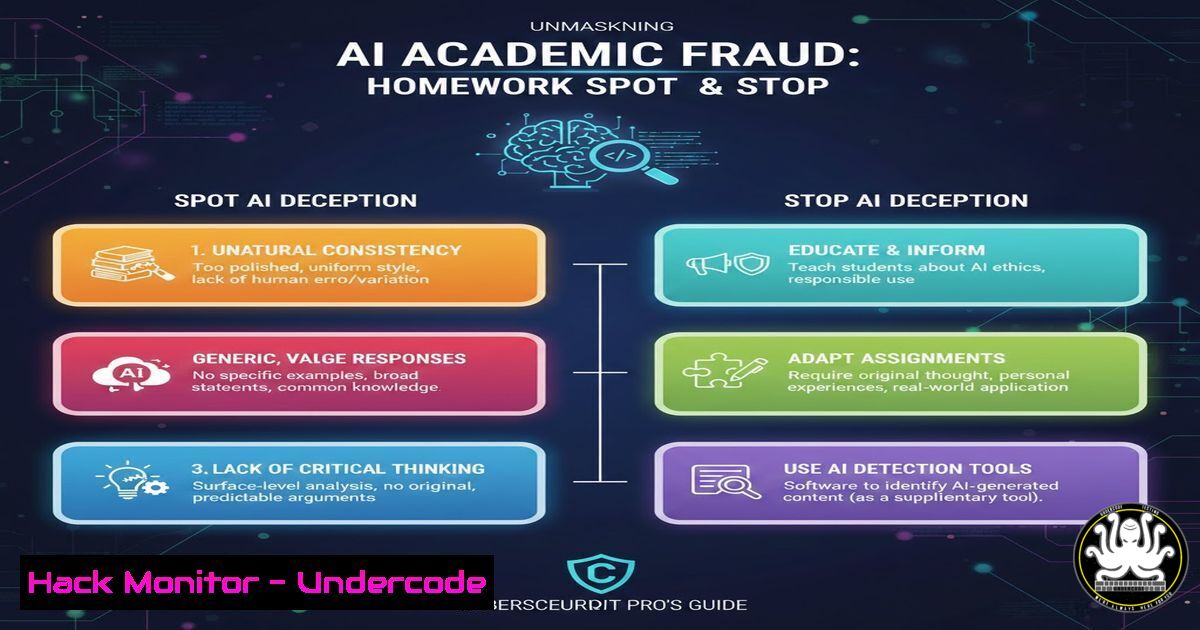
The viral post showcasing an “incredible” AI passing a homework test underscores a burgeoning threat vector in cybersecurity: AI-powered academic fraud. This isn’t just about cheating; it’s a gateway to sophisticated social engineering, credential theft, and data poisoning attacks, where AI-generated content is used to bypass traditional security and verification systems. This article deconstructs the technical implications and provides actionable defense strategies.
Learning Objectives:
- Understand how Large Language Models (LLMs) are weaponized for fraud and initial reconnaissance in cyber attacks.
- Learn to implement technical controls and detection methods for AI-generated content and anomalous user behavior.
- Master defensive configurations for enterprise and educational environments to mitigate risks from AI-authorized fraudulent activities.
You Should Know:
1. The Anatomy of an AI-Generated Submission Attack
AI-generated text, code, and even diagrams can be used to create fraudulent academic work, penetration testing reports, or even phishing lures that appear highly credible. The attack begins with prompt engineering to tailor output that evades plagiarism checkers and mimics human writing patterns.
Step-by-step guide:
Step 1: Attacker Reconnaissance. The attacker uses AI to research the topic, understand context, and gather key phrases. Tools like GPT-4, Claude, or open-source models (via Hugging Face) are queried with detailed prompts.
Example “Generate a 500-word essay on the history of cryptography, written in a conversational undergraduate style, with three specific mentions of the Enigma machine and Diffie-Hellman key exchange. Include one subtle grammatical error per paragraph to mimic human imperfection.”
Step 2: Content Generation & Obfuscation. The AI creates the content. For code submissions, the attacker may request: “Write a Python script for a secure login system with bcrypt hashing, then refactor it to avoid common code similarity detection algorithms.”
Step 3: Submission & Evasion. The fraudulent content is submitted through standard portals. Basic checks pass because the content is original AI output, not copied.
2. Detecting AI Artifacts with Technical Tools
While detection is challenging, forensic analysis of text and code can reveal AI artifacts—statistical uniformity, lack of depth on recent events, or specific token patterns.
Step-by-step guide:
Step 1: Utilize Dedicated Detection APIs. Integrate checks into submission systems.
Linux CLI using curl with OpenAI’s classifier (example):
curl https://api.openai.com/v1/classifications \
-H "Authorization: Bearer $OPENAI_API_KEY" \
-H "Content-Type: application/json" \
-d '{
"model": "text-davinci-003",
"query": "PASTE_SUBMITTED_TEXT_HERE",
"labels": ["AI-generated", "Human-written"]
}'
Step 2: Implement Stylometric Analysis. Use Python scripts to analyze writing style.
Example Python snippet using `textstat` and `scikit-learn`:
import textstat
 Calculate Fog Index, lexical diversity
complexity = textstat.gunning_fog(text_sample)
 A very uniform score across multiple submissions can be a red flag.
Step 3: Deploy Pattern-Based Code Analysis. For programming assignments, use static analysis.
Using `grep` and `cloc` on a Linux system to find generic comments or structure:
 Search for overly generic AI-produced comment patterns
grep -r "This function handles the process" ./submitted_code/
 Compare code structure metrics across submissions
cloc ./submission_directory/ --by-file --report-file=cloc_report.txt
3. Hardening Submission and Authentication Systems
Move beyond simple file uploads to interactive, monitored environments that validate the user’s process, not just the final output.
Step-by-step guide:
Step 1: Implement Multi-Factor Authentication (MFA) and Context-Aware Access. Ensure the submitting account is legitimate and accessed from a typical location/device.
Windows Server (Using PowerShell for AD):
 Enforce MFA registration for a security group (conceptual)
Set-AdfsGlobalAuthenticationPolicy -AdditionalAuthenticationProvider @("AzureMfaAuthentication")
Step 2: Use Secure, Monitored Exam Environments. Tools like LockDown Browser or containerized coding platforms (e.g., GitLab CI/CD with session recording) can limit external access.
Docker command to isolate a testing environment:
docker run --rm -it --memory="512m" --cpus="1.0" --network=none -v $(pwd)/test_code:/app:ro python:3.9-slim bash
Step 3: Leverage Behavioral Analytics. Monitor keystroke dynamics, time spent, and access patterns during submission creation. Sudden, highly productive bursts or perfect code with no intermediate saves can be flagged.
- Mitigating the “AI Homework” Threat in Corporate Training & Code Reviews
The same techniques used for homework fraud can compromise internal security training, certification, and code review processes, leading to skill gaps and insecure code being deployed.
Step-by-step guide:
Step 1: Mandate Interactive, Practical Assessments. Replace take-home essays with proctored, hands-on labs.
Setup a simple vulnerable VM (e.g., Metasploitable) for a practical test:
 On a controlled KVM host, start the assessment VM
virsh start metasploitable-assessment
 Provide unique, dynamically generated credentials to each user
Step 2: Enhance Code Review with AI-Detection Plugins. Integrate tools into your CI/CD pipeline.
Example: Using GitHub Actions with a custom scan:
- name: Scan for AI-generated code patterns
run: |
python scripts/scan_for_ai_artifacts.py ${{ github.workspace }}
Step 3: Foster a Culture of Authentic Learning. Pair training with mandatory, unscripted viva voce (oral) exams or peer programming sessions to verify understanding.
- Proactive Defense: Training Your Team on AI Threats
The best defense is a aware workforce. Security awareness training must now include modules on the malicious use of AI.
Step-by-step guide:
Step 1: Develop Internal Training Modules. Create content explaining how AI can be used for phishing, deepfakes, and fraud.
Step 2: Conduct Red Team Exercises. Use AI tools to generate phishing emails and test employee vigilance. Analyze which emails bypass filters and why.
Step 3: Establish Clear Policies. Update acceptable use policies (AUP) to explicitly forbid the use of unauthorized AI tools for generating work product that must represent human skill. Define approved AI tools and use cases.
What Undercode Say:
- The “Homework Test” is a Canary in the Coal Mine. The ability of AI to credibly complete assigned tasks signals a paradigm shift. The immediate next step for threat actors is using these capabilities to generate malicious code, fraudulent reports, and hyper-personalized social engineering content at scale, drastically lowering the barrier to entry for advanced attacks.
- Detection is a Losing Battle; Process Validation is Key. Reliably distinguishing AI-generated from human-generated content will become mathematically impossible. Therefore, security must pivot to verifying the process—through monitored environments, behavioral biometrics, and interactive assessments—rather than just authenticating the output.
The core takeaway is that this trend blurs the line between human and machine output, eroding trust in digital credentials and submissions. Organizations must architect systems that assume AI-generated fraud is omnipresent and design controls that validate human presence and comprehension throughout the workflow, not just at the point of submission. The focus shifts from content detection to identity and process assurance.
Prediction:
Within 2-3 years, AI-generated fraud will evolve from academic cheating to widespread corporate and software supply chain incidents. We will see the first major breach attributed to AI-generated code that slipped through review, and AI-forged security audit reports will be used in social engineering attacks against C-level executives. This will spur the rapid adoption of “proof-of-humanity” protocols and zero-trust learning/code submission platforms, integrating continuous authentication and process verification as standard practice. The cybersecurity industry will respond with a new category of tools focused on behavioral credentialing and AI activity logging.
▶️ Related Video (76% Match):
🎯Let’s Practice For Free:
IT/Security Reporter URL:
Reported By: Rpvmay The – Hackers Feeds
Extra Hub: Undercode MoN
Basic Verification: Pass ✅


