Listen to this Post
Introduction:
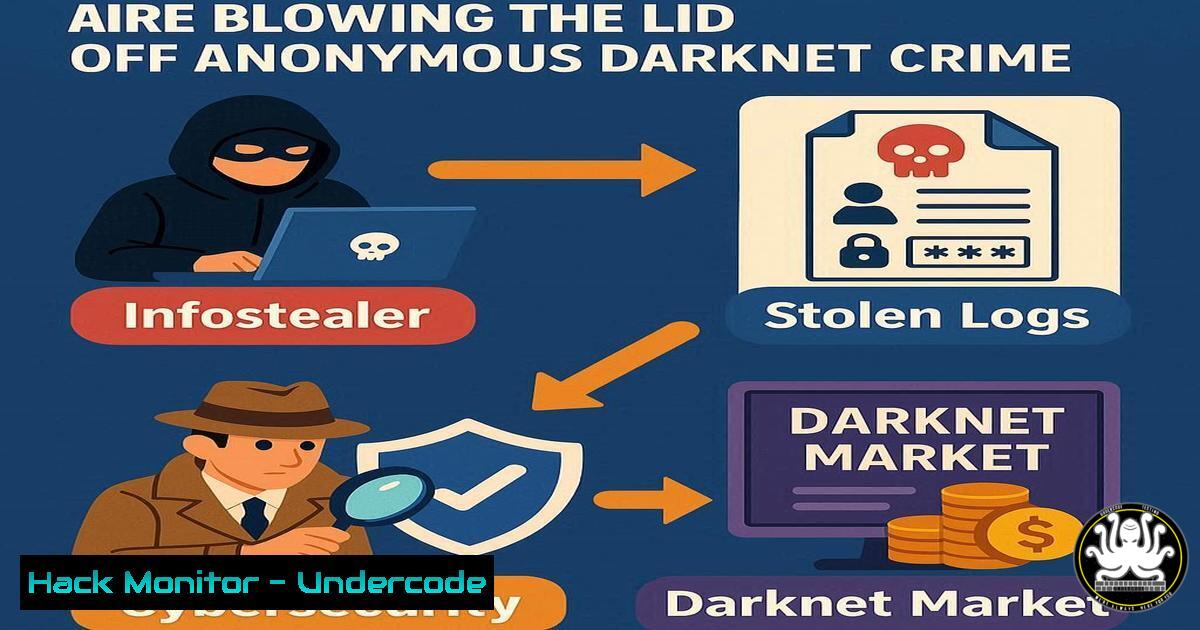
The digital underworld is facing a new era of exposure, not through sophisticated decryption, but by leveraging the very malware criminals use. Infostealer logs, harvested by information-stealing trojans, are becoming a pivotal tool for investigators. These logs are now being integrated into powerful platforms like Darkside, enabling the correlation of compromised credentials to de-anonymize activities on encrypted darknet services.
Learning Objectives:
- Understand the operational mechanics of infostealers and the data they capture.
- Learn how to query and pivot across massive breach datasets to trace digital identities.
- Explore the ethical and legal frameworks governing the use of stolen data in official investigations.
You Should Know:
1. The Anatomy of an Infostealer Log
Infostealer malware, like RedLine or Raccoon, vacuums data from infected machines. The resulting logs are goldmines of forensic data.
 Typical Infostealer Log Data Structure (JSON Example)
{
"ip_address": "192.168.1.100",
"system_info": {
"username": "DarkNetUser_01",
"machine_name": "DESKTOP-7A3B1F2",
"os": "Windows 10"
},
"cookies": [
{ "host": ".onion", "name": "sessionid", "value": "abc123..." }
],
"saved_passwords": [
{ "url": "http://csm-site.onion/login", "username": "predator23", "password": "encrypted_or_plaintext" }
],
"autofill_data": [
{ "field_name": "email", "value": "[email protected]" }
]
}
Step-by-step guide: When a user’s computer is infected, the stealer executable runs a series of queries to gather this data. It dumps browser cookies, saved passwords, autofill information, and system details. This data is then exfiltrated to a command-and-control (C2) server. Investigators who gain access to these logs, either via takedowns or purchasing from threat intelligence feeds, can parse this JSON-like structure. The key is cross-referencing the discovered credentials—like a unique `sessionid` or a `username:password` combination—against access logs from darknet sites, such as those hosting CSAM, to confirm a user’s identity and activities.
- Pivoting from a Username to an Email with Darkside-Style Queries
Platforms like Darkside allow analysts to start with a single data point and find connected information across billions of records.Example CLI Pivot Query (Conceptual) $ darkside-cli query --selector username --value "predator23"</li> </ol> RESULTS FOUND: 4 - Compromise Source: "StealerLog_2024_01.bin" Email: [email protected] Password: "P@ssw0rd123!" IP: "95.123.78.201" <ul> <li>Compromise Source: "Breach_CompanyX_2023.db" Email: [email protected] Password: "DarkWeb2024!"
Step-by-step guide: This process automates the manual work of combining multiple breach datasets. 1. An investigator inputs a known identifier, such as a username found on a darknet forum. 2. The platform’s backend scans its aggregated databases of breaches and stealer logs for any record containing that username. 3. The results are returned, showing all associated emails, passwords, and IP addresses. 4. The investigator can then pivot again using the newly discovered email (
[email protected]) to find other accounts or services where that email was used, building a comprehensive profile of the individual. - The weaponization of criminal tools against their own operations marks a fundamental shift in cyber forensics, turning the attackers' greatest strength into their most critical vulnerability.
- The ethical line is thin; using stolen data for justice is powerful, but it operates in a legal grey zone that demands strict oversight and clear lawful authority.
3. Correlating .onion Credentials with Infostealer Data
The core technique used in the Recorded Future report involves matching credentials from darknet sites with those found in stealer logs.
 Python Snippet to Correlate Credentials
import sqlite3

Connect to a database of harvested .onion site credentials
onion_db = sqlite3.connect('onion_access_logs.db')
onion_cursor = onion_db.cursor()
onion_cursor.execute("SELECT username, password FROM login_attempts WHERE site='csm_hub'")

Connect to a database of parsed infostealer logs
stealer_db = sqlite3.connect('parsed_stealer_logs.db')
stealer_cursor = stealer_db.cursor()

for (onion_user, onion_pass) in onion_cursor.fetchall():
stealer_cursor.execute("""
SELECT source_ip, machine_name FROM logs
WHERE username=? AND password=?
""", (onion_user, onion_pass))
result = stealer_cursor.fetchone()
if result:
print(f"[bash] Onion User '{onion_user}' -> Real IP: {result[bash]}, Hostname: {result[bash]}")
Step-by-step guide: This script demonstrates the correlation logic. 1. Data Collection: First, you need two datasets: one containing credentials (username, password) extracted from the login pages or logs of a target .onion site, and another containing parsed data from infostealer logs. 2. Iteration: The script loops through every credential pair from the .onion site. 3. Query: For each pair, it queries the infostealer database to see if the exact same username and password combination exists. 4. Verification: A successful match (
</code>) directly links an anonymous darknet activity to a specific infected computer, revealing the real IP address and hostname of the user.

<h2 style="color: yellow;">4. Hardening Systems Against Infostealer Infections</h2>

Preventing the initial infection is the best defense against this type of de-anonymization.
[bash]
 Windows Defender Application Control (WDAC) Policy - Example XML Snippet
<FileRules>
<Allow ID="1001" FriendlyName="Microsoft Signed Apps" FileName="" />
<Allow ID="1002" FriendlyName="WHQL Signed Drivers" FileName="" />
<Deny ID="9999" FriendlyName="Block Untrusted Scripts" FileName=".ps1" FilePath="%USERPROFILE%\Downloads" />
</FileRules>

PowerShell to Deploy a Base WDAC Policy
$PolicyPath = "C:\Windows\schemas\CodeIntegrity\ExamplePolicies\DefaultWindows_Enforced.xml"
ConvertFrom-CIPolicy -XmlFilePath $PolicyPath -BinaryFilePath "C:\Temp\SiPolicy.p7b"
Apply-CIPolicy -FilePath "C:\Temp\SiPolicy.p7b"
Step-by-step guide: WDAC restricts which applications can run on a Windows system. 1. Policy Creation: Create an XML policy that, in its simplest form, allows only applications signed by Microsoft (or your company) to execute. The example also explicitly blocks PowerShell scripts (.ps1) from running in the high-risk `Downloads` directory. 2. Conversion: Use the `ConvertFrom-CIPolicy` cmdlet to convert the human-readable XML into a binary file that the system can enforce. 3. Application: Deploy this binary policy using the `Apply-CIPolicy` cmdlet. This prevents unauthorized executables, like infostealer malware, from running in the first place, thereby protecting the user's credentials and system data from being stolen.
5. Leveraging MITRE ATT&CK for Infostealer Analysis
Framing the infostealer threat within the MITRE ATT&CK framework helps standardize detection and analysis.
 Sigma Rule to Detect Credential Dumping by LSASS Access (Example)
title: LSASS Access via Credential Dumping Tool
logsource:
category: process_creation
product: windows
detection:
selection:
Image|endswith:
- '\procdump.exe'
- '\mimikatz.exe'
CommandLine|contains: 'lsass'
condition: selection
falsepositives:
- Legitimate administrative activity
level: high
Step-by-step guide: This Sigma rule is a generic signature for detecting credential dumping. 1. Log Source: It monitors Windows process creation events. 2. Detection Logic: It looks for known credential-dumping tools (procdump.exe, mimikatz.exe) and checks if their command-line arguments include a reference to the `lsass` process, which stores user credentials in memory. 3. Condition: If both conditions are met, a high-severity alert is generated. Security teams can deploy this rule in their SIEM (like Elasticsearch or Splunk) to get early warnings of infostealer activity on their network, as most stealers will attempt to dump credentials from LSASS.
6. Cloud-Based Threat Hunting with Stealer Log Data
Security teams can proactively hunt for compromised corporate credentials in circulating stealer logs.
 KQL Query for Azure Sentinel/Microsoft Defender to Hunt for Compromised Credentials
let StealerLogs = datatable(Email:string, Password:string, Source:string)[
"[email protected]", "CompanyPass123!", "RedLine_Stealer_Log_445",
"[email protected]", "Winter2024!", "Raccoon_Stealer_Log_782"
];
SecurityEvent
| where EventID == 4624 // Successful logon
| project LogonTime = TimeGenerated, Account = AccountName, Computer = Computer
| join kind=inner (StealerLogs) on $left.Account == $right.Email
| project LogonTime, Account, Computer, CompromisedPassword = Password, LogSource = Source
Step-by-step guide: This Kusto Query Language (KQL) hunt assumes you have ingested a list of known-compromised credentials (StealerLogs). 1. Data Definition: The `datatable` operator defines a sample set of credentials known to be in stealer logs. In practice, this would be a large, regularly updated dataset. 2. Logon Correlation: The query looks at all successful logon events (EventID 4624) on your network. 3. Join Operation: It performs an inner join between the successful logons and the list of compromised credentials, matching on the email/account name. 4. Result: Any match indicates that a user is successfully logging into a corporate system using a password that is known to be circulating in criminal stealer logs, signaling a severe account compromise that requires immediate password reset and investigation.
What Undercode Say:
The integration of infostealer logs into platforms like Darkside represents a paradigm shift in OSINT and cyber investigations. It's a form of digital jiu-jitsu, using the adversary's momentum and tools against them. While the efficacy is undeniable, as demonstrated by the takedown of CSAM consumers, this practice raises profound questions. Law enforcement and vetted investigators operate under a mandate, but the same data is available to private intelligence firms and potentially malicious actors. The technique blurs the line between victim and investigator, as both are using illegally obtained data. The long-term implication is a forced evolution of criminal tradecraft, potentially leading to even more secure communication methods and a greater reliance on hardware-based security keys that are immune to infostealers, creating a new arms race in the shadows.
Prediction:
The widespread use of infostealer logs for de-anonymization will force a rapid evolution in darknet tradecraft. We predict a surge in the adoption of hardware security keys (like Yubikey) for two-factor authentication on darknet markets and forums, as these cannot be stolen by malware. Concurrently, sophisticated threat actors will develop and deploy "cleanroom" operational environments—fully isolated virtual machines with no personal data, used solely for accessing sensitive services. This will create a bifurcation in the threat landscape: low-level criminals will continue to be easily unmasked, while high-value targets will become significantly harder to identify, pushing investigators towards more advanced network exploitation and signal intelligence techniques.
🎯Let’s Practice For Free:
IT/Security Reporter URL:
Reported By: Valdemarballe %F0%9D%97%94%F0%9D%97%BA%F0%9D%97%AE%F0%9D%98%87%F0%9D%97%B6%F0%9D%97%BB%F0%9D%97%B4 - Hackers Feeds
Extra Hub: Undercode MoN
Basic Verification: Pass ✅


