Listen to this Post
Introduction:
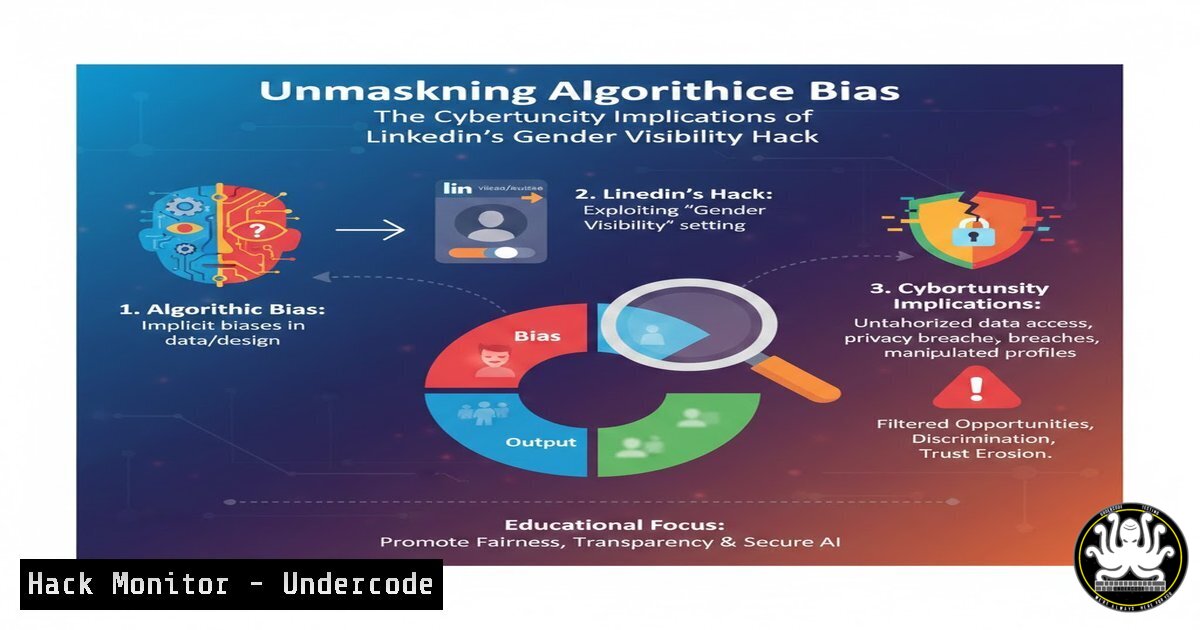
A recent social experiment revealed that women on LinkedIn gained a 400% increase in post views simply by changing their gender to male in their profile settings. This phenomenon exposes deeper issues within platform algorithms that cybersecurity and IT professionals must understand, as it demonstrates how machine learning systems can perpetuate and amplify real-world biases with significant consequences for digital equity and platform security.
Learning Objectives:
- Understand how algorithmic bias functions within social media platforms and professional networks
- Learn methods to audit and detect bias in automated systems
- Develop strategies to mitigate bias in AI-driven content distribution systems
You Should Know:
1. The Technical Architecture of Social Media Algorithms
Social media platforms like LinkedIn employ complex recommendation algorithms that analyze user engagement patterns to distribute content. These systems typically use collaborative filtering, natural language processing, and deep learning models to predict what content users will find engaging.
Step-by-step guide explaining what this does and how to use it:
– Recommendation engines track metrics including click-through rates, comment frequency, and sharing patterns
– The algorithms create user embeddings – mathematical representations of user preferences and behaviors
– Content is then scored based on similarity to these embeddings and promoted accordingly
– To audit these systems, security professionals can use tools like:
 Basic bias detection framework
import pandas as pd
from sklearn.metrics import accuracy_score, demographic_parity_ratio

def detect_bias(dataset, protected_attribute, predictions):
parity_ratio = demographic_parity_ratio(dataset[bash], predictions)
return parity_ratio
2. Data Collection and Demographic Tracking
LinkedIn’s demographic collection features, including gender fields, directly feed into their algorithmic systems. Understanding what data platforms collect and how they use it is crucial for cybersecurity professionals.
Step-by-step guide explaining what this does and how to use it:
– Platforms typically store demographic data in separate database tables with user ID linkages
– This data is used for both advertising targeting and algorithmic content distribution
– Security researchers can use browser developer tools to monitor data transmission:
// Monitor network requests for demographic data
console.log("Tracking API calls:");
window.addEventListener('beforeunload', function() {
performance.getEntriesByType("resource").forEach(function(entry) {
if(entry.name.includes("demographic") || entry.name.includes("gender")) {
console.log("Demographic API call:", entry.name);
}
});
});
3. API Security and Data Integrity Concerns
The ability to easily change demographic information raises questions about API security and data validation processes. Cybersecurity professionals must ensure that platform APIs properly validate and log demographic changes.
Step-by-step guide explaining what this does and how to use it:
– Platforms should implement strict change logging for demographic fields
– Security teams can test API endpoints using tools like Postman or curl:
 Test profile modification API endpoints
curl -X PATCH https://api.linkedin.com/v2/me \
-H "Authorization: Bearer <token>" \
-H "Content-Type: application/json" \
-d '{"gender": "male"}'
– Implement automated monitoring for unusual demographic change patterns that might indicate testing or manipulation
4. Machine Learning Model Retraining and Feedback Loops
The gender visibility experiment demonstrates how biased outcomes can create self-reinforcing feedback loops in machine learning systems. When content from certain demographics receives more visibility, the algorithm learns to prefer that demographic.
Step-by-step guide explaining what this does and how to use it:
– Monitor model performance across different demographic segments
– Implement regular bias audits using fairness metrics:
from aif360.metrics import BinaryLabelDatasetMetric
from aif360.algorithms.preprocessing import Reweighing

Measure bias in training data
metric = BinaryLabelDatasetMetric(dataset,
unprivileged_groups=unprivileged_groups,
privileged_groups=privileged_groups)
print("Disparate impact:", metric.disparate_impact())
– Use techniques like adversarial debiasing during model training to reduce algorithmic bias
5. Privacy-Preserving Analytics and Differential Privacy
To prevent exploitation of demographic data while maintaining platform functionality, cybersecurity professionals can implement differential privacy and other privacy-enhancing technologies.
Step-by-step guide explaining what this does and how to use it:
– Differential privacy adds calibrated noise to query results to prevent individual identification
– Implement using frameworks like Google’s Differential Privacy library:
from pipeline_dp import aggregate_params, budget
import pipeline_dp

Configure differential privacy parameters
budget_accountant = budget.BudgetAccountant(epsilon=1.0, delta=1e-5)
params = aggregate_params.AggregateParams(
max_partitions_contributed=1,
max_contributions_per_partition=1,
min_value=0,
max_value=1)
– This allows platforms to gather aggregate engagement metrics without exposing individual user data
6. Continuous Security Monitoring for Algorithmic Systems
Organizations must implement ongoing monitoring specifically designed to detect algorithmic bias and manipulation in production systems.
Step-by-step guide explaining what this does and how to use it:
– Deploy monitoring dashboards that track performance metrics across demographic segments
– Set up alerts for significant disparities in content distribution:
-- SQL query to detect engagement disparities
SELECT gender,
AVG(views) as avg_views,
AVG(engagement_rate) as avg_engagement
FROM user_posts
GROUP BY gender
HAVING ABS(avg_views - (SELECT AVG(views) FROM user_posts)) > 0.4;
– Implement A/B testing frameworks that can detect biased outcomes early in deployment cycles
7. Ethical AI Governance Frameworks
Beyond technical solutions, organizations need robust governance frameworks to ensure algorithmic systems operate fairly and transparently.
Step-by-step guide explaining what this does and how to use it:
– Establish multi-disciplinary AI ethics committees including cybersecurity, legal, and diversity experts
– Implement model cards and fact sheets that document system limitations and testing results
– Create transparent opt-in systems for algorithmic content distribution:
 Example consent management system
class UserConsent:
def <strong>init</strong>(self, user_id):
self.user_id = user_id
self.algorithmic_preferences = self.load_preferences()

def update_algorithm_consent(self, algorithm_type, consent_status):
self.algorithmic_preferences[bash] = consent_status
self.save_preferences()
What Undercode Say:
- Algorithmic bias represents a significant cybersecurity threat that can undermine platform integrity and user trust
- The ease of manipulating demographic fields to achieve different outcomes highlights fundamental flaws in content distribution systems
- Organizations must treat algorithmic fairness as a security requirement, not just an ethical consideration
- Continuous monitoring and regular bias audits should be integrated into standard security practices
- The 400% visibility increase demonstrates how quickly biased algorithms can create unequal playing fields
The LinkedIn gender experiment reveals critical vulnerabilities in how platforms design and deploy algorithmic systems. From a cybersecurity perspective, this isn’t merely about social equity—it’s about system integrity. Biased algorithms create attack surfaces that can be exploited through profile manipulation, potentially enabling bad actors to amplify malicious content. As AI systems become more pervasive in professional and social platforms, the cybersecurity community must lead in developing technical safeguards against algorithmic discrimination, treating bias detection with the same urgency as traditional security vulnerabilities.
Prediction:
Within two years, regulatory bodies will begin treating algorithmic bias as a cybersecurity compliance issue, requiring independent audits of content distribution systems. We’ll see the emergence of specialized tools for detecting and mitigating bias in real-time, similar to current web application firewalls. Major platforms will face significant penalties for biased algorithms, and cybersecurity insurance policies will begin excluding coverage for incidents stemming from unaddressed algorithmic discrimination. The cybersecurity profession will develop new specializations focused exclusively on algorithmic integrity and fairness assurance.
🎯Let’s Practice For Free:
IT/Security Reporter URL:
Reported By: Michael Tchuindjang – Hackers Feeds
Extra Hub: Undercode MoN
Basic Verification: Pass ✅


