Listen to this Post
Introduction:
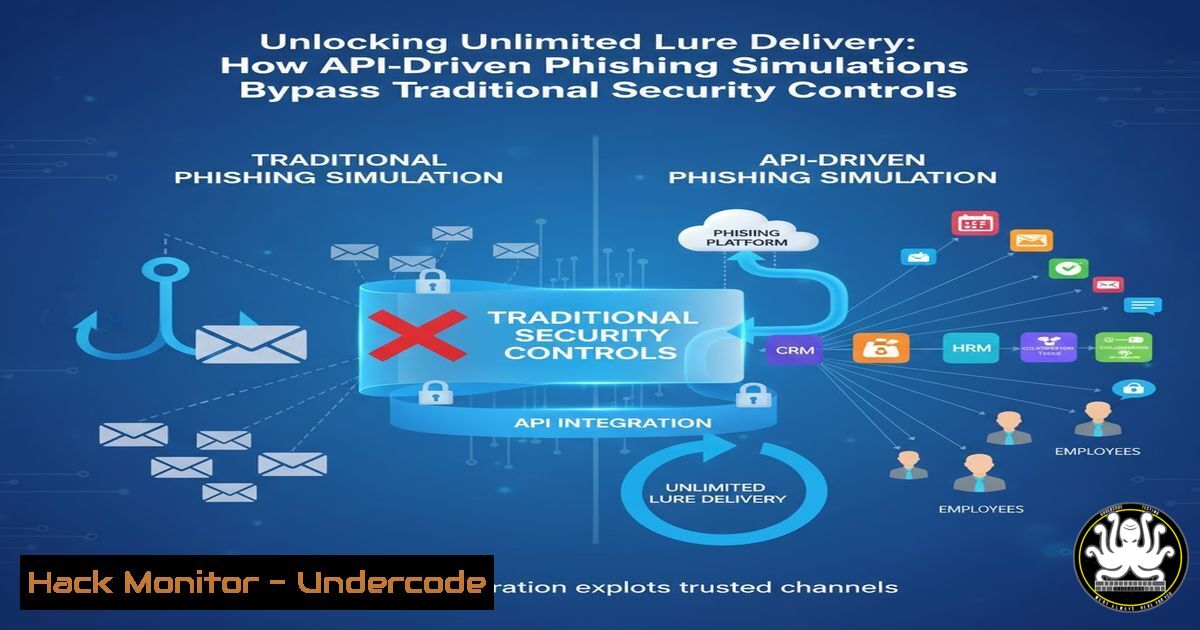
Modern phishing simulation platforms are evolving beyond simple SMTP delivery, embracing API-driven methods to overcome common network restrictions. This technical shift enables red teams and security professionals to craft highly customized social engineering lures that bypass traditional email security gateways and network filtering mechanisms, providing more realistic security assessments.
Learning Objectives:
- Understand how API-based email delivery circumvents SMTP port blocking in cloud environments
- Master the configuration of Phishing Club’s API Sender functionality for custom integrations
- Implement API bridge patterns for advanced social engineering campaigns across multiple communication channels
You Should Know:
1. The SMTP Limitation Problem in Cloud Environments
Many cloud hosting providers and corporate networks restrict outbound SMTP traffic on ports 25, 587, and 465 to prevent spam and unauthorized email relay. This creates significant challenges for security teams attempting to conduct phishing simulations from cloud instances or within restricted network environments.
Step-by-step guide explaining what this does and how to use it:
The traditional SMTP approach requires direct mail transfer protocol communication, which depends on specific network ports being accessible. When these ports are blocked, simulation emails cannot be delivered through conventional means.
Technical Verification Commands:
 Check if SMTP ports are blocked from your environment
telnet smtp.sendgrid.net 587
telnet smtp.gmail.com 465
nc -zv smtp.office365.com 25

Alternative check using curl for HTTP-based services
curl -v https://api.sendgrid.com/v3/mail/send
Configuration Example – Digital Ocean Instance:
 On Digital Ocean, test outbound connectivity
iptables -L OUTPUT -n  Check firewall rules
netstat -tuln | grep :587  Verify no local service blocking port
2. API Sender Architecture and Variables
Phishing Club’s API Sender functionality transforms email delivery from protocol-based to API-based, using RESTful API calls to cloud email services. This approach leverages HTTP/HTTPS traffic on standard web ports (80/443), which are rarely blocked in modern networks.
Step-by-step guide explaining what this does and how to use it:
The API Sender works by constructing HTTP requests with dynamic variables that are replaced at runtime with target-specific information, enabling personalized mass email campaigns through third-party email APIs.
SendGrid API Configuration:
// Example API Sender configuration for SendGrid
{
"method": "POST",
"url": "https://api.sendgrid.com/v3/mail/send",
"headers": {
"Authorization": "Bearer {{API_KEY}}",
"Content-Type": "application/json"
},
"body": {
"personalizations": [{
"to": [{"email": "{{email}}"}],
"dynamic_template_data": {
"first_name": "{{first_name}}",
"tracking_pixel": "{{tracking_url}}"
}
}],
"from": {"email": "[email protected]"},
"template_id": "your-template-id-here"
}
}
Available Phishing Club Variables:
– `{{email}}` – Target email address
– `{{first_name}}` – Target first name
– `{{last_name}}` – Target last name
– `{{tracking_url}}` – Tracking pixel URL
– `{{uid}}` – Unique identifier for the target
3. Building API Bridges for Custom Integrations
API bridges serve as intermediary services that translate Phishing Club’s requests into various communication formats, enabling delivery through Slack, Microsoft Teams, SMS gateways, or custom internal systems.
Step-by-step guide explaining what this does and how to use it:
An API bridge acts as a middleware that receives webhook calls from Phishing Club and transforms them into appropriate API calls for various services, significantly expanding delivery options beyond traditional email.
Python Flask API Bridge Example:
from flask import Flask, request, jsonify
import requests
import os

app = Flask(<strong>name</strong>)

@app.route('/send-lure', methods=['POST'])
def send_phishing_lure():
data = request.json

Transform for Slack delivery
if data['channel'] == 'slack':
slack_message = {
"channel": data['slack_channel'],
"text": f"Urgent: {data['message']}",
"attachments": [{
"text": f"Track engagement: {data['tracking_url']}"
}]
}
response = requests.post(
'https://slack.com/api/chat.postMessage',
headers={'Authorization': f"Bearer {os.getenv('SLACK_TOKEN')}"},
json=slack_message
)

return jsonify({"status": "sent", "message_id": response.json()['ts']})

if <strong>name</strong> == '<strong>main</strong>':
app.run(host='0.0.0.0', port=5000)
4. Advanced Tracking and Analytics Configuration
Beyond basic open tracking, API-driven phishing simulations enable sophisticated engagement metrics through custom webhook callbacks and data collection points.
Step-by-step guide explaining what this does and how to use it:
The tracking system captures user interactions beyond email opens, including link clicks, form submissions, and application-specific actions, providing comprehensive behavioral analytics.
Webhook Configuration for Advanced Tracking:
 Phishing Club webhook configuration
webhook_endpoints:
- event: email_opened
url: https://your-analytics-server.com/track
method: POST
headers:
Authorization: "Bearer your-analytics-token"
Content-Type: "application/json"
body:
campaign_id: "{{campaign_id}}"
target_email: "{{email}}"
timestamp: "{{timestamp}}"
user_agent: "{{user_agent}}"

<ul>
<li>event: link_clicked
url: https://your-analytics-server.com/click
method: POST
body:
campaign_id: "{{campaign_id}}"
target_email: "{{email}}"
clicked_url: "{{clicked_url}}"
ip_address: "{{ip_address}}"
5. Security Hardening for API Credentials
Protecting API keys and authentication tokens is critical when using external services for phishing simulations to prevent credential leakage and unauthorized access.
Step-by-step guide explaining what this does and how to use it:
Implement secure credential management using environment variables, secret management services, and encryption to protect sensitive API keys from exposure in configuration files or logs.
Environment-based Security Configuration:
 Linux/MacOS - Add to ~/.bashrc or ~/.zshrc
export SENDGRID_API_KEY='your-sendgrid-key-here'
export SLACK_BOT_TOKEN='xoxb-your-slack-token'
export AWS_ACCESS_KEY='your-aws-access-key'

Windows - Set environment variables
 Verify environment variables are set
echo $SENDGRID_API_KEY
Dockerized Deployment with Secrets:
FROM python:3.9-slim
WORKDIR /app
COPY requirements.txt .
RUN pip install -r requirements.txt
COPY . .
CMD ["python", "app.py"]
 docker-compose.yml with secrets
version: '3.8'
services:
phishing-club:
image: your-registry/phishing-club:latest
environment:
- SENDGRID_API_KEY_FILE=/run/secrets/sendgrid_api_key
secrets:
- sendgrid_api_key

secrets:
sendgrid_api_key:
file: ./secrets/sendgrid_api_key.txt
6. Multi-Channel Campaign Orchestration
Advanced social engineering campaigns require coordinated delivery across multiple channels (email, chat, SMS) to increase credibility and engagement rates.
Step-by-step guide explaining what this does and how to use it:
Orchestrate timed delivery sequences across different communication platforms using workflow automation and conditional triggers based on target responses.
Multi-Channel Campaign Configuration:
 Campaign orchestration script
import schedule
import time
from datetime import datetime, timedelta

def execute_campaign_sequence():
 Day 1: Initial email lure
send_api_request(email_config)

Schedule follow-up based on engagement
if not check_tracking_open(target_email, campaign_id):
 Day 2: Slack message if email not opened
schedule.every().day.at("10:00").do(send_slack_reminder, target_email)

Day 3: SMS notification if still no engagement
schedule.every().day.at("14:00").do(send_sms_alert, target_email)

def send_slack_reminder(email):
slack_data = {
"channel": f"@{email}",
"text": "Following up on my email from yesterday...",
"tracking_pixel": generate_tracking_url()
}
 API call to Slack
requests.post(slack_webhook_url, json=slack_data)
7. Compliance and Safety Controls
Enterprise phishing simulations require robust safety measures to prevent accidental triggering of security systems, ensure legal compliance, and maintain appropriate scope boundaries.
Step-by-step guide explaining what this does and how to use it:
Implement whitelisting, rate limiting, and content validation to ensure simulations remain within authorized boundaries and don’t impact production systems.
Safety Configuration Example:
compliance_controls:
whitelist_domains:
- yourcompany.com
- partner-domain.com

rate_limiting:
max_emails_per_hour: 1000
max_api_calls_per_minute: 60

content_filters:
prohibited_terms:
- "password reset"
- "urgent action required"
required_disclaimer: "This is a simulated phishing test"

scope_validation:
validate_recipients: true
allowed_domains_only: true
pre_campaign_approval_required: true
What Undercode Say:
- API-driven phishing simulations represent the next evolution in social engineering testing, moving beyond technical restrictions to focus on human vulnerability assessment
- The flexibility of API integrations enables unprecedented creativity in social engineering scenarios, closely mimicking modern attacker techniques
- Organizations must update their security awareness programs to address multi-channel social engineering attacks that bypass traditional email security controls
The shift from SMTP to API-based delivery mechanisms fundamentally changes the phishing simulation landscape. While this provides more realistic testing scenarios, it also requires security teams to develop new detection capabilities for API-based attacks. The traditional focus on email headers and SMTP anomalies becomes less effective as attackers leverage legitimate cloud services. Security programs must evolve to include behavioral analysis, API traffic monitoring, and multi-channel threat detection to keep pace with these advanced techniques. Additionally, the ethical implications of using legitimate services for security testing require careful consideration of terms of service and potential impact on service reputation.
Prediction:
API-driven social engineering will become the dominant attack vector within two years, forcing significant changes in enterprise security architecture. We’ll see increased integration between API security platforms and email security systems, with ML-based behavioral analysis becoming essential for detecting malicious use of legitimate services. Cloud providers will introduce specialized “security testing” API tiers to accommodate legitimate red team activities while maintaining service integrity.
🎯Let’s Practice For Free:
IT/Security Reporter URL:
Reported By: Skansing In – Hackers Feeds
Extra Hub: Undercode MoN
Basic Verification: Pass ✅


