
Listen to this Post
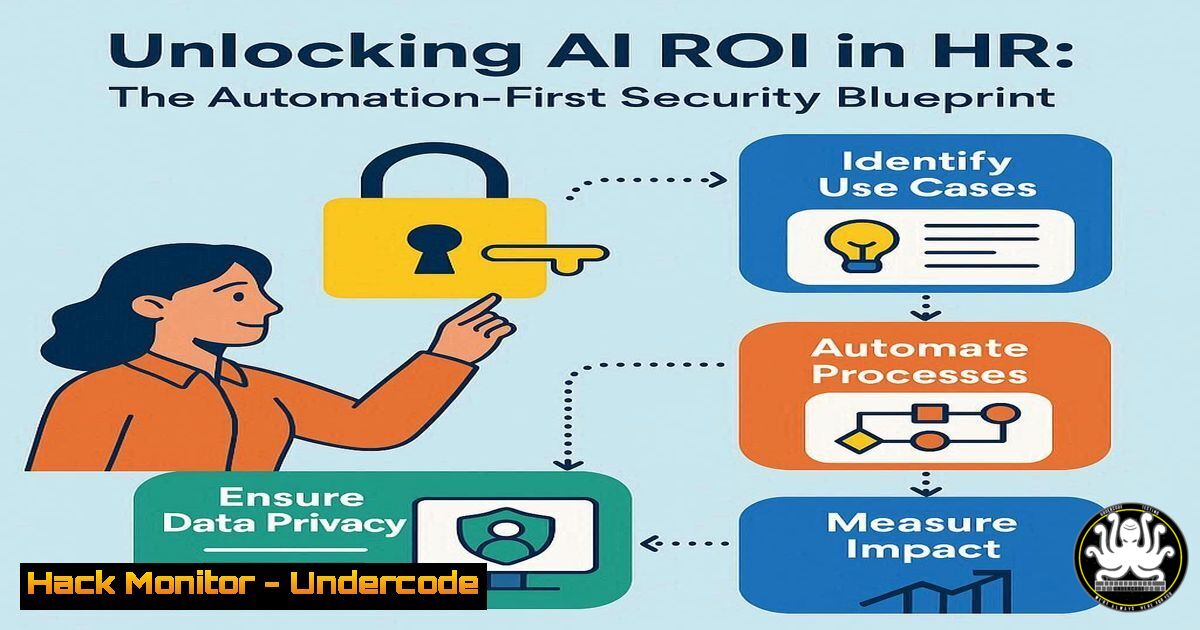
Introduction:
The integration of Artificial Intelligence into Human Resources represents a paradigm shift in operational efficiency, yet it introduces a complex web of cybersecurity considerations. As organizations automate critical HR workflows—from recruitment to performance management—they must simultaneously fortify these systems against emerging threats that target AI pipelines and data integrity.
Learning Objectives:
- Understand the security implications of AI-driven HR automation platforms
- Implement secure API integrations between AI models and workflow automation tools
- Develop monitoring strategies for AI-powered HR systems to prevent data leakage and unauthorized access
You Should Know:
1. Securing Custom GPT HR Workflows
 HR AI Security Audit Script
import openai
import logging
from security_audit import HRDataValidator

def secure_gpt_integration(api_key, user_input):
 Initialize with security context
openai.api_key = os.environ.get('SECURE_API_KEY')

Input sanitization for HR data
sanitized_input = HRDataValidator.sanitize_pii(user_input)

Set security parameters
response = openai.ChatCompletion.create(
model="gpt-4",
messages=[{"role": "system", "content": "HR Assistant with PII protection"}],
temperature=0.3,
max_tokens=500
)
return HRDataValidator.scan_output(response.choices[bash].message.content)
Step-by-step guide: This Python script demonstrates secure integration with OpenAI’s API for HR workflows. The HRDataValidator class handles Personally Identifiable Information (PII) sanitization before processing and scans outputs for potential data leakage. Implement this by setting environment variables for API keys, configuring input validation rules specific to your HR data schema, and establishing output monitoring for compliance violations.
2. Hardening n8n Webhook Endpoints
 n8n Webhook Security Hardening
 Generate secure webhook URL with expiration
curl -X POST "https://api.n8n.io/webhooks/<workflow_id>" \
-H "Content-Type: application/json" \
-H "X-n8n-Signature: $(openssl rand -hex 32)" \
-d '{
"security": {
"ip_whitelist": ["192.168.1.0/24"],
"rate_limit": "100/hour",
"payload_validation": true
}
}'

Monitor webhook security
n8n audit-trail --webhook <workflow_id> --security-scan
Step-by-step guide: This command sequence secures n8n webhook endpoints that receive AI-generated HR content. The first command generates a cryptographically signed webhook with IP restrictions and rate limiting. Implement by replacing `
3. AI-HR Data Pipeline Encryption
 End-to-end encryption for HR AI data
from cryptography.fernet import Fernet
from hr_data_protocol import HRDataProtocol

class SecureHRPipeline:
def <strong>init</strong>(self):
self.key = Fernet.generate_key()
self.cipher_suite = Fernet(self.key)

def encrypt_hr_data(self, sensitive_data):
 Convert HR data to secure format
encoded_data = HRDataProtocol.serialize(sensitive_data)
encrypted_data = self.cipher_suite.encrypt(encoded_data)
return encrypted_data

def decrypt_for_ai_processing(self, encrypted_data):
decrypted_data = self.cipher_suite.decrypt(encrypted_data)
return HRDataProtocol.deserialize(decrypted_data)
Step-by-step guide: This encryption class protects sensitive HR data throughout the AI processing pipeline. Implement by initializing the cipher suite with your encryption key, serializing HR data according to your organization’s protocol, and ensuring decryption only occurs within secure AI processing environments. Rotate encryption keys quarterly and maintain audit logs of all encryption/decryption events.
4. Slack Bot Security for HR Notifications
// Secure Slack integration for AI HR notifications
const { WebClient } = require('@slack/web-api');
const { createHmac } = require('crypto');

class SecureHRNotifier {
constructor() {
this.slack = new WebClient(process.env.SLACK_HR_BOT_TOKEN);
this.signing_secret = process.env.SLACK_SIGNING_SECRET;
}

async sendSecureNotification(channel, message) {
// Verify request signature
const signature = createHmac('sha256', this.signing_secret)
.update(JSON.stringify(message))
.digest('hex');

// Send to approved HR channels only
if (this.validateHRChannel(channel)) {
return await this.slack.chat.postMessage({
channel: channel,
text: this.sanitizeHRMessage(message),
blocks: this.createSecureBlocks(message)
});
}
}
}
Step-by-step guide: This Node.js implementation provides secure Slack notifications for AI-generated HR content. The code validates message signatures and restricts notifications to pre-approved HR channels. Deploy by setting environment variables for Slack credentials, configuring channel validation rules, and implementing message sanitization to prevent injection attacks through AI-generated content.
5. API Security Monitoring for AI HR Systems
 Real-time API security monitoring setup
 Install security monitoring stack
docker run -d --name hr-ai-waf \
-e "MODSECURITY=ON" \
-e "PARANOIA=2" \
-v /hr-ai-rules:/etc/modsecurity \
owasp/modsecurity-crs:latest

Configure custom HR AI rules
cat > /hr-ai-rules/hr-ai-security.conf << EOF
SecRule REQUEST_BODY "@rx (ssn|salary|performance)" \
"phase:2,deny,log,msg:'Sensitive HR Data Exposure Attempt'"

SecRule RESPONSE_BODY "@rx (confidential|evaluation|compensation)" \
"phase:4,block,msg:'Potential HR Data Leakage'"
EOF

Monitor security events
tail -f /var/log/hr-ai-security.log | grep -i "violation"
Step-by-step guide: This Docker-based setup deploys a Web Application Firewall (WAF) specifically configured for AI HR systems. The custom rules detect attempts to access or expose sensitive HR data through AI interfaces. Implement by running the Docker container, customizing the security rules to match your HR data patterns, and setting up real-time alerting for security violations.
- Identity and Access Management for AI HR Platforms
Terraform configuration for AI HR IAM
resource "aws_iam_policy" "ai_hr_limited" {
name = "AI-HR-Limited-Access"
description = "Least privilege access for AI HR systems"</li>
</ol>

policy = jsonencode({
Version = "2012-10-17"
Statement = [
{
Effect = "Allow"
Action = [
"s3:GetObject",
"s3:PutObject"
]
Resource = "arn:aws:s3:::hr-ai-data/"
Condition = {
StringEquals = {
"aws:RequestTag/Department" = "HR"
}
}
}
]
})
}

Attach to AI service role
resource "aws_iam_role_policy_attachment" "ai_hr_access" {
role = aws_iam_role.ai_hr_processor.name
policy_arn = aws_iam_policy.ai_hr_limited.arn
}
Step-by-step guide: This Terraform configuration implements least-privilege access control for AI systems processing HR data. The IAM policy restricts S3 access to specifically tagged HR data buckets. Deploy by initializing Terraform in your cloud environment, customizing the resource ARNs to match your storage locations, and implementing mandatory tagging for all HR data resources.
7. AI Model Security Hardening for HR Data
 AI model security wrapper for HR applications
import tensorflow as tf
from differential_privacy import DPQuery

class SecureHRModel:
def <strong>init</strong>(self, base_model):
self.model = base_model
self.dp_optimizer = DPKerasAdamOptimizer(
l2_norm_clip=1.0,
noise_multiplier=0.5,
num_microbatches=1
)

def train_with_privacy(self, hr_data, labels):
 Apply differential privacy for HR data
private_grads = self.dp_optimizer.get_gradients(
self.model, hr_data, labels
)

Secure model update
self.model.optimizer.apply_gradients(
zip(private_grads, self.model.trainable_variables)
)

return self.model.get_weights()
Step-by-step guide: This TensorFlow implementation adds differential privacy protection to AI models training on HR data. The DPI Keras optimizer adds calibrated noise to gradients, preventing memorization of individual employee data. Implement by wrapping your existing HR AI models, configuring privacy parameters based on your compliance requirements, and validating that model utility remains acceptable for business use cases.
What Undercode Say:
- AI-driven HR automation creates massive attack surfaces that traditional security teams are unprepared to monitor
- The convergence of sensitive employee data and AI decision-making requires new security frameworks beyond standard IT controls
- Organizations must implement AI-specific security measures before achieving the promised ROI from HR automation
The rapid adoption of AI in HR represents both an efficiency breakthrough and a security nightmare waiting to happen. While the promised 95% time savings in job description creation is compelling, security teams must recognize that each AI integration point—Custom GPTs, n8n workflows, Slack notifications—creates new vectors for data exfiltration and system compromise. The fundamental challenge is that HR AI systems process extremely sensitive data while operating outside traditional security perimeters. Organizations cannot simply bolt security onto existing AI HR implementations; they must architect security into the AI workflow from inception, implementing rigorous data protection, access controls, and monitoring specific to AI-generated content and decisions.
Prediction:
Within 18-24 months, we will witness the first major breach originating from compromised AI HR systems, exposing millions of employee records and leading to stringent new regulations governing AI data handling. The organizations that proactively implement the security measures outlined above will not only avoid catastrophic breaches but will gain competitive advantage through trusted, secure AI HR operations that attract top talent concerned about data privacy.
🎯Let’s Practice For Free:
IT/Security Reporter URL:
Reported By: Mattbradburn Streamlining – Hackers Feeds
Extra Hub: Undercode MoN
Basic Verification: Pass ✅🔐JOIN OUR CYBER WORLD [ CVE News • HackMonitor • UndercodeNews ]
📢 Follow UndercodeTesting & Stay Tuned:


