Listen to this Post
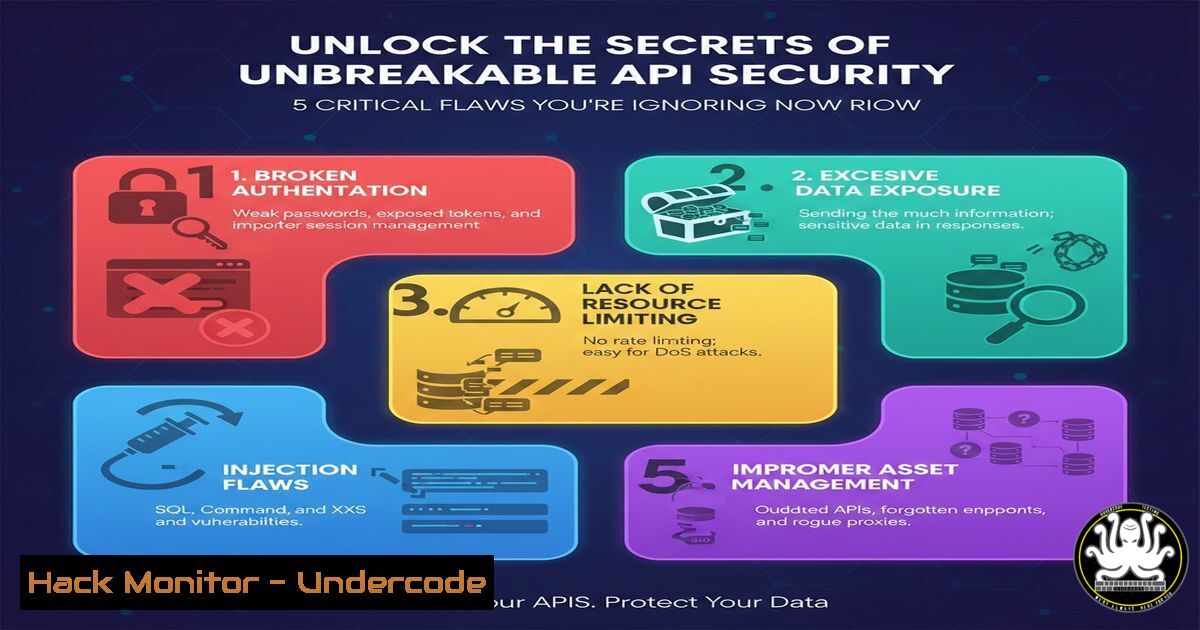
Introduction:
In today’s interconnected digital ecosystem, Application Programming Interfaces (APIs) have become the backbone of software communication, yet they represent a massive and often overlooked attack surface. As organizations rush to adopt microservices and cloud-native architectures, insecure APIs are being exploited at an alarming rate, leading to data breaches, service disruptions, and compliance nightmares. This article delves into the technical trenches of API security, providing actionable steps to harden your endpoints against modern threats.
Learning Objectives:
- Understand the most critical API vulnerability classes and how attackers exploit them.
- Implement practical hardening measures using common security tools and platform-specific commands.
- Build a proactive API security testing regimen into your development lifecycle.
You Should Know:
1. Authentication Bypass and JWT Tampering
APIs often rely on tokens like JSON Web Tokens (JWT) for authentication. Weak signing algorithms or improper validation can allow attackers to forge tokens and escalate privileges.
Step‑by‑step guide explaining what this does and how to use it.
Step 1: Identify Weak JWT Signatures. Use the `jwt_tool` on Linux to analyze a token. Capture a JWT from your application’s authorization header.
 Install jwt_tool
git clone https://github.com/ticarpi/jwt_tool
cd jwt_tool
python3 -m pip install -r requirements.txt
 Analyze a token
python3 jwt_tool.py <your_jwt_token_here>
Step 2: Test for None Algorithm Vulnerability. The tool will flag if the ‘alg’ field is set to ‘none’. A vulnerable server might accept a token with a modified payload and the ‘alg’:’none’ header.
Step 3: Mitigation. Always enforce a strong algorithm (e.g., RS256) on the server side. Here’s a Node.js snippet for verification:
const jwt = require('jsonwebtoken');
const verified = jwt.verify(token, publicKey, { algorithms: ['RS256'] });
2. Mass Assignment and Excessive Data Exposure
APIs that automatically bind client input to internal objects (mass assignment) can expose sensitive fields. Similarly, endpoints that return full data objects often leak more information than required.
Step‑by‑step guide explaining what this does and how to use it.
Step 1: Probe for Mass Assignment. Use Burp Suite or a custom script to send a PATCH or POST request with additional parameters. For example, if updating a user profile, add `”isAdmin”: true` to the JSON body and observe if the property is accepted.
Step 2: Mitigation with Allow-Listing. Explicitly define which fields can be updated. In a Rails application, use strong parameters:
def user_params
params.require(:user).permit(:name, :email)  Explicitly allow only name and email
end
Step 3: Filter API Responses. Use DTOs (Data Transfer Objects) or serializers to whitelist fields sent to the client. Never rely on front-end filtering.
3. Insecure Direct Object References (IDOR)
IDOR occurs when an API uses user-supplied input to access objects directly without proper authorization checks, allowing attackers to access other users’ data.
Step‑by‑step guide explaining what this does and how to use it.
Step 1: Test for IDOR. Manipulate object identifiers in API requests. For instance, change `GET /api/v1/invoices/1234` to GET /api/v1/invoices/1235. Use a tool like `OWASP ZAP` to automate this testing.
Step 2: Implement Access Control Checks. Always validate that the requested resource belongs to the authenticated user. Example pseudo-code:
def get_invoice(invoice_id):
invoice = Invoice.query.get(invoice_id)
if invoice.user_id != current_user.id:
raise PermissionDeniedError
return invoice
Step 3: Use UUIDs Instead of Sequential IDs. While not a fix, using non-sequential identifiers like UUIDs makes blind enumeration harder.
4. Rate Limiting Bypass and DDoS
APIs without rate limiting are prime targets for brute-force attacks and denial-of-service conditions, exhausting server resources.
Step‑by‑step guide explaining what this does and how to use it.
Step 1: Implement Rate Limiting. Use a gateway like NGINX or a cloud service. For NGINX, configure limits in /etc/nginx/nginx.conf:
http {
limit_req_zone $binary_remote_addr zone=api:10m rate=10r/s;
server {
location /api/ {
limit_req zone=api burst=20 nodelay;
proxy_pass http://backend;
}
}
}
Step 2: Test Your Defenses. Simulate a flood attack using `wrk` on Linux:
wrk -t12 -c400 -d30s http://your-api-endpoint/login
Monitor logs and response codes to ensure limits are enforced.
5. Misconfigured CORS and Security Headers
Cross-Origin Resource Sharing (CORS) misconfigurations can allow malicious websites to access your API from unauthorized domains. Missing security headers expose applications to clickjacking, MIME sniffing, and other attacks.
Step‑by‑step guide explaining what this does and how to use it.
Step 1: Audit Headers. Use `curl` to inspect responses:
curl -I https://your-api.com/v1/data
Look for `Access-Control-Allow-Origin`, `Content-Security-Policy`, `X-Frame-Options`, etc.
Step 2: Configure CORS Properly. In an Express.js app, avoid wildcards for sensitive endpoints:
const cors = require('cors');
app.use(cors({
origin: ['https://trusted-domain.com'], // Specific allowed origin
credentials: true
}));
Step 3: Harden Headers. Use middleware like `helmet` for Node.js to set security headers automatically:
const helmet = require('helmet');
app.use(helmet());
6. Injection Attacks via GraphQL or REST
APIs, especially GraphQL endpoints, can be vulnerable to injection attacks like SQL, NoSQL, or command injection if user input is not sanitized.
Step‑by‑step guide explaining what this does and how to use it.
Step 1: Test for SQL Injection. Use `sqlmap` against a REST endpoint:
sqlmap -u "https://api.com/users?id=1" --batch --risk=3
For GraphQL, craft malicious queries in the request body.
Step 2: Mitigation with Parameterized Queries. Never concatenate user input into queries. Use prepared statements. In Python with SQLAlchemy:
from sqlalchemy import text
result = db.engine.execute(text("SELECT  FROM users WHERE id = :user_id"), user_id=request_id)
Step 3: Limit GraphQL Query Depth. To prevent abusive deep queries, use validation rules:
const { graphql, validate } = require('graphql');
const { depthLimit } = require('graphql-depth-limit');
const validationRules = [depthLimit(5)];
7. Insecure Cloud API Permissions
In cloud environments (AWS, Azure, GCP), overly permissive IAM roles and service accounts for API endpoints can lead to lateral movement and data exfiltration.
Step‑by‑step guide explaining what this does and how to use it.
Step 1: Audit IAM Policies. Use AWS CLI to list policies attached to a role:
aws iam list-attached-role-policies --role-name LambdaAPIRole
Step 2: Apply Principle of Least Privilege. Create a custom policy that grants only the necessary actions and resources. Use the AWS Policy Simulator to test.
Step 3: Harden S3 Buckets. Ensure buckets serving API content are not publicly readable unless required. Check and set bucket policies:
aws s3api get-bucket-policy --bucket your-bucket-name
aws s3api put-bucket-policy --bucket your-bucket-name --policy file://restrictive-policy.json
What Undercode Say:
- API Security is a Continuous Process: Tooling and one-time fixes are insufficient. Security must be integrated into the CI/CD pipeline with automated static and dynamic testing.
- Context is King: The same technical vulnerability (e.g., IDOR) has vastly different risk levels in a banking API versus a weather API. Risk assessment must guide mitigation priorities.
Analysis: The proliferation of APIs is accelerating faster than security teams can adapt. The core issue is often a cultural and procedural gap where development velocity is prioritized over security design. The technical steps outlined are effective, but they must be underpinned by a shift-left mentality, comprehensive developer training, and the adoption of standardized security frameworks like OWASP API Security Top 10. Organizations that treat API security as a product feature rather than a compliance checkbox will gain significant trust and competitive advantage.
Prediction:
Within the next 2-3 years, we will see a major regulatory shift specifically targeting API security, similar to GDPR for data privacy, forcing companies to disclose API breaches and adhere to strict design standards. Concurrently, AI-driven offensive security tools will become commonplace, automatically discovering and exploiting API flaws at scale, making manual penetration testing obsolete. Conversely, AI will also power next-generation API security gateways that can model normal behavior and block zero-day attacks in real-time, leading to an arms race between AI attackers and defenders in the API space.
▶️ Related Video (80% Match):
🎯Let’s Practice For Free:
IT/Security Reporter URL:
Reported By: Delphine Belhassen – Hackers Feeds
Extra Hub: Undercode MoN
Basic Verification: Pass ✅


